
Building Disputes Tribunal NSW: NCAT Process & Expert Tips
You hired a builder to deliver a home, an extension, a renovation, or remedial work. Instead, you’re left with cracking, water ingress, incomplete items, or a builder who says the job is finished when the site tells a different story. By the time you search for the NSW building disputes tribunal, you’re already tired, frustrated, and worried about whether you’ve waited too long or missed something important.
In New South Wales, that formal pathway is usually NCAT, not a vague complaints process and not a simple form you lodge and forget. The cases that go well are usually the ones that are prepared properly from the beginning, with the defects identified clearly, the documents organised, and the claim framed around evidence instead of outrage.
Your Guide to the NSW Building Disputes Tribunal
A common pattern starts like this. The project slips. Variations become arguments. Defects are raised informally, then denied. Someone sends a final invoice. Someone else refuses to pay. At that point, many owners and builders still think the dispute will sort itself out through emails and a few site meetings.
Sometimes it does. Often it doesn’t.
When people refer to the building disputes tribunal NSW, they usually mean the NSW Civil and Administrative Tribunal, or NCAT. For residential building conflict in NSW, NCAT is the forum where many defective work, incomplete work, and related contractual disputes are determined. It gives both homeowners and building professionals a structured venue to ask for enforceable orders.
This isn’t a niche issue. An analysis of tribunal dispute numbers reports about 4,000 strata disputes a year across Australia, with New South Wales accounting for about 1,500 of those cases, and roughly 1 in 77 strata buildings involved in a formal dispute each year, which gives a useful sense of how common tribunal-based property conflict has become in NSW’s built environment (analysis of Australian strata disputes).
The first practical relief many clients feel is simply learning that the process is structured. Confusing, yes. Arbitrary, no.
What people usually get wrong at the start
The biggest misconception is that NCAT decides cases based on who sounds more reasonable. It doesn’t work that way. The Tribunal looks at documents, dates, scope, technical evidence, contractual obligations, and whether the alleged defects are proved.
A second mistake is waiting for the relationship to improve after it has already broken down. Once trust has gone, every conversation tends to create more evidence, but not necessarily good evidence. Casual calls, emotional texts, and broad allegations rarely help.
What usually helps instead
Before anyone thinks about the hearing room, they should think about the file:
- Contract documents: Signed contract, plans, specifications, variations, and any scope changes.
- Site evidence: Date-stamped photographs, videos, defect lists, and progress records.
- Communications: Emails, text messages, directions, complaints, and responses.
- Expert material: Independent inspection findings that separate genuine defects from preference issues.
If you’re in this situation now, the priority isn’t to write the angriest email. It’s to build a case that survives scrutiny.
Understanding NCAT Jurisdiction and Claim Limits
NCAT hears home building disputes in its Consumer and Commercial Division. In practical terms, this is the part of the Tribunal that deals with many residential building conflicts about workmanship, defects, incomplete work, and related issues arising from building contracts in NSW.
The jurisdiction question matters because not every complaint belongs there, and not every claimant arrives in time. Owners often assume visible defects automatically create a valid claim. Builders often assume practical completion closes the issue. Neither assumption is safe.
Who usually brings claims
Most matters are brought by one of these parties:
- Homeowners: Usually alleging defective or incomplete work, delay-related issues, or failures to comply with the contract.
- Builders or contractors: Often seeking payment, defending defect allegations, or responding to offset claims.
- Owners corporations and strata parties: Particularly where common property work, waterproofing, façades, roofing, or service failures affect multiple lots.
The key point is that NCAT is not just for owners. It is a forum where both sides can seek orders, and both sides need to present their evidence carefully.
Time limits can decide the whole case
One of the most important technical issues is whether the claim is still within time. For statutory warranty claims in NSW, applications must generally be lodged within six years for major defects and two years for all other defects, which means defect classification can directly affect whether a claimant still has a valid NCAT pathway (guidance on preparing for a building dispute in NCAT).
That sounds straightforward until you’re dealing with a mixed defect schedule. A water entry issue might be argued one way. A tiling finish issue might be argued another. The classification can affect whether the Tribunal can hear the item at all.
Practical rule: If limitation dates might be close, don’t wait until your evidence is perfect before getting advice about the classification and filing position.
Why jurisdiction is a technical issue, not just a formality
A strong claim can fail if it is filed late, framed badly, or built around vague defect descriptions. Likewise, a weak defence can become stronger if the respondent identifies that parts of the claim sit outside time or outside the proper scope of the Tribunal’s powers.
That is why experienced preparation matters. At this stage, the work isn’t dramatic. It’s disciplined. Identify the defect. Link it to the contract or standard. Classify it properly. Put it in a form the Tribunal can use.
Your Step-by-Step Guide to the NCAT Process
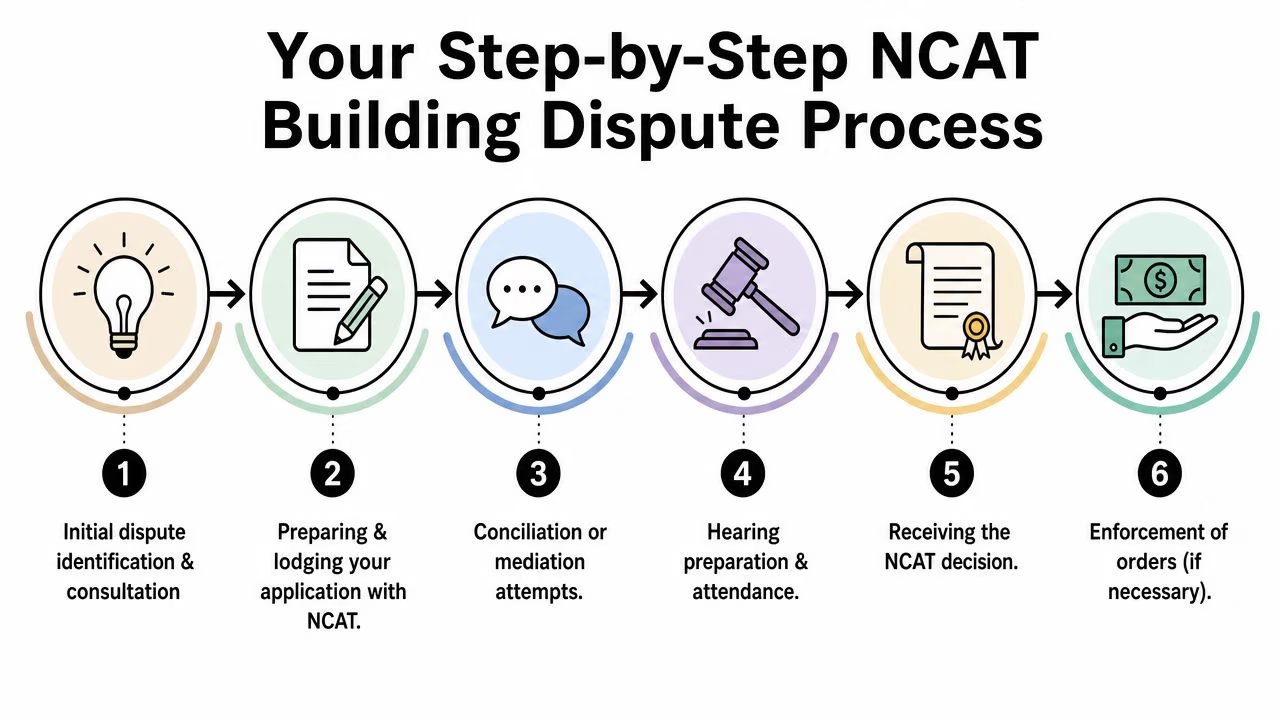
The NSW process is more structured than many people expect. A home building dispute doesn’t usually start with an NCAT application. It starts earlier.
Step 1 begins before NCAT
For NSW home building disputes, there is a mandatory NSW Fair Trading referral step before NCAT can accept an application, and NCAT says applicants must attach evidence of the Fair Trading investigation unless the matter is exempt. NCAT also states that these disputes are heard under the Home Building Act 1989 in its Consumer and Commercial Division (NCAT home building dispute requirements).
That requirement changes how you should prepare. If your documents are chaotic at the complaint stage, they will still be chaotic later. If your defect list is vague at Fair Trading, it often stays vague in the Tribunal file.
Step 2 prepare the application properly
Once that referral step is complete, the next task is preparing the application with precision. During this preparation, many self-represented parties lose ground. They lodge too early, with broad accusations and no organised schedule of items, or too late, after key dates have become a problem.
A good application usually does three things well:
- It identifies each disputed item clearly.
- It states the remedy sought in practical terms.
- It attaches documents that prove the issue exists and matters.
A vague grievance isn’t a case. A defect item tied to evidence is.
For readers trying to understand how claims are organised item by item, this guide on what a Scott Schedule is in a building dispute in NSW is useful because it shows how issues are broken down into a format the Tribunal and the other side can respond to efficiently.
Step 3 service and directions matter more than people think
After filing, documents must be served correctly. If service is defective, delay follows. Then comes the first directions stage, where the Tribunal may set dates for evidence, responses, expert material, and conciliation.
People often underestimate procedural directions because they seem administrative. They aren’t. They shape the case calendar. Miss a direction, and you may spend the rest of the matter trying to recover lost ground.
Here is a simple explanation of the process flow before a hearing:
- Complaint stage: The dispute is raised through the required Fair Trading pathway.
- Application stage: NCAT receives the formal application and supporting material.
- Directions stage: The Tribunal sets the timetable for evidence and responses.
- Conciliation or mediation: Parties try to narrow issues or resolve the matter.
- Hearing: The Tribunal considers the evidence and makes orders.
- Enforcement if needed: A successful order may still need action if the other side doesn’t comply.
A short overview can help if you prefer a visual explanation:
Step 4 conciliation is not the same as surrender
Many matters settle in conciliation or after directions narrow the issues. That doesn’t mean one party was wrong to file. It means the evidence forced a commercial reality.
The best settlements usually happen when both parties can see the strengths and weaknesses of the case clearly. The worst ones happen when one side arrives underprepared and settles out of fear.
If you’re going to compromise, do it from an informed position. Not because your file is disorganised and your hearing date is close.
Building Your Case The Crucial Role of Evidence
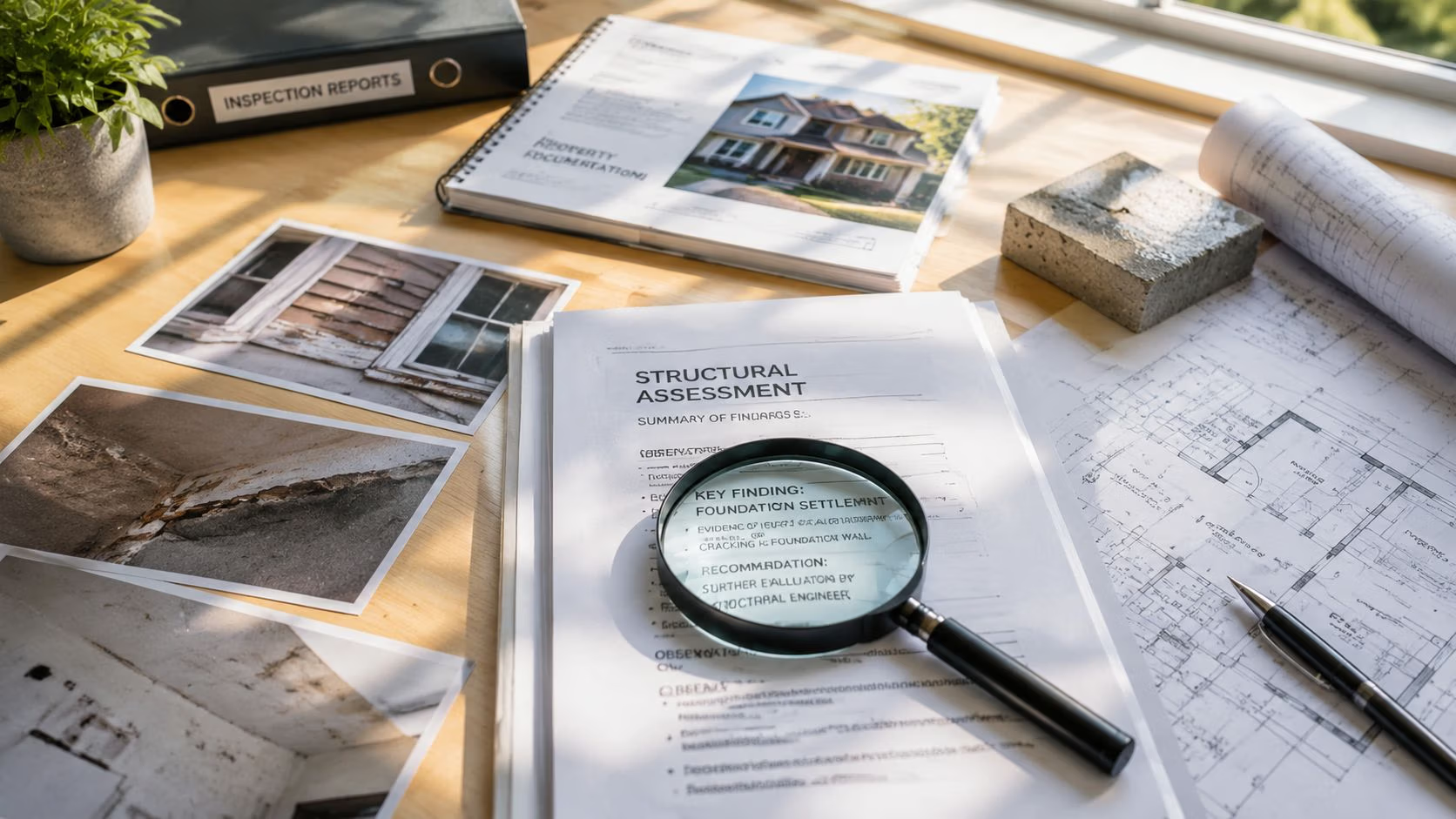
Most NCAT building disputes are not won by the person who feels most wronged. They are won by the party whose evidence is more coherent, more relevant, and easier for the Tribunal to follow.
That distinction matters because building disputes often involve a mix of real defects, arguable defects, contractual scope disagreements, and plain frustration. The Tribunal needs help separating those categories. Good evidence does that. Poor evidence blurs them together.
Not all evidence carries the same weight
Homeowners often arrive with a phone full of photos and a folder of angry emails. Builders often arrive with progress claims, text chains, and a view that the owner is impossible to satisfy. Both may have useful material. Neither has necessarily proved the technical issues.
The Tribunal generally responds best to evidence that answers practical questions:
- What is the defect or disputed item?
- Where is it located?
- Why is it defective, incomplete, or non-compliant?
- What document, standard, plan, or scope item supports that position?
- What is the appropriate remedy?
A quote from another contractor can help with scope or pricing context. It usually won’t replace a proper defect analysis. That’s where many cases become weak. People bring costings before they prove liability.
What a proper expert report does
An Expert Witness Report should do more than complain in technical language. It should identify the relevant work, describe observed conditions, explain the basis for the opinion, and connect findings to the actual issues in dispute. It should also distinguish between defective work, incomplete work, maintenance issues, design issues, and damage caused by others.
That distinction is critical. A report that says everything is defective often helps no one. A report that isolates each issue and explains the reasoning is far more useful.
A Tribunal member can only decide the case in front of them. If your report bundles ten different issues into one broad allegation, you make the decision harder than it needs to be.
Why Scott Schedules are so effective
Scott Schedules are one of the most practical tools in a building dispute because they force clarity. Instead of arguing in long narrative statements, the parties address items line by line. Each item can show the allegation, response, evidence, and often the competing positions on scope or cost.
That structure is especially useful in matters involving multiple rooms, multiple trades, or a long list of incomplete and defective items. It turns noise into a working document.
For anyone dealing with expert evidence obligations in Tribunal matters, this resource on NCAT Procedural Directions 3 and expert evidence is a practical reference point.
What works in real matters
Over years of dispute work, the pattern is consistent. The strongest files usually contain:
| Evidence type | Why it matters |
|---|---|
| Contract, plans, specifications | Defines what was actually promised |
| Variation records | Shows whether scope changed and who approved it |
| Chronology of events | Helps the Tribunal understand sequence and delay context |
| Site photographs | Supports observations and location of issues |
| Expert report | Converts observations into technical opinion |
| Scott Schedule | Organises the dispute item by item |
Awesim Building Consultants provides site investigations, Expert Witness Reports, and Scott Schedules for NSW building disputes. Used properly, those documents help convert a stressful building problem into a tribunal-ready evidence file.
NCAT Timelines Fees and Possible Outcomes
Early on, two key questions are frequently asked: How long will this take, and what will it cost? The honest answer is that NCAT building disputes usually take time, and the total cost depends less on the filing step than on how contested the matter becomes.
Timelines are shaped by complexity
Simple matters can move more quickly than heavily contested ones, but no one should assume the process will be over in a few weeks. Directions, evidence exchange, conciliation, adjournments, and hearing availability all affect timing. If expert evidence is needed, the preparation stage alone can take meaningful time because the inspection, report drafting, and issue-by-issue analysis need to be done properly.
Cases also slow down when the parties don’t narrow the dispute. A file with three clear issues is easier to manage than a file with a sprawling list of complaints that mix defects, maintenance, personality conflict, and payment arguments.
Costs go beyond the application
There may be Tribunal filing and hearing costs, but those are only part of the picture. Many parties also spend money on:
- Expert inspections and reports: Often necessary where workmanship, compliance, causation, or scope is disputed.
- Legal advice or representation: Particularly useful in larger or more technical matters.
- Document preparation: Chronologies, annexures, schedules, and hearing bundles all take work.
- Time away from work: A real cost that people often ignore until the matter drags on.
The expensive approach is often the one that looks cheap at the start. Filing a weak case without proper evidence can create delay, repeated attendances, and rushed expert work later.
What outcomes can NCAT make
NCAT can make different kinds of orders depending on the dispute. In practical terms, parties usually seek one or more of the following:
- Rectification-related outcomes: Orders focused on fixing defective or incomplete work.
- Money-related outcomes: Payment claims, offsets, or compensation-style orders where appropriate.
- Dismissal or partial success: Some items succeed, some fail, and some are reduced.
- Procedural outcomes: Directions about evidence, inspections, or how the case will proceed.
A favourable result still needs to be workable. If the order is unclear, enforcement and compliance can become another battle. That is why the claim itself should be framed with practical remedies in mind, not just broad statements that something was done badly.
Common Pitfalls to Avoid in Your Building Dispute
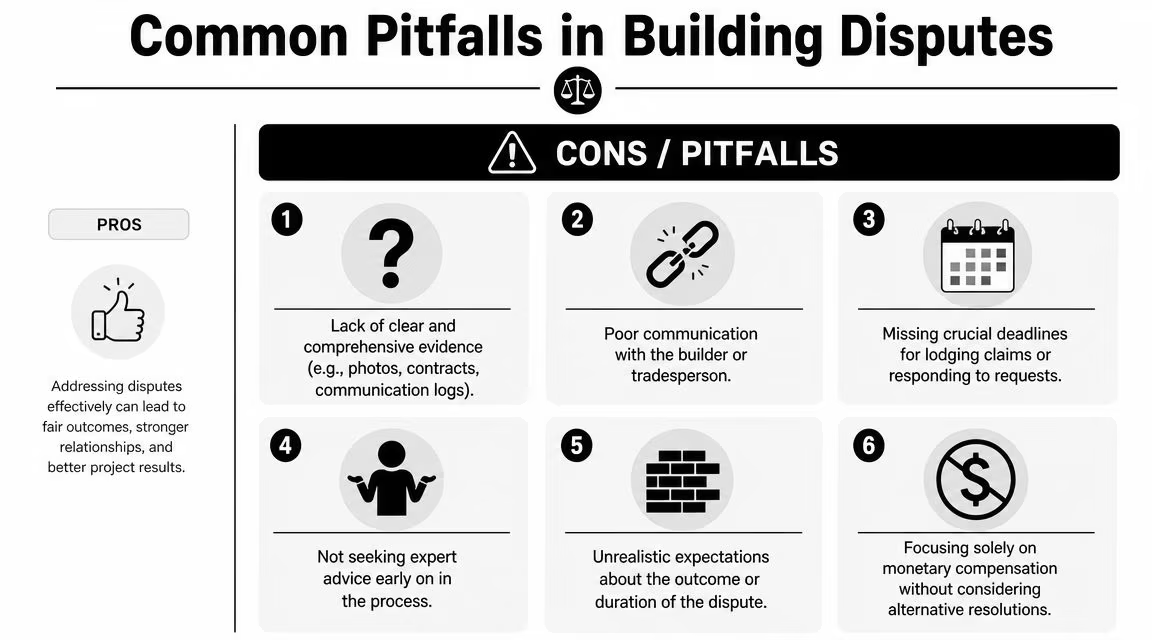
Many parties don’t lose because the facts are against them. They lose because they sabotage a decent case with avoidable mistakes.
The mistakes that keep appearing
The first is procedural. People assume the Tribunal will overlook a missed prerequisite, a missed deadline, or incomplete filing material because they’re self-represented. Sometimes there is flexibility. Often there isn’t.
The second is evidentiary. A builder’s quote is not the same as an independent expert opinion. A long witness statement is not the same as a structured defect schedule. An emotional chronology is not the same as proof.
Third, parties often damage their own credibility through conduct. They interrupt, exaggerate, refuse to concede small points, or turn every disagreement into an accusation of bad faith. NCAT members see conflict every day. They usually respond better to organised restraint than theatre.
What to do instead
Use this as a quick check before you push deeper into the dispute:
- Check the pathway early: Make sure you have completed the required pre-tribunal step and kept the evidence of it.
- Separate defects from annoyances: Focus on items you can prove, not every site irritation.
- Get your dates in order: Contracts, complaints, inspections, and responses should be placed in sequence.
- Use the right expert material: If the matter is technical, get technical evidence.
- Stay practical in negotiations: Some disputes resolve better through scope-specific rectification than an all-or-nothing money fight.
Unrealistic expectations create bad settlements and bad hearings. The strongest position is usually a measured one.
There is another pitfall that starts before the dispute itself. Poor site control can create extra loss, extra arguments, and extra evidentiary mess after workmanship issues emerge. For teams managing active projects, this article on critical security advice for project managers is worth reading because site access, protection of materials, and incident control often become relevant once a project starts to unravel.
Why Expert Guidance Is Your Best Investment
A building dispute in NSW is never just about who is upset. It turns on process, timing, classification, and proof. People who understand that early usually make better decisions. They preserve the right records, engage the right expertise, and avoid turning a repair issue into a procedural disaster.
That is why expert guidance pays for itself in ways that aren’t always obvious at the start. It helps you define the actual issues, not the emotional ones. It helps you present defects in a format the Tribunal can use. It helps you avoid wasting time on claims that are weak while strengthening the ones that are sound.
For homeowners, builders, solicitors, and strata parties, the practical need is the same. You need a file that can stand up to scrutiny. That means disciplined site investigation, clear technical reporting, and properly organised schedules of issues and responses.
Awesim’s background is grounded in 35+ years in building and construction and 15+ years providing litigation support to homeowners, builders, and lawyers. In NCAT matters, that kind of experience matters most at the point where facts need to become evidence.
If you need help preparing for a NSW building dispute, contact Awesim Building Consultants for practical guidance on site investigations, Expert Witness Reports, and Scott Schedules. Email admin@awesim.com.au or call 1800 293 746.

Related Posts

Water Damage in Homes: How to Track Down the Source
Water damage in a home rarely announces itself at the source. A stain on the ceiling, a musty smell in
Read More »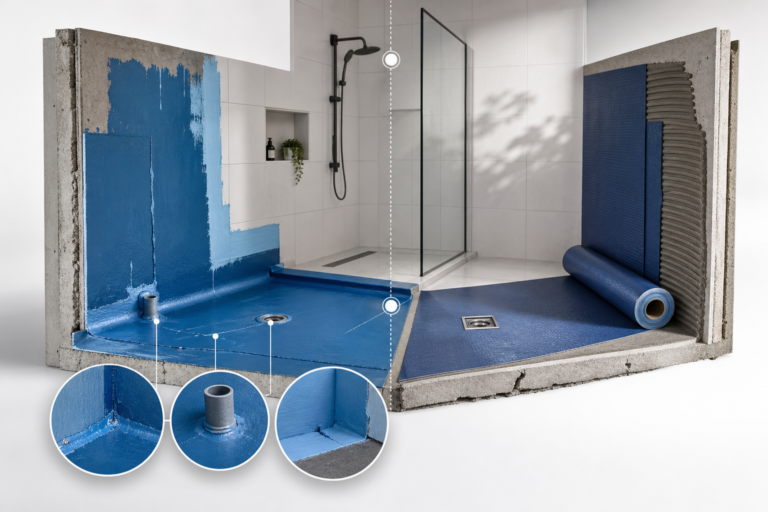
Waterproofing Membrane Types: Which Fails Most in NSW Bathrooms
Waterproofing failure is the single most common serious defect found in NSW apartments, and the type of membrane used, along
Read More »
Building Certifier NSW: Role, Limits, and When You Need More
A building certifier in NSW is a registered professional who issues construction certificates, conducts critical stage inspections, and grants occupation
Read More »