
Building Expert Scott Schedule: A 2026 NCAT Guide

You’ve probably reached the point where the dispute is no longer about one cracked tile, one leak, or one unfinished item. It’s now a bundle of emails, photos, quotes, arguments about responsibility, and a hearing date that’s getting closer. Everyone has a different version of events, and the paperwork often makes things worse instead of clearer.
That’s where a building expert scott schedule matters. In practice, it’s the document that turns a messy building dispute into a structured list of issues that can be tested, costed, and decided. For homeowners, it removes the guesswork. For builders, it stops vague allegations from floating around unchallenged. For solicitors, it gives the case a format that NCAT can work with.
A good Scott Schedule isn’t just admin. It’s a working dispute document built from site evidence, standards, and realistic rectification methodology. If it’s prepared properly, it helps the Tribunal compare positions item by item. If it’s prepared badly, it can damage your case before the hearing really starts.
Your Building Dispute Needs a Game Plan
A typical dispute starts in a familiar way. Water appears where it shouldn’t. Cracking worsens. Tiling looks uneven. A balcony leaks into the room below. The owner says the work is defective. The builder says the complaint is exaggerated, caused by maintenance, or outside scope. The solicitor asks for a list of defects, and suddenly everyone is working from different documents.
That’s when people usually realise they don’t have a case plan. They have fragments.
A Scott Schedule brings those fragments together. It forces each issue into a structured line item so the dispute stops being emotional and starts becoming technical. Instead of broad complaints, you get a defined defect, a proposed rectification method, a cost, and a response from the other side.
What chaos looks like in practice
In real matters, the early paperwork often contains the same problems:
- General language instead of defects such as “bad workmanship” or “substandard finish”
- No link to standards so nobody can tell whether the complaint is opinion or a measurable breach
- Inconsistent costings where one side uses a rough allowance and the other uses a completely different scope
- Mixed evidence with photos, texts, quotes, and reports sitting in separate files
That combination makes settlement harder. It also makes hearing preparation slower because the parties are still arguing about what the actual issues are.
Practical rule: If a defect can’t be described clearly in one item with supporting evidence and a rectification pathway, it usually isn’t ready for a Tribunal schedule.
What a proper game plan does
A properly prepared building expert scott schedule gives the dispute a spine. Each alleged defect gets its own place. Each side can state its position. The Tribunal can compare those positions directly.
That structure matters because building disputes are rarely won by volume. They’re usually resolved by clarity. The party with the cleaner schedule often has the easier story to follow.
With 35+ years in building and construction and 15+ years providing litigation support, the practical value of this process is straightforward. It replaces argument with itemisation, and itemisation is what lets a dispute move.
What Is a Scott Schedule and Why Does NCAT Use It
Think of a Scott Schedule as the official scorecard for a building dispute. It’s the document that lays out the defects in rows so each party can respond to the same item, in the same place, with the same issue under review.

In NSW home building disputes, NCAT uses Scott Schedules because they stop the case drifting into broad complaint language. Under the Home Building Act 1989 and Procedural Direction 3, the schedule has to be technically organised. That means sequential item numbering linked to the expert building report, precise defect descriptions, references to the relevant National Construction Code or Australian Standards, and costings broken down in a way that can be tested.
Why NCAT wants this format
A Tribunal Member needs to compare competing positions quickly and fairly. If the owner files one long narrative report and the builder files scattered responses by email, the dispute becomes harder to hear. A Scott Schedule fixes that by creating a common framework.
Each row usually answers the questions that matter most:
- What is the alleged defect?
- What standard or code requirement is said to be breached?
- What work is proposed to rectify it?
- What does that work cost?
- Does the other side admit, deny, or partly accept the item?
This is why the document carries so much weight. It doesn’t just record the disagreement. It disciplines it.
What NCAT won’t accept easily
NCAT is not interested in a schedule filled with loose phrases like “poor workmanship” if there’s no technical basis for the complaint. The schedule has to connect the allegation to something measurable.
A strong schedule usually has these features:
- Clear item numbering linked back to the relevant report section or defect location
- Specific defect language that identifies what failed and where
- Standards references to the NCC or the applicable Australian Standard
- Rectification scope describing the actual work proposed
- Cost detail showing quantities, unit rates, and totals rather than a lump sum
For readers trying to understand why legal and technical compliance matter so much in document-heavy disputes, DocsBot’s legal compliance articles are a useful general resource on how structured documentation affects decision-making.
A Scott Schedule works best when it reads like a job breakdown, not a grievance letter.
Why this matters before the hearing
A significant benefit shows up before anyone steps into the hearing room. Once both parties are forced to answer each item in a common table, weak allegations tend to shrink, genuine defects become easier to isolate, and the dispute becomes more capable of negotiation.
That’s why a building expert scott schedule is far more than a form. It is usually the document that determines whether the matter can be narrowed, discussed sensibly, and decided on evidence instead of frustration.
Anatomy of a Building Expert Scott Schedule
Most clients feel better once they can see what the document looks like. A Scott Schedule is not mysterious once you break it into its working parts.
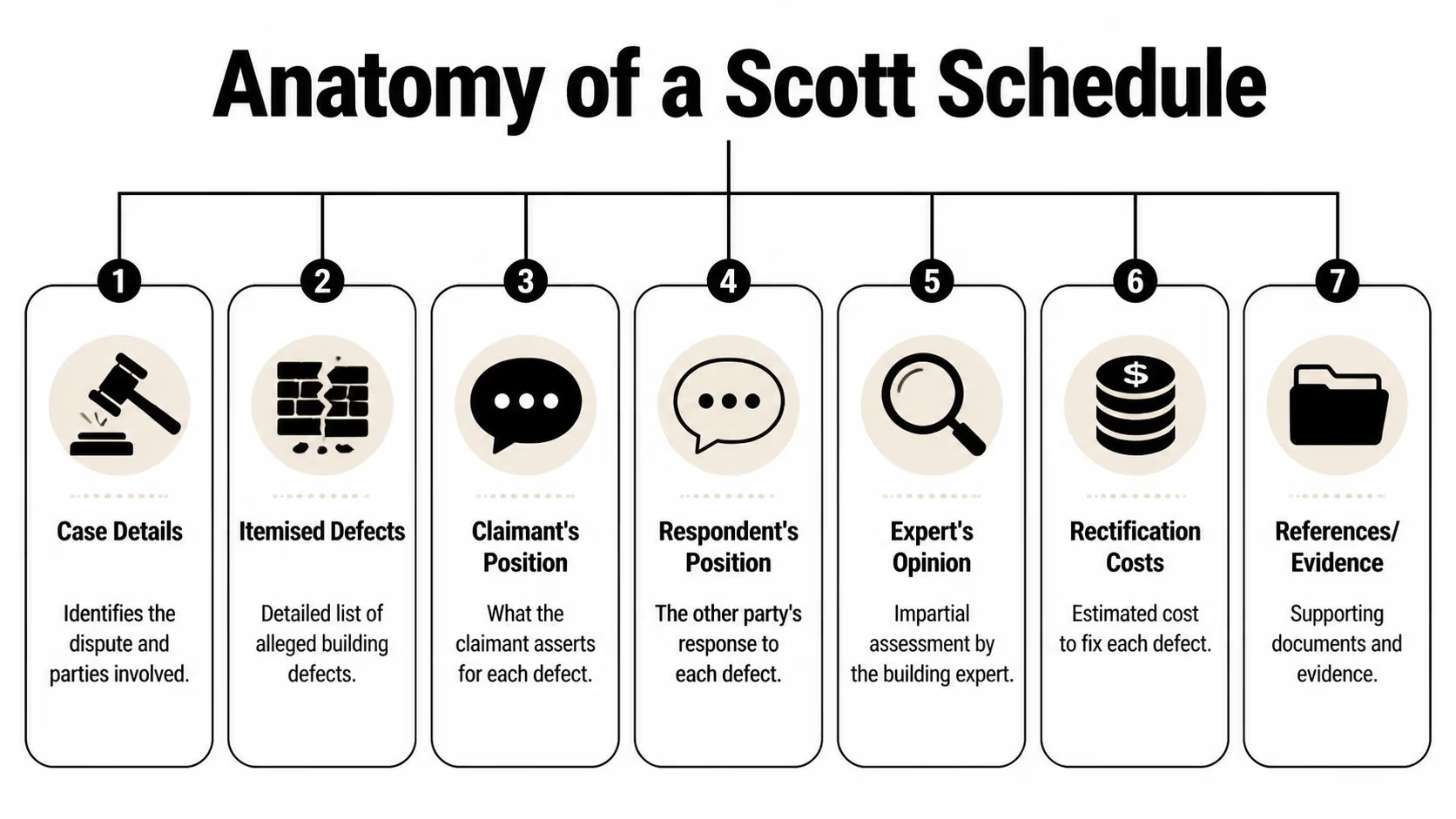
At its core, the schedule is a table. But each column serves a different job, and the quality of each column affects the usefulness of the whole document.
The columns that matter
A professionally prepared building expert scott schedule commonly includes the following components:
- Item number so each defect can be identified and tracked without confusion
- Defect description stating exactly what is alleged to be wrong, where it is, and why it is said to be defective
- Applicant’s proposed rectification setting out the scope of work the claimant says is required
- Applicant’s costing showing what that scope is said to cost
- Respondent’s response admitting, denying, or partly accepting the item and often disputing scope, cause, or price
- Expert’s finding giving the independent technical opinion on defect status, rectification pathway, and reasonable costing
- References or evidence tying the item back to photos, plans, reports, standards, or quotations
The important point is this. Every item should stand on its own. If one row is removed from the schedule and read separately, it should still make sense.
What a good item sounds like
Bad item:
“Balcony waterproofing poor. Needs fixing.”
Good item:
Failed balcony membrane to balcony serving main bedroom. Moisture ingress evident at adjacent internal wall junction. Proposed breach reference to waterproofing installation requirements. Rectification requires removal of finishes, substrate preparation, membrane replacement, reinstatement, and testing.
One is an opinion. The other is a defect allegation with a path to evidence.
For readers dealing with a live dispute, this is also where an NCAT Scott Schedule Form 2 example can help. Seeing the structure often makes it easier to brief your solicitor, expert, or builder properly.
Sample Scott Schedule Entry – Balcony Waterproofing Defect
| Item No. | Defect (Applicant’s Claim) | Proposed Rectification (Applicant) | Cost (Applicant) | Response (Respondent) | Expert’s Finding |
|---|---|---|---|---|---|
| 7 | Failed balcony waterproofing causing moisture ingress to adjoining internal area. Applicant alleges inadequate lap jointing and non-compliant membrane installation. | Remove existing membrane and finishes, prepare substrate, apply replacement waterproofing system, reinstate finishes, test completed works. | Costing should be broken into quantities, unit rates, and totals derived from licensed builder quotes reflecting the relevant market. For Sydney residential bathroom waterproofing rectification, Rawlinsons NSW data cited in the verified material notes typically $80-$150/m² as of 2024 for that category of work, but project scope must still be item-specific. | Respondent may deny defect, dispute causation, or argue partial repair only. | Independent finding should state whether the defect is established, what standard or code reference applies, and whether full or partial rectification is reasonable on the evidence. |
Why the detail level matters
The schedule becomes persuasive when the rows are tied back to real technical material. The verified NCAT guidance in the source material requires sequential numbering, linkage to the expert report, specific defect descriptions citing relevant breaches, and detailed rectification costings with quantities, unit rates, and totals.
That level of detail is what separates a hearing document from a complaint spreadsheet.
The strongest schedules are usually boring to read. That’s a good sign. They’re clear, methodical, and difficult to misunderstand.
The Building Expert’s Role in Preparing the Schedule
A Scott Schedule only has value if the underlying work is sound. The expert’s role starts well before the document is drafted, and most of that work happens on site, in the evidence review, and in the costing method.

In practical terms, the expert has to inspect, identify, measure, compare, and explain. The job isn’t to repeat what the client says. The job is to test it.
What the expert actually does
A proper preparation process usually includes:
- Site investigation to inspect the alleged defects, document locations, and gather photographs and notes
- Document review of plans, specifications, contract documents, variations, correspondence, and any earlier reports
- Standards cross-checking against the NCC and the relevant Australian Standards such as AS 3740 where waterproofing issues are involved
- Rectification scoping so the proposed works address the actual defect rather than a cosmetic patch
- Costing review using licensed builder quotes and market-relevant rates appropriate to the work and location
Technical experience is essential. Many disputes involve defects that look minor on the surface but have a larger causation issue underneath. A tile crack may be a tile issue, or it may point to movement, substrate failure, or water damage. A schedule that only describes the symptom is incomplete.
Why vague drafting fails
NCAT expects the schedule to connect each defect to a specific breach. According to the verified material, vague claims such as “poor workmanship” are often rejected, and 40-60% of items in a non-compliant schedule can be struck out, which can prolong proceedings by 4-8 weeks and escalate costs, as set out in this analysis of Scott Schedule mistakes in NCAT.
That’s the practical reason expert drafting matters. Precision is not academic. It affects whether the item survives.
If the defect description doesn’t tell the Tribunal what failed, where it failed, and what benchmark was missed, the item is exposed.
Independence matters more than advocacy
A useful expert is not a hired mouthpiece. Under NCAT procedure, the expert’s duty is to assist the Tribunal impartially. That means stating what can be supported, identifying limits in the evidence, and resisting the urge to overstate the claim.
For lawyers and clients who need to understand that obligation, the NCAT expert witness code of conduct guide is worth reading before the brief goes out.
One practical example from the verified material shows why this matters. A Class 2 defect requiring full demolition for a standard 10m² balcony membrane failure due to poor lap jointing can involve $15,000-$30,000 in full demolition rectification, while early concession via conclave may reduce the outcome to $5,000 for partial rectification where that position is technically justified. The expert’s role is to distinguish between those two outcomes based on evidence, not preference.
How to Instruct an Expert and Typical Timelines
Most delays start with an incomplete brief. The expert is asked to prepare a Scott Schedule, but key documents arrive in stages, the site isn’t ready for inspection, and nobody has clarified whether the schedule is for negotiation, a conclave, or a hearing timetable.
The cleaner the instruction, the smoother the process.
What to send at the start
When instructing an expert, provide the core material in one organised bundle if possible:
- The building contract and variations. These help identify the original scope.
- Plans, specifications, and engineering details. Without these, many allegations can’t be tested properly.
- A defect list or pleading. Even if it’s rough, it gives the expert a starting map.
- Photographs and correspondence. These often help with timing, notice, and defect development.
- Quotes or invoices already obtained. They won’t decide the issue, but they may help frame the costing review.
- Any existing expert material from the other side.
If a solicitor is instructing the expert, it also helps to identify the immediate purpose. Sometimes the task is an initial merit assessment. Sometimes it’s a formal schedule tied to a Tribunal order. Those are different jobs.
What affects the timeline
There is no single timeframe that suits every matter. A simple, narrow dispute can move much faster than a multi-trade claim involving waterproofing, structural movement, brickwork, joinery, and external finishes.
The timeline usually expands when:
- The site is regional or rural and travel needs to be coordinated
- The defects are spread across multiple areas and require careful sequencing on inspection
- There are competing reports that need technical response
- Costing must reflect the local market rather than a Sydney assumption
That regional point matters. The verified material notes that a major challenge in rural and regional NSW is the accessibility and cost of expert services, that complex Scott Schedules can take longer due to travel, and that parties should confirm whether costings reflect the local market rather than metropolitan Sydney, as discussed in this regional perspective on Scott Schedules.
Keep the paperwork usable
A dispute file doesn’t need to be fancy, but it does need to be organised. If you’re collating large volumes of correspondence, plans, forms, and evidence, some clients find general workflow tools helpful. For broader admin efficiency, especially in smaller businesses, this guide to no-code document solutions for SMBs can be useful for keeping records more consistent before they go to legal or expert review.
One practical instruction point
Ask early how the expert proposes to handle costing. In some matters, the issue isn’t whether there is a defect. It’s whether the claimed rectification scope is excessive, incomplete, or priced for the wrong market. That question affects the usefulness of the final schedule more than most clients realise.
Common Scott Schedule Mistakes to Avoid
Most weak Scott Schedules fail in predictable ways. The document looks busy, but the substance is thin. That creates risk for both applicants and respondents.

The mistakes that do the damage
- Emotional descriptions instead of technical ones. Words like “shocking”, “hopeless”, or “unacceptable” don’t prove a defect.
- No standards reference. If the item doesn’t identify the benchmark, the argument becomes opinion against opinion.
- Patch repair thinking. Some schedules propose a surface fix for a defect that needs full investigation and rebuild of the affected assembly.
- DIY costings. A rough number without proper scope and market support is easy to challenge.
- Copying defect lists into a schedule format. A defect list is not the same thing as a Scott Schedule.
The costing trap
One of the biggest practical problems is valuation. The verified material notes a critical gap around cost estimation accuracy and that there is often a significant variance between claimant and respondent costings. It also states that a professionally prepared Scott Schedule from a building expert can improve settlement outcomes by providing a credible third-party valuation, as discussed in this overview of Scott Schedule services.
That doesn’t mean every expert number will be accepted. It means the schedule is more useful when the costing method is transparent and defensible.
A high claim doesn’t make a case stronger. It can make it easier to attack if the scope and rates don’t hold up.
What tends to work better
A stronger approach is usually plain and restrained:
- Identify the defect precisely.
- Link it to the correct technical reference.
- Describe the rectification method in trade language.
- Support the costing with a logical breakdown.
- Leave advocacy to the submissions, not the defect row.
This is why major disputes rarely benefit from a do-it-yourself schedule. The risk isn’t just that it looks less polished. The risk is that key items are overstated, understated, or framed in a way that weakens the whole case.
Your Next Step Towards Resolving the Dispute
If your matter has reached the point where defects, scope, and cost are all being argued at once, the paperwork needs to do more than list complaints. It needs to organise the dispute into a format that can be analysed and resolved.
That’s what a building expert scott schedule does when it’s prepared properly. It converts competing narratives into itemised issues, tested against standards, evidence, and realistic rectification methods. That helps homeowners understand what they’re really claiming. It helps builders see what they’re responding to. It helps solicitors run a cleaner case.
The trade-off is simple. Preparing a proper schedule takes work. It involves inspection, technical review, and disciplined costing. But the alternative is usually worse. A vague, inflated, or poorly structured schedule tends to prolong the dispute and increase the stress around it.
For parties in Sydney, regional NSW, or rural areas, the practical question isn’t whether the dispute feels serious. It’s whether the document being relied on is strong enough to carry the case.
If you need a confidential discussion about a Scott Schedule, expert report, or dispute strategy, call 1800 293 746 or email admin@awesim.com.au.
If you need practical help with a building dispute, Awesim Building Consultants provides site investigations, Expert Witness Reports, and Scott Schedules for homeowners, builders, and solicitors across NSW.

Related Posts

Water Damage in Homes: How to Track Down the Source
Water damage in a home rarely announces itself at the source. A stain on the ceiling, a musty smell in
Read More »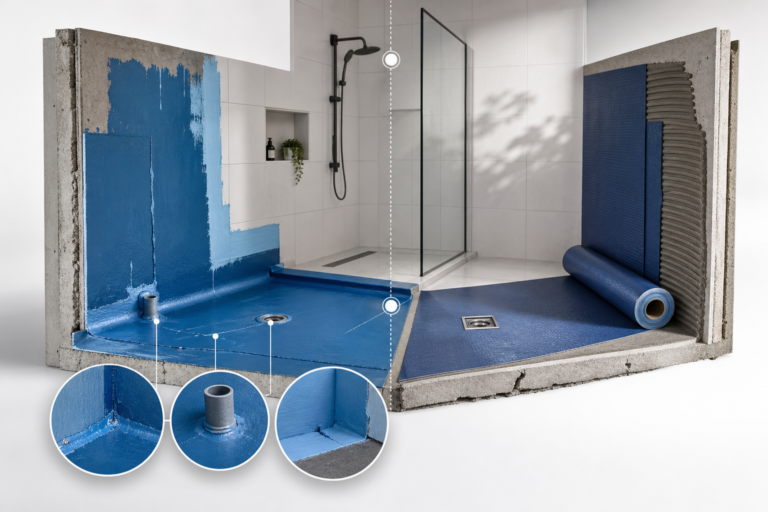
Waterproofing Membrane Types: Which Fails Most in NSW Bathrooms
Waterproofing failure is the single most common serious defect found in NSW apartments, and the type of membrane used, along
Read More »
Building Certifier NSW: Role, Limits, and When You Need More
A building certifier in NSW is a registered professional who issues construction certificates, conducts critical stage inspections, and grants occupation
Read More »