
Building Expert Witness: A Guide for NSW Disputes
You’ve moved in, unpacked the boxes, and then something starts to show itself. A crack over the window that keeps growing. Water staining below a balcony door. Tiles that sound hollow underfoot. The builder says it’s normal movement. The certifier says it’s outside their role. Your solicitor asks for evidence. That’s usually the point where people realise a building dispute isn’t won by frustration. It’s won by facts, method, and a report that can stand up in front of NCAT.
For homeowners, that moment is personal. For builders, it’s commercial. For lawyers, it’s procedural. In every case, the same question comes up. Who can properly inspect the work, identify what has failed, explain why it failed, and present that opinion in a way the Tribunal will accept? That’s where a building expert witness becomes central.
When Your Dream Home Becomes a Dispute
A lot of disputes start with something that looks small.
A bit of dampness at a skirting board. A shower recess that never quite dries out. A balcony crack that the owner was told to “keep an eye on”. Then the finishes come off, the substrate is exposed, and the problem turns out to be poor waterproofing, bad falls, missing flashings, movement, or plain bad workmanship.
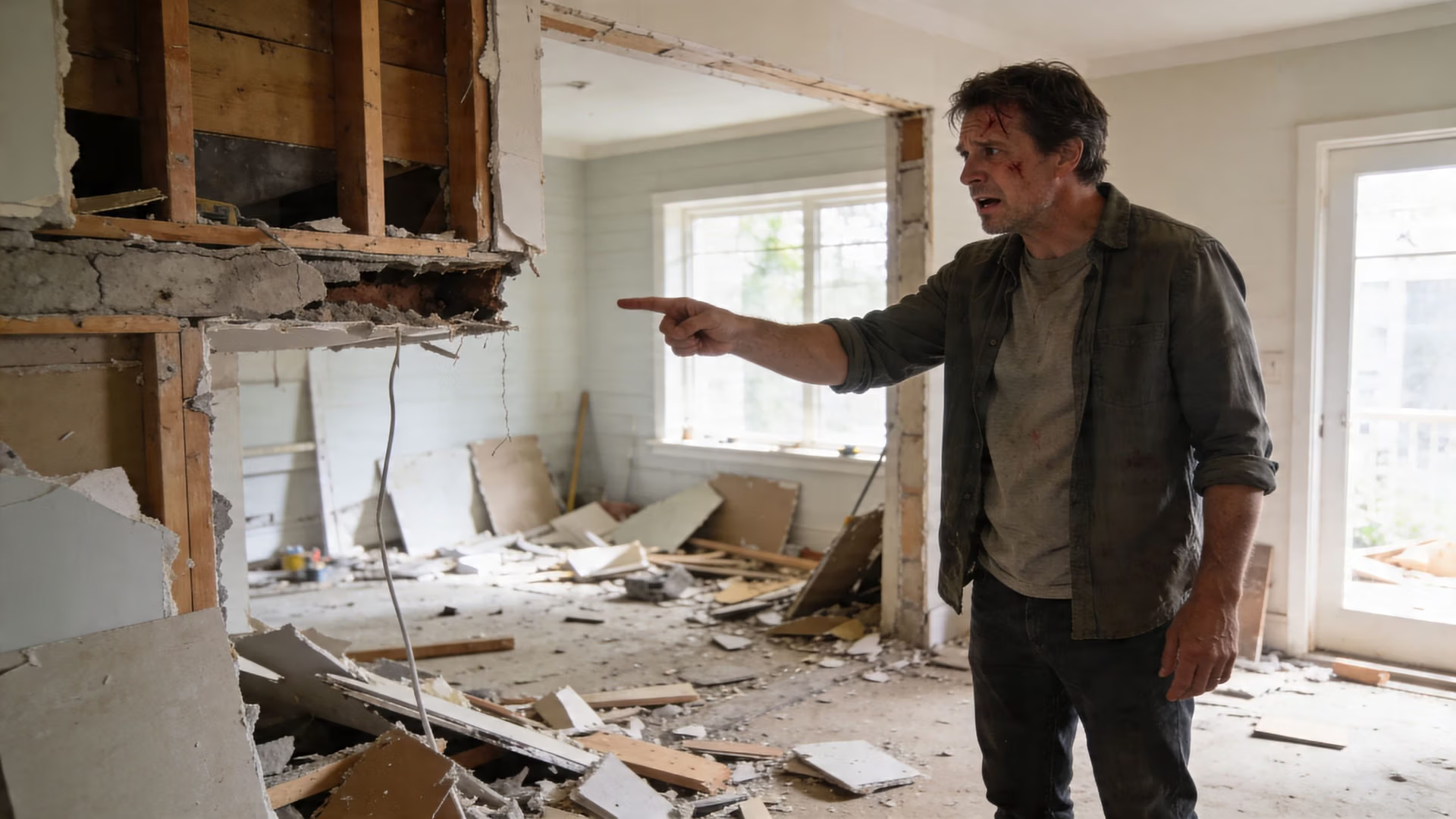
By the time help is sought, those involved are already under pressure. The owner wants repairs done. The builder wants clarity about what is being alleged. The lawyer wants a report that separates emotion from evidence. NCAT wants material it can work with.
What people get wrong early
The first mistake is assuming the defect will “speak for itself”. It won’t. A tribunal member doesn’t attend the site with you. They see documents, photos, schedules, test results, and competing explanations.
The second mistake is treating the dispute like a normal inspection job. A standard inspection can be useful, but a dispute needs more than a list of visible issues. It needs defect identification, causation, compliance analysis, scope of rectification, and a report written with litigation in mind.
Practical rule: If the matter may end up in NCAT, inspect it from day one as if someone will later test every opinion under cross-examination.
This isn’t a niche problem in New South Wales. The NSW Civil and Administrative Tribunal handles over 5,000 building-related applications annually, with disputed amounts in recent years exceeding $150 million, which is why clear, evidence-based expert reports matter so much in practice, according to NCAT building dispute reporting discussed here.
Why the right expert changes the direction of the case
A proper building expert witness brings order to a messy file. They don’t just say “this is defective”. They tie each issue to the work performed, the likely cause, the relevant standard, and the practical rectification pathway.
That matters because building disputes usually turn on a few hard questions:
- What is the defect and where is it located?
- What caused it. Design, workmanship, product failure, lack of maintenance, movement, or a mix?
- What standard applies to the work?
- What repair is reasonable and what is it likely to involve?
- Who carries responsibility for each item?
When those questions are answered properly, the dispute becomes clearer. Sometimes that leads to settlement. Sometimes it narrows the fight. Either way, it gives the owner, builder, and lawyer something solid to work with.
What Exactly Is a Building Expert Witness
A building expert witness is not just a person with building knowledge. In a dispute, the role is much narrower and much more disciplined than that.
The simplest way to explain it is this. The expert is an impartial translator between the building site and the Tribunal. They take technical facts, site observations, standards, and workmanship issues, and turn them into evidence the decision-maker can understand and rely on.
Duty to the Tribunal, not the client
This catches people out.
Yes, the homeowner, builder, insurer, or solicitor may engage the expert. But the expert’s opinion isn’t supposed to be advocacy dressed up as technical language. Their duty is to give an independent opinion based on their expertise, inspection findings, and the material they have reviewed.
That means a good expert will sometimes tell the person who engaged them something they don’t want to hear. If an item isn’t defective, it shouldn’t be pleaded as one. If the available evidence doesn’t prove causation, the report should say so. If maintenance or owner alteration contributed to the damage, that has to be addressed as well.
The most useful expert is often the one who narrows bad arguments early, before those arguments damage the whole case.
How this differs from a standard building inspector
People often confuse a pre-purchase inspector with a building expert witness. They’re different jobs.
A standard inspector usually works to identify visible issues and provide a practical snapshot of condition. A dispute expert works more like a forensic investigator. The scope is deeper. The notes are more detailed. The photos are selected for evidentiary use. The conclusions have to be explained, not just listed.
A building expert witness may need to:
- Review contracts and plans to see what was required
- Compare completed work against standards and approved details
- Assess causation rather than merely note symptoms
- Prepare for conferencing and hearing where opinions are challenged
- Write in a way that survives scrutiny from the other side
What impartiality looks like on site
On a real site, impartiality is practical, not theoretical.
It means measuring the floor, not guessing. Opening up suspect areas where necessary and authorised. Looking at drainage, waterproofing junctions, framing, movement joints, articulation, ventilation, and sequencing. It also means documenting what’s there, even when it cuts against the client’s preferred story.
That’s why experience matters. An expert who has been on the tools knows the difference between cosmetic complaint, tolerable variation, incomplete work, and actual defect. They know what can be fixed locally, what needs full replacement, and when an apparent finish issue is only the surface sign of a concealed failure.
The Core Services an Expert Witness Delivers
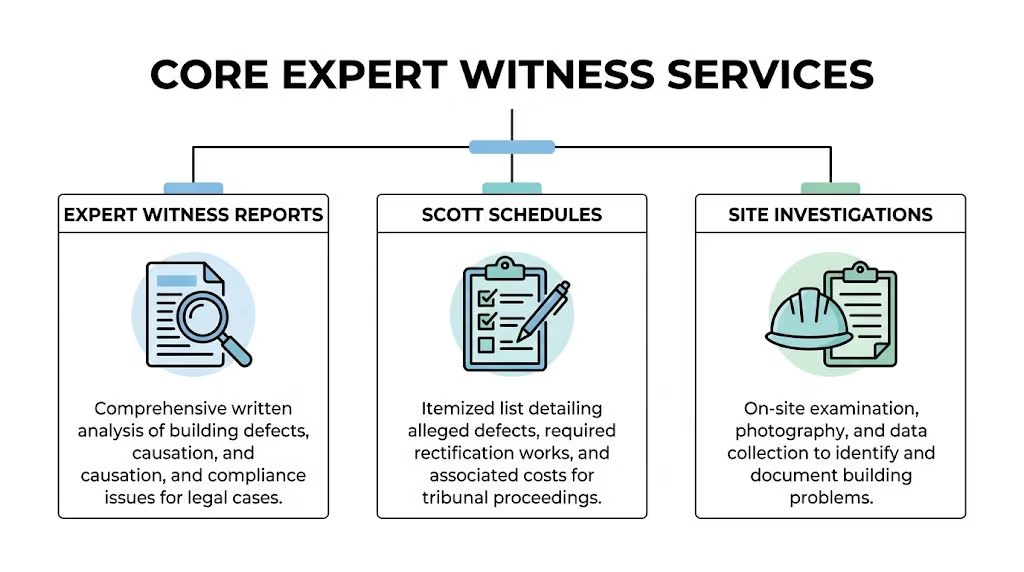
While “a report” is a common request, that word hides three separate pieces of work. In practice, a building expert witness usually delivers a combination of site investigations, an expert witness report, and a Scott Schedule.
Expert witness reports
This is the formal written opinion. It isn’t just a defect list.
A useful report identifies each issue, records the relevant observations, explains the likely cause, refers to the applicable standard or building requirement where appropriate, and sets out the recommended rectification approach. In a dispute, the report also needs a clear chain of reasoning. A tribunal member must be able to see how the expert got from raw site evidence to final opinion.
Good reports are plain, structured, and specific. They avoid dramatic language. They don’t wander outside the expert’s area. They attach photos, notes, and supporting material where that helps prove the point.
Scott Schedules
A Scott Schedule is the working ledger of the dispute.
It tabulates each alleged defect and sets out the parties’ competing positions in a format NCAT can use efficiently. In practice, the schedule either clarifies confusion or exacerbates it. If the schedule is vague, duplicated, inconsistent, or missing key references, the whole matter becomes harder to manage.
NCAT Procedural Direction 3 for 2025 mandates Scott Schedules in building disputes, and this tabulated format has been reported to enhance resolution rates by 40% because it gives the Tribunal a clearer comparison of each defect item and each party’s position, as noted in this discussion of Scott Schedules and NCAT procedure.
A workable Scott Schedule usually includes:
- Defect reference with a distinct item number
- Location so nobody argues about which area is being discussed
- Description of allegation in concrete terms
- Response position from the other side
- Expert opinion on defect, cause, and liability
- Rectification scope sufficient to understand the proposed work
For clients gathering records, it also helps to understand how documentary evidence supports a dispute. Contracts, variations, emails, progress photos, invoices, and inspection records often matter as much as what is seen on the day of inspection.
A short visual explanation is often easier to follow than a long description alone.
Site investigations
This is where the case is actually built.
A proper site investigation involves more than walking around with a clipboard. The expert observes, photographs, measures, compares details against plans and visible construction logic, and identifies where further investigation is needed. On some matters, that may involve invasive work authorised by the client or ordered through the process.
Awesim Building Consultants provides these services in NSW disputes, including site investigations, expert witness reports, and Scott Schedules prepared for NCAT-related matters. What matters most, regardless of provider, is whether the work is methodical and written for evidentiary use rather than general commentary.
The Expert Witness Engagement Process Step by Step
People are usually calmer once they know the sequence. A building expert witness engagement follows a pattern, even though every matter has its own wrinkles.
Step 1 takes place before the site visit
The first conversation is about scope, not opinions.
The expert needs to know what the dispute is about, what stage the matter is at, who the parties are, what documents exist, and what the client is asking them to do. If a solicitor is involved, this is usually where the Letter of Instruction becomes important. It should define the issues to be addressed and the documents to be considered.
If the brief is loose, the report usually ends up loose as well.
Step 2 is document review
Before a good expert forms views, they read. That may include the contract, plans, engineering details, waterproofing details, specifications, defect lists, variation records, photographs, prior reports, and relevant correspondence.
This phase often reveals the core of the dispute. Many matters that appear to be workmanship claims on first contact often involve a mismatch between design intent, site conditions, and what was built.
Step 3 is the inspection and evidence capture
The inspection is where assumptions are tested.
Effective expert reports rely on forensic methodology, and site surveys may include destructive probing and material testing to reconstruct root cause. That approach has been reported to increase testimony persuasiveness by 55% in NCAT proceedings, according to this forensic engineering discussion.
On site, the process may involve:
- Photographic recording of each alleged item and surrounding context
- Measurement and level checks where falls, alignment, or deflection are in issue
- Moisture or material investigation where water ingress or substrate failure is suspected
- Targeted opening-up where surface symptoms alone won’t identify cause
Don’t ask an expert for a final causation opinion before they’ve seen the site and reviewed the underlying documents. That shortcut causes more trouble than it saves.
Step 4 is drafting the report and schedule
Discipline matters. The report should separate observation from opinion and opinion from assumption. If a conclusion depends on limited access or incomplete records, that limitation should be stated plainly.
If the matter requires a Scott Schedule, the items must match the report. One of the most common problems in dispute work is inconsistency between the narrative report, the pleaded defects, and the schedule used by the Tribunal.
For readers wanting to see the sort of structure commonly used in practice, this expert witness report template for Australia is a useful reference point.
Step 5 may involve conclave, response, or hearing
After reports are exchanged, experts may be directed to confer and identify areas of agreement and disagreement. Sometimes that narrows the issues sharply. Sometimes it exposes where one side has overreached.
If the matter proceeds, the expert may then respond to questions, prepare an addendum, or give oral evidence.
Here’s a practical budgeting guide.
| Phase | Typical Timeline | Estimated Fee Range (ex. GST) |
|---|---|---|
| Initial review and scoping | Varies with document volume and urgency | Varies by expert, scope, and complexity |
| Site inspection | Depends on property size, access, and number of issues | Varies by expert, travel, and inspection extent |
| Report drafting | Depends on complexity, testing, and supporting documents | Varies by report length and forensic depth |
| Scott Schedule preparation | Depends on number of defect items and party responses | Varies by schedule complexity |
| Conclave and hearing attendance | Depends on Tribunal directions and matter progression | Varies by preparation time and attendance duration |
The Qualifications That Matter at a Tribunal
A tribunal doesn’t need the longest CV in the room. It needs a witness whose opinions are reliable, relevant, and grounded in real expertise.
That’s why there’s often a gap between impressive credentials on paper and useful evidence in a building dispute. Building failures are practical events. Water gets in through actual junctions. Cracks follow actual load paths. Finishes fail because somebody omitted, misapplied, rushed, or misunderstood something on site.
Why hands-on experience carries weight
A trade-qualified expert with decades on residential sites usually sees things differently from someone whose experience is mostly office-based. They understand build sequence, practical tolerances, substitution on site, and the common shortcuts that produce recurring defects.
In NSW court and tribunal settings, there is a reported preference for “battle-tested” witnesses. Analysis cited in this discussion of expert witness services and building code litigation says trade-qualified experts with 35+ years of field experience have a 15% higher success rate in defect causation arguments than those with purely academic backgrounds.
That doesn’t mean formal qualifications don’t matter. They do. The point is that practical expertise often decides whether the witness can explain not just that the work failed, but how it failed in the actual conditions of a site.
What solicitors and owners should look for
When assessing a building expert witness, focus on whether the expert can do all of the following:
- Diagnose cause, not just symptom. A stained ceiling isn’t the defect. It’s the result.
- Explain workmanship logically. The opinion must make practical construction sense.
- Write clearly under procedural rules. Good knowledge is wasted if the report is unusable.
- Stay independent. Tribunals quickly spot hired-gun language.
For NSW matters, it also helps to understand the obligations experts work under. This overview of the expert witness code of conduct schedule 7 is relevant because credibility depends as much on conduct and independence as on technical skill.
A strong expert doesn’t win by sounding certain about everything. They win by being careful, qualified where necessary, and impossible to shake on the points that matter.
How to Choose and Instruct Your Building Expert
A poor expert can damage a good case. A well-briefed expert can narrow issues, expose weak assumptions, and help everyone move faster toward resolution.
The key is selection first, instruction second.
Questions worth asking before you engage anyone
Don’t ask only whether the expert can inspect a property. Ask whether they understand the dispute environment in NSW.
General expert witness advice often misses NSW-specific requirements. Material cited in this overview of building code expert witness issues says 40% of building defect cases involve reports at risk of dismissal for failing to comply with local standards such as NCAT Procedural Direction 3 and AS 4349.1 inspection protocols.
Ask direct questions like these:
- Have you prepared reports specifically for NCAT building disputes in NSW?
- Do you prepare Scott Schedules, or only narrative reports?
- How do you identify the cause of a defect when access is limited?
- What documents do you need before inspection?
- How do you deal with items that aren’t defects?
- Are you willing to change your view if the evidence points elsewhere?
The last question matters more than is generally understood. Independence isn’t a marketing phrase. It’s the feature that makes the evidence useful.
Why the Letter of Instruction matters
A proper instruction letter stops drift.
If a solicitor is involved, the letter should identify the parties, the property, the issues for opinion, the documents enclosed, any limits on access, and any specific questions the expert is asked to address. If no solicitor is involved, the client should still set out the scope carefully in writing.
A poor brief creates predictable problems:
- Issues are too broad and the report becomes unfocused
- Key documents are omitted and the opinion rests on incomplete material
- The expert is asked to argue the case instead of opining on technical matters
- Critical site access isn’t arranged and important areas remain uninspected
What works better in practice
The best instructions are narrow, factual, and organised. They don’t tell the expert what conclusion to reach. They provide the file, identify the dispute issues, and let the expert do the technical work.
For homeowners, that often means resisting the urge to send fifty emotional emails and instead compiling a clear bundle of plans, photos, defect lists, quotes, and correspondence. For lawyers, it means asking questions the Tribunal needs answered, not every question the client happens to have.
Your Next Step to Resolving the Dispute
Building disputes feel overwhelming because they mix technical issues, money, time pressure, and legal process. The way through isn’t more noise. It’s better evidence.
A sound building expert witness brings three things to the table. First, practical diagnosis based on what’s happening on site. Second, disciplined reporting that fits the Tribunal process. Third, independence. Without that last part, even a technically correct opinion can lose weight.
If you’re still early in the process, it also helps to think broadly about choosing a building professional with the right fit for the job. The same principle applies in disputes. Local knowledge, relevant experience, and clear communication matter more than polished sales talk.
If you’re dealing with defects, incomplete work, water ingress, cracking, or a disputed scope of rectification, get the matter assessed properly before positions harden further.
Awesim Building Consultants provides independent building inspections, Expert Witness Reports, Scott Schedules, and litigation support across NSW, backed by 35+ years in building and construction and 15+ years providing litigation support to homeowners, builders, and lawyers. If you need help with an NCAT matter or a building defect dispute, contact Awesim Building Consultants at admin@awesim.com.au or call 1800 293 746.
Related Posts

NCAT Consumer Division: Steps From Lodgement to Hearing
Most people who end up at the NCAT Consumer and Commercial Division do not arrive there by choice. They arrive
Read More »
Statutory Warranty NSW: What Builders Must Fix and for How Long
Statutory warranty NSW obligations exist precisely for the moment a builder stops returning calls. A crack appears in the render.
Read More »
Home Building Act NSW: Key Clauses Every Owner Should Know
The Home Building Act 1989 (NSW) sets the rules for residential building work in New South Wales. It requires licensed
Read More »