
Expert Witness Building Construction Guide for NSW
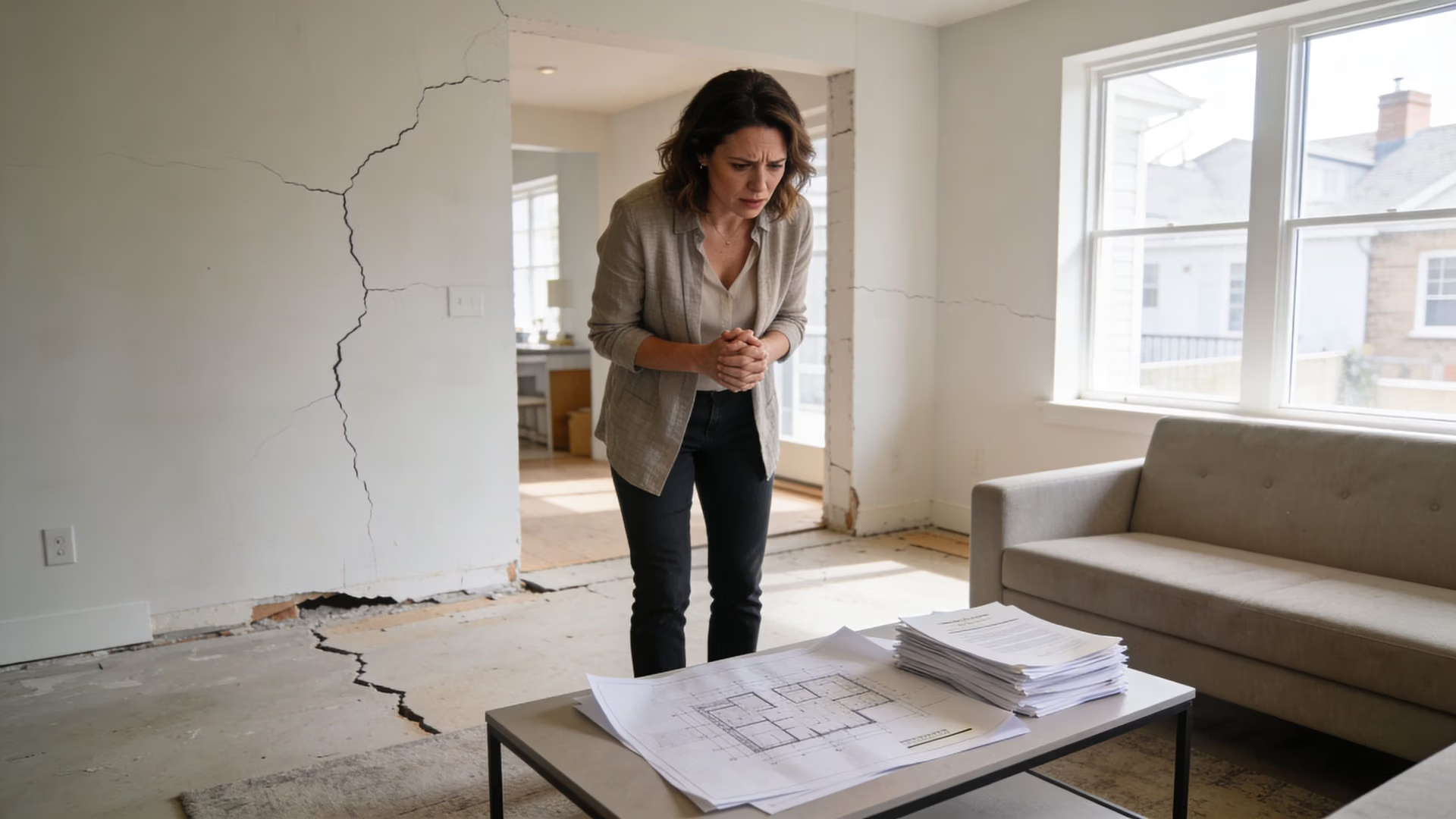
Defects in a new home or renovation rarely start as a legal problem. They start as a practical one. A crack that keeps widening. Water staining that returns after each storm. A balcony that sounds hollow underfoot. A floor that isn’t level when the plans said it should be. Then the emails start, positions harden, and what should’ve been a straightforward rectification turns into a dispute.
By the time individuals look for help, they’re already carrying folders full of photos, quotes, text messages, invoices, and conflicting opinions. What they usually don’t have is a clear, independent explanation of what failed, why it failed, what standard applies, and what it will reasonably cost to put right. That’s where expert witness building construction work becomes decisive.
Navigating Your Building Dispute Starts Here
When communication breaks down, people often make the same mistake. They keep arguing the facts without first establishing them properly. In building disputes, that usually gets you nowhere. The tribunal doesn’t decide cases on frustration, volume, or who wrote the angriest email. It decides them on evidence.
In NSW, this isn’t a niche issue. Over 1,500 home building disputes are registered with NCAT annually, about 65% involve defective workmanship or non-compliance, and expert witness engagements for NCAT proceedings have increased by 30% since 2015 following amendments to the Home Building Act 1989 according to construction dispute data referenced here. Those figures tell you something important. Building disputes are common, technical, and increasingly evidence-driven.
What changes once an expert is involved
A proper expert witness doesn’t just “have a look” and offer a view. The job is to identify the defect, trace the likely cause, measure the work against the applicable standards, and present conclusions in a form NCAT can use. That changes the conversation from opinion to proof.
For homeowners, that often means finally understanding whether the issue is cosmetic, structural, moisture-related, incomplete work, or straightforward non-compliance.
For builders, it can be just as important. A sound expert assessment can separate genuine defects from maintenance issues, owner-caused damage, scope variations, or allegations that don’t stand up once the plans, contract, and built work are reviewed together.
Practical rule: The earlier the defects are documented properly, the better. Sites change, materials are removed, repairs get started, and key evidence disappears.
Why NSW procedure matters
NSW disputes have their own rhythm. NCAT expects organised material, clear defect identification, and reports that help the tribunal rather than confuse it. That’s why generic online advice from overseas doesn’t help much. If you’re trying to understand the legal side of holding builders accountable for construction defects, the useful question isn’t just whether someone is responsible. It’s whether the evidence has been assembled in a way the tribunal can act on.
With 35+ years in building and construction and 15+ years providing litigation support, the practical value isn’t just knowledge of standards. It’s knowing what defects look like in the field, what records matter, what testing is worth doing, and what weak reports tend to miss. That’s the difference between adding paperwork and adding useful evidence.
What a Construction Expert Witness Actually Does
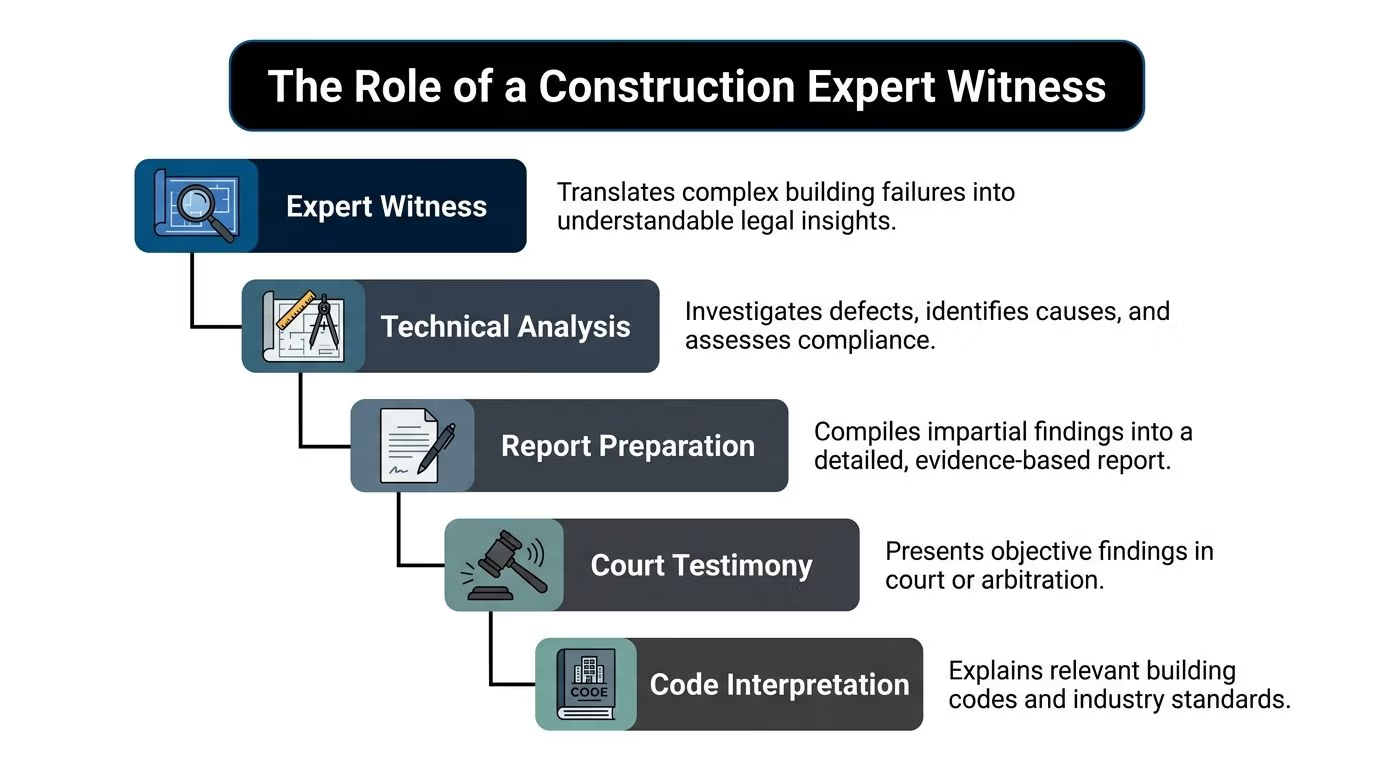
A construction expert witness is best understood as a translator for the tribunal. Building failures are often technical. NCAT members still need to decide them in plain terms. The expert’s role is to convert site conditions, plans, specifications, code references, testing results, and workmanship issues into a clear opinion the tribunal can follow.
The expert’s duty is not to the client
This point is often overlooked. Even when one party pays the fee, the expert’s overriding duty is to the tribunal. If an expert acts like an advocate, the report usually weakens instead of strengthens the case.
That’s why a credible expert witness building construction report states assumptions, identifies documents reviewed, explains methodology, and separates observed facts from professional opinion. It doesn’t overreach. It doesn’t guess. It doesn’t promise an outcome.
An expert who tells you exactly how the case will end before inspecting the site is selling confidence, not evidence.
The work usually involves five distinct tasks
Not every matter requires the same depth, but most expert instructions involve some combination of the following:
Site investigation and defect identification
The expert inspects the property, records conditions, photographs defects, checks dimensions, reviews sequencing issues, and notes signs of movement, moisture, incomplete work, or poor installation.Compliance analysis
The built work is assessed against the contract documents, National Construction Code, approved plans, manufacturer requirements, and relevant Australian Standards. If electrical or service works are in issue, supporting documents such as a Certificate of Compliance can also become important parts of the evidentiary picture.Causation opinion
A defect isn’t just listed. The expert should explain the likely cause. Poor substrate preparation, inadequate falls, missing articulation, wrong material selection, or incorrect footing design are very different problems and need different remedies.Rectification scope and costing
The report should identify what work is required to rectify the defect properly. In some matters that includes staged demolition, further investigation, or specialist trades.Tribunal support
The expert may prepare a report, assist with a Scott Schedule, participate in a joint conference with the other side’s expert, and give oral evidence if required.
Why format matters as much as opinion
In NSW, procedure influences outcome. Since NCAT was established in 2014, expert witness testimony has influenced outcomes in more than 75% of appealed building construction cases, and standardised Scott Schedule formats have reduced hearing times by an average of 25%. Those figures were provided in the verified material for this article. The practical takeaway is simple. A strong opinion buried in a disorganised report can lose force fast.
Good expert evidence is methodical. It helps the tribunal move item by item, defect by defect, issue by issue. That discipline is often what separates a persuasive report from a noisy one.
Understanding the Expert Report and Scott Schedule
When clients ask what they’re paying for, the answer usually comes down to two core documents. The Expert Witness Report and the Scott Schedule. They serve different purposes, and both matter.
What sits inside an expert report
A proper expert report should read like a technical investigation, not a complaint letter. It needs structure. It needs restraint. It also needs enough detail that another professional can understand how the conclusion was reached.
A typical report will include:
Instructions received
Who engaged the expert, what issues were referred, and what questions the expert was asked to answer.Documents reviewed
Contracts, plans, specifications, approvals, engineering details, photographs, correspondence, quotations, variation documents, and previous reports if they exist.Inspection methodology
What areas were inspected, whether invasive work was done, what limitations applied, and whether any access restrictions affected the opinion.Findings and defect analysis
This is the heart of the report. Each alleged defect is described, located, photographed where appropriate, and assessed against the relevant benchmark.Rectification recommendations
Not vague comments like “repair as necessary”, but practical scope. Remove, expose, replace, retest, re-waterproof, regrade, underpin, relay, or rebuild, depending on the issue.Opinion and conclusion
A concise summary that ties observation to standard, cause, and remediation.
Why waterproofing reports need precision
Waterproofing disputes are common and they’re often mishandled because people focus on symptoms instead of system failure. Waterproofing failures account for 42% of residential claims in NSW, and experts use AS 4654.2-2012 to assess these defects. Rectification for a compliant torch-on bitumen system can average around AUD 250/m² according to this construction expert witness reference on waterproofing failures.
That means a report shouldn’t just say “balcony leaks”. It should identify whether the membrane failed, whether falls were inadequate, whether upturns were missing, whether surface preparation was poor, or whether adjoining construction created the ingress path.
If the report doesn’t connect the water entry point, the failed element, and the required rectification method, the other side will attack causation.
What a Scott Schedule does better than a narrative report
A Scott Schedule is a working tribunal document. It forces both sides to deal with each defect in a disciplined format. NCAT uses it because it makes disputes more manageable. Instead of broad arguments, the parties address each item directly.
For readers who want a deeper NSW-specific breakdown, this guide on what is a Scott Schedule in a building dispute NSW guide explains the document in more detail.
Here is a simplified example of the format.
| Item No. | Defect Alleged by Homeowner | Homeowner’s Estimated Rectification Cost | Builder’s Response | Builder’s Estimated Rectification Cost |
|---|---|---|---|---|
| 1 | Balcony membrane failure causing water ingress to ceiling below | Amount to be assessed by expert scope and pricing | Denies membrane failure, says issue caused by door threshold detailing | Amount disputed |
| 2 | Cracking to masonry at ground floor wall | Amount to be assessed after further footing review | Admits cracking but disputes cause and extent of rectification | Amount disputed |
| 3 | Inadequate falls to shower floor causing ponding | Amount to be assessed by strip-out and rebuild scope | Accepts minor ponding, proposes local repair only | Amount disputed |
The Scott Schedule isn’t impressive because it’s fancy. It’s effective because it stops everyone hiding inside generalities.
How to Engage an Expert Witness Step-By-Step
A building dispute usually becomes harder, and more expensive, when the wrong expert is brought in too late. I see that pattern often in NSW matters. By the time the homeowner or builder asks for proper advice, repairs have started, records are missing, and the argument has drifted away from the actual defect issues that NCAT will want addressed.
Handled properly, the engagement process is straightforward. The point is to get clear evidence early, define the dispute properly, and avoid paying for opinions that will not assist the tribunal.

Step one is document control
Start with the records before anyone books an inspection. The usual documents include the contract, approved plans, engineering, specifications, variations, progress photos, certificates, invoices, emails, defect lists, and any earlier scope or quote for rectification.
If a solicitor is already involved, the expert should receive a proper letter of instruction. That letter should identify the property, the parties, the disputed work, and the questions the expert must answer. Clear instructions usually lead to a useful report. Poor instructions usually produce a broad opinion that costs money and helps no one.
This early stage also has a preventive value that often gets missed. A careful document review can show whether the issue is really a defect claim, a scope gap, a design problem, or a contract administration failure before positions harden into formal proceedings.
Step two is the site inspection
The inspection tests the paperwork against the built work. Areas in dispute should be accessible. Defects should be left exposed where possible. Patch repairs, repainting, or partial demolition before inspection can destroy evidence and create unnecessary arguments about what was there originally.
Some matters are resolved quickly at inspection. Others are not. Cracking, moisture ingress, slab movement, structural deflection, and waterproofing failures often need further investigation before any responsible expert gives an opinion on cause or rectification. That may involve limited invasive inspection, moisture testing, levels, or referral to an engineer or geotechnical consultant where the issue falls outside the building consultant’s expertise.
That is a practical trade-off. More investigation costs more upfront, but guessing is usually far more expensive once the matter reaches NCAT.
Step three is narrowing the core issues
Every complaint should not go into the report. Some items are defects. Some are incomplete works. Some are maintenance issues. Some are disagreements about finish, tolerance, or what the contract required. Sorting that out early keeps the report focused and makes the dispute easier to run.
Awesim Building Consultants is one provider in this area and prepares site investigations, expert witness reports, and Scott Schedules for NSW building disputes. Whatever firm is engaged, the scope needs to match the actual issues in dispute and the likely NCAT pathway, not just the client’s frustration with the project.
This is also where an experienced expert can save a client from a weak case. If a point is unlikely to survive scrutiny, it is better to say so early than bury it inside a long list of minor complaints that distract from the stronger items.
A short explainer on the process can help if you’re visualising how these matters develop in practice.
Step four is report drafting and expert conferencing
Once the inspection and document review are complete, the expert prepares the report. In NCAT matters, that report needs to do more than describe what looks wrong. It needs to identify the relevant work, explain the basis of the opinion, separate observed facts from assumptions, and stay within the expert’s actual area of expertise.
If the other side also has an expert, the tribunal may order a joint conference, often called a conclave. The purpose is practical. The experts identify the points of agreement, isolate the disputes that remain, and explain why they differ. A well-prepared report helps at that stage. An argumentative report usually falls apart.
The best engagements are disciplined from the start. Good records, a careful inspection, a tightly defined scope, and an independent report do more than react to a dispute. In many NSW matters, they also help parties resolve the problem before the cost and delay of a full hearing sets in.
Choosing a Credible Building Construction Expert
A builder’s licence alone doesn’t make someone a credible expert witness. It proves a baseline. It doesn’t prove they can investigate causation, write a compliant report, survive cross-examination, or stay independent under pressure.
What to look for first
The strongest experts usually combine two kinds of experience. Deep site experience and actual litigation support work. Those aren’t the same thing.
A person can have years on the tools and still write unusable reports. Another may know legal language but miss obvious construction sequencing issues because they haven’t spent enough time on live sites. You want both.
Look for someone who can do the following without bluffing:
Read the built work against the documents
Plans, details, specifications, variations, and the actual site condition need to be reconciled carefully.Explain standards in plain English
A tribunal needs clarity, not jargon. If the expert can’t explain a defect plainly, the report will struggle.Stay inside their lane
Good experts know where their expertise ends. They don’t give engineering opinions if they aren’t qualified to do so.
Questions worth asking before you engage
Interview the expert the way you’d interview any key consultant. Direct questions usually tell you a lot.
How much of your work involves NCAT or building dispute litigation support?
You’re checking whether they understand tribunal procedure, not just defect spotting.Have you prepared Scott Schedules and joint expert material before?
Many haven’t. That gap shows up later.What documents do you need before inspecting?
If they say they can work it all out on site alone, be cautious.How do you deal with issues that don’t support my position?
The right answer is that they still report them.Can you distinguish defect rectification from betterment or upgrade work?
This is a common battleground in costing disputes.
Selection test: If an expert promises to “win the case”, move on. Their job is to assist the tribunal with independent evidence.
Red flags that usually cause trouble
Some warning signs are obvious once you know them:
Advocacy posing as expertise
Reports loaded with emotive language usually lose credibility quickly.No methodology
If the report doesn’t say what was inspected, what was reviewed, and what limitations applied, expect problems.Overconfidence on specialised issues
Structural movement, moisture intrusion, and service coordination often need careful boundaries between trades and disciplines.Poor communication
If the expert is hard to understand in a first meeting, that won’t improve in a hearing.
The right expert doesn’t just know buildings. They know how to present building evidence so the decision-maker can use it.
Understanding Costs and Timelines
Expert witness fees vary because disputes vary. A small bathroom waterproofing claim with clear access, decent records, and one inspection is a different exercise from a multi-area residential matter involving movement, sequencing questions, missing documents, and competing causation arguments.
What usually drives cost
The biggest variables are the number of alleged defects, the complexity of the issues, the volume of documents, and whether further testing or follow-up inspections are needed. Destructive investigation, specialist input, or extensive Scott Schedule work can expand the brief quickly.
A second factor is report purpose. A concise preliminary opinion for settlement discussions takes less work than a full tribunal-ready report supported by annexures, detailed itemisation, and conference preparation.
What affects timing
Turnaround depends on site access, document quality, inspection scope, and whether the expert is waiting on test results or additional material. Delays often come from missing plans, late instructions from solicitors, incomplete photo records, or a scope that keeps changing after the inspection.
If you’re trying to understand fee drivers in more detail, this page on the cost of a building expert witness report is a useful starting point.
Good reports take time because they require review, correlation, drafting, and checking. Fast and careless usually becomes slow and expensive later.
If you need a customized proposal for your matter, the practical next step is a confidential discussion with the documents in front of you. You can email admin@awesim.com.au or call 1800 293 746 to discuss scope, likely timing, and what material should be assembled before the instruction starts.
Expert Witness Building Construction FAQs
Can my own builder act as the expert witness
Usually, no. A builder already involved in the project, repairs, or dispute won’t usually be seen as independent. They may still be a factual witness about what they observed or did, but that’s different from acting as an expert.
What happens if both experts disagree
That’s common. The disagreement should be narrowed through the reports, the Scott Schedule, and often a joint expert conference. The tribunal then considers the reasoning, not just the conclusion. An opinion with clear methodology usually carries more weight than a bare assertion.
Does a strong expert report guarantee success at NCAT
No. It improves the quality of your evidence. It doesn’t decide the case by itself. NCAT still considers the contract, witness evidence, correspondence, procedural compliance, and the conduct of the parties.
Should I engage an expert before filing or after the dispute escalates
Early is usually better. The condition of the work is fresher, records are easier to line up, and there’s a better chance of identifying the core issues before positions harden. Early expert involvement can also help parties resolve disputes before they become larger and more expensive.
Can an expert help prevent disputes, not just respond to them
Yes. That role is underused. Independent review during construction, better defect documentation, and clear records of workmanship and compliance can make later disputes easier to avoid or easier to defend. Prevention work isn’t as dramatic as litigation support, but it often saves more trouble.
What should I have ready before the first call
Bring the contract, plans, key photos, list of defects, any previous reports, and the main correspondence. If you have a chronology of events, even better. Clear records shorten the time spent untangling the basics.
If you need practical, NSW-specific guidance on an expert witness building construction matter, contact Awesim Building Consultants. Send your documents to admin@awesim.com.au or call 1800 293 746 for a confidential discussion about inspections, expert reports, and Scott Schedules for NCAT proceedings.

Related Posts

NCAT Consumer Division: Steps From Lodgement to Hearing
Most people who end up at the NCAT Consumer and Commercial Division do not arrive there by choice. They arrive
Read More »
Statutory Warranty NSW: What Builders Must Fix and for How Long
Statutory warranty NSW obligations exist precisely for the moment a builder stops returning calls. A crack appears in the render.
Read More »
Home Building Act NSW: Key Clauses Every Owner Should Know
The Home Building Act 1989 (NSW) sets the rules for residential building work in New South Wales. It requires licensed
Read More »