
Building Inspector NSW: When You Need More Than a Report

- What a Standard Building Inspector Does
- When the Dispute Is Already Underway
- The Documents That Matter in NSW Construction Disputes
- Why the Firm You Choose Matters
- What to Ask Before Engaging a Building Inspector for a Dispute
- The Cost Question
- Strata and Multi-Unit Disputes
- Regional NSW
- Getting Started
- Frequently Asked Questions
A building inspector in NSW should be selected for the job you need: a property condition check, a defect investigation or expert evidence for a dispute. Confirm the inspection scope, relevant experience and reporting requirements before engagement. This guide explains when an expert witness report may be appropriate.
This article explains the difference. It will help you understand when a pre-purchase inspection firm is the right call, and when you need a building consultancy that prepares dispute-ready documentation for NCAT, the District Court, or the Supreme Court.
What a Standard Building Inspector Does
A pre-purchase building inspector visits a property, checks for visible defects, and produces a condition report — typically formatted around Australian Standard AS 4349.1. That report is useful for buyers negotiating a price or deciding whether to proceed with a purchase.
It is not designed for litigation. It does not follow the expert witness code of conduct. It does not assign liability, quantify rectification costs in a format a tribunal can act on, or hold up under cross-examination. If you take that report to NCAT and the other party has legal representation, its limitations will become apparent quickly.
This is not a criticism of pre-purchase inspectors. They are doing exactly what they were engaged to do. The problem arises when a homeowner or solicitor assumes the same document type serves both purposes.
When the Dispute Is Already Underway
Once a defect claim becomes a formal dispute, the documentation requirements change entirely. NSW tribunals and courts expect expert evidence to meet the standard set out in Schedule 7 of the Uniform Civil Procedure Rules. That standard requires the expert to acknowledge their overriding duty to the tribunal — not to the party who engaged them — and to set out the factual basis for every opinion.
A report that does not comply with Schedule 7 can be rejected outright, or have its weight reduced significantly. That is a serious problem when the report is the core of your case.
The situations that typically require this level of documentation include:
- A homeowner who has identified structural defects, waterproofing failures, or incomplete work after the builder has left the site
- A solicitor who needs an independent expert opinion before filing at NCAT or in the District Court
- A strata manager dealing with common-property defects where the owners corporation needs evidence to support a claim
- A builder who disputes a homeowner's defect list and needs an independent assessment of what is actually defective and what is not
- Any party where the dispute has escalated beyond informal negotiation and a tribunal date is approaching
In each of these situations, the document you need is an Expert Witness Report — not a condition report.
The Documents That Matter in NSW Construction Disputes
Expert Witness Reports
An Expert Witness Report is prepared by a qualified building consultant who can be cross-examined on its contents. It sets out observed defects, the applicable standards those defects breach, the rectification method required, and the cost to remediate. Every opinion is supported by evidence gathered during an on-site inspection.
The report must comply with Schedule 7 of the UCPR. The expert's qualifications, licence, and declaration of independence are part of the document. When Glen Sim at Awesim Building Consultants signs a report, his name and licence are on it, and he is accountable for every opinion it contains.
Scott Schedules
A Scott Schedule is a structured document used in NSW tribunals and courts to present defect claims in a format both parties and the decision-maker can work through systematically. Each defect is listed in a row, with columns for the claimant's description, the respondent's response, and the expert's opinion.
They are particularly common in NCAT proceedings, where they turn what can otherwise be a sprawling defect list into something a tribunal member can adjudicate efficiently. Preparing one well requires understanding both the legal format and the construction detail behind each item.
Quantum Meruit Reports
A Quantum Meruit report is used when a builder or contractor is claiming payment for work done in the absence of, or outside the scope of, a formal contract. It establishes the reasonable value of the work performed. This is a specialist document that relatively few building consultancies prepare, and it requires both construction knowledge and a clear understanding of how quantum claims are assessed in NSW courts.
Forensic Waterproofing Inspection Reports
Waterproofing failures are among the most common defects in NSW construction disputes. A forensic waterproofing inspection goes well beyond noting that water is getting in. It identifies where the membrane has failed, why it failed, whether the installation met the relevant Australian Standards, and what remediation is required. That level of analysis is what separates a forensic report from a general defect observation.
Why the Firm You Choose Matters
Not every building consultancy advertising expert witness services in NSW has the same capability or the same accountability model.
Some firms use multiple consultants, and it is not always clear whose name and licence will appear on your report until after you have engaged them. Others have built their business around pre-purchase inspections and offer expert witness work as a secondary service — which means their report formats and internal processes may not be optimised for tribunal use.
Awesim Building Consultants has been preparing dispute documentation for NSW courts and tribunals since 1996. Every report is prepared by or under principal consultant Glen Sim, whose name and licence appear on every document. His prior expert witness case references are published at awesim.com.au/glen-sim-expert-witness-case-references — an unusual level of transparency in this market.
The firm operates from three offices covering Sydney, Tamworth, and Tweed Heads, and serves all of NSW. Reports are prepared for NCAT, District Court, and Supreme Court proceedings.
What to Ask Before Engaging a Building Inspector for a Dispute
If you are comparing firms, these questions will help you identify whether a building inspector is genuinely set up for dispute work or primarily focused on pre-purchase inspections.
Does the report comply with Schedule 7 of the UCPR? If the consultant cannot answer this directly, the report is probably not formatted for tribunal use.
Whose name and licence will appear on the report? You want a named expert who can be cross-examined and who is accountable for every opinion in the document.
Has the consultant given expert evidence in NCAT, the District Court, or the Supreme Court? Prior case references are a reasonable thing to ask for.
Can the firm prepare a Scott Schedule if the matter requires one? Not all building consultancies understand this format or know how to structure one correctly.
Does the firm handle Quantum Meruit reports if your dispute involves a payment claim? This is a specialist service and not widely available.
What is the geographic coverage? If your property is in regional NSW, you want a firm with genuine regional presence — not one that treats the travel as an extra complication.
The Cost Question
Pre-purchase building inspection fees are generally modest. Dispute documentation is a different category of work entirely.
The market range cited in Awesim's April 2026 blog post is $2,000 to $10,000 AUD for expert reports, with approximately $4,500 AUD as a typical figure. That range reflects variation in property size, defect complexity, and the number of inspection visits required. Awesim does not publish fixed fees; project-based quotes are provided after an initial consultation.
It is worth weighing that cost against the alternative. A report that is rejected or significantly discounted by a tribunal because it does not meet the required standard can effectively restart the evidentiary phase of your case.
Strata and Multi-Unit Disputes
Strata disputes introduce additional complexity. Common-property defects may affect multiple lots, the owners corporation may be the claimant rather than an individual owner, and the defect list can be extensive. A Scott Schedule becomes particularly useful in this context — it allows a large number of defects to be presented in a format the tribunal can work through without losing track of where each item stands.
Awesim serves strata managers and owners corporations dealing with common-property defect disputes across NSW. The same Schedule 7 standards apply, and the same accountability model holds: Glen Sim's name and licence are on the report.
Regional NSW
Sydney-based firms often treat regional work as out-of-scope or add significant travel costs. Awesim's offices in Tamworth and Tweed Heads reflect genuine regional coverage — not a metropolitan firm willing to travel occasionally. Service pages cover more than 200 NSW suburbs and localities.
Getting Started
If a solicitor has advised you to obtain an independent expert report, or a tribunal date has been set and you need dispute-ready documentation, the right starting point is a conversation with a building consultancy that understands what the tribunal expects.
Awesim offers a free initial consultation. Call 1800 293 746 or visit awesim.com.au to discuss what your matter requires and which documents would support it.
Frequently Asked Questions
What is the difference between a building inspector and an expert witness building consultant in NSW?
A building inspector conducting a pre-purchase inspection produces a condition report under Australian Standard AS 4349.1. An expert witness building consultant produces a report that complies with Schedule 7 of the Uniform Civil Procedure Rules, which governs expert evidence in NSW courts and tribunals. The two documents serve different purposes and are not interchangeable in a formal dispute.
Do I need an expert witness report for NCAT?
If your matter involves disputed defects or construction work, NCAT will generally expect any expert evidence to comply with Schedule 7 of the UCPR. A standard building inspection report does not meet this standard. You should obtain an Expert Witness Report from a qualified building consultant who understands the tribunal's requirements.
What is a Scott Schedule and when is it used?
A Scott Schedule is a structured document used in NSW tribunals and courts to present defect claims in a tabular format. It lists each defect, the claimant's position, the respondent's position, and the expert's opinion. It is commonly used in NCAT building disputes to organise complex defect lists in a way the tribunal can work through systematically.
How much does an expert witness building report cost in NSW?
The market range cited in Awesim's April 2026 blog post is $2,000 to $10,000 AUD, with approximately $4,500 AUD as a typical figure. The actual cost depends on property size, defect complexity, and the number of inspection visits required. Awesim provides project-based quotes after an initial consultation.
Can a building consultancy help if I am self-representing at NCAT?
Yes. Many homeowners self-represent at NCAT, and an independent Expert Witness Report or Scott Schedule prepared by a qualified building consultant can provide the evidentiary foundation your case needs. A free initial consultation can help clarify which documents are appropriate for your specific matter.
What is a Quantum Meruit report and who needs one?
A Quantum Meruit report establishes the reasonable value of construction work performed in the absence of, or outside the scope of, a formal contract. It is typically used by builders or contractors seeking payment for work done. It is a specialist document that relatively few NSW building consultancies prepare.
Does Awesim Building Consultants cover regional NSW?
Yes. Awesim operates from three offices: Sydney, Tamworth, and Tweed Heads. The firm covers all of NSW and has service pages for more than 200 suburbs and localities, including regional centres. If your property is outside Sydney, the firm's regional offices mean genuine on-the-ground coverage rather than metropolitan-only service.

Related Posts
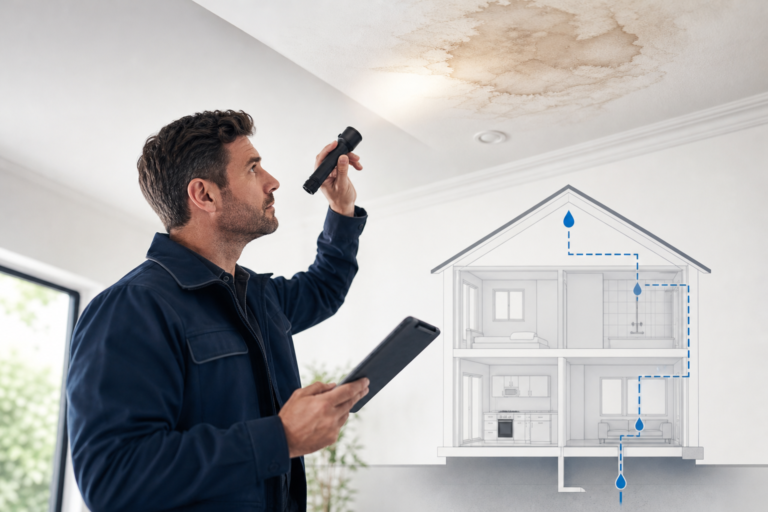
Water Damage in Homes: How to Track Down the Source
Water damage in a home rarely announces itself at the source. A stain on the ceiling, a musty smell in
Read More »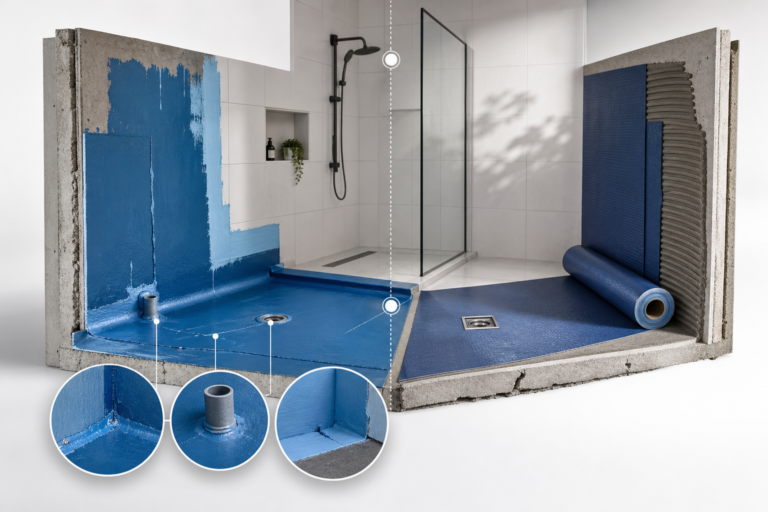
Waterproofing Membrane Types: Which Fails Most in NSW Bathrooms
Waterproofing failure is the single most common serious defect found in NSW apartments, and the type of membrane used, along
Read More »
Building Certifier NSW: Role, Limits, and When You Need More
A building certifier in NSW is a registered professional who issues construction certificates, conducts critical stage inspections, and grants occupation
Read More »