
Contract Administration in Construction: What a Building Consultant Does After the Contract Is Signed

- What Contract Administration Actually Means
- The Core Responsibilities After Signing
- When Contract Administration Connects to Dispute Resolution
- What a Building Consultant Brings That a Solicitor Cannot
- Quantity Surveying and Construction Scheduling as Part of the Picture
- Common Situations Where Contract Administration Prevents Problems
- How to Engage a Building Consultant for Contract Administration
- Frequently Asked Questions
Most of the attention in a construction project falls on two moments: signing the contract and handing over the keys. Everything in between — the months of site activity, payment claims, variations, and quality checks — often runs without proper oversight. That gap is where contract administration earns its value, and where things can quietly go wrong.
If you are an owner, developer, or strata manager who has engaged a builder and wants someone in your corner watching how the contract is being performed, a building consultant acting as your contract administrator is one of the most practical protections you can put in place.
What Contract Administration Actually Means
Contract administration is the ongoing management of a building contract from execution through to practical completion and beyond. It is not project management in the sense of directing the builder's workforce. It is a client-side function: making sure the contract terms are followed, payments are certified only for work that meets the agreed standard, and any changes are documented properly before money changes hands.
The contract administrator sits between the owner and the builder. They read the contract carefully, attend site at key stages, assess progress claims, and issue the formal certificates the contract requires. When disputes arise, they assess the facts against the contract rather than taking sides.
This role is distinct from the builder's site supervisor, the certifier who issues occupation certificates, and the architect who designed the building. Each has a different function. The contract administrator's function is protecting the owner's contractual position throughout the build.
The Core Responsibilities After Signing
Reviewing and Administering Progress Claims
Under most standard-form residential and commercial building contracts in NSW, the builder is entitled to submit progress claims at agreed intervals or milestones. The contract administrator reviews each claim against the actual work completed on site, checks it against the contract schedule, and certifies the amount the owner is required to pay.
This sounds straightforward, but it requires someone who can read a construction programme, walk a site, and assess whether a claimed milestone has genuinely been reached. Certifying a claim that overstates progress means the owner has paid for work that has not been done — which weakens their position considerably if the builder later defaults or the project stalls.
Assessing and Approving Variations
Variations are changes to the scope of work. They are common, and they are one of the most frequent sources of construction disputes. A builder might claim that something the owner requested verbally constitutes a variation worth tens of thousands of dollars. An owner might believe a variation was agreed at a lower cost. Without a contract administrator managing the process, these conversations happen informally and the paper trail disappears.
A building consultant acting as contract administrator ensures variations are assessed against the contract before work starts, priced properly, and documented in writing. This protects both parties — but particularly the owner, who otherwise has little leverage once the work is done.
Monitoring Programme and Progress
Construction contracts typically include a programme showing when key stages will be completed. The contract administrator monitors actual progress against that programme and, when the builder falls behind, identifies whether the delay is the builder's responsibility or whether it falls under an extension of time provision.
This matters because many contracts allow the builder to claim an extension of time for events outside their control, which can affect the owner's right to claim liquidated damages for late completion. An owner who does not understand this mechanism can lose a significant contractual right simply by not responding correctly to a delay notice.
Issuing Formal Notices and Certificates
Standard building contracts require specific certificates at defined stages: practical completion, defects liability period notices, final certificates, and in some cases notices of default. These are not administrative formalities. They trigger contractual rights and obligations, including the release of retention money and the start of statutory warranty periods.
A building consultant who understands construction contracts knows when these certificates should be issued, what they must contain, and what happens if they are issued incorrectly or not at all.
Managing the Defects Liability Period
Practical completion is not the end of the contract administrator's role. Most contracts include a defects liability period — typically between three and twelve months — during which the builder is required to return and rectify defects that appear in the completed work. The contract administrator documents defects as they emerge, issues formal notices to the builder, and assesses whether rectification has been completed properly before retention funds are released.
If the builder refuses to return or disputes that defects exist, the documentation maintained throughout this period becomes the foundation for any subsequent dispute, whether that is a negotiation, a tribunal application, or formal litigation.
When Contract Administration Connects to Dispute Resolution
One of the less obvious benefits of having a building consultant administer your contract is that the records they keep can become critical evidence if the project ends in dispute.
Construction disputes in NSW are frequently heard at NCAT or in the District Court. The quality of the documentary record — site inspection notes, variation correspondence, progress claim assessments, defect notices — often determines how a dispute is resolved. An owner who had a contract administrator in place from the start is in a far stronger position than one who relied on informal emails and verbal agreements.
Building consultants who also prepare Expert Witness Reports and Scott Schedules, as Awesim does, understand exactly what evidence a tribunal or court will need. That dual perspective — practical contract management on one side, forensic reporting on the other — means the documentation produced during administration is already structured with potential legal use in mind.
If a dispute does emerge, the same consultant who administered the contract can assess defects, prepare a Scott Schedule itemising those defects and their rectification costs, or provide an Expert Witness Report for formal proceedings. That continuity of knowledge about the project is genuinely useful.
What a Building Consultant Brings That a Solicitor Cannot
Solicitors handle the legal strategy in a construction dispute. They draft pleadings, advise on rights, and represent clients in proceedings. What they typically cannot do is walk a site, read a construction programme, assess whether a concrete pour meets the specified standard, or tell you whether a builder's variation claim is priced at market rates.
A building consultant fills that technical gap. In the context of contract administration, they provide the on-site presence and construction knowledge that keeps the owner informed about what is actually happening — not just what the builder is reporting.
That combination of technical expertise and procedural knowledge is what makes a building consultant useful both during a project and after it. The same skills that allow a consultant to administer a contract properly are the skills that allow them to identify and document defects, prepare a Scott Schedule, or write an expert witness report that satisfies the requirements of Schedule 7 of the Uniform Civil Procedure Rules 2005.
Quantity Surveying and Construction Scheduling as Part of the Picture
Contract administration rarely sits in isolation. In practice, it connects closely with quantity surveying — assessing the cost of work — and construction scheduling, which involves planning and monitoring the programme.
A building consultant who provides all three services can assess whether a builder's progress claim reflects the actual value of work completed, not just whether a milestone has been ticked off. They can also identify when a builder is front-loading claims — claiming more in early stages than the work warrants — a pattern that can leave owners financially exposed if the project is later abandoned.
Awesim's client-side project management services include contracts administration, construction scheduling, and quantity surveying, offered alongside the firm's dispute and litigation support work. That breadth means the same team that manages your contract during construction can support you if the project ends in a dispute.
Common Situations Where Contract Administration Prevents Problems
Owner-Builder or Cost-Plus Projects
Projects running under a cost-plus arrangement — where the owner pays the builder's actual costs plus a margin — require particularly close oversight. Without a fixed price, there is no automatic check on what is being spent. A building consultant reviewing invoices, assessing labour rates, and monitoring programme performance provides the oversight the contract itself does not.
Strata Remediation Works
Strata managers overseeing remediation of common property defects — particularly waterproofing failures or structural repairs — often engage a building consultant to administer the remediation contract. The strata committee typically lacks the technical knowledge to assess whether the builder's claims are accurate or whether the work meets the specified standard. A contract administrator fills that gap and provides the committee with independent assessments at each stage.
Multi-Stage Residential Developments
Larger residential projects with multiple stages and extended programmes benefit from consistent oversight across the full build. A contract administrator who has been present since the beginning understands the project history, the agreed variations, and the programme commitments — which is far more useful than engaging someone new when a problem emerges in stage three.
How to Engage a Building Consultant for Contract Administration
The right time to engage a contract administrator is before the contract is signed, not after problems appear. A building consultant can review the contract prior to execution, identify terms that are unfavourable to the owner, and establish the administration processes that will apply once the build starts.
If you are already mid-project without a contract administrator in place, it is still worth engaging one. A consultant can review the contract, assess progress to date, and establish proper oversight going forward. The earlier you engage, the more value the role provides — but it is rarely too late to improve the quality of oversight.
Awesim Building Consultants has been providing client-side project management and contracts administration services across NSW since 1996. With offices in Sydney, Tamworth, and Tweed Heads, the firm offers on-site presence across the state, from metropolitan Sydney to regional centres. If you are managing a construction project and want to understand what contract administration would involve for your specific situation, a free initial consultation is available by calling 1800 293 746 or through awesim.com.au.
Frequently Asked Questions
What is contract administration in construction?
Contract administration is the management of a building contract after it is signed. It involves assessing progress claims, approving or rejecting variations, monitoring the construction programme, issuing formal certificates, and managing the defects liability period. The contract administrator acts on behalf of the owner to ensure the builder performs in accordance with the contract terms.
Do I need a contract administrator if I already have an architect?
An architect's primary role is design and documentation. While some architects offer contract administration as an additional service, their focus is on design intent rather than commercial and programme oversight. A building consultant acting as contract administrator focuses specifically on the contractual and technical performance of the builder — which is a different function.
When should I engage a contract administrator?
The ideal time is before the contract is signed. A building consultant can review the contract terms, identify unfavourable clauses, and establish the administration processes from the start. If you are already mid-project, engaging a consultant to take over administration is still worthwhile — particularly if payment disputes or defect concerns have begun to emerge.
What happens if the builder disputes the contract administrator's assessment?
The contract administrator's role is to assess claims and certify amounts based on the contract terms and the work completed. If the builder disagrees with a certification, the dispute mechanism in the contract applies — which may involve adjudication under the Building and Construction Industry Security of Payment Act or proceedings at NCAT or in court. The documentation maintained throughout the project becomes central to resolving that dispute.
Can the same building consultant administer my contract and later prepare an expert witness report?
Yes, and there are practical advantages to that continuity. A consultant who has administered the contract understands the project history, the variations that were agreed, and the defects that emerged. That background makes their expert witness report more detailed and more grounded in documented fact. At Awesim, the same team that provides contracts administration also prepares Expert Witness Reports and Scott Schedules for use in NCAT, District Court, and Supreme Court proceedings.
What is the difference between contract administration and project management?
Project management typically involves directing the construction process, coordinating trades, and making day-to-day site decisions. Contract administration is a client-side function focused on the contractual relationship between the owner and the builder. A building consultant acting as contract administrator does not direct the builder's workforce — they assess whether the builder is meeting their contractual obligations and protect the owner's position when they are not.
Does contract administration cover defects after practical completion?
Yes. Most building contracts include a defects liability period after practical completion, during which the builder must rectify defects that appear. The contract administrator documents defects, issues formal notices to the builder, and assesses whether rectification work is adequate before releasing retention money. If the builder fails to return or disputes the existence of defects, the records from this period support any subsequent dispute resolution process.

Related Posts

Water Damage in Homes: How to Track Down the Source
Water damage in a home rarely announces itself at the source. A stain on the ceiling, a musty smell in
Read More »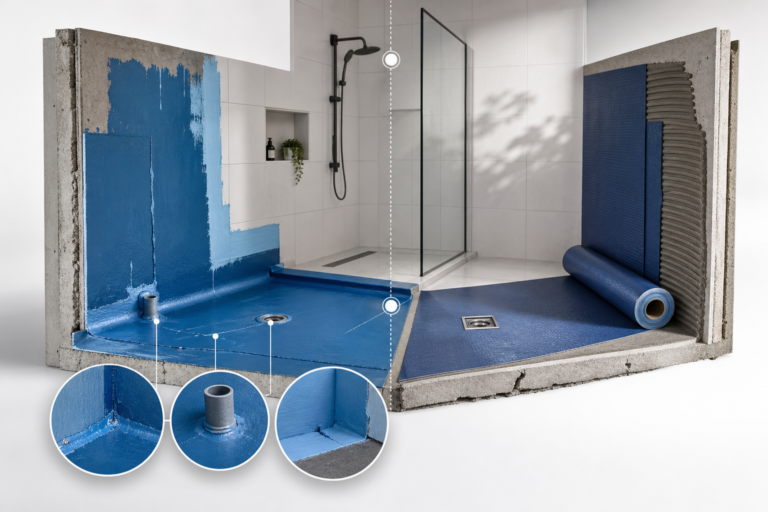
Waterproofing Membrane Types: Which Fails Most in NSW Bathrooms
Waterproofing failure is the single most common serious defect found in NSW apartments, and the type of membrane used, along
Read More »
Building Certifier NSW: Role, Limits, and When You Need More
A building certifier in NSW is a registered professional who issues construction certificates, conducts critical stage inspections, and grants occupation
Read More »