
Water Stop vs Waterproofing Membrane: Which System Is Required Where in a NSW Bathroom
- What Is a Water Stop?
- What Is a Waterproofing Membrane?
- How the Two Systems Work Together
- What AS 3740 Requires in a NSW Bathroom
- Where Waterproofing Failures Actually Occur
- When Waterproofing Defects Become a Legal Matter
- A Practical Summary: Which System Goes Where
- Frequently Asked Questions
- The Bottom Line
A water stop and a waterproofing membrane are not the same thing, and confusing the two is one of the most common reasons NSW bathroom waterproofing fails. Whether you are dealing with a leaking bathroom, preparing for an NCAT hearing, or trying to work out what your builder was actually required to install, understanding what a water stop is and where each system belongs is the starting point for everything else.
This article explains what a water stop is, how it differs from a waterproofing membrane, and which system AS 3740 requires at each specific location inside a NSW bathroom.
What Is a Water Stop?
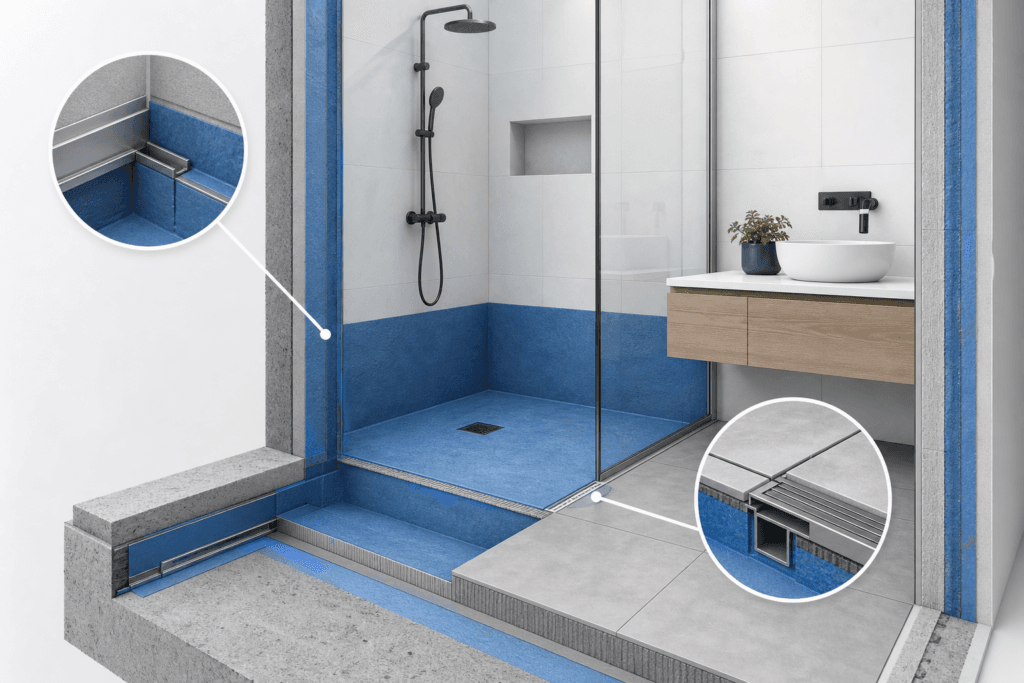
A water stop is a physical barrier — typically a pre-formed strip or angle — that is embedded into or fixed to a substrate to prevent water from migrating through joints, junctions, or transitions between surfaces. In bathroom construction, water stops appear most commonly at the junction between a wall and a floor, particularly where a tiled floor meets a tiled wall, or where a shower screen or bath is set against a wall.
The purpose is mechanical containment. A water stop physically blocks a pathway that water would otherwise follow through capillary action or hydrostatic pressure. It does not absorb water, and it does not form a continuous waterproof layer across a surface. That is the membrane's job.
Common water stop materials include:
- PVC or rubber pre-formed angles installed at wall-to-floor junctions before tiling
- Stainless steel or aluminium angle sections used at shower screen bases
- Foam or compressible backing rod used behind sealant joints at movement junctions
In NSW construction, the term "water stop" is sometimes used loosely to refer to the silicone sealant applied at the junction between a bath or shower screen and the wall. That usage is technically imprecise. The sealant is a seal; the water stop is the substrate component that gives the sealant something to work against and prevents water from tracking behind it.
What Is a Waterproofing Membrane?
A waterproofing membrane is a continuous layer of waterproof material applied to a substrate to prevent water from passing through it. In bathrooms, membranes are applied to floors and walls before tiling, forming an unbroken barrier between the wet area and the structural substrate beneath.
Membranes come in several forms:
- Sheet-applied membranes: pre-formed sheets bonded to the substrate, typically used on floors
- Liquid-applied membranes: brush or roller-applied coatings that cure to form a flexible film — the most common type in residential bathroom construction
- Fibreglass or composite systems: used in high-exposure areas or where substrate movement is a concern
The membrane is the primary waterproofing element in a bathroom. Without a correctly installed, continuous membrane, water will eventually penetrate the substrate regardless of how well the tiles or grout are applied.
How the Two Systems Work Together
A water stop and a membrane are not interchangeable — they are complementary. The membrane covers the field; the water stop addresses the joints and transitions where the membrane is most likely to fail.
Junctions are the most vulnerable points in any waterproofing system. A membrane applied to a flat floor surface may be technically sound across the field, but if it is not correctly detailed at the wall-to-floor junction, water will find that gap. The water stop at that junction reinforces the membrane detail and provides a physical barrier that does not depend on the membrane alone.
A correctly installed bathroom waterproofing system requires both: a continuous membrane across all required surfaces, and water stops at all required junctions. Omitting either element creates a defect.
What AS 3740 Requires in a NSW Bathroom
Australian Standard AS 3740-2021, Waterproofing of Domestic Wet Areas, is the benchmark standard for bathroom waterproofing in NSW residential construction. The National Construction Code references AS 3740, making its requirements enforceable under the Building Code of Australia.
AS 3740 divides wet areas into two classifications based on water exposure:
- Class 1 (Wet areas): areas subject to regular water exposure, such as shower recesses, bath surrounds, and laundry tub areas
- Class 2 (Damp areas): areas subject to splash or condensation but not direct water exposure, such as bathroom floors outside the shower zone
The standard specifies where membranes are required, what type, and to what height. It also specifies where water stops are required at junctions.
Shower Recess
The shower recess is the most demanding location. AS 3740 requires:
- A continuous waterproof membrane across the full floor of the shower recess
- Membrane extending up the walls to a minimum height of 1,800 mm, or to the full height of the wall if fully tiled
- A water stop at the junction between the shower floor and the shower wall — typically a pre-formed PVC or rubber angle — to reinforce the membrane at this critical transition
- A water stop or sealant joint at the base of any shower screen or door frame
The floor-to-wall junction in a shower is the single most common location for waterproofing failure in NSW bathrooms. Water that penetrates this junction typically travels along the substrate and surfaces as a leak in the ceiling below, or as efflorescence and tile delamination on adjacent walls.
Bathroom Floor Outside the Shower Zone
For the general bathroom floor (Class 2 area), AS 3740 requires:
- A membrane applied to the floor substrate
- The membrane extending at least 75 mm up the wall perimeter
- A water stop at the wall-to-floor junction where the membrane terminates
The 75 mm turn-up at the perimeter is a minimum. In practice, many builders apply the membrane only to the floor field and omit the turn-up entirely, leaving the perimeter junction unprotected. This is a defect that appears regularly in forensic waterproofing inspections.
Bath Surrounds
Where a bath is set against a wall, AS 3740 requires:
- A membrane applied to the wall behind the bath to a minimum height of 150 mm above the bath rim, or to the full height of the tiled area
- A water stop or sealant joint at the junction between the bath rim and the wall
The sealant joint at the bath-to-wall junction functions as a water stop, but it is also a maintenance item. Silicone sealant at this junction has a finite service life and will degrade, crack, or debond over time. When it fails, water tracks behind the bath and into the wall substrate. Homeowners often attribute this to a membrane failure when the actual defect is the failed sealant joint.
Wet Areas Adjacent to Timber Framing
A significant proportion of NSW residential construction uses timber-framed walls. AS 3740 imposes additional requirements where wet areas are adjacent to or built on timber framing, because timber is susceptible to both moisture damage and movement.
In these locations:
- The membrane must be applied to the full height of the wet zone, not just the splash zone
- Flexible membranes are required rather than rigid systems, to accommodate timber movement
- Water stops at junctions must be flexible and capable of accommodating movement without cracking or debonding
This is a recurring source of defects in older NSW homes where the original construction used rigid cement-based waterproofing systems that have since cracked as the timber frame has moved.
Where Waterproofing Failures Actually Occur
Understanding where water stops and membranes are required matters most when something has already gone wrong. In forensic waterproofing inspections, the same failure points appear repeatedly:
Floor-to-wall junction in the shower: The membrane turns up the wall but the water stop angle was omitted or installed incorrectly, leaving a gap at the most-trafficked joint.
Penetrations: Pipes and wastes that penetrate the floor membrane are a common failure point. The membrane must be dressed around each penetration, and a water stop or collar is required to seal the junction between the membrane and the pipe.
Shower screen base: The water stop at the base of the shower screen is often omitted entirely, or the screen is installed directly onto grout with no sealant or water stop component. Water tracks along the screen base and into the floor substrate.
Membrane not extended to required height: The membrane on shower walls is applied only to the lower portion of the wall, well below the 1,800 mm minimum, leaving the upper section unprotected.
Inadequate membrane thickness: Liquid-applied membranes require a minimum dry film thickness to be effective. Under-application — particularly on vertical surfaces — is a defect that is invisible to the eye but measurable on inspection.
Each of these failure modes is documentable and, where a building dispute arises, forms part of a forensic waterproofing inspection report.
When Waterproofing Defects Become a Legal Matter
A waterproofing failure in a NSW bathroom is not simply a maintenance problem. Under the Home Building Act 1989, waterproofing work is a major defect category, carrying a six-year statutory warranty period. That means a homeowner can pursue a claim against the builder for up to six years after the work was completed.
If you are preparing a claim at NCAT, or a builder is disputing whether a defect exists or who is responsible, you will need an independent expert report that documents the defect, identifies its cause, and relates it to the applicable standard. A forensic waterproofing inspection report does exactly that: it records what was found on site, photographs the evidence, and provides a technical opinion on whether the work meets the requirements of AS 3740 and the Building Code of Australia.
That opinion needs to be independent and technically grounded. A report prepared by a consultant with a commercial relationship with either party — or one that does not meet the procedural requirements of the relevant court or tribunal — will not carry the weight you need.
Awesim Building Consultants has been preparing forensic waterproofing inspection reports and expert witness reports for NSW courts and tribunals since 1996. All expert witness reports are prepared to Schedule 7 of the Uniform Civil Procedure Rules 2005, the standard required by NCAT, the District Court, and the Supreme Court. If you have a waterproofing dispute and need an independent assessment, start with a free initial consultation at awesim.com.au or call 1800 293 746.
A Practical Summary: Which System Goes Where
| Location | Membrane Required | Water Stop Required |
|---|---|---|
| Shower floor | Yes, full floor | Yes, at wall junction |
| Shower walls | Yes, to 1,800 mm minimum | Yes, at floor junction |
| Shower screen base | No (membrane already present) | Yes, sealant/water stop at screen base |
| Bathroom floor (outside shower) | Yes, with 75 mm turn-up | Yes, at wall perimeter |
| Bath surround wall | Yes, to 150 mm above rim | Yes, sealant at bath-to-wall junction |
| Pipe penetrations | Dressed membrane required | Water stop collar required |
This table reflects minimum requirements under AS 3740. Specific site conditions, substrate types, and exposure classifications may require additional measures.
Frequently Asked Questions
What is a water stop in a bathroom?
A water stop is a physical component — typically a pre-formed PVC, rubber, or metal angle — installed at junctions between surfaces in a wet area to prevent water from tracking through those joints. It works alongside a waterproofing membrane, not in place of it. The most common location is the floor-to-wall junction inside a shower recess.
Is a water stop the same as a waterproofing membrane?
No. A membrane is a continuous layer applied across a surface to prevent water passing through it. A water stop is a discrete component installed at a junction or transition point to block water movement through that specific joint. Both are required in a correctly waterproofed bathroom; they serve different functions.
What does AS 3740 require for a shower in NSW?
AS 3740-2021 requires a continuous waterproof membrane across the full shower floor and up the walls to a minimum height of 1,800 mm. Water stops are required at the floor-to-wall junction and at the base of any shower screen or door frame. Penetrations such as waste pipes must also be sealed with a membrane detail and a water stop collar.
How high does a waterproofing membrane need to go on shower walls?
Under AS 3740, the membrane must extend to a minimum height of 1,800 mm on shower walls. If the wall is fully tiled to a greater height, the membrane should extend to the full height of the tiled area. Applying the membrane only to the lower section of the wall is a common defect.
What is a major defect in waterproofing under NSW law?
Under the Home Building Act 1989, waterproofing work is classified as a major defect category. A major defect in waterproofing carries a six-year statutory warranty from the date the work was completed, giving homeowners a defined period within which to bring a claim against the builder.
When do I need a forensic waterproofing inspection report?
You need one when you are preparing a building defect claim at NCAT or another NSW court, when a builder disputes that a waterproofing failure constitutes a defect, or when you need independent evidence of the cause and extent of a waterproofing failure. The report documents the defect on site, photographs the evidence, and provides a technical opinion referenced to the applicable standard.
What makes an expert witness report on waterproofing admissible at NCAT?
For an expert witness report to be accepted by NCAT or NSW courts, it must comply with Schedule 7 of the Uniform Civil Procedure Rules 2005. This requires the expert to acknowledge their overriding duty to the tribunal rather than to the party engaging them, and to set out the basis for their opinions clearly. Reports that do not meet this standard can be rejected or given reduced weight — which directly affects the outcome of your case.
The Bottom Line
Water stops and waterproofing membranes are both required in a NSW bathroom, but they do different jobs in different locations. The membrane provides the continuous barrier across surfaces; the water stop addresses the junctions where that barrier is most likely to fail. AS 3740 specifies exactly where each is required, and a bathroom that omits either element has a defect.
If you have a leaking bathroom and a dispute to resolve, the question of what was supposed to be installed versus what was actually installed requires an independent, on-site inspection and a properly prepared report. That is often where the difference between winning and losing a claim is made.

Related Posts
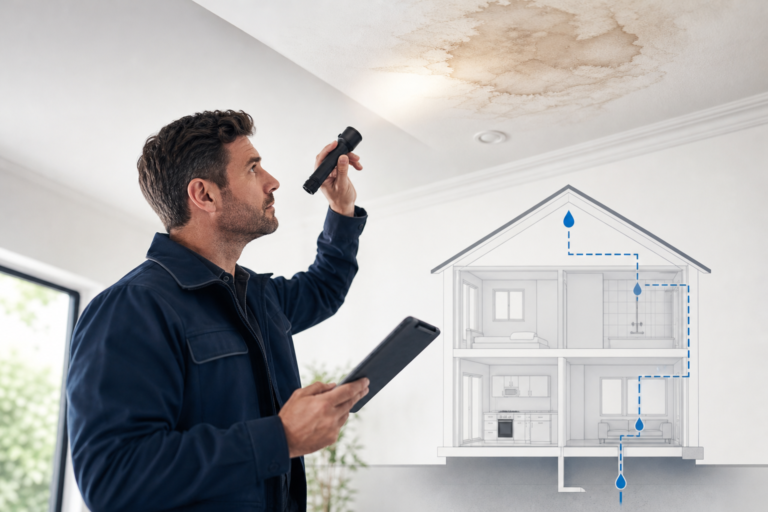
Water Damage in Homes: How to Track Down the Source
Water damage in a home rarely announces itself at the source. A stain on the ceiling, a musty smell in
Read More »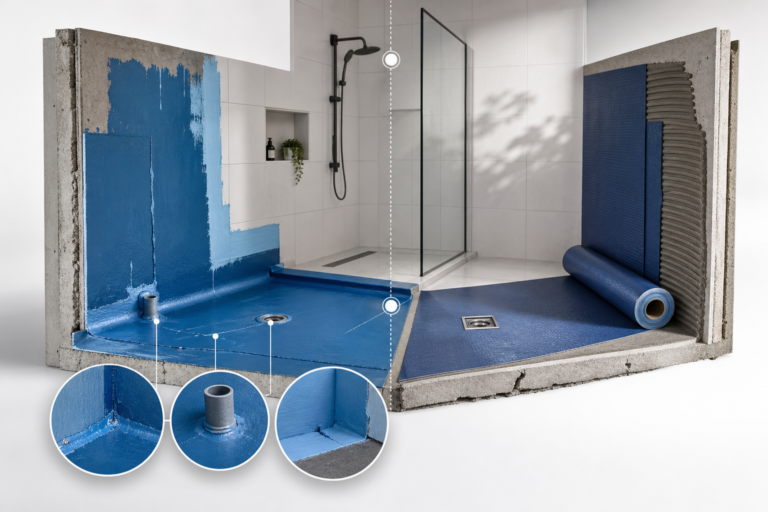
Waterproofing Membrane Types: Which Fails Most in NSW Bathrooms
Waterproofing failure is the single most common serious defect found in NSW apartments, and the type of membrane used, along
Read More »
Building Certifier NSW: Role, Limits, and When You Need More
A building certifier in NSW is a registered professional who issues construction certificates, conducts critical stage inspections, and grants occupation
Read More »