
A Guide to Drone Roof Inspections in Australia
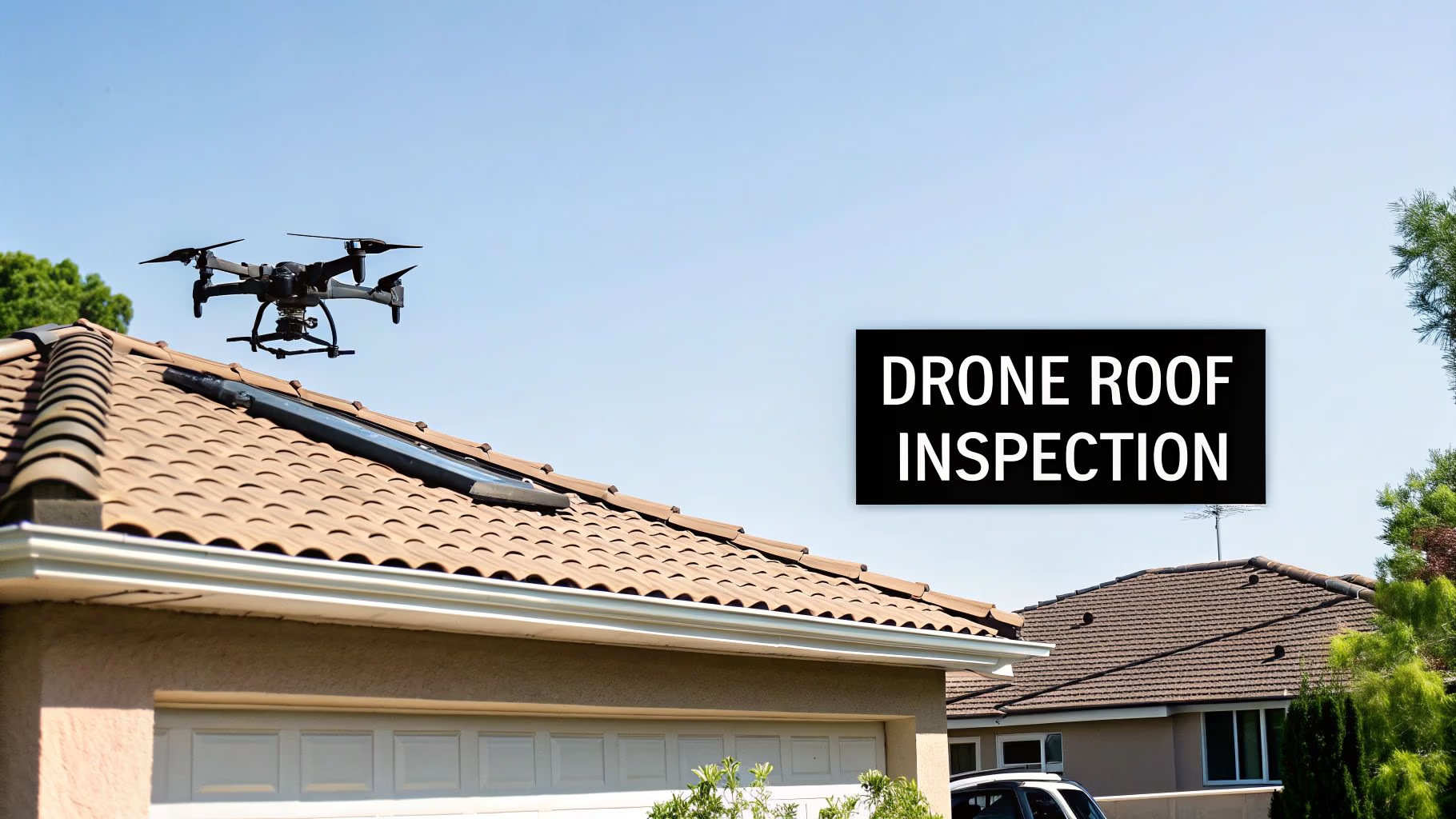
At its core, a drone roof inspection is exactly what it sounds like: using a specialised drone, or unmanned aerial vehicle (UAV), equipped with a high-resolution camera to get a detailed look at a roof’s condition. It’s a modern approach that swaps ladders and harnesses for joysticks and screens, allowing an inspector to see every tile, gutter, and flashing from the safety of the ground.
This method delivers a fast, incredibly thorough overview of potential issues like hidden leaks, storm damage, or just the general wear and tear that every roof experiences over time.
A New Perspective on Property Maintenance
Think about trying to piece together a huge puzzle with only the pieces you can physically reach. That’s a lot like a traditional roof inspection. The inspector’s view is naturally limited by what’s safe to access. Navigating steep pitches and slippery surfaces is not only slow but also inherently risky, and some parts of a complex roof might be impossible to see up close.
Drone inspections completely flip that script. By putting a highly manoeuvrable camera in the sky, we get a complete, bird’s-eye view of the entire roofing system. This isn’t just a matter of convenience; it’s about capturing far better, more objective data to make smart decisions about a property.
How Drones See What We Can’t
The real magic is in the sophisticated sensors these drones carry. We’re talking about much more than just a flying camera that can zoom in on a single cracked tile from metres away.
- Thermal Cameras: These are brilliant for detecting what the naked eye can’t. They read temperature variations across the roof surface. A cool patch on a hot day could mean moisture is trapped under the roofing membrane—a classic sign of a leak, often caught long before it stains a ceiling.
- Orthomosaic Mapping: This is where advanced software takes hundreds, sometimes thousands, of individual photos and stitches them together into one giant, high-resolution map of the entire roof. It creates a detailed and measurable digital record you can analyse from any angle.
- 3D Modelling: That same data can be used to build an accurate 3D model. This allows for precise measurements of slopes, ridges, and skylights without anyone having to physically climb up with a tape measure.
This level of detail shifts an inspection from a subjective “walk-around” to an objective, data-driven analysis. Instead of relying only on an inspector’s handwritten notes, you get a verifiable digital twin of your roof’s health at a specific moment.
A drone provides an unbiased, data-rich perspective that is simply unattainable from the ground or even from standing on the roof itself. It transforms roof assessment from a risky physical task into a precise data collection exercise.
Let’s look at how these two approaches stack up.
Drone vs Traditional Roof Inspection Methods
This table provides a quick comparison, highlighting the key differences in safety, speed, data quality, and cost between modern drone inspections and traditional manual methods.
| Feature | Drone Inspection | Traditional Inspection |
|---|---|---|
| Safety | Extremely high. The operator remains safely on the ground, eliminating fall risks. | High risk. Involves climbing ladders and walking on potentially unstable surfaces. |
| Speed & Efficiency | Very fast. An average residential roof can be fully captured in under an hour. | Slow. Can take several hours, depending on the roof’s size and complexity. |
| Data Quality | Comprehensive. Captures high-res photos, 4K video, thermal data, and 3D models. | Limited. Relies on manual photos from restricted angles and handwritten notes. |
| Accessibility | Excellent. Can easily inspect hard-to-reach areas like steep pitches and high gables. | Poor. Some areas may be completely inaccessible due to safety concerns. |
| Cost-Effectiveness | Often lower. Reduced time and labour costs, plus early detection of issues saves money. | Can be higher. More labour-intensive, and potential for missed issues leads to bigger repair bills later. |
As you can see, the benefits of using a drone go far beyond just taking a few aerial photos.
A Growing Trend in Australian Property Care
This move towards safer, more detailed inspections isn’t just a fleeting trend; it’s a major evolution in how we look after property in Australia. The drone inspection market is growing fast, driven by the simple fact that it’s safer and more cost-effective. The technology dramatically cuts down on-site time and, crucially, takes the human risk factor out of the equation—a massive plus for Australia’s diverse and often complex building designs. You can discover more about these industry trends and their impact.
Ultimately, a drone inspection gives you more than just a folder of pictures. It delivers clarity, safety, and a depth of information that empowers property owners, builders, and strata managers to protect their assets proactively. This solid foundation of reliable data paves the way for smarter maintenance, faster insurance claims, and more effective dispute resolution.
Why Drones Are a Smarter Choice for Roof Assessments
For generations, the only way to check a roof was to climb a ladder and walk on it. It was accepted as just part of the job. But drone inspections have completely changed the game, offering a far better way to get the job done that goes well beyond simple convenience. It’s not just about using new tech for the sake of it; it’s about getting superior results in safety, speed, and the quality of information you receive.
The most obvious win is safety. Putting a person on a ladder, especially on a steep or slippery roof, is always a risk. One misstep can lead to a serious fall. Drones take that danger completely out of the equation. The operator stays safely on the ground, turning what was a high-risk task into a controlled, stress-free process.
Unmatched Speed and Efficiency
Think about the time it would take to manually inspect the enormous roof of a commercial warehouse or a multi-building strata complex. It could easily consume a full day, demanding multiple people, harnesses, and maybe even scaffolding. A drone can cover the same area—often more thoroughly—in a fraction of the time. A detailed scan of a large residential home can be done and dusted in under an hour.
This speed isn’t just impressive; it directly translates into cost savings. Less time and labour on-site naturally makes drone inspections a more budget-friendly option than the old way of doing things. For homeowners and businesses, it also means minimal disruption to their day.
The roofing industry here in Australia is catching on fast, especially with the rise of AI-powered reporting software that works with drone imagery. This combination is a massive leap forward from the slow, risky inspections of the past. Now, inspectors can safely capture consistent, high-resolution photos, cutting their on-site inspection time by more than half. You can discover more about how software is transforming roofing inspections to see just how powerful this combination is.
Superior Data and Deeper Insights
A drone doesn’t just see what a person sees from a few feet away; it captures a far more detailed and complete picture. Outfitted with high-resolution and even thermal cameras, drones deliver a level of detail the human eye can’t possibly match from all angles.
- Pinpoint Accuracy: High-resolution cameras can zoom right in on hairline stress fractures, subtle hail impacts, or deteriorating flashing that could easily be overlooked during a physical walk-over.
- Thermal Detection: This is where drones truly shine. Thermal cameras spot temperature variations across the roof’s surface, which is a dead giveaway for moisture trapped underneath. It allows us to find a hidden leak long before it shows up as a stain on your ceiling.
- Comprehensive Coverage: A drone methodically captures every square centimetre from an ideal bird’s-eye perspective. This guarantees that no spot is missed, even those areas that are too dangerous or difficult to access on foot.
This rich data collection creates a permanent digital record of your roof’s health at a specific point in time. Forget scribbled notes and a handful of photos; a drone inspection gives you a detailed, timestamped snapshot of your roof’s exact condition.
This digital archive is invaluable. You can use it to track how your roof degrades over time, schedule preventative maintenance before small issues become big ones, or present undeniable proof for an insurance claim or a building defect dispute.
A Practical Scenario: Storm Damage Assessment
Let’s imagine a bad hailstorm has just rolled through a suburb. Traditionally, this would mean inspectors spending days, even weeks, carefully climbing onto slick, damaged roofs across the neighbourhood.
With a drone, a single certified operator could safely assess multiple properties in just one day. The crisp, high-resolution images provide clear and objective evidence of the damage, which can be sent straight to the insurance company. This dramatically speeds up the entire claims process, helping property owners get the green light for repairs much sooner. It’s this ability to gather accurate data quickly and safely that has made drone inspections the genuinely smarter choice for any modern property assessment.
Understanding the CASA Rules for Drone Operations
When you hire a professional for a drone roof inspection, you’re not just paying for someone to fly a drone. You’re investing in their compliance with Australia’s aviation safety laws, which are some of the strictest in the world. Flying a drone for commercial purposes—and yes, inspecting your property for a fee is absolutely a commercial operation—is a completely different ball game to a hobbyist flying in a park. This distinction is critical and is governed by the Civil Aviation Safety Authority (CASA).
Navigating these rules isn’t just about ticking boxes. A provider who cuts corners on CASA regulations isn’t just risking a fine; they’re putting people and property, including yours, at risk. Knowing the basics helps you make a smart, responsible choice.
The moment money changes hands for a drone service, it’s a commercial flight. That single fact triggers a whole set of legal requirements designed to ensure accountability and professional safety standards.
The Two Pillars of Professional Certification
To legally carry out commercial drone roof inspections in Australia, a provider needs more than just a fancy drone. They need specific certifications from CASA that prove two things: the pilot’s skill and the business’s commitment to safety. Think of it like hiring an electrician—you want someone who is personally licensed and works for a business that’s properly registered and insured.
These two key credentials are:
Remote Pilot Licence (RePL): This is the individual pilot’s qualification. It’s essentially their driver’s licence, proving they’ve been trained and assessed on flying safely, managing risks, and understanding complex airspace rules. To get an RePL, a pilot has to pass both a theory exam and a hands-on flight test.
Remotely Piloted Aircraft Operator’s Certificate (ReOC): This certification is for the business itself. A ReOC shows that the company has detailed, documented procedures for everything from pre-flight risk assessments and maintenance logs to emergency plans. CASA only issues a ReOC after an exhaustive audit of the company’s entire safety system.
In short, the RePL certifies the pilot, and the ReOC certifies the business. For a fully compliant and professional drone inspection, you need to be sure your provider has both. This combination is your best guarantee of a safe, legal, and professional job.
Navigating Key Safety and Privacy Rules
Beyond the core certifications, CASA enforces a set of standard operating conditions that keep people and property safe on the ground. Any professional operator will have these rules baked into the flight plan for every single inspection.
Some of the most important rules include:
- Maintaining Visual Line-of-Sight: The pilot must be able to see the drone with their own eyes at all times—no flying over hills or around buildings where it disappears from view.
- Altitude Limits: Drones are generally restricted to flying no higher than 120 metres (400 feet) above the ground.
- Restricted Airspace: Flights are forbidden within 5.5 kilometres of a major airport unless the operator has specific CASA approval. They also have to steer clear of emergency situations like bushfires or police operations.
- People and Property: A pilot can’t fly a drone recklessly. This includes keeping a safe buffer distance from anyone not directly involved in the inspection.
Privacy is another huge piece of the puzzle. While CASA’s main job is aviation safety, all drone operators must also comply with Australian privacy laws. A true professional will be incredibly mindful of this, planning their flight path and camera angles to focus squarely on your roof, respecting the privacy of your neighbours. It’s another clear hallmark of a reputable service.
How a Professional Drone Inspection Actually Works
So, what really goes on during a professional drone roof inspection? It’s a lot more involved than just sending a drone up for a quick look around. A proper, certified operation is a methodical, four-phase process that’s built from the ground up for safety, accuracy, and ultimately, clarity.
Each step is deliberate, building on the one before it to turn raw aerial photos into a genuinely useful assessment tool. This isn’t just about complying with CASA regulations; it’s about making sure the flight captures exactly the right data you need. Let’s break down what you should expect when you bring in a qualified pro.
Phase 1: Pre-Flight Planning and Risk Assessment
Long before a drone’s propellers even twitch, the real work begins on the ground. This first phase is all about careful preparation and putting safety first. Any professional operator will start with a thorough risk assessment, often called a Job Safety Analysis (JSA), to identify and deal with any potential hazards on or around your property.
This isn’t a box-ticking exercise. It involves:
- A Proper Site Evaluation: Looking for real-world obstacles like power lines, overhanging trees, or even just neighbouring buildings that could cause issues.
- Checking the Airspace: Making sure the property isn’t in restricted airspace, which could be anything from being too close to an airport to an active emergency services operation nearby.
- Designing the Flight Path: This is where the magic starts. A detailed, automated flight plan is created to guarantee the drone covers every square centimetre of the roof, with consistent overlap between photos for precise mapping later on.
Getting this planning stage right is the foundation of a successful and safe inspection. It gets rid of surprises and makes the on-site data capture as efficient as possible.
This infographic gives you a good sense of the core parts of a compliant drone operation under CASA rules—from the certified pilot and registered drone to the properly assessed site.
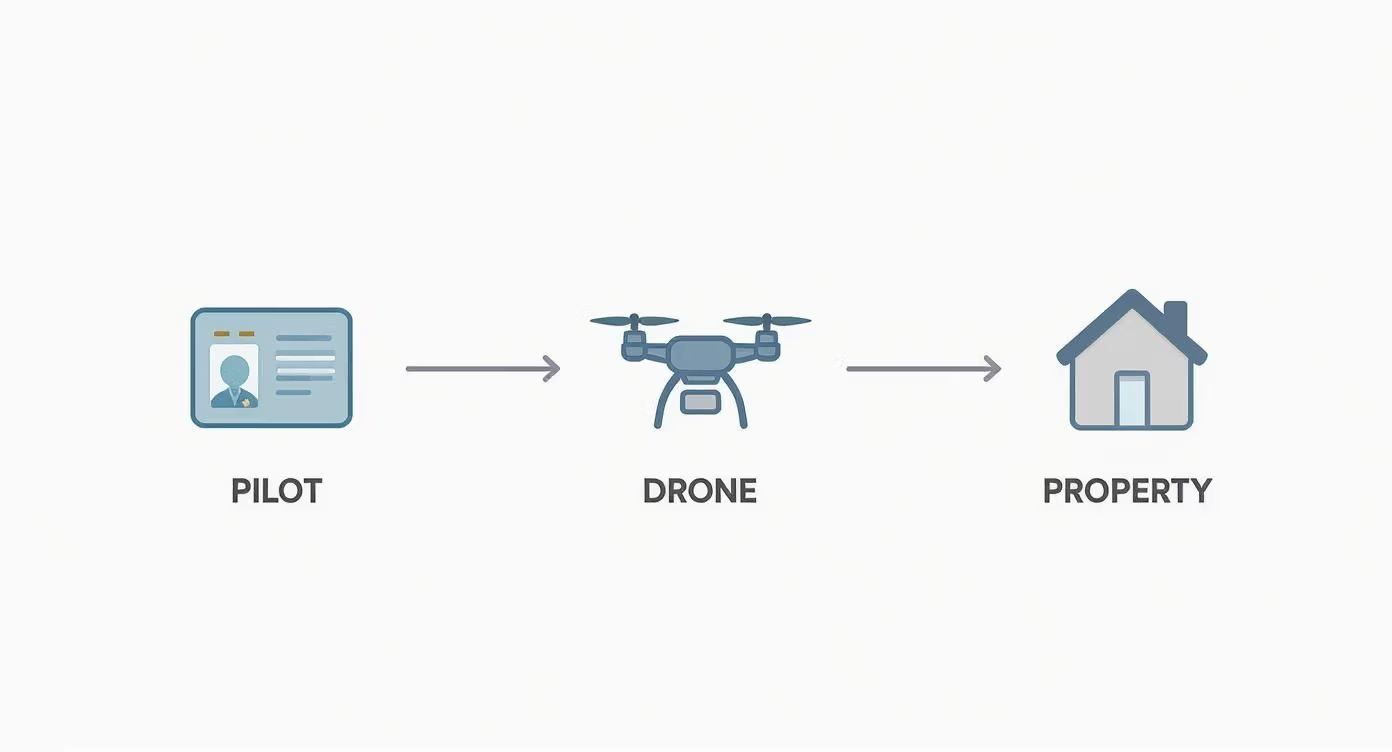
As you can see, professional certification and solid planning are what separates a proper inspection from just a fly-by.
Phase 2: On-Site Data Capture
With a solid plan in hand, it’s time to get on-site. The certified pilot will arrive, do one last on-the-ground check of the area, and set up a safe spot for take-off and landing. Then, the drone is launched to run its pre-programmed flight path.
The drone works methodically, flying a grid pattern over the roof and snapping hundreds—sometimes thousands—of high-resolution images. Depending on what we’re looking for, it might also capture thermal imagery to find hidden moisture or 4K video to get a more dynamic view. The best part? This stage is surprisingly fast. A standard residential roof can often be fully documented in under 30 minutes.
Phase 3: Data Processing and Analysis
Once the drone is back on the ground, the raw images are fed into powerful processing software. This is where individual photos are stitched together using a technique called photogrammetry to create incredibly detailed digital models. This isn’t just a folder of pictures; it’s a complete digital reconstruction of your roof.
The real aim here is to transform those separate snapshots into a single, measurable, and analytical model of the roof. This digital asset becomes the undisputed source of truth for the property’s condition.
The most valuable outputs from this process are:
- Orthomosaic Map: Think of this as a super-detailed, distortion-free Google Map of your entire roof.
- 3D Model: An interactive model you can spin around on a screen, allowing for precise measurements of length, area, and even roof pitch without anyone climbing a ladder.
- Thermal Maps: These show temperature differences across the roof’s surface, highlighting potential leaks or moisture issues that are completely invisible to the naked eye.
Phase 4: The Final Report and Deliverables
The last step is turning all that data into a comprehensive report you can actually use. A good provider doesn’t just dump a bunch of files on you; they interpret the findings. Your report should feature clear images of any defects they found—cracked tiles, failing flashing, blocked gutters—with detailed notes explaining the problem and pinpointing its exact location.
In Australia, the insurance industry has been a huge driver for drone inspections, especially for assessing damage after big hailstorms. Insurers rely on this data to verify claims objectively and speed up payments, all while keeping their assessors out of harm’s way. The best Australian drone companies are focused on delivering this kind of fast, precise data for real estate, construction, and insurance clients to help them monitor asset health and plan maintenance. You can discover more about the drone-assisted inspection market to see how the industry is growing.
Ultimately, this detailed, evidence-based report becomes your go-to guide for organising repairs, planning future maintenance, or backing up a legal claim.
How to Choose the Right Drone Inspection Provider
This is probably the single most important decision you’ll make. The quality of your inspection, the legal weight of the report, and the safety of the whole operation all hinge on the provider you hire.
Lots of people can fly a drone, but very few have the right mix of aviation credentials, building expertise, and procedural discipline to give you genuinely useful insights. This isn’t the time to just grab the cheapest quote. A rock-bottom price is often a red flag, hinting at a provider cutting corners on insurance, certification, or data security. What you need is a solid framework for vetting companies to make sure they’re competent, compliant, and can deliver the goods.
First Things First: Verifying CASA Certification
In Australia, the Civil Aviation Safety Authority (CASA) strictly regulates all commercial drone operations. This is your first and most critical checkpoint. Don’t even consider a provider who can’t immediately show you their CASA credentials.
Your verification checklist must include:
- A Remote Pilot Licence (RePL): This is the pilot’s personal qualification. It proves they have the training and knowledge to fly safely and by the book.
- A Remotely Piloted Aircraft Operator’s Certificate (ReOC): This is the business’s certification. It confirms the company has documented safety systems, risk management plans, and maintenance logs that CASA has audited and approved.
Think of it this way: hiring a company without a valid ReOC is like hiring an unlicensed builder. You have zero assurance of their safety standards, professionalism, or accountability if something goes wrong. It’s a risk you just can’t afford to take.
Insurance and Real-World Experience Are Crucial
Beyond the essential CASA paperwork, you need to look at a provider’s insurance and their actual experience in the field. At the end of the day, a drone is a piece of machinery flying over your property. While accidents are rare with professionals, they can happen.
Always ask for their Certificate of Currency for public liability insurance. Make sure the policy is current and provides at least $20 million in coverage, which is the industry standard for commercial drone work in Australia. This is what protects you and your property from any potential damages.
Equally important is their hands-on experience. A pilot who has only ever flown over simple suburban roofs might be out of their depth with a complex commercial building or a heritage-listed property. Ask them about their track record with different roof types, materials, and specific challenges like steep pitches or tricky access points.
Judge Them by the Quality of Their Work
The final report is the whole point of the exercise, so you need to be sure it’s going to be top-notch. The best way to do that? Ask to see a sample report. A professional provider will be more than happy to show you an example of their work (with any sensitive client info blacked out, of course).
When you’re looking at a sample report, keep an eye out for:
- High-Resolution Imagery: Are the photos crystal clear, even when you zoom in?
- Detailed Annotations: Does the report clearly point out and explain each issue it finds?
- Logical Structure: Is the information laid out in a way that’s easy to follow?
- Objective Language: Is the commentary factual and free from guesswork or speculation?
This step is absolutely critical if you think the report might end up in a legal setting, like an NCAT hearing or an insurance claim. In those cases, the evidence has to be clear, unambiguous, and defensible.
If you’re heading down that path, you should also ask about their data handling and chain-of-custody procedures. This ensures the digital evidence is kept secure and its integrity is maintained from the moment it’s captured to when it’s submitted. Choosing a specialist like Awesim Building Consultants, who prepare reports specifically for legal proceedings, means you get documentation with the necessary rigour baked in from the start.
Provider Vetting Checklist
To help you compare apples with apples, use this simple checklist when speaking to potential drone inspection providers.
| Verification Point | What to Ask For | Why It Matters |
|---|---|---|
| CASA Certification | A copy of their ReOC and the pilot’s RePL. | This is non-negotiable proof of legal compliance and basic safety standards in Australia. |
| Public Liability Insurance | A current Certificate of Currency for at least $20M. | Protects you and your property from any accidental damage during the inspection. |
| Relevant Experience | Examples of similar projects or roof types. | Ensures the pilot has the practical skills to handle the specific challenges of your property. |
| Sample Report | A redacted report from a previous job. | This is the best way to judge the quality, clarity, and detail of their final deliverable. |
| Data Handling (for legal use) | An explanation of their chain-of-custody process. | Guarantees the integrity and admissibility of the evidence for legal or insurance disputes. |
| Inclusions | A clear list of what the quote covers (e.g., flight time, report, number of images). | Avoids surprise costs and ensures you know exactly what you are paying for. |
Taking a few extra minutes to run through these checks can save you a world of headaches later on. It’s the difference between getting a valuable, actionable report and a collection of useless photos.
Understanding the Costs and Best Use Cases
When you’re thinking about a drone roof inspection, it really boils down to two questions: what’s it going to cost me, and is it actually the right approach for my situation? There’s no simple answer on price, but if you understand what drives the cost and where drones really shine, you can make a much smarter decision.
The price isn’t just for the time the drone is in the air. It’s an investment in getting objective, high-quality data, analysed by an expert.
What Determines the Price of a Drone Roof Inspection
The quote you get from a professional provider in Australia will be shaped by a few key things. This is a tailored service, not a one-size-fits-all product, so the price reflects the specifics of your property and what you need from the report.
Here’s what typically influences the cost:
- Property Size and Roof Complexity: A straightforward, single-storey house is a lot quicker to inspect than a massive commercial warehouse or a strata complex with heaps of gables, valleys, and skylights. The more complex the roof, the more flight planning and time is needed to capture all the data.
- Level of Detail Required: A basic visual report is naturally going to cost less than a deep-dive analysis that includes thermal imaging, 3D models, and precise annotations flagging every single defect. If you need a report for a legal matter, like an NCAT hearing, it demands a much higher standard of evidence handling, and the cost will reflect that.
- Location and Accessibility: A property way out in a remote area or a building crowded by obstacles like tall trees and power lines means more time spent on risk assessments and planning. This extra work will factor into the final price.
A drone inspection might set you back anywhere from a few hundred dollars to several thousand. The important thing is to weigh that cost against what you stand to save. Finding one small, hidden leak early could easily save you tens of thousands of dollars in major structural repairs down the track.
The real value isn’t measured by the cost of the flight, but by the cost of the problems it helps you avoid. Think of it as a proactive investment in protecting your asset.
When Drone Inspections Deliver Maximum Value
Drones are handy for almost any property, but they become an absolute game-changer in certain high-stakes situations. This is where the technology truly proves its worth, giving you undeniable clarity and hard evidence right when you need it most.
Knowing the best time to call in a drone ensures you’re getting the most bang for your buck.
Key Scenarios for a Drone Inspection
- Pre-Purchase Building Reports: Before you sign on the dotted line, a drone can spot hidden roof problems that are impossible to see from the ground. This gives you serious negotiating power or the confidence to walk away from what could be a financial nightmare.
- Insurance Claim Assessments: After a big storm, fire, or hailstorm, drone images provide objective, time-stamped proof of the damage. This can dramatically speed up your insurance claim and minimise back-and-forth arguments by showing exactly what happened.
- Documenting Builder Defects: This is a huge one, especially if things turn legal. If you suspect shoddy workmanship or that the work doesn’t meet Australian standards, a drone report creates an impartial, detailed record. This kind of evidence is vital for resolving disputes with a builder or for formal hearings at NCAT, where firms like Awesim Building Consultants use this data to prepare expert witness reports.
- Strata Maintenance Planning: For strata managers, a drone can capture a complete picture of all roofing assets across an entire complex. This makes proactive maintenance planning, accurate budgeting, and fair cost allocation among owners so much easier. It takes the guesswork out of managing one of the building’s most critical assets.
Your Questions Answered
When you’re considering a drone roof inspection, a few practical questions usually pop up. Let’s run through the common ones so you know exactly what to expect.
How Long Does an Inspection Take?
It’s a lot quicker than you might think. For a typical house, the actual drone flight is usually wrapped up in under 30 minutes.
The real work happens back at the office. Analysing the hundreds of high-resolution photos and compiling a detailed report takes time. You can generally expect to have the complete, annotated report in your hands within 2 to 3 business days.
Are Drone Reports Usable for Legal and Insurance Claims?
Yes, they’re not just usable—they’re incredibly powerful. A professionally prepared drone report provides objective, time-stamped visual evidence that is perfect for insurance claims or legal matters, like an NCAT hearing in New South Wales.
The secret is working with an expert who knows the rules of evidence. A properly documented report from a qualified inspector is a factual record of a roof’s condition at a specific point in time, which can be invaluable in settling disputes.
What Happens if the Weather Turns Bad?
Safety always comes first. Drones and bad weather, especially high winds or rain, simply don’t mix.
If the forecast looks dodgy for your scheduled inspection, any professional operator will get in touch with you beforehand to reschedule. We’ll find the next suitable day to ensure the flight is safe and the photos are crystal clear—rain-streaked lenses don’t make for good evidence.
For expert building advice and detailed, NCAT-compliant reports backed by over 35 years of construction experience, trust Awesim Building Consultants. Visit us at https://www.awesim.com.au to secure professional insights for your property.

Related Posts
Water Damage in Homes: How to Track Down the Source
Water damage in a home rarely announces itself at the source. A stain on the ceiling, a musty smell in
Read More »
Waterproofing Membrane Types: Which Fails Most in NSW Bathrooms
Waterproofing failure is the single most common serious defect found in NSW apartments, and the type of membrane used, along
Read More »
Building Certifier NSW: Role, Limits, and When You Need More
A building certifier in NSW is a registered professional who issues construction certificates, conducts critical stage inspections, and grants occupation
Read More »