
What a Building Consultant Can Do for Your Case
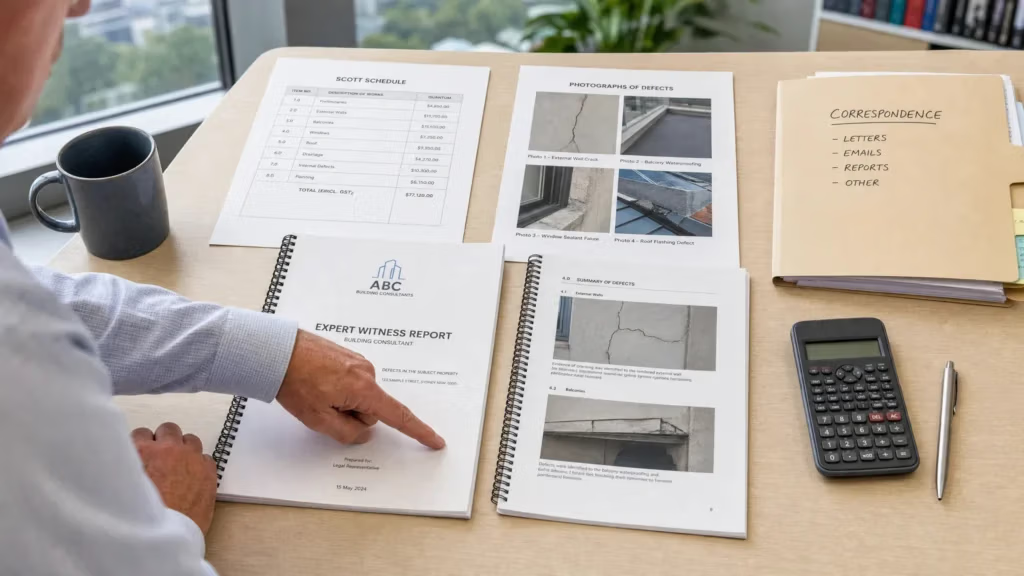
In a building dispute, a case is only as strong as the evidence behind it. Photos, emails, invoices and site notes all matter, but they often need to be interpreted by someone who understands construction, defects, scope, workmanship and reasonable cost. That is where a building consultant can become a practical advantage.
For a homeowner, a consultant can help explain what is defective, incomplete or non-compliant. For a builder, they can help respond to allegations with technical clarity. For a lawyer or solicitor, they can turn construction issues into organised evidence that is easier to plead, negotiate, mediate or present in NCAT or court.
Awesim Building Consultants provides independent building dispute support across New South Wales, including expert witness reports, Scott Schedules, quantum meruit reports and litigation support. Under the direction of Glen Sim, owner and director of Awesim Building Consultants, the focus is on clear, independent and dispute-ready reporting that helps parties understand the real technical issues in their matter.
Why technical evidence matters in a building case
Most building cases involve competing stories. One party says the work is defective. The other says the work was done properly, varied by agreement, affected by design issues or left unpaid. Without independent technical evidence, the dispute can become a contest of opinions.
Tribunals and courts need more than frustration or general disagreement. They need evidence that identifies the issue, explains why it matters, connects it to standards or contract documents where relevant, and sets out the consequence. In NSW home building matters, NCAT deals with many residential building disputes, and parties are commonly expected to present their issues in a structured and evidence-based way.
A building consultant helps close the gap between the construction site and the legal forum. They do not replace your lawyer, and they should not act as an advocate pretending to be independent. Their value is in investigating, documenting and explaining the technical facts so the case can be assessed more accurately.
Where a building consultant fits in
A consultant can be involved early, before a claim is filed, or later, when a matter is already in NCAT or court. The right timing depends on the dispute, but early involvement often helps parties understand the strengths and weaknesses of their position before costs escalate.
| Case issue | What a building consultant can examine | Possible output for the case |
|---|---|---|
| Alleged defective work | Workmanship, visible defects, likely causes, relevant standards and practical consequences | Building defect assessment or expert witness report |
| Incomplete work | Contract scope, site condition, progress claims and remaining works | Completion assessment or report section |
| Variations | Records, instructions, pricing, scope changes and site circumstances | Opinion support for variation dispute or Scott Schedule input |
| Payment dispute | Work performed, value claimed, invoices, quantities and supporting evidence | Quantum meruit report or cost assessment support |
| Multiple disputed items | Defects, responses, evidence references and claimed amounts | Scott Schedule or expert input into a schedule |
| Legal preparation | Technical issues that need clarification for pleadings, mediation or hearing | Litigation support for solicitor or party |
This structured approach is especially helpful because building disputes often contain many small issues. A cracked tile, a leaking junction, an uneven slab, a disputed variation and an unpaid progress claim may all sit inside the same case. Without structure, important details get lost.
Expert witness reports that explain the technical issues
An expert witness report is one of the main ways a building consultant can assist in a formal dispute. It sets out the expert’s observations, assumptions, reasoning and opinions in a format that can be used in a tribunal or court process.
A useful expert report should do more than list defects. It should explain the issue in plain language, identify relevant evidence, distinguish between observed facts and opinion, and provide a basis for the conclusions reached. Where appropriate, it may refer to plans, specifications, standards, manufacturer guidance, site photographs, contracts, invoices or correspondence.
Independence is critical. In NSW court proceedings, expert witnesses are subject to duties that include assisting the court impartially. The Expert Witness Code of Conduct in Schedule 7 of the Uniform Civil Procedure Rules 2005 is an important reference point for expert evidence. Even where a matter is in NCAT rather than a court, the same principle is important: an expert’s role is to assist with independent technical opinion, not simply to argue for the person who engaged them.
This is where the experience of a dispute-focused consultant matters. Glen Sim’s role through Awesim is not just to inspect buildings, but to help produce reports that are suitable for the realities of building disputes in NSW. The report must be clear enough for non-builders to understand, but detailed enough to withstand scrutiny.
For matters already heading to NCAT, you may also find Awesim’s guide to NCAT independent building inspections useful.
Scott Schedules that organise the dispute
A Scott Schedule is a structured table used to organise disputed items. In building cases, it commonly lists each defect, incomplete item, variation or cost issue, along with the claimant’s position, respondent’s position, evidence references and amounts claimed or disputed.
A building consultant can help by identifying the technical issues that should appear in the schedule, ensuring items are described clearly, and connecting each item to the supporting report or evidence. This is important because a poorly prepared schedule can confuse the dispute rather than narrow it.
For example, a schedule entry that says bathroom defective is too broad. A better entry would identify the specific issue, such as inadequate fall to floor waste in upstairs bathroom, then refer to photographs, inspection notes, relevant standards or the expert report section. That level of detail helps everyone understand what is actually in dispute.
Awesim prepares Scott Schedules for NSW building matters and can work with homeowners, builders and lawyers to make the schedule more useful for negotiation, mediation or hearing preparation. If you want a deeper explanation, see Awesim’s article on what a Scott Schedule does in a building dispute.
Quantum meruit reports and payment disputes
Some building cases are not only about defects. They are about money. A builder may say they performed valuable work and were not paid. An owner may say the claimed amount is excessive, unsupported or affected by defective and incomplete work. In some disputes, the legal question may involve quantum meruit, which broadly concerns the reasonable value of work or services in the circumstances.
A building consultant does not decide the legal entitlement. That is for the tribunal, court and legal representatives. What the consultant can do is assess construction records, site evidence, quantities, scope and claimed value from a technical building perspective. This can help the legal team or party understand whether the amount claimed is supported by the work observed and the available documents.
Quantum meruit reports can be particularly useful where records are incomplete, scope has changed, or the parties disagree about what was actually done. They can also help separate the value of completed work from disputed, defective or unfinished items.
How a consultant helps homeowners
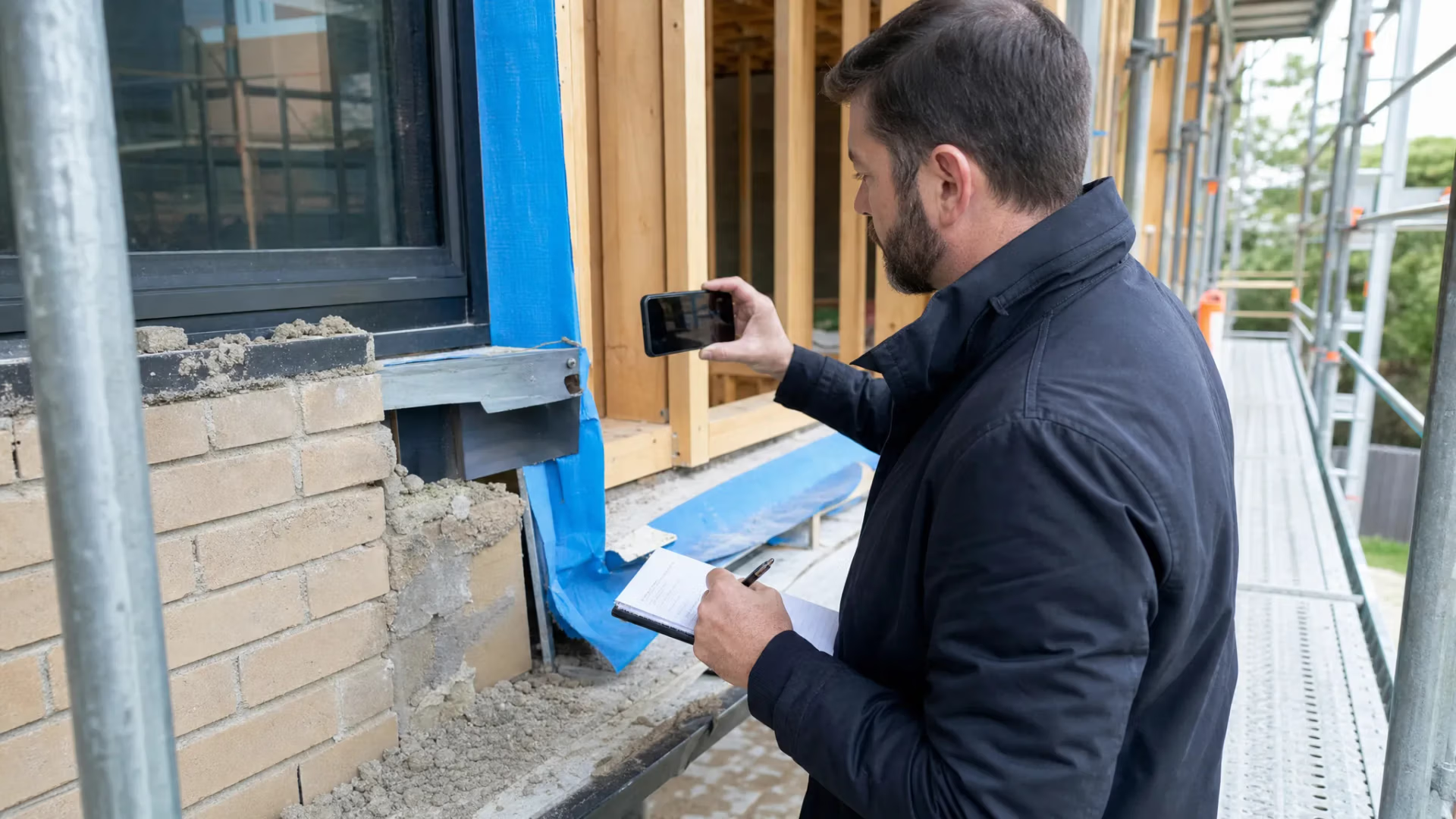
For homeowners, a building dispute can feel personal and overwhelming. You may know something is wrong, but struggle to explain it in a way that carries weight. A consultant helps by translating concerns into technical findings.
This can include identifying whether an issue is cosmetic, defective, incomplete, unsafe, non-compliant or potentially caused by another factor. That distinction matters. Not every imperfection justifies the same response, and not every defect has the same cost consequence.
A homeowner may also need help prioritising issues. In many disputes, the strongest case is not built by listing every minor concern. It is built by presenting the material issues clearly, with evidence and a realistic understanding of remediation.
How a consultant helps builders
Builders also benefit from independent technical support. A claim against a builder may include allegations that are exaggerated, poorly described or unrelated to the builder’s scope. A consultant can help assess whether the alleged defects are valid, whether they arise from the builder’s work, and whether the claimed rectification approach appears reasonable.
This can be valuable when preparing a response to a claim, negotiating a settlement, or narrowing issues before a hearing. A builder may also need support in variation disputes, progress payment disagreements, incomplete work allegations or quantum meruit claims.
A good consultant does not simply reject every allegation. They identify what is supportable, what is not, and what needs further evidence. That balanced approach can improve credibility and help reduce unnecessary dispute costs.
How a consultant helps lawyers and solicitors
For lawyers, the challenge is often converting messy construction facts into a case theory, evidence bundle and hearing-ready documents. A building consultant can assist by clarifying technical issues early, helping identify what evidence is missing, and providing opinions that align with the questions the legal process needs answered.
This support can be especially useful when preparing pleadings, evidence, Scott Schedules, settlement offers, mediation positions and cross-examination topics. A consultant may also help lawyers understand which issues are genuinely technical and which are primarily contractual or legal.
The best results usually come from clear instructions. Lawyers should identify the questions they need answered, provide the relevant documents, and allow the expert to form an independent opinion. The consultant’s independence is what gives the evidence value.
What to prepare before engaging a building consultant
The more organised your documents are, the more efficiently a consultant can assess the matter. You do not need a perfect brief before seeking help, but basic records make a significant difference.
Useful material often includes:
- The building contract and any amendments
- Plans, specifications and engineering documents
- Variation requests, approvals and pricing records
- Progress claims, invoices and receipts
- Emails, text messages and written instructions
- Photographs and videos with dates where possible
- Defect lists, inspection notes and previous reports
- NCAT, court or solicitor correspondence if proceedings have started
A consultant can still assist where records are incomplete, but gaps should be identified honestly. Missing documents can affect the strength of an opinion and may need to be addressed in the report.
What the engagement may involve
Every matter is different, but a building consultant’s work often follows a practical sequence. The first step is usually to understand the dispute, the property, the parties’ positions and the documents available. After that, the consultant may inspect the site, record observations, take photographs and compare the work against relevant project documents or standards.
The next step is preparing the required output. That may be an expert witness report, defect assessment, Scott Schedule, quantum meruit report or a combination of those documents. In some matters, further clarification is needed after the other side serves evidence or after legal representatives refine the issues.
If the matter proceeds to a hearing, the consultant may also be asked to assist with expert conclaves, joint reports or giving evidence, depending on the forum and directions made. Not every case needs that level of involvement, but the original report should be prepared with the possibility of scrutiny in mind.
Choosing the right building consultant for your case
Not every building inspection is suitable for a dispute. A pre-purchase inspection, maintenance inspection or general condition report may be useful for other purposes, but a contested case often needs a consultant who understands expert evidence, dispute processes and the importance of clear reasoning.
| What to look for | Why it matters |
|---|---|
| Independence | The opinion must be credible and not merely argumentative |
| Dispute experience | NCAT and court matters require structured evidence and clear reasoning |
| Clear report writing | Decision-makers need to understand the issue without construction jargon |
| Ability to use schedules | Many building cases need itemised issues, evidence references and amounts |
| NSW building knowledge | Local processes, documents and expectations affect how evidence is prepared |
| Practical communication | Homeowners, builders and lawyers all need clear explanations at different levels |
Awesim’s work is focused on building dispute support across NSW, rather than generic inspection only. That focus is important when the report may be used in negotiation, NCAT or court.
Frequently Asked Questions
Can a building consultant help before I start an NCAT case? Yes. Early advice can help you understand the technical issues, organise evidence and decide whether the dispute is suitable for negotiation, mediation or formal proceedings. Legal advice should still be obtained for questions about rights, limitation periods and strategy.
Is a building consultant the same as a lawyer? No. A lawyer advises on legal rights, claims, procedure and strategy. A building consultant provides technical construction opinion, defect assessment, cost or scope analysis, expert reports and related dispute support.
Can a consultant prepare a report for both defects and payment issues? In many cases, yes, provided the consultant has the information needed to assess both areas. Some matters may require a defect report, a Scott Schedule, a quantum meruit report or separate sections dealing with different issues.
Will an expert report guarantee that I win my case? No report can guarantee an outcome. A strong expert report can improve the quality of your evidence, clarify the issues and support your position, but the final decision depends on the facts, law, documents and decision-maker.
Why is independence so important? Independent evidence is more persuasive because it is based on technical assessment rather than loyalty to one party. If an expert appears biased, the weight given to their opinion may be reduced.
Need building dispute support in NSW?
If your case involves defects, incomplete work, disputed variations, unpaid claims, Scott Schedules or expert evidence, Awesim Building Consultants can help you understand the technical issues and prepare dispute-ready documents.
Led by Glen Sim, owner and director, Awesim provides independent building consultant support across New South Wales for homeowners, builders and lawyers. To discuss expert witness reports, Scott Schedules, quantum meruit reports or litigation support, contact Awesim Building Consultants.
Related Posts

Water Damage in Homes: How to Track Down the Source
Water damage in a home rarely announces itself at the source. A stain on the ceiling, a musty smell in
Read More »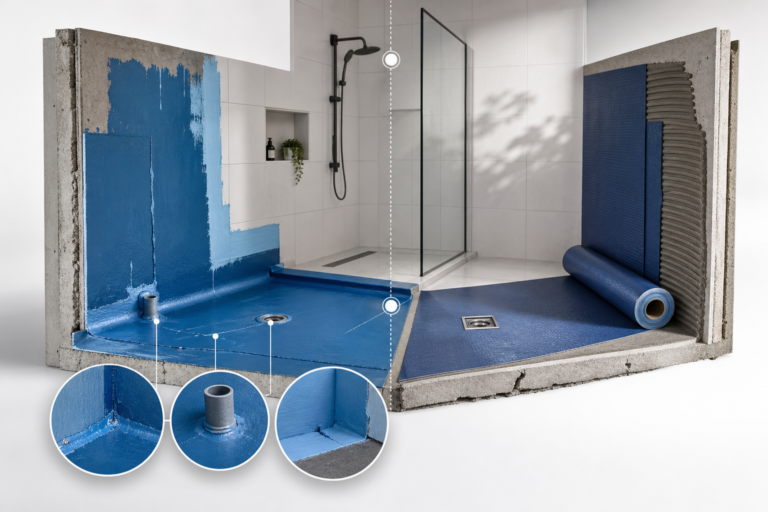
Waterproofing Membrane Types: Which Fails Most in NSW Bathrooms
Waterproofing failure is the single most common serious defect found in NSW apartments, and the type of membrane used, along
Read More »
Building Certifier NSW: Role, Limits, and When You Need More
A building certifier in NSW is a registered professional who issues construction certificates, conducts critical stage inspections, and grants occupation
Read More »