
How a Building Construction Consultant Assesses Defects
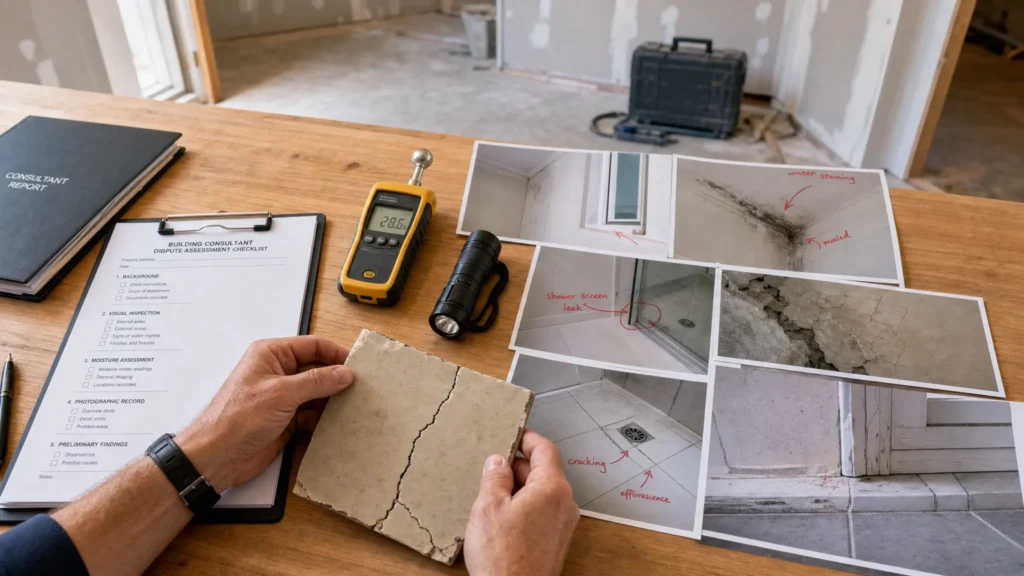
When a wall cracks, a shower leaks, or newly installed joinery starts pulling away from the substrate, the visible problem is only the starting point. In a building dispute, the real question is not simply, “Is there a defect?” It is, “What is the defect, what caused it, how serious is it, what standard has been breached, and what is the reasonable rectification scope?” You need a Construction Consultant.
That is where an independent building construction consultant becomes valuable. For homeowners, builders, and solicitors in NSW, a properly reasoned defect assessment can turn a confusing list of complaints into clear technical evidence. Glen Sim, owner and director of Awesim Building Consultants, approaches defect assessment with the discipline required for NCAT and court matters: inspect carefully, test the allegations against the evidence, identify causation, and present findings in a form that can be understood by decision-makers.
What a building defect assessment is trying to prove
A defect assessment is not just a visual walk-through. It is a technical investigation that considers whether completed work complies with the contract, approved plans, relevant codes, Australian Standards, manufacturers’ requirements, and accepted building practice.
In NSW residential building disputes, statutory warranties under the Home Building Act 1989 are often relevant. These warranties include requirements that work is performed with due care and skill, in accordance with the plans and specifications, and in compliance with the law. The National Construction Code may also be central where safety, waterproofing, structural adequacy, fire separation, access, energy efficiency, or health and amenity issues are involved.
A consultant’s role is to connect the condition observed on site to the applicable technical requirement. A cracked tile, for example, is not automatically a workmanship defect. It may be caused by poor substrate preparation, structural movement, impact damage, inappropriate adhesive, incorrect movement joints, or an issue outside the builder’s control. The assessment must separate symptoms from causes.
The consultant starts with documents, not just the site
Before attending site, an experienced consultant will usually review available project documents. This allows the inspection to be targeted and helps prevent assumptions.
Relevant documents may include the building contract, scope of works, architectural drawings, engineering details, specifications, variation records, invoices, photographs, emails, site instructions, waterproofing certificates, occupation certificate records, and previous reports. For a dispute, the consultant may also review pleadings, a list of alleged defects, correspondence between the parties, and any rectification proposals already exchanged.
This document review matters because the same physical condition can have different consequences depending on the agreed scope. If a builder was engaged to complete a limited repair, the consultant must assess the work against that limited engagement. If the builder was engaged for a full renovation, a wider set of obligations may apply. For solicitors, this distinction is often critical because technical evidence must align with the issues actually in dispute.
Site inspection: observing, measuring, and recording
The site inspection is where allegations are tested against physical evidence. Glen Sim’s role as an independent expert is not to advocate for a party’s preferred version of events. It is to form a reasoned opinion based on what can be observed, measured, documented, and supported.
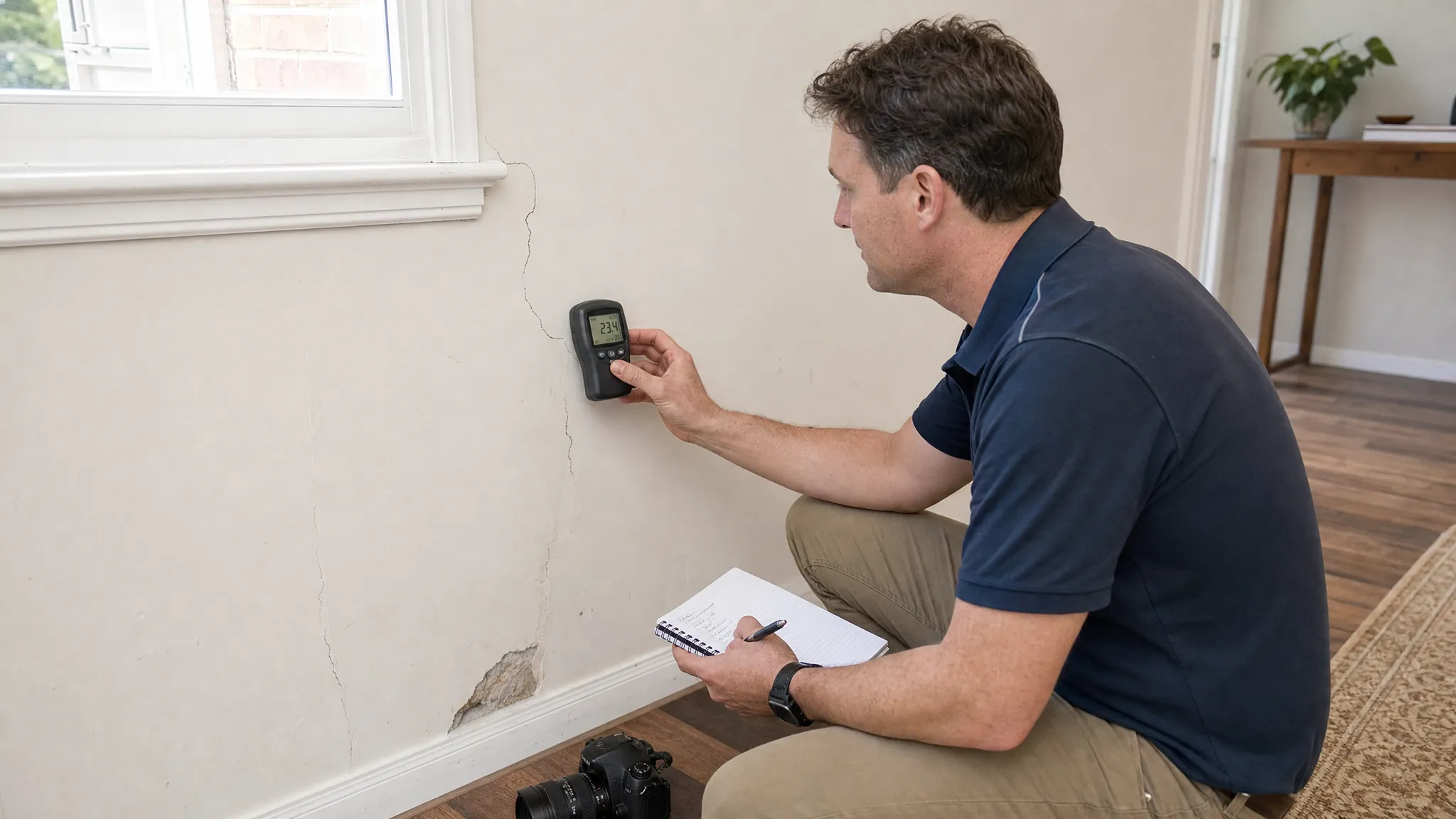
A defect inspection commonly includes a systematic review of the relevant areas, photographic recording, measurements, moisture readings where appropriate, levels and falls, visual checks of workmanship, and comparison with drawings or specifications. The consultant may examine external elements such as cladding, roofing, balconies, drainage, paving, retaining walls, windows, and doors. Internal areas may include wet areas, flooring, walls, ceilings, stairs, joinery, finishes, and services interfaces.
Access is important. Some defects cannot be properly assessed without viewing roof spaces, subfloors, service penetrations, external elevations, or concealed junctions. Where destructive testing is needed, such as opening a wall or removing tiles, that should generally be planned, authorised, and documented so the evidence remains reliable.
A good consultant records not only what is defective, but also what was inspected and found to be acceptable. This helps narrow the dispute and reduces the risk of broad, unsupported allegations.
The difference between appearance issues and true defects
Not every imperfection is a construction defect. Buildings are handmade products assembled from many trades, materials, and site conditions. Some minor variations may be within tolerances, while others may indicate non-compliance or poor workmanship.
The consultant must distinguish between cosmetic, functional, compliance, and structural concerns. This distinction influences urgency, cost, and the strength of a claim.
| Defect type | What the consultant considers | Common examples |
|---|---|---|
| Cosmetic defect | Whether the finish falls outside reasonable workmanship standards or specified tolerances | Paint blemishes, uneven grout, visible patching, minor surface scratches |
| Functional defect | Whether the element fails to perform its intended purpose | Doors not latching, ponding water, leaking windows, inadequate falls |
| Compliance defect | Whether the work departs from the NCC, approved plans, standards, or manufacturer requirements | Non-compliant waterproofing, incorrect balustrade height, inadequate ventilation |
| Structural defect | Whether the defect affects stability, load path, movement, durability, or safety | Significant cracking, settlement, framing movement, failed retaining structures |
| Consequential damage | Whether one defect has caused secondary damage elsewhere | Swollen cabinetry from leaks, mould from moisture ingress, damaged linings |
This classification is particularly useful in NCAT and court matters because it helps the parties understand which items are minor, which require urgent action, and which may justify specialist engineering input.
Testing against standards and tolerances
A building construction consultant does not assess defects by personal preference. The opinion should be anchored to objective benchmarks wherever possible.
Depending on the issue, relevant benchmarks may include the contract documents, approved plans, engineering specifications, manufacturer installation guides, the NCC, Australian Standards, NSW Fair Trading guidance, and industry tolerances. For example, a waterproofing complaint may require consideration of the wet area design, membrane installation, falls to waste, shower screen junctions, and evidence of moisture migration. A cracking complaint may require consideration of crack width, pattern, location, age of the building, substrate type, and whether the cracking is active.
The consultant must also be careful not to overstate certainty. If the available evidence supports a probable cause but not an absolute conclusion, the report should say so. This is part of what makes an expert report credible. Decision-makers are more likely to rely on evidence that explains its assumptions and limitations than evidence that simply asserts conclusions.
Causation: the most important part of the assessment
In many disputes, both sides agree that a problem exists. The disagreement is about why it exists and who should bear the cost of rectification. That is why causation is central.
A consultant may consider whether the defect resulted from design error, poor workmanship, unsuitable materials, inadequate supervision, movement in the structure, water ingress, lack of maintenance, owner-supplied materials, latent site conditions, subsequent trades, accidental damage, or normal wear and tear.
For example, water staining below a balcony may be caused by failed waterproofing, inadequate drainage, cracked grout, poorly sealed penetrations, insufficient set-downs, or defects in adjoining wall cladding. Each cause may point to a different rectification method and a different responsible party. A report that merely says “balcony leak” is not enough for a serious dispute. The useful evidence is the reasoning that identifies the likely pathway of water ingress and the work required to fix it.
Causation also affects quantum. If a defect is localised, targeted repair may be reasonable. If the defect is systemic, such as widespread non-compliant waterproofing or repeated installation errors, broader removal and replacement may be justified. A consultant’s role is to explain that logic clearly.
Assessing severity, risk, and urgency
Once defects are identified, the consultant considers their practical impact. Some defects are inconvenient but stable. Others present safety risks, ongoing deterioration, or the risk of further damage if not addressed quickly.
Severity may be assessed by considering safety, water ingress, structural movement, loss of function, breach of statutory requirements, risk of mould, durability, and the likelihood of consequential damage. This helps homeowners understand what needs immediate attention. It helps builders prioritise rectification. It helps lawyers distinguish between strong technical issues and lower-value complaints that may not be worth pursuing aggressively.
Urgency should be stated carefully. A consultant may recommend temporary mitigation, such as preventing further water entry, but should avoid giving legal advice about rights, liability, or strategy. The technical opinion supports the legal process, it does not replace it.
Determining the reasonable rectification scope
A defect assessment should normally move beyond diagnosis and address rectification. The question is not always “What is the most expensive way to make it perfect?” The question is usually “What is a reasonable and necessary scope to rectify the defect in accordance with the applicable standard?”
For some defects, this may involve repair, adjustment, cleaning, resealing, or replacement of a limited component. For others, compliant rectification may require demolition and reconstruction of the affected area. Waterproofing defects, for instance, can be difficult because the failed membrane is often concealed. If the membrane has not been installed correctly, surface sealing may not be a durable or compliant solution.
A well-prepared report should explain why the proposed rectification method is appropriate. If alternative methods exist, the consultant may identify them and explain the risks. This becomes especially important when parties are negotiating settlement, preparing a Scott Schedule, or responding to competing expert evidence.
For matters involving multiple disputed items, a Scott Schedule can help organise each defect, response, evidence reference, rectification scope, and cost. Awesim has explained this process in more detail in its guide on what a Scott Schedule does in a building dispute.
Considering cost evidence and quantum
Defect assessments often feed into a claim for rectification costs. The consultant may identify the technical scope of works, while cost evidence may be supported by builder quotations, quantity surveyor input, invoices, or a quantum report, depending on the dispute.
In building disputes, cost evidence should be itemised and connected to the defects. A lump sum quote with no breakdown may be difficult to test. A stronger approach links each cost item to a specific defect, the reason rectification is required, and the evidence supporting it.
This is one reason Scott Schedules are commonly used in NSW building disputes. They allow parties to compare claim, response, expert opinion, and cost in a structured way. For solicitors, this can reduce ambiguity and assist with preparation for directions, conciliation, expert conclaves, or hearing.
What makes an assessment suitable for NCAT or court?
A dispute-ready assessment is different from a casual inspection note. If the report may be used as expert evidence, it should be independent, structured, and transparent. The expert should identify the documents reviewed, the inspection date, the issues considered, the observations made, the standards relied upon, the opinion reached, and the reasoning behind that opinion.
The report should also avoid advocacy. An expert witness has a duty to assist the tribunal or court, not to act as a mouthpiece for the person who engaged them. This is why independence is so important. Glen Sim’s work through Awesim Building Consultants focuses on clear technical reasoning for homeowners, builders, and lawyers who need evidence that can withstand scrutiny.
A strong report will usually include:
- A clear description of each alleged defect.
- Photographs and location references.
- Relevant measurements or test results where available.
- The applicable standard, drawing, specification, or requirement.
- The likely cause of the defect.
- The recommended rectification scope.
- Any limitations on the opinion, such as restricted access or concealed works.
For NSW disputes, it is also useful to ensure the report can be cross-referenced with the application, points of claim, builder’s response, and any Scott Schedule used in the matter.
Common mistakes that weaken a defect claim
Defect claims often become harder than they need to be because evidence is gathered too late or presented too broadly. A long list of complaints without technical support may create confusion rather than clarity.
Common mistakes include relying only on photographs without context, failing to preserve samples or damaged materials, repairing alleged defects before they are inspected, mixing contractual complaints with technical defects, using vague descriptions such as “poor workmanship”, and claiming complete replacement when a targeted repair may be adequate.
Builders can make similar mistakes by dismissing defects without explaining why the work complies. A short denial may not be persuasive if the homeowner has an independent report with photographs, standards, and reasoning. A better response addresses each alleged defect with documents, measurements, site records, and a technical explanation.
Lawyers can assist by defining the issues early and providing the expert with the right material. The clearer the questions, the more useful the expert evidence is likely to be.
Practical preparation before engaging a consultant
Before engaging a building construction consultant, prepare a concise chronology and gather the key records. This does not need to be perfect, but it should help the consultant understand what happened and when.
Useful preparation includes contracts, plans, variations, progress payment claims, photographs taken during construction, completion documents, certificates, emails, text messages, previous inspection reports, repair invoices, and a list of the specific defects to be inspected. If the dispute is already in NCAT or court, provide relevant orders, pleadings, directions, and any timetable for evidence.
Homeowners should avoid altering the area before inspection unless urgent mitigation is required. Builders should preserve site records and subcontractor details. Solicitors should identify any expert code or procedural requirements that apply to the matter.
Why independence matters in defect assessment
The value of an expert assessment depends on trust. If the report appears one-sided, speculative, or disconnected from evidence, it can damage the party’s position. If it is balanced and well reasoned, it can clarify the dispute even when the findings are not entirely favourable to the person who requested it.
This is particularly important in building disputes because many matters settle before a final hearing. A credible report can help the parties understand risk, narrow the issues, and focus negotiations on the defects that genuinely matter.
Awesim Building Consultants provides independent building dispute support across NSW, including expert witness reports, defect assessments, Scott Schedules, quantum meruit reports, and litigation support. The aim is not to inflate disputes. It is to bring technical clarity to complex building issues so homeowners, builders, and lawyers can make informed decisions.
Frequently Asked Questions
Is a defect assessment the same as a standard building inspection? No. A standard inspection may identify visible issues, but a defect assessment for a dispute usually goes further. It considers evidence, standards, causation, rectification scope, and how the findings may be presented in an expert report.
Can a building construction consultant decide who is legally liable? A consultant can provide technical opinions about defects, causation, compliance, and rectification. Legal liability is a matter for the tribunal, court, or legal advisers, based on the evidence and applicable law.
Should defects be repaired before the consultant inspects them? Ideally, no. Repairing defects before inspection can remove important evidence. If urgent work is required to prevent damage or safety risks, document the condition carefully with photographs, videos, invoices, and notes before rectification.
What should I give the consultant before the inspection? Provide the contract, plans, specifications, variations, photographs, emails, invoices, certificates, previous reports, and a clear list of alleged defects. If proceedings have started, provide the relevant NCAT or court documents as well.
How does a consultant assess hidden defects? Hidden defects may require inference from visible symptoms, moisture testing, document review, photographs taken during construction, or controlled invasive inspection. The report should clearly state any limitations where areas could not be accessed.
Need an independent defect assessment in NSW?
If you are dealing with defective work, a disputed rectification claim, or a matter before NCAT or court, independent technical evidence can make the difference between confusion and clarity.
Glen Sim, owner and director of Awesim Building Consultants, assists homeowners, builders, and lawyers across NSW with building defect assessments, expert witness reports, Scott Schedules, quantum meruit reports, and litigation support. To discuss your matter, contact Awesim Building Consultants and get clear, independent guidance before your dispute becomes harder to resolve.

Related Posts
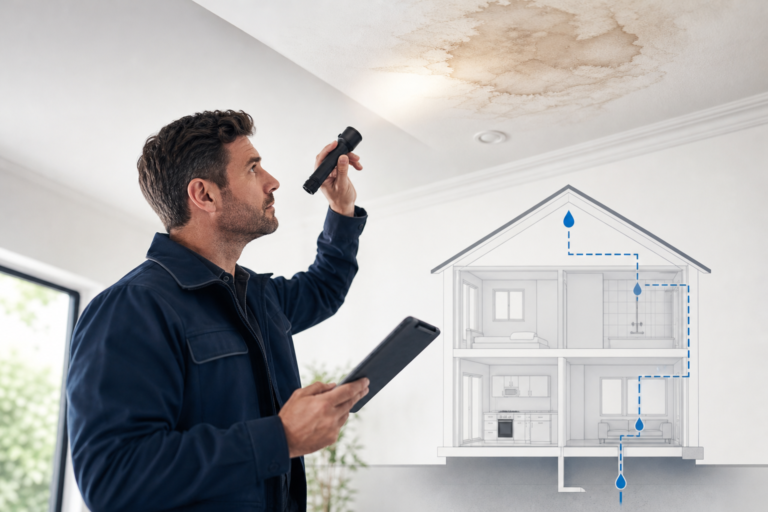
Water Damage in Homes: How to Track Down the Source
Water damage in a home rarely announces itself at the source. A stain on the ceiling, a musty smell in
Read More »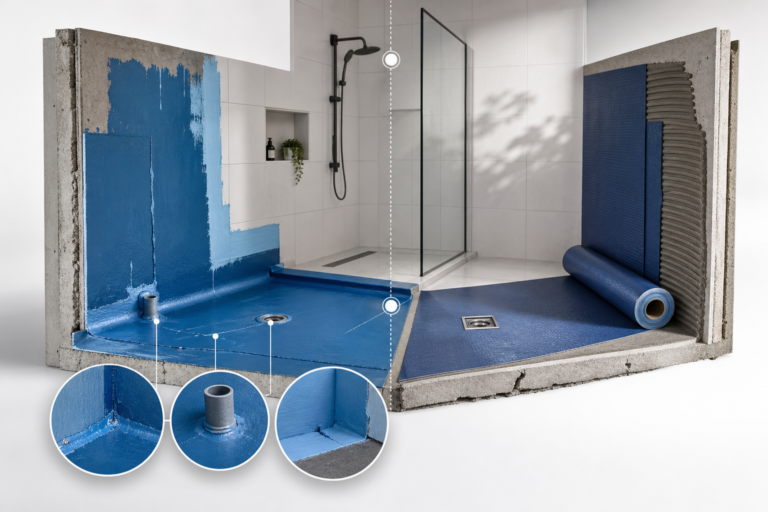
Waterproofing Membrane Types: Which Fails Most in NSW Bathrooms
Waterproofing failure is the single most common serious defect found in NSW apartments, and the type of membrane used, along
Read More »
Building Certifier NSW: Role, Limits, and When You Need More
A building certifier in NSW is a registered professional who issues construction certificates, conducts critical stage inspections, and grants occupation
Read More »