
How Construction Dispute Resolution Consultants Add Value
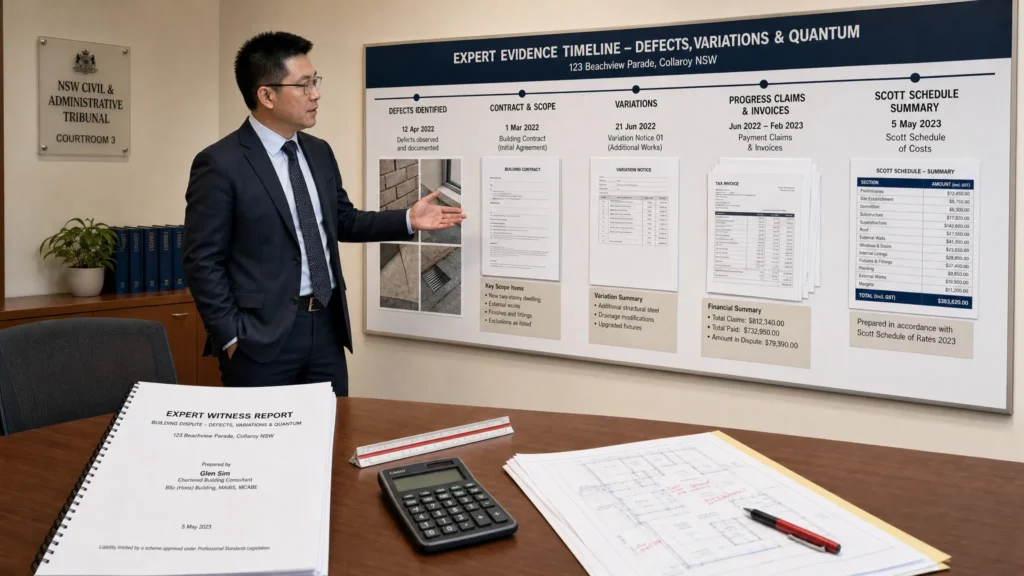
When a construction dispute escalates, the conversation can quickly become emotional. A homeowner may feel the work is defective. A builder may feel they have not been paid for completed work. A solicitor may be trying to separate contract issues from technical building questions before advising on the next step.
This is where construction dispute resolution consultants add value. They bring an independent technical lens to the dispute, identify what can be proven, and convert building issues into evidence that can be used in negotiation, NSW Fair Trading processes, NCAT proceedings, court matters, or settlement discussions.
The real value is not simply “having a report”. It is having the right issues investigated, the right questions answered, and the evidence presented in a way that helps parties make better decisions.
What construction dispute resolution consultants actually do
A construction dispute resolution consultant is usually engaged when there is disagreement about workmanship, incomplete work, variations, payment, defects, rectification costs, or the scope of a builder’s obligations.
They do not replace a solicitor, tribunal member, adjudicator, or mediator. Their role is different. They provide independent technical input so the legal and commercial issues can be understood more clearly.
In practical terms, a consultant may:
- Inspect the building work and identify alleged defects or incomplete items.
- Review contracts, drawings, specifications, variation documents, invoices, photos, and correspondence.
- Assess whether work appears consistent with relevant standards, tolerances, plans, and accepted building practice.
- Comment on likely rectification methods and reasonable cost issues where within their expertise.
- Prepare expert witness reports, Scott Schedules, quantum meruit reports, or NCAT dispute reports.
- Help solicitors frame technical questions that need to be answered before a matter proceeds.
For a broader overview of dispute pathways in New South Wales, Awesim has also published a practical guide to dispute resolution in construction that explains negotiation, NSW Fair Trading, NCAT, court proceedings, and related options.
The main value: turning allegations into evidence
Most building disputes begin with broad statements: “the work is poor”, “the owner keeps changing their mind”, “the builder has overcharged”, or “the job is not finished”. These concerns may be genuine, but they are not always enough to resolve a dispute.
A consultant adds value by converting general complaints into structured evidence. That usually means identifying each disputed item, linking it to the relevant contract documents or technical standards, and explaining the likely cause and consequence.
This matters because decision-makers generally need more than dissatisfaction. In NSW building disputes, useful evidence often needs to answer questions such as:
- What exactly is alleged to be defective or incomplete?
- What document, standard, tolerance, drawing, or specification is relevant?
- What inspection observations support the allegation?
- Is rectification required, or is another remedy more appropriate?
- What is the reasonable scope of rectification?
- What is the cost issue in dispute?
- Which items are technical issues and which are legal or contractual issues?
This process can reduce confusion and prevent a dispute from becoming a long list of untested grievances. It also helps parties identify which issues are strong, weak, or capable of compromise.
How consultants add value at different stages of a dispute
The value of a consultant changes depending on when they are engaged. Early involvement can prevent a dispute from growing. Later involvement can help prepare evidence for a formal process.
| Stage of dispute | Common problem | Consultant value |
|---|---|---|
| Early disagreement | Parties are arguing in general terms | Identifies the actual technical issues and separates defects from misunderstandings |
| Pre-application or pre-response | Evidence is scattered across emails, photos, invoices, and site notes | Organises the issues into a coherent technical position |
| NCAT or court preparation | The matter needs expert evidence or a structured schedule | Prepares reports, Scott Schedules, or quantum-related material within scope |
| Settlement discussions | Parties do not know what is realistically worth pursuing | Narrows the dispute and helps clarify technical and cost risks |
| Hearing or expert conference | Technical opinions need to be explained and tested | Provides independent expert assistance in a format suitable for the forum |
The earlier the technical issues are understood, the easier it is for homeowners, builders, and lawyers to make commercial decisions. That does not mean every dispute will settle early, but it does mean decisions are less likely to be based on assumptions.
Value for homeowners, builders, and solicitors
Construction dispute resolution consultants can assist each party in a different way. The underlying role remains independent, but the practical benefit depends on the client’s position and the forum.
| Audience | What they often need | How a consultant adds value |
|---|---|---|
| Homeowners | Clarity on defects, incomplete work, and rectification scope | Provides an independent assessment of what is technically supportable |
| Builders | A fair review of alleged defects, variations, unpaid work, or owner complaints | Helps distinguish genuine defects from disputed expectations or scope issues |
| Solicitors | Technical evidence that can be used to advise, negotiate, plead, or prepare a case | Converts building issues into structured expert material and schedules |
For homeowners, the value is often confidence. They need to know whether the problem is serious, what evidence supports it, and what rectification may involve.
For builders, the value is fairness and clarity. A consultant can help test whether allegations are technically justified and whether a payment or variation claim needs better evidentiary support.
For solicitors, the value is precision. Legal arguments are stronger when the technical evidence is clearly framed, properly supported, and prepared by an independent expert rather than presented as a client’s opinion.
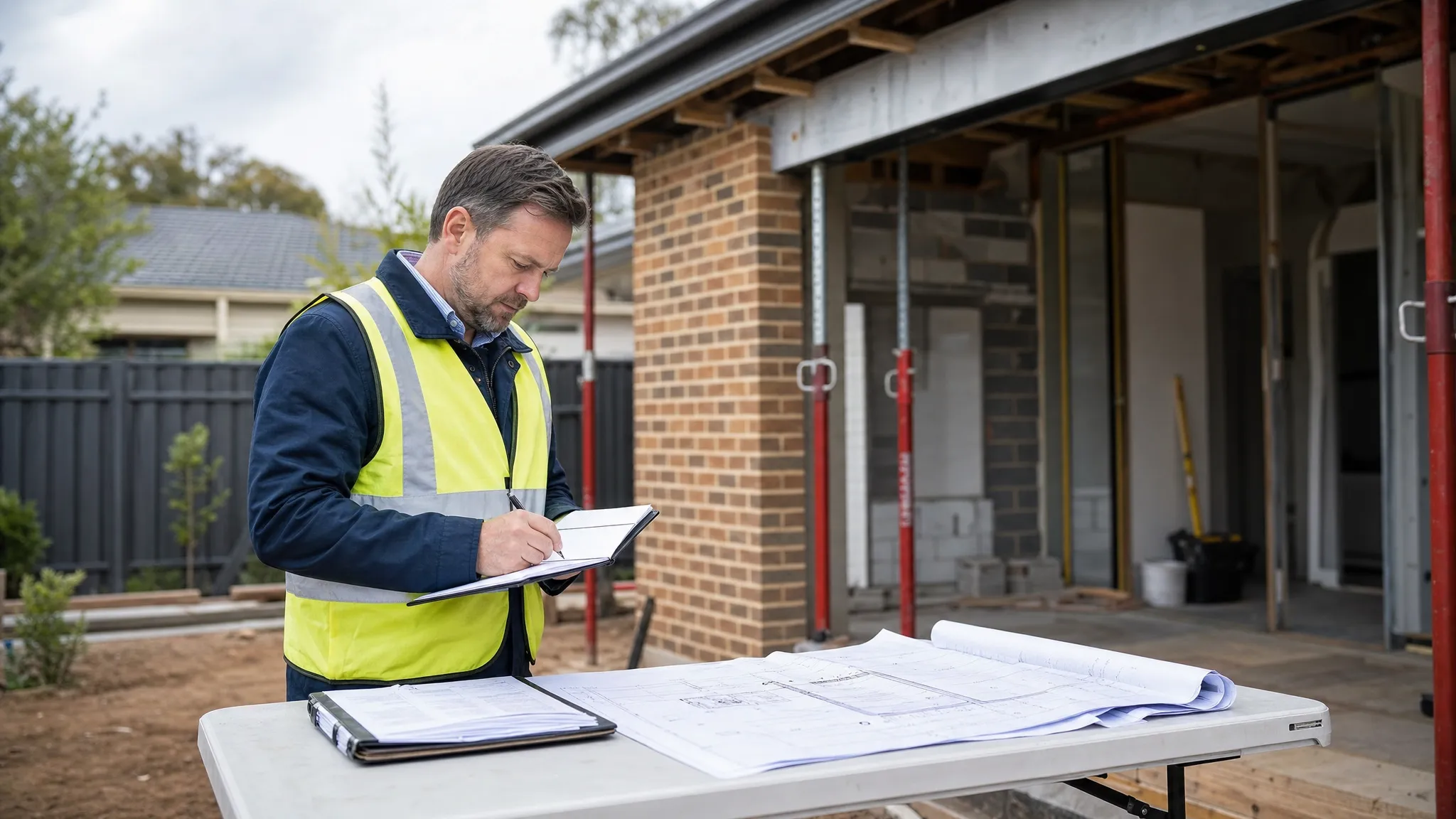
Why independence is central to the value
A consultant’s usefulness depends heavily on independence. If a report reads like advocacy, it may create more problems than it solves. In a formal dispute, the expert’s role is to assist the tribunal or court on technical matters, not to argue the client’s case as if they were a party.
In NSW court proceedings, expert witnesses are expected to comply with the Expert Witness Code of Conduct in Schedule 7 of the Uniform Civil Procedure Rules 2005. While not every matter begins in court, the same discipline is valuable in NCAT and settlement contexts: clear assumptions, clear reasoning, and opinions limited to the expert’s area of expertise.
This is why engaging the right expert matters. Glen Sim, owner and director of Awesim Building Consultants, leads Awesim’s dispute work with an expert-led focus on independence, technical clarity, and evidence that can withstand scrutiny. In practice, that means avoiding exaggerated claims, identifying what is not known, and explaining the basis for each opinion.
Awesim has written more about this issue in its article on why an independent construction consultant matters, particularly for NSW building disputes where technical opinions may influence negotiation, NCAT preparation, or court evidence.
Scott Schedules make complex disputes easier to understand
One of the most practical tools in building disputes is the Scott Schedule. A Scott Schedule sets out disputed items in a structured table, often including the item number, allegation, response, evidence, rectification position, and cost claimed or disputed.
This format is valuable because many construction disputes involve dozens of separate issues. Without structure, parties can spend time arguing broadly without knowing which items remain in dispute.
A consultant can add value by helping populate the technical parts of the schedule. For example, they may identify whether an item is a defect, an incomplete item, a variation issue, a maintenance issue, or a matter that requires legal interpretation. They may also assist with rectification scope and cost-related information where appropriate.
A strong Scott Schedule can help parties see the dispute more clearly. It can reveal that some items are not worth pursuing, that some costs need better support, or that a handful of major issues are driving most of the claim.
Expert witness reports give decision-makers a technical foundation
In NCAT and court matters, an expert witness report can be critical. A properly prepared report should not simply list defects. It should explain the expert’s instructions, documents reviewed, inspection findings, assumptions, reasoning, conclusions, and any limitations.
A consultant adds value when the report helps answer the real questions in dispute. For example, if a homeowner alleges water ingress, the report should do more than say there is moisture present. It should explain observed symptoms, likely causes, relevant construction details, further investigation needed if any, and appropriate rectification considerations.
If a builder disputes liability, the expert may need to explain whether the alleged issue appears to arise from workmanship, design, product failure, lack of maintenance, owner-supplied materials, subsequent trades, or another cause. Not every issue has a simple answer, and a credible expert report should say so where the evidence is limited.
For more detail on the role of expert evidence, Awesim’s guide on how an expert witness helps in construction disputes explains how expert reports can assist with defects, incomplete work, causation, rectification, and quantum issues.
Quantum meruit and payment disputes need careful technical support
Not every dispute is about defective work. Many arise from payment claims, variations, or work performed without an agreed final price. In some circumstances, a party may raise a quantum meruit claim, which broadly concerns the reasonable value of work performed.
A construction dispute resolution consultant can assist by reviewing what work appears to have been carried out, what documents support that work, and how the claimed value aligns with the evidence. This can be especially useful where the contract documents are incomplete, the parties disagree about variations, or the scope changed during the project.
The consultant’s role is not to provide legal advice on whether a quantum meruit claim is available. That is a legal question. The consultant’s value is in the technical and evidentiary assessment of the work, scope, and value-related material so a solicitor or decision-maker has a clearer factual foundation.
The commercial value: narrowing the dispute
One of the most overlooked benefits of engaging a consultant is issue reduction. A building dispute may start with 60 alleged defects, but after independent review, only 15 may be technically significant. Alternatively, a builder may deny responsibility for all items, but an expert review may show that some rectification is clearly required.
That narrowing process has commercial value. It can reduce legal costs, shorten negotiation, improve settlement prospects, and help parties avoid spending time and money on weak points.
It can also reduce the risk of poor decisions. For example, a homeowner may be tempted to carry out urgent rectification before evidence is properly recorded. A builder may reject a complaint without inspecting the issue carefully. A solicitor may not yet know which technical questions should be put to an expert. In each case, early consultant input can help avoid unnecessary escalation.
No consultant can guarantee an outcome. The value lies in giving parties better information so they can make decisions based on evidence rather than pressure, frustration, or incomplete assumptions.
How to brief a construction dispute resolution consultant effectively
A consultant can only provide a useful opinion if they have the right information. A rushed or incomplete brief can lead to delay, extra cost, or a report that does not answer the questions that matter.
Before briefing a consultant, it is usually helpful to gather:
- The building contract and any signed variations.
- Architectural drawings, engineering drawings, specifications, and schedules.
- Invoices, payment claims, receipts, and cost breakdowns.
- Photos and videos showing the work at relevant stages.
- Emails, text messages, site notes, and written directions.
- Previous reports, notices, certificates, or inspection records.
- A short chronology of key events.
- A clear list of questions the consultant is being asked to answer.
Solicitors should also consider whether the expert is being briefed for preliminary advice, settlement purposes, NCAT evidence, court evidence, or another process. The required format and level of formality may differ.
Homeowners and builders should be clear about deadlines. NCAT directions, hearing dates, rectification works, and ongoing site conditions can all affect what needs to happen first.
When should you engage a consultant?
The best time to engage a consultant is usually before positions become entrenched and before evidence is lost. That may be when defects are first identified, when a payment dispute emerges, when a rectification demand is made, or when a solicitor needs technical input before drafting correspondence or evidence.
It is particularly sensible to seek expert input when:
- The dispute involves multiple alleged defects or incomplete items.
- The cost of rectification is significant.
- The parties disagree about whether work complies with the contract or relevant standards.
- A Scott Schedule is required or likely to be useful.
- A matter is heading to NCAT or court.
- A solicitor needs independent technical evidence to advise properly.
NSW Fair Trading and NCAT processes can involve strict steps, evidence requirements, and timeframes. The NCAT home building disputes information is a useful starting point for understanding the tribunal context, but technical evidence should be tailored to the specific issues in the dispute.
Frequently Asked Questions
Are construction dispute resolution consultants the same as mediators? No. A mediator helps parties negotiate and communicate. A construction dispute resolution consultant provides technical building evidence, such as defect assessments, expert reports, Scott Schedules, or quantum-related analysis.
Can a consultant help before a matter reaches NCAT? Yes. Early consultant involvement can clarify the issues, preserve evidence, and help parties negotiate from a more informed position before formal proceedings are commenced.
Do homeowners and builders both benefit from independent consultants? Yes. Homeowners may need evidence of defects or incomplete work, while builders may need a fair assessment of allegations, variations, or payment issues. Independence is valuable for both sides.
What makes a good expert witness report in a building dispute? A good report is clear, independent, well-structured, and evidence-based. It explains what was inspected, what documents were reviewed, what assumptions were made, and how the expert reached each opinion.
Can a consultant decide who wins the dispute? No. A consultant does not decide the legal outcome. Their role is to provide independent technical evidence that assists negotiation, legal advice, NCAT, or court decision-making.
Need independent support for a NSW building dispute?
Awesim Building Consultants provides independent building dispute support across New South Wales, including expert witness reports, Scott Schedules, quantum meruit reports, NCAT dispute reports, and building defect assessments.
Led by Glen Sim, owner and director of Awesim Building Consultants, Awesim helps homeowners, builders, and solicitors understand the technical evidence behind a dispute before the next step is taken.
If you need clear, independent input for a construction dispute, you can speak with Awesim Building Consultants about the evidence, reporting, and dispute support your matter may require.
Related Posts

Water Damage in Homes: How to Track Down the Source
Water damage in a home rarely announces itself at the source. A stain on the ceiling, a musty smell in
Read More »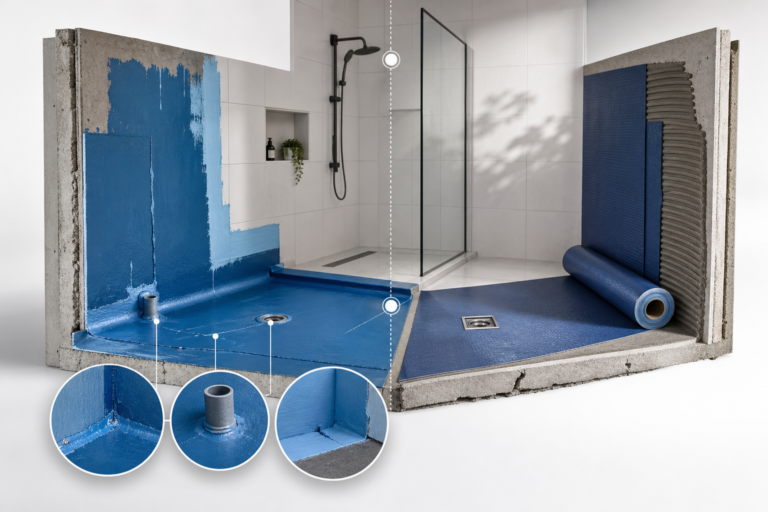
Waterproofing Membrane Types: Which Fails Most in NSW Bathrooms
Waterproofing failure is the single most common serious defect found in NSW apartments, and the type of membrane used, along
Read More »
Building Certifier NSW: Role, Limits, and When You Need More
A building certifier in NSW is a registered professional who issues construction certificates, conducts critical stage inspections, and grants occupation
Read More »