
How an Expert Witness Helps in Construction Disputes
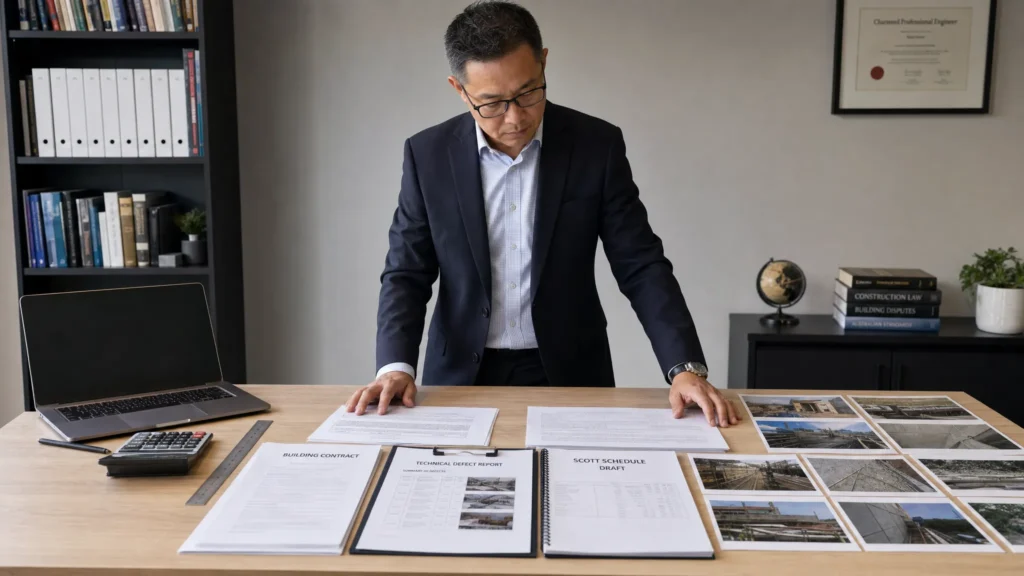
Construction disputes rarely turn on a single email, one photograph or one version of events. In NSW building matters, the outcome often depends on technical questions: Was the work defective? Was it incomplete? Did it comply with the contract, the plans, the Building Code of Australia, Australian Standards or acceptable industry practice? What is a reasonable cost to rectify it?
That is where an expert witness can make a significant difference.
An expert witness helps in construction disputes by turning complex building issues into clear, independent evidence. For homeowners, builders and solicitors, that evidence can clarify the real dispute, narrow the issues, support negotiations and assist NCAT or a court in understanding the technical facts.
At Awesim Building Consultants, Glen Sim, owner and director, leads independent dispute support across New South Wales, including expert witness reports, Scott Schedules and quantum meruit reports for building matters. His role is not to argue one side’s case. It is to provide technical opinion evidence that is reasoned, impartial and useful.
What is an expert witness in a construction dispute?
An expert witness is a person with specialised knowledge, training or experience who provides an independent opinion on matters within their area of expertise. In construction disputes, that expertise may relate to building defects, incomplete work, workmanship, causation, rectification methodology, scope of works, variations or the reasonable value of building work.
This is different from a general building inspection. A pre-purchase report may identify visible defects, but expert evidence for a dispute must usually go further. It needs to explain what is wrong, why it is wrong, what standard applies, who or what may have caused the issue, and what should be done about it.
In practical terms, an expert witness may inspect a property, review the contract documents, analyse photographs and correspondence, compare the work against relevant standards, prepare a written report and, if required, give evidence at a hearing.
The key word is independent. An expert witness is not a hired advocate. Their duty is to assist the tribunal or court with impartial technical evidence.
Why independence matters so much
Construction disputes are often emotional. Homeowners may feel they have paid for work that is defective or unfinished. Builders may feel they are being blamed for issues outside their control, unpaid variations or unrealistic expectations. Solicitors need evidence that can withstand scrutiny, not just a persuasive complaint.
Independent expert evidence helps separate frustration from proof.
In NSW court proceedings, the Expert Witness Code of Conduct in Schedule 7 of the Uniform Civil Procedure Rules 2005 states that an expert witness has an overriding duty to assist the court impartially on matters relevant to the expert’s area of expertise. The expert is not an advocate for the party who engaged them.
Although the exact procedural requirements can vary depending on whether the matter is in NCAT, court or another dispute pathway, the principle is consistent: expert evidence is strongest when it is objective, transparent and properly reasoned.
This is why the right expert can add credibility to a construction dispute. A report that simply repeats a client’s allegations is weak. A report that identifies the documents reviewed, the site observations, the applicable standards and the reasoning behind each conclusion is far more useful.
How an expert witness helps identify the real issues
Many construction disputes start with broad allegations. A homeowner may say the renovation is full of defects. A builder may say the owner keeps changing the scope. A solicitor may receive a bundle of photos, invoices and text messages with no clear technical structure.
An expert witness helps by breaking the dispute into defined issues.
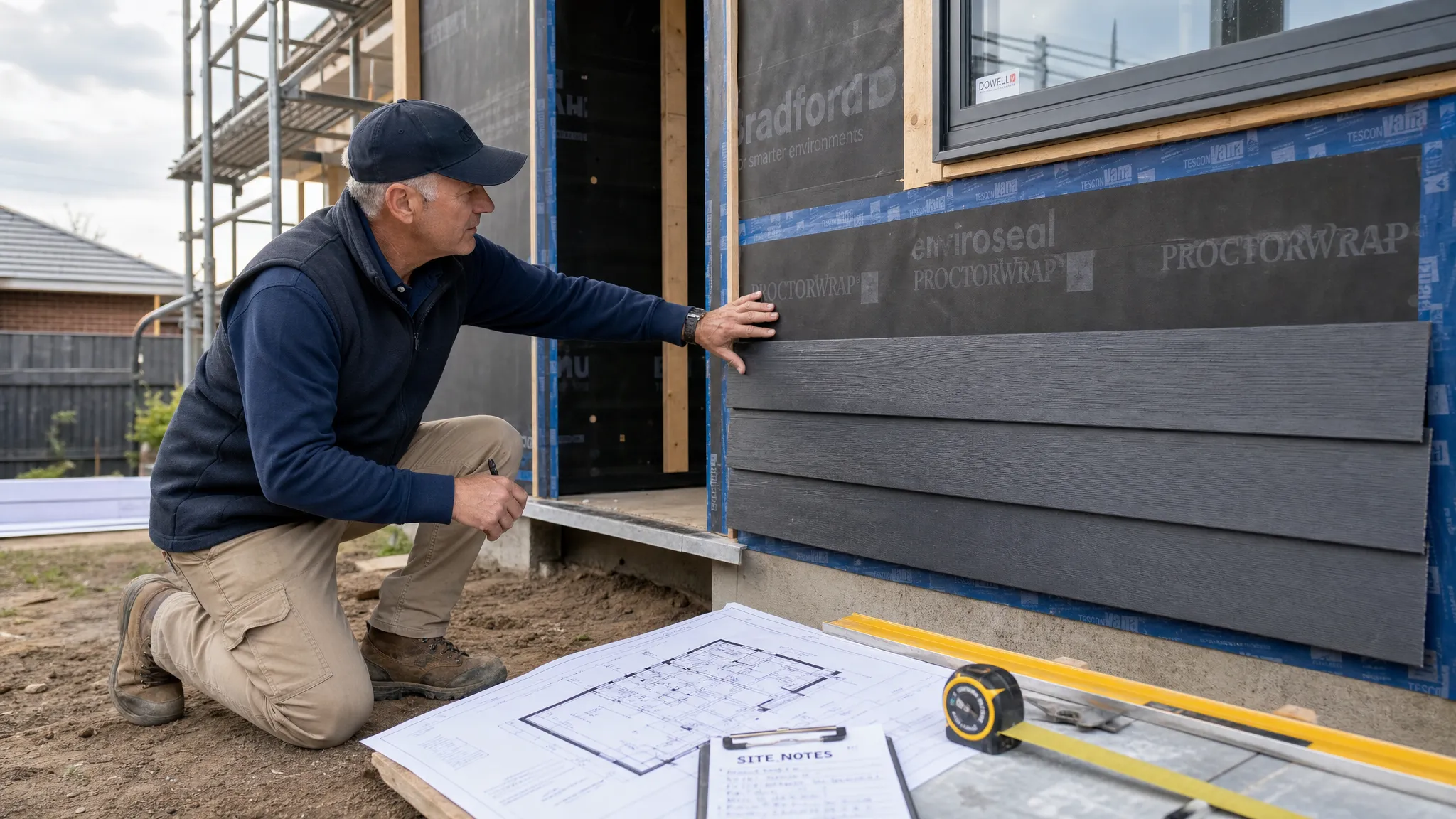
For example, a complaint about water ingress may involve several possible causes: poor flashing installation, defective waterproofing, inadequate drainage, design issues, maintenance issues or later damage. The expert’s job is to inspect, test where appropriate, review the available evidence and explain which explanation is technically supported.
A complaint about cracking may involve normal settlement, poor substrate preparation, structural movement, defective materials or non-compliant workmanship. Without expert analysis, parties may argue about symptoms without ever proving the cause.
This is especially important where defects are hidden or progressive. If a visible symptom is only the surface issue, the expert may need to consider the underlying construction sequence and the likely mechanism of failure. For a closer look at how technical assessments are approached, Awesim’s guide on how a building construction consultant assesses defects explains the importance of connecting observations to standards, causation and evidence.
The main ways expert evidence supports a construction dispute
An expert witness can assist at several stages, from early assessment through to final hearing. Their contribution is not limited to writing a report at the end of the process.
| Dispute issue | How an expert witness can help | Why it matters |
|---|---|---|
| Defective work | Identifies defects, references standards and explains causation | Helps distinguish genuine defects from preferences or minor imperfections |
| Incomplete work | Compares completed work against contract scope, plans and agreed inclusions | Helps quantify what remains to be done |
| Rectification | Recommends a practical rectification scope where appropriate | Supports realistic settlement discussions and cost assessment |
| Variations | Reviews whether the alleged variation is technically separate from the original scope | Helps parties understand whether extra work is being claimed |
| Payment claims | Assesses the extent and value of work completed | Assists with progress payment, final payment and set-off disputes |
| Scott Schedules | Organises disputed items into a structured table | Helps NCAT, courts and solicitors compare each party’s position |
| Quantum meruit | Assists with the reasonable value of work where relevant | Helps evaluate claims for work not priced in the original contract |
A good expert report can also reduce wasted argument. When the technical issues are defined, the parties can focus on the matters that genuinely need resolution.
How an expert witness helps homeowners
For homeowners, a construction dispute can be overwhelming. You may know something is wrong, but not know how to prove it. Photos and personal observations can help, but they may not be enough to establish a defect, cause or rectification cost.
An expert witness helps homeowners by giving structure to the complaint. Instead of saying the work is poor, the expert can identify specific issues, explain the relevant benchmark and provide an opinion on whether the work falls below that benchmark.
This can be especially helpful before lodging or progressing a claim. A clear expert report may show which issues are strong, which issues are weak and which concerns need further evidence. That can prevent homeowners from spending time and money pursuing points that are unlikely to carry weight.
It can also help avoid overclaiming. In building disputes, credibility matters. A focused claim supported by expert evidence is usually more persuasive than a long list of unsupported grievances.
How an expert witness helps builders
Builders also benefit from independent expert evidence. A dispute does not automatically mean the builder’s work is defective. Some complaints arise from design limitations, owner-supplied materials, changes to scope, access issues, prior work by others, maintenance problems or unrealistic expectations about tolerances.
An expert witness can assess whether the alleged defects are actually defects, whether the builder’s work complies with applicable requirements and whether claimed rectification work is reasonable.
For builders facing payment disputes, expert evidence may help demonstrate the stage of completion, the value of work performed, or whether alleged defects justify withholding the amount claimed. Where variations are disputed, expert analysis may help distinguish original contract work from additional work.
This independent perspective can be valuable because it is not simply the builder defending themselves. It is a technical opinion based on inspection, documents and reasoning.
How an expert witness helps solicitors
For solicitors, expert evidence can turn a technically messy building dispute into a case that is easier to plead, negotiate and present.
A construction dispute solicitor may need to understand which allegations are technically viable, what evidence is missing, what rectification scope is reasonable and how the expert’s conclusions align with the legal issues. A well-briefed expert can help identify the technical strengths and weaknesses early, before positions become entrenched.
Expert evidence can also support Scott Schedules, pleadings, offers of settlement, mediation preparation and hearing evidence. If the matter involves NCAT or court proceedings, the solicitor can advise on procedural requirements, including whether leave is needed for expert evidence and what form the report should take.
If legal deadlines, notices, termination issues or formal proceedings are already involved, it may be sensible to seek legal advice early. Awesim’s article on when to brief a construction dispute solicitor outlines common warning signs that a dispute has moved beyond informal disagreement.
When should you engage an expert witness?
The best time to engage an expert witness is usually before the dispute hardens into fixed positions. Early expert input can help the parties understand what the dispute is really about and whether settlement is realistic.
Common triggers for expert involvement include:
- Defect allegations that are denied or disputed
- Incomplete work claims where the scope is unclear
- Progress payment or final payment disputes
- Variation claims involving technical disagreement
- Rectification quotes that appear excessive or inadequate
- NCAT proceedings, court proceedings or solicitor involvement
- A need for a Scott Schedule or quantum meruit report
Early involvement does not always mean immediately preparing a full expert witness report. Sometimes an initial assessment helps identify the key issues and decide what evidence is required. In other situations, a formal report is needed from the outset.
The important point is that expert evidence should be prepared carefully. If a report is rushed, unsupported or outside the expert’s area of expertise, it may create more problems than it solves.
What happens after an expert witness is engaged?
The process will depend on the dispute, the property and the forum, but most expert witness construction disputes follow a similar technical pathway.
- Review of documents: The expert considers relevant material such as contracts, plans, specifications, variations, invoices, progress claims, photographs, correspondence, notices and previous reports.
- Site inspection: The expert inspects the work, records observations, takes photographs and may take measurements or request further investigation where appropriate.
- Technical analysis: The expert compares the work against relevant contractual requirements, codes, standards, tolerances and accepted practice.
- Opinion and reasoning: The expert forms an opinion on defects, causation, completion, scope, rectification or value, supported by reasons.
- Report preparation: The findings are presented in a structured report suitable for the dispute pathway, subject to the relevant rules and instructions.
- Further assistance: The expert may answer questions, assist with a Scott Schedule, participate in expert conclaves or give evidence if required.
This process is designed to make the evidence traceable. A reader should be able to understand not only what the expert concluded, but how they got there.
What a strong expert witness report should include
A strong report is clear, organised and transparent. It should not rely on vague statements such as poor workmanship or not to standard without explaining the standard and the reason.
Depending on the matter, an expert witness report should generally identify the expert’s qualifications and experience, the instructions received, the documents reviewed, the facts and assumptions relied upon, the inspection findings, the applicable technical standards, the expert’s opinion and the reasoning behind that opinion.
Where rectification is addressed, the report should be practical. It should explain what needs to be done and why. Where cost or value is addressed, the report should make clear what has been included, what has been excluded and what assumptions have been made.
For NCAT and court matters, solicitors should ensure the report is prepared in a form that suits the procedural requirements of the forum. The expert’s independence must remain intact throughout the process.
The role of Scott Schedules and quantum meruit reports
In many construction disputes, the problem is not just the number of issues. It is the lack of structure.
A Scott Schedule helps organise disputed items in a table. It may list each alleged defect or disputed item, the claimant’s position, the respondent’s position, the expert’s opinion and the claimed or assessed cost. This format is particularly useful where there are many defects, variations or payment items.
An expert witness can help make a Scott Schedule more useful by ensuring the technical descriptions are precise. Instead of broad allegations, each item can be linked to observations, evidence and a reasoned opinion.
Quantum meruit reports are different. They usually relate to the reasonable value of work performed, often where the price is disputed or the work falls outside a straightforward agreed price. The legal basis for such claims should be addressed by a solicitor, but technical and valuation evidence may be needed to assess the work itself.
Awesim’s broader dispute support, including expert witness reports, Scott Schedules and quantum meruit reports, is part of the type of building consultant services that help resolve disputes before or during formal proceedings.
Can an expert witness help settle a dispute?
Yes, often. Expert evidence is commonly associated with hearings, but one of its most valuable uses is helping parties avoid unnecessary hearings.
A well-reasoned report can show both sides the likely technical battleground. It may confirm that certain defects require rectification. It may show that some claims are overstated. It may identify a practical scope of works that allows the parties to settle without continuing to argue over every detail.
For homeowners, this can provide confidence that the claim is grounded in evidence. For builders, it can provide a fair basis to respond. For solicitors, it can support realistic advice about prospects, risk and settlement range.
Expert evidence does not guarantee settlement. Some disputes still require NCAT or court determination. But without expert evidence, parties may spend months arguing from assumptions rather than facts.
Common mistakes to avoid
Expert witness evidence is most effective when it is obtained and used properly. Common mistakes include:
- Waiting until shortly before a hearing to seek expert input
- Asking the expert to advocate rather than provide an independent opinion
- Providing incomplete documents or selective evidence
- Relying on photos without a proper technical explanation
- Claiming rectification costs that are not linked to identified defects
- Treating every complaint as equally important, even where evidence is weak
The most serious mistake is misunderstanding the expert’s role. An expert witness is there to assist with independent technical evidence. If the evidence does not support a party’s preferred position, the expert should say so. That honesty is what gives expert evidence its value.
Frequently Asked Questions
Do I need an expert witness for every construction dispute? Not every dispute needs a formal expert witness report. Minor issues may be resolved through negotiation, builder rectification or informal advice. However, where defects, causation, scope or cost are disputed, independent expert evidence can be important.
Can the same expert help homeowners and builders? Yes, an independent expert can be engaged by either side, provided there is no conflict and the expert remains impartial. The expert’s duty is to give an objective opinion within their expertise, not to favour the party who engaged them.
Is an expert witness report the same as a defect inspection report? Not necessarily. A defect inspection report may identify issues, but an expert witness report for a dispute usually needs more detailed reasoning, references to relevant standards, assumptions, causation analysis and a format suitable for NCAT or court use.
What documents should I provide to an expert witness? Useful documents may include the contract, plans, specifications, variations, invoices, progress claims, photographs, emails, text messages, notices, previous reports and any rectification quotes. The expert or solicitor can advise what is relevant.
Can an expert witness give legal advice? No. An expert witness provides technical opinion evidence. Legal strategy, rights, obligations, procedural rules and prospects should be discussed with a qualified solicitor.
How does Glen Sim assist in construction disputes? Glen Sim, owner and director of Awesim Building Consultants, provides independent building dispute support across NSW, including expert witness reports, Scott Schedules and quantum meruit reports for NCAT and court-related matters.
Need independent expert evidence for a NSW building dispute?
If your dispute involves defects, incomplete work, variations, payment claims or technical disagreement, independent expert evidence can help bring clarity to the process.
Awesim Building Consultants, led by Glen Sim, provides expert witness reports, Scott Schedules, quantum meruit reports and litigation support for homeowners, builders and solicitors across New South Wales.
To discuss whether expert evidence may assist your matter, visit Awesim Building Consultants and make an enquiry with Glen Sim’s team.

Related Posts

Schedule of Rates in Construction: How Disputes Arise in NSW
A Schedule of Rates contract prices construction work by unit rates applied to measured quantities, so the final cost varies
Read More »
NCAT Consumer Division: Steps From Lodgement to Hearing
Most people who end up at the NCAT Consumer and Commercial Division do not arrive there by choice. They arrive
Read More »
Statutory Warranty NSW: What Builders Must Fix and for How Long
Statutory warranty NSW obligations exist precisely for the moment a builder stops returning calls. A crack appears in the render.
Read More »