
NSW Expert Witness Code of Conduct Guide 2026
You’ve found cracking, leaking, movement, waterproofing failure, or incomplete work. The builder says it’s minor. Your solicitor says you need expert evidence. Someone else tells you to get “a report for NCAT” as if any report will do.
It won’t.
In NSW building disputes, the expert witness code of conduct is the difference between a report that helps the Tribunal and a report that gets cut apart, discounted, or used against the party who filed it. This fact is frequently learned only after investing in a glossy document full of opinions, blame, and loose language that subsequently fails scrutiny.
That’s why this isn’t just a legal topic. It’s a practical one. If your dispute is heading toward NCAT, every instruction to the expert, every assumption, every photograph, every reference to the NCC or Australian Standards, and every opinion about causation matters.
The Critical Role of an Expert Witness in Your Building Dispute
A typical dispute starts long before the paperwork. A homeowner notices floor movement six months after handover. Tiles begin to crack. The shower leaks into an adjoining wall. The builder attends once, twice, then stops responding or says the issue is maintenance. By the time solicitors get involved, trust is gone and the defect itself is usually only half the problem. The other half is proof.
That’s where the expert comes in. Not as a cheerleader for one side, and not as a substitute for the Tribunal, but as the person who turns site conditions into usable evidence. A proper expert identifies what was observed, what standard applies, what is non-compliant, what likely caused it, and what further investigation or rectification is reasonably required.
The scale of the system matters here. NCAT handled 12,436 applications in its Home Building Division in 2024, and 68% relied on expert evidence to resolve defect disputes, according to the NSW civil procedure information and linked tribunal framework. In practical terms, expert evidence isn’t an optional extra in this jurisdiction. It’s often the spine of the case.
Practical rule: If the defect is technical, the dispute turns on evidence, not outrage.
What parties usually get wrong early
The first mistake is waiting too long. By then, defects have been patched, concealed, worsened by weather, or altered by another contractor.
The second mistake is engaging the wrong person. Plenty of consultants can identify a defect. Far fewer can prepare a report that stands up in NCAT. Those are different skills.
A good expert report does three jobs at once:
- Documents the condition with clear site observations, photos, measurements, and references to the relevant materials and construction elements.
- Applies standards properly by linking the issue to the NCC, Australian Standards, plans, specifications, and accepted building practice where relevant.
- Separates fact from opinion so the Tribunal can see what the expert found and how they reached each conclusion.
For homeowners, lawyers, and consultants, that’s the primary function of the code. It sets the rules for evidence that can be relied on.
What Is the Expert Witness Code of Conduct?
A common NCAT problem starts the same way. A homeowner pays for a report, the report reads like a submission for one side, and the other party attacks the expert before the defect issues are even argued. At that point, the dispute is no longer just about waterproofing failure, movement cracking, or incomplete work. It becomes a fight about whether the Tribunal can rely on the report at all.
The expert witness code of conduct is the rulebook that decides that question. In NSW, it sits within the Uniform Civil Procedure Rules 2005 and the related court practice framework. In practical terms, it tells an expert what their job is, how their opinion must be formed, and what the report must do if it is going to carry weight in a building dispute.
The point of the code
The code exists because expert evidence can easily drift into advocacy. Building disputes create pressure. Owners want the defects stated as strongly as possible. Builders want the criticism narrowed or softened. Lawyers want a report that supports the pleaded case. The code is there to stop the expert from becoming another advocate in the room.
That matters in NCAT more than many parties realise. A technically correct opinion can still lose force if the report looks partisan, selective, or overstated. I have seen sound defect observations discounted because the expert stepped outside the role and started arguing the case.
What the code actually does
At ground level, the code sets the working rules for expert evidence. It requires the expert to assist the court or tribunal with independent opinion evidence. It also requires the expert to show the reasoning process, identify the facts and assumptions relied on, and stay within their actual area of expertise.
This is not a paperwork formality. It affects how the inspection is carried out, what documents are reviewed, how competing causes are addressed, and how conclusions are expressed. If the cause of water ingress is not confirmed, the report must say that. If destructive inspection was not done, the limitation needs to be stated. If there are two plausible explanations, both need to be addressed.
The duty that overrides payment
The point many clients find uncomfortable is simple. The expert may be engaged by one party, but the opinion is not owed to that party in the ordinary commercial sense. The overriding duty is to the Tribunal.
That changes the whole job.
A compliant expert does not leave out bad facts because they hurt the client’s case. A compliant expert does not present suspicion as certainty. A compliant expert does not turn a defect report into a closing submission. In a building matter, those choices have direct consequences. Once the Tribunal loses confidence in the independence of the expert, the report becomes harder to rely on, and the party who paid for it may have spent thousands on evidence that does little to advance the case.
The code is not just a legal attachment at the back of the report. In NCAT, it is the practical rulebook that often decides whether expert evidence helps the case or damages it.
What this means in NSW building disputes
In building matters, the code applies to more than the final opinion page. It reaches the site notes, the photographs chosen, the standards referenced, the assumptions made about cause, scope, and rectification, and the language used throughout the report.
That is why experienced consultants treat the code as part of the inspection method, not an afterthought at the end. In real disputes, the issue is rarely whether an expert can identify a defect. The issue is whether they can present that defect evidence in a form NCAT is prepared to accept and act on.
Your Expert’s Core Obligations in Plain English
The simplest way to understand the code is this. The expert is not there to act like a barrister in a hi-vis vest. The expert is there to act like an independent technical referee.
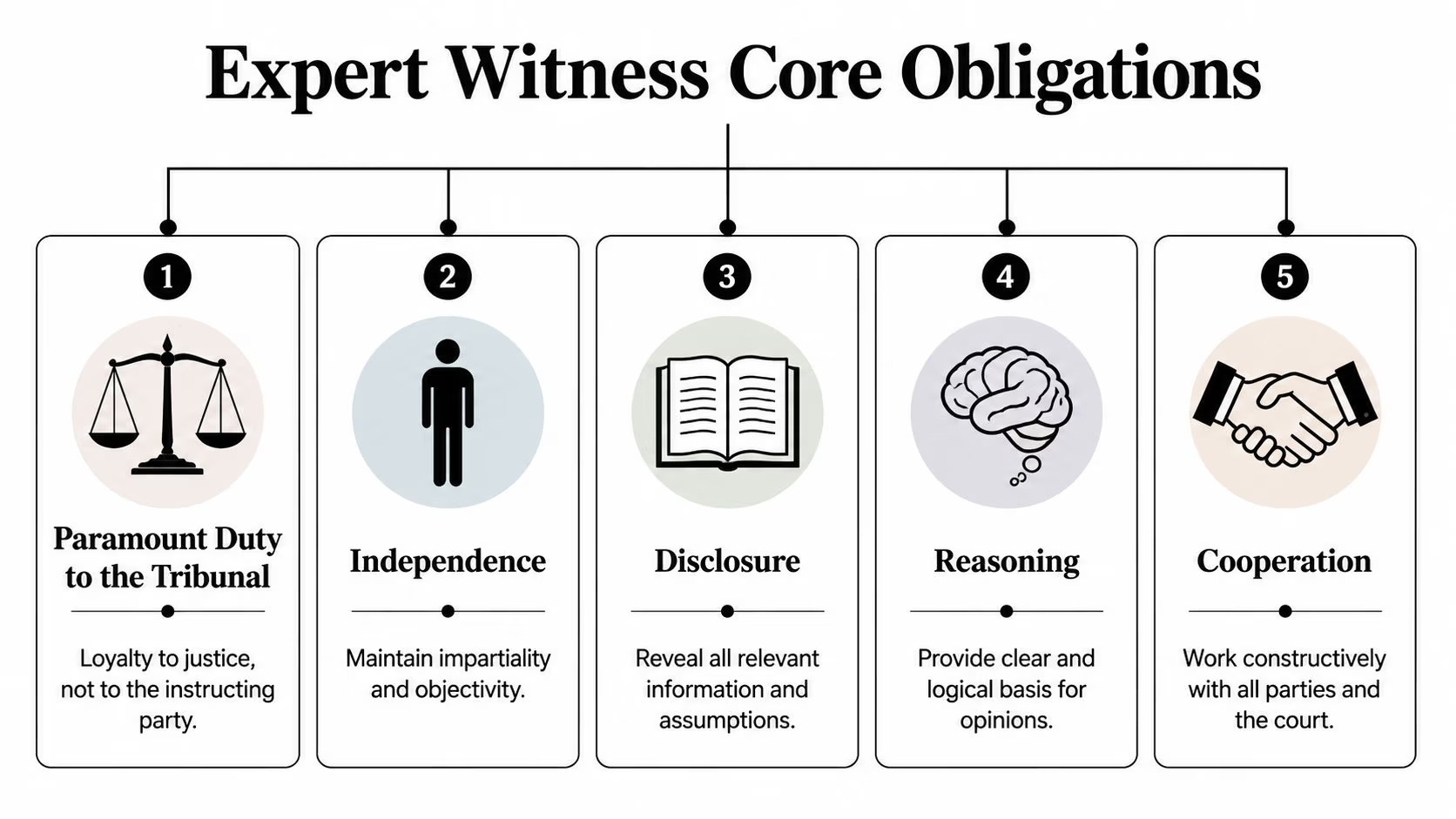
Paramount duty to the Tribunal
This obligation comes first because it controls all the others. If a client asks for a report that “really pushes the point” or “helps us win”, the expert has to resist that pressure.
A proper building expert doesn’t soften findings for a builder and doesn’t exaggerate them for a homeowner. The same site conditions should produce the same technical opinion regardless of who pays for the inspection.
Independence and impartiality
Independence shows up in tone and method. The report should avoid loaded language, personal attacks, and legal conclusions that belong to the Tribunal.
A line like “the builder has been dishonest and incompetent throughout” is advocacy. A line like “the installed membrane was not continuous at the junction and visible moisture damage was observed to adjacent materials” is evidence.
Stay within your expertise
This sounds obvious, but it causes trouble constantly in construction disputes. A building consultant may be qualified to comment on workmanship, sequencing, moisture damage, general non-compliance, and visible building defects. That doesn’t automatically qualify the same person to provide an engineering opinion, an electrical opinion, or a quantity surveying opinion.
If slab movement requires structural analysis, the report should say so. If the dispute turns on specialist services, the expert should identify the limit of their expertise and recommend the right consultant.
Here’s a useful primer before anyone signs off on formal declarations or report attachments involving execution and authority. Papersign’s guide to legal advice on signatures for businesses is helpful for understanding how signatures and sign-off issues can create avoidable problems in formal documents.
A reliable report also needs the right framework. If you’re reviewing structure, declarations, annexures, and presentation, a practical starting point is this expert witness report template for Australia.
Full disclosure of instructions, facts, and assumptions
Many weak reports fail due to insufficient disclosure. The expert must set out the instructions received, the material facts relied on, and the assumptions used. If those aren’t disclosed, the other side can attack the basis of the opinion.
NCAT procedural directions are strict enough that non-compliance can lead to up to 80% of an expert’s evidence being struck out, as noted in the NCAT procedural directions framework for expert evidence. In real terms, that can gut a defect claim or defence.
Use this as a quick check:
- Instructions identified. Who engaged the expert, and what were they asked to inspect or answer?
- Material reviewed. Plans, specifications, contracts, photographs, correspondence, previous reports, and site observations should be listed.
- Assumptions stated. If concealed work couldn’t be opened up, say that. If access was limited, say that too.
The video below gives a useful overview of expert witness fundamentals and how evidence should be approached in tribunal and court settings.
Honest reasoning, not just conclusions
The Tribunal needs to see how the expert got from observation to opinion. That means the report should separate observed fact from inference.
A sound passage looks like this:
- Observed fact. Efflorescence and damp staining were visible to the internal lower wall.
- Relevant context. The external paving level appeared close to or above the internal finished floor level.
- Opinion. The moisture ingress is consistent with bridging or inadequate moisture management at the perimeter, subject to further invasive confirmation if required.
That structure is what makes a report useful under pressure.
Compliant vs Non-Compliant Behaviour in Building Reports
A lot of NCAT matters turn on this point. Two consultants can inspect the same bathroom leak or slab crack, then produce reports with completely different value in the Tribunal. One helps the Member decide the case. The other gives the other side a target.
The difference is usually not building knowledge alone. It is whether the report follows the expert rulebook in practice. In NSW building disputes, that means disciplined language, proper disclosure, clear limits, and opinions that stay tied to what was seen on site and the material reviewed under NCAT Procedural Direction 3 on expert evidence.
What compliant language looks like
A compliant report is measured and specific. It can still reach a firm conclusion. The point is that the conclusion must come from observed facts, the relevant benchmark, and a reasoning path that can survive cross-examination.
| Compliant Behaviour (Objective & Factual) | Non-Compliant Behaviour (Biased & Speculative) |
|---|---|
| “Cracking was observed to the masonry veneer at the south elevation. The pattern and width are consistent with movement requiring assessment against the relevant footing and site classification criteria.” | “The builder’s terrible work caused major structural failure.” |
| “Water staining was visible below the ensuite shower hob. The observed condition is consistent with moisture escape from the wet area, subject to confirmation after opening works.” | “There is no doubt the waterproofing was completely defective everywhere.” |
| “I was instructed to inspect alleged defects to tiling, waterproofing, and external drainage. My opinions are based on the documents listed and the site inspection undertaken.” | “I reviewed the matter thoroughly and I know exactly what happened.” |
| “The report distinguishes between observed conditions and opinions inferred from those conditions.” | “It is obvious the respondent is responsible for all resulting damage.” |
| “The expert notes previous work for one party and confirms that relationship in the report so the Tribunal can assess independence.” | “The expert omits prior involvement and presents as entirely detached.” |
In practice, the non-compliant examples fail for the same reason. They skip steps. They jump from complaint to blame without proving defect, cause, extent, or the technical standard said to be breached.
Conflict disclosure must be dealt with early
This issue catches parties out more often than it should. A consultant may have previously worked for the builder, the owners corporation, the strata manager, or the homeowner. A certifier may have had some earlier project involvement. A quantity surveyor may already have priced rectification before being asked to give expert opinion.
Prior involvement does not automatically rule the expert out. Hidden involvement creates the problem.
If there is a prior relationship, disclose it in the report and make the scope of the current engagement clear. NCAT members and opposing lawyers are far less concerned about disclosed history than they are about a relationship that only appears under cross-examination. Once that happens, the report starts looking managed rather than independent.
If there is something to disclose, put it on the table early.
Red flags that weaken a report fast
These are the issues I tell clients and solicitors to look for before the report is served:
- Loaded adjectives instead of technical analysis. Words like “shoddy”, “dishonest”, “outrageous”, or “obviously defective” usually add heat and remove weight.
- Conclusions that outrun the inspection. If no destructive testing occurred, the report should not speak as if concealed work was fully confirmed.
- No benchmark identified. A report should tie its opinion to a contract requirement, approved documents, the NCC, an Australian Standard, the Guide to Standards and Tolerances, or another recognised reference.
- Scope creep. Building consultants should not stray into structural design, fire engineering, hydraulic certification, or legal liability unless they are properly qualified to do so.
- Rectification opinions with no method or basis. Saying work must be replaced is not enough. The report should explain why repair is inadequate, what further investigation is needed, or what assumptions sit behind the recommendation.
Good reports help the Tribunal answer practical questions. What was observed? What standard applies? What defect follows from that? What remains uncertain? That is the format that carries weight in a building dispute.
For parties needing formal building evidence, Awesim Building Consultants offers expert witness reports for NSW building disputes, provided the report is prepared to the Code and the applicable NCAT requirements rather than as a generic defect inspection.
Common Pitfalls That Can Derail Your NCAT Case
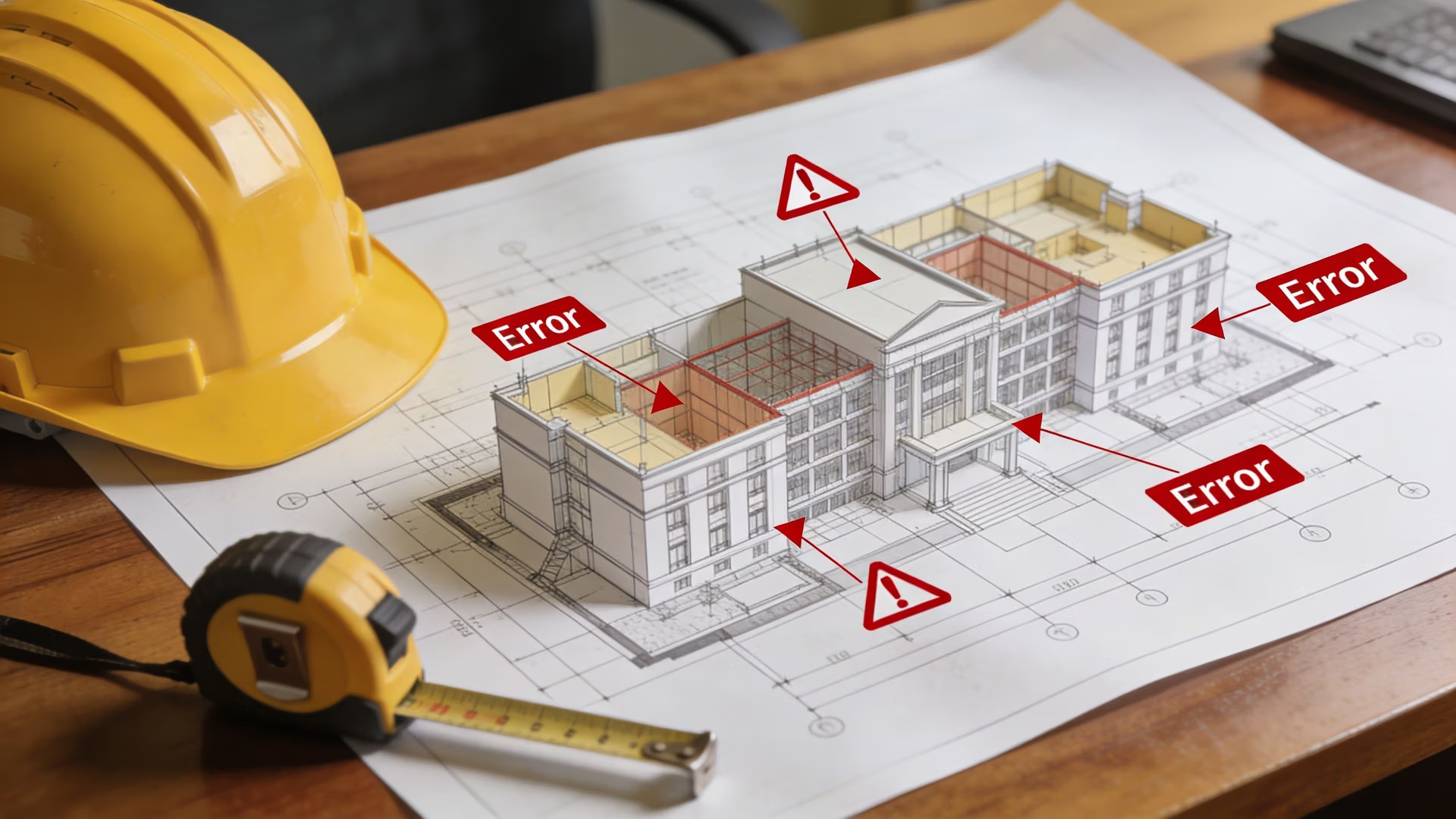
The mistakes that damage building cases are usually predictable. They happen when an expert stops acting like an expert and starts acting like a party to the dispute.
Acting as an advocate
This is the fastest way to lose credibility. Once a report starts arguing the client’s case instead of analysing the building evidence, the other side will attack independence, tone, and methodology.
That often shows up in adjectives. “Appalling workmanship”, “deliberate shortcuts”, “clear deception”. None of that helps if the expert hasn’t first established the physical defect, the relevant benchmark, and the reasoning chain.
Giving opinions outside the lane
A building consultant shouldn’t wander into structural engineering, electrical safety certification, hydraulic design, or detailed quantity surveying unless they hold the relevant qualifications and experience. In NCAT, overreach is easy to expose in cross-examination.
The better course is narrow and disciplined. Identify the visible issue. State the technical basis. Then say where a specialist opinion is required.
Failing to use the right NCAT format
A sound opinion can still be weakened by poor presentation. Scott Schedules, defect tables, annexures, assumptions, and coding of disputed items all need to be organised so the Tribunal can use them.
That becomes sharper under the current tribunal directions for expert evidence. If you’re preparing or reviewing material for a building matter, this guide to NCAT Procedural Direction 3 and expert evidence is worth reading before the report is finalised.
Confusing certainty with credibility
Experts sometimes think firm language makes the report stronger. Usually the opposite is true. The stronger report is the one that properly states limits.
A careful “consistent with” will often carry more weight than an overconfident “proves” that can’t be defended.
Other recurring pitfalls include:
- Poor standard references. Citing the NCC or an Australian Standard loosely, without tying the clause or requirement to the actual defect.
- No distinction between scope and outcome. An expert can identify rectification issues, but should be careful not to turn every observation into a final legal conclusion.
- Missing site constraints. If rooms were locked, finishes concealed, or invasive testing not permitted, the report must say so.
In building disputes, detail wins. Overstatement loses.
A Practical Checklist for Compliant Expert Reports
Before a report goes anywhere near NCAT, it should pass a basic compliance review. This applies whether you’re the homeowner paying for it, the solicitor relying on it, or the consultant preparing it.
Document and declaration checks
Start with the formal foundation. If these pieces are missing, the rest of the report can become much harder to defend.
- Code acknowledgement included. Does the report contain the required declaration that the expert has read and agrees to be bound by the applicable code?
- Signature and date completed. Is the report properly signed, dated, and attributed to the actual author?
- Qualifications attached. Does the expert include a CV, licence details, trade background, and relevant experience for the issues addressed?
Instructions and evidence trail
The next issue is traceability. The Tribunal must be able to see what the expert was asked to do and what material was used.
Check for these points:
- Clear instructions. The report should identify who retained the expert and the scope of the engagement.
- Material facts listed. Plans, reports, emails, photographs, contracts, and inspection dates should be set out.
- Assumptions stated openly. If the expert assumed concealed framing damage based on moisture readings and visible symptoms, that assumption should be explicit.
Reasoning and scope review
In this context, many reports look polished but fail under challenge.
Ask these questions:
- Are observed facts separated from opinions? A reader should be able to tell what the expert saw versus what the expert inferred.
- Are standards applied specifically? References to the NCC, tolerances, manufacturer instructions, or Australian Standards should connect directly to the defect item.
- Is the expert staying within their discipline? If specialist input is needed, the report should identify that rather than bluff through it.
- Are limitations disclosed? Restricted access, non-invasive inspection limits, weather impacts, and unavailable documents should all be recorded.
Field test: If another consultant can’t follow how the report reached its conclusion, the Tribunal may not trust it either.
A strong review habit is to read the report once as a builder, once as a homeowner, and once as opposing counsel. If the weak spots jump out in any of those readings, fix them before filing.
How to Choose an Expert Witness You Can Trust
Don’t choose an expert because they sound aggressive. Choose one because they sound careful. In tribunal work, careful wins more often than loud.
Questions worth asking before engagement
Ask the consultant practical questions, not marketing questions.
- What kind of matters do you prepare reports for? You want someone familiar with building defect disputes, not just general inspections.
- Can you explain how you separate observed facts from opinions? If they can’t answer that clearly, the report may blur the two.
- How do you deal with conflicts or prior involvement? A credible expert will answer directly and won’t treat disclosure as a nuisance.
- Can you work within Scott Schedule and NCAT evidence requirements? Process matters as much as technical skill.
If your legal team is also reviewing workflow tools for document analysis and case preparation, this overview of how to compare AI legal assistants is a useful starting point. It won’t replace an expert witness, but it can help lawyers assess supporting tools around the dispute.
Red flags that should stop you
Walk away if the expert guarantees a win, promises to “destroy” the other side, or dismisses the need for formal compliance. Be cautious if they speak outside their discipline, refuse to disclose prior relationships, or produce reports heavy on blame and light on evidence.
The right expert witness is not the one who tells you what you want to hear. It’s the one who can inspect the site, apply the right standards, explain the defect properly, and survive challenge.
If you need an independent building expert for an NCAT matter, Awesim Building Consultants prepares site investigation reports, Expert Witness Reports, and Scott Schedules for NSW building disputes. For enquiries, email admin@awesim.com.au or call 1800 293 746.
Related Posts

NCAT Consumer Division: Steps From Lodgement to Hearing
Most people who end up at the NCAT Consumer and Commercial Division do not arrive there by choice. They arrive
Read More »
Statutory Warranty NSW: What Builders Must Fix and for How Long
Statutory warranty NSW obligations exist precisely for the moment a builder stops returning calls. A crack appears in the render.
Read More »
Home Building Act NSW: Key Clauses Every Owner Should Know
The Home Building Act 1989 (NSW) sets the rules for residential building work in New South Wales. It requires licensed
Read More »