
Quantum Meruit Claims in Building Disputes: Legal Framework

When a building project goes wrong and the contract is unenforceable or incomplete, a builder, subcontractor, or homeowner may still be entitled to payment for work actually done. In Australian construction law, this kind of claim is known as a quantum meruit claim. The term comes from Latin and means ‘what the job is worth’ or ‘the amount one deserves’. It allows a contractor to recover a fair and reasonable sum for the labour performed and materials supplied, even when there is no valid agreement in place. Understanding how quantum meruit claims work is essential for anyone involved in a building dispute, especially in NSW where the NSW Civil and Administrative Tribunal (NCAT) and the courts regularly deal with these matters.
What Is Quantum Meruit?
Quantum meruit literally translates to ‘what the job is worth’. More precisely, it means ‘the amount one deserves’ or ‘as much as one has earned’. It is a restitutionary claim that arises when there is no contract specifying a sum to be paid. Instead of enforcing an agreed price, the claimant seeks payment that is fair and reasonable in light of the work or services they have performed. Because quantum meruit is a common law doctrine, it does not rely on any specific statute; rather, it is built on the principle that a person should not be unjustly enriched at the expense of another.
In the building industry, quantum meruit claims most often arise in three situations:
- Work is completed without any formal agreement between the parties.
- The parties have an agreement, but it is found to be unenforceable (for example, because it does not comply with the Home Building Act 1989 in NSW).
- Extra work is performed that falls outside the scope of the original contract, and no additional price was agreed.
Importantly, a claim for quantum meruit cannot arise if the parties already have a valid contract that sets an agreed sum for the work in question. The claim is only available where there is no existing contractual entitlement to be paid that amount.
Common Scenarios for Quantum Meruit in Construction
Quantum meruit claims are particularly common in construction disputes. A builder whose contract is later found to be unenforceable may still recover payment under quantum meruit. Similarly, if work is done without a written agreement, or if a homeowner requests additional work that was not part of the original scope, the contractor can claim a reasonable sum for that extra labour and materials.
Another typical scenario is when parties reach a verbal understanding but never sign a formal contract. If the work proceeds and a dispute later arises about payment, a quantum meruit claim provides a pathway for the contractor to be compensated for the value they have added. Homeowners may also bring quantum meruit claims against builders who have abandoned the project or performed defective work, though the claim is more commonly made by the party who provided the services.
Because the claim rests on the idea of fairness, the court or tribunal will examine what the job is objectively worth, not what one party hoped to receive. This contrasts with a claim under a valid fixed-price contract, where the agreed sum is the starting point.

Proving a Quantum Meruit Claim
To succeed in a quantum meruit claim, the person making the claim (the claimant) must usually show that the other party (the defendant) expressly or impliedly requested the services, or freely accepted them. This means there must be evidence that the homeowner or builder knew about the work and agreed, either by words or conduct, that it should be carried out.
In building disputes, this often comes down to emails, text messages, site meeting notes, or photographs showing the defendant’s involvement. The claimant must also demonstrate that they performed the work and supplied materials, and that it would be unjust for the defendant to keep the benefit without paying a reasonable amount.
It is important to note that quantum meruit is not a claim for an agreed price. The amount awarded is based on what the court or tribunal considers fair in the circumstances. Therefore, detailed records of the work performed, including timesheets, invoices for materials, and correspondence about the scope of work, are crucial evidence.
How Is the Reasonable Sum Determined?
There is no fixed formula for calculating the reasonable sum under a quantum meruit claim. The court or tribunal will consider a range of factors, including the nature and quality of the work performed, the usual market rate for similar services in the area, and any evidence of the costs actually incurred by the claimant.
In many building disputes, expert evidence is used to help quantify the reasonable sum. For example, a quantity surveyor or building consultant may prepare a report that values the completed works using standard industry rates. This report can then be presented to NCAT or the court as part of the claim.
The reasonable sum is not simply the builder’s original quote or the amount they hoped to receive. It must reflect the actual value of the benefit provided to the other party. If the work is defective or incomplete, the sum will be reduced accordingly. Similarly, if the work was performed outside the scope of any original agreement and was not authorised by the homeowner, the claim may be worth less or even fail entirely.
Because quantum meruit claims require a careful assessment of the work and its value, they often benefit from expert analysis. A building consultant with experience in quantum meruit reports can help gather the necessary evidence and present it in a clear, defensible format.

Quantum Meruit vs Quantum Valeb
Another Latin term that sometimes appears alongside quantum meruit is “quantum valebat”. While quantum meruit applies to services (claiming a reasonable sum for work done), quantum valebat is used for goods (claiming a reasonable price for materials supplied). In practice, building disputes often involve both services and materials, so a claim may include both elements. However, the core legal principle is the same: the claimant seeks what is fair and reasonable, not an agreed contractual price.

Why Quantum Meruit Matters in Building Disputes
For builders, subcontractors, and homeowners in NSW, understanding quantum meruit is important because it provides a safety net when a contract is invalid or incomplete. Without this remedy, a builder who has performed valuable work under a defective contract could be left with nothing. Similarly, a homeowner who has paid a builder for work that was never completed may need to understand how quantum meruit works to defend a claim or to bring a cross-claim.
Because quantum meruit claims are assessed on fairness, it is essential to keep detailed records of all communications, site activities, and costs from the very start of a project. If a dispute arises, having clear evidence of the work performed and the requests made by the other party can make the difference between a successful claim and a costly loss.
Given the complexity of the law in this area, anyone involved in a building dispute that involves a potential quantum meruit claim should seek legal advice. A building consultant can also assist by preparing independent expert reports that help quantify the reasonable sum, particularly when the matter is headed to NCAT or a court in NSW.
Frequently Asked Questions
Can I make a quantum meruit claim if I have a signed contract?
No. A quantum meruit claim cannot arise if the parties have a valid contract that sets an agreed sum for the work. The claim is only available when there is no enforceable contract covering the work in question, for example, if the contract is void or unenforceable, or if the work falls outside the scope of the agreement.
Does a quantum meruit claim apply only to builders?
No. Quantum meruit can apply to any situation where services are performed without an agreed price, but it is very common in construction disputes. Homeowners, subcontractors, and other tradespeople can also bring or defend quantum meruit claims, provided they can show the services were requested or freely accepted.
How is the reasonable sum calculated in a quantum meruit claim?
There is no single method. The court or tribunal will consider the actual costs incurred by the claimant, the market rate for similar work, and the benefit received by the defendant. Evidence such as invoices, timesheets, and expert reports is typically used to support the calculation.
Is quantum meruit a statutory claim in Australia?
No. Quantum meruit is a common law doctrine, not a statutory claim. It is not created by any specific Australian legislation. Instead, it has been developed by courts over centuries to prevent unjust enrichment when no contract exists.
What should I do if I think I have a quantum meruit claim?
Gather all evidence of the work performed, including communications, photographs, invoices, and records of materials. Seek legal advice from a solicitor experienced in building disputes. You may also need an expert report from a building consultant to help value the work for the claim.
Quantum meruit claims are a valuable remedy for those who have performed work without a binding contract. By understanding the legal framework and preparing solid evidence, parties in a building dispute can pursue a fair outcome. Whether you are a builder, subcontractor, or homeowner, knowing when and how to bring a quantum meruit claim can protect your financial interests and help resolve disputes more effectively.

Related Posts

Water Damage in Homes: How to Track Down the Source
Water damage in a home rarely announces itself at the source. A stain on the ceiling, a musty smell in
Read More »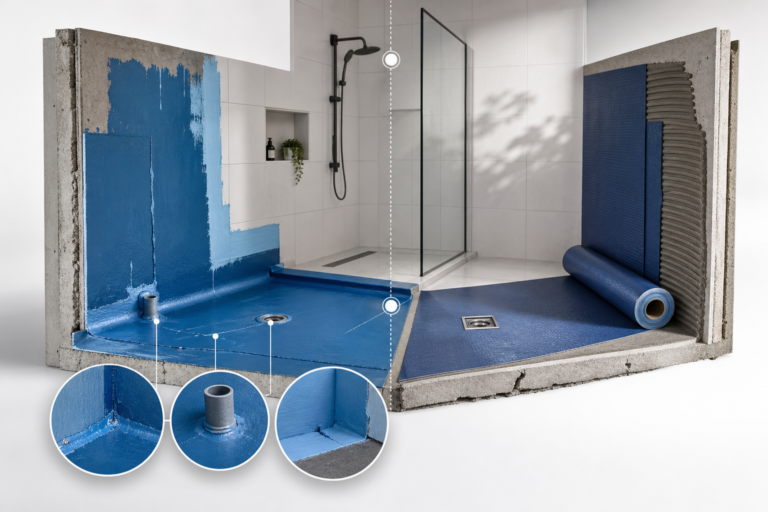
Waterproofing Membrane Types: Which Fails Most in NSW Bathrooms
Waterproofing failure is the single most common serious defect found in NSW apartments, and the type of membrane used, along
Read More »
Building Certifier NSW: Role, Limits, and When You Need More
A building certifier in NSW is a registered professional who issues construction certificates, conducts critical stage inspections, and grants occupation
Read More »