
Residential Building Disputes NSW: How an Expert Report Changes the Outcome at NCAT
- What NCAT Handles in Residential Building Disputes
- Why Builders Often Have the Advantage Early On
- What Makes an Expert Report Credible at NCAT
- The Role of a Scott Schedule
- What an Expert Does That You Cannot Do Alone
- When to Get an Expert Report
- What Happens at a Joint Expert Conference
- How the Report Affects Settlement
- Choosing the Right Expert for Your NSW Dispute
- Frequently Asked Questions
Residential building disputes in NSW often turn on the quality of the evidence about defective or incomplete work. An independent expert report explains the observations, relevant requirements, causes and repair options. It helps NCAT assess technical issues without guaranteeing a particular outcome.
This article explains what happens in residential building disputes at NCAT, why an expert report changes the dynamic, and what that report needs to contain to actually work in your favour.
What NCAT Handles in Residential Building Disputes
The NSW Civil and Administrative Tribunal hears residential building disputes under the Home Building Act 1989. Most matters involve defective work, incomplete work, or both, with claims reaching up to $500,000 in the Consumer and Commercial Division.
Common disputes include waterproofing failures, structural cracking, non-compliant framing, drainage problems, and work that falls short of the standards required under the Act. For homeowners and owner-builders in NSW, NCAT is almost certainly where a dispute will be resolved unless the parties settle beforehand.
The process moves faster than court, but it's still formal. Rules of evidence apply, and the weight the Tribunal gives your claim depends heavily on what you can prove.
Why Builders Often Have the Advantage Early On
Builders who face NCAT claims regularly aren't starting from scratch. Many engage solicitors who know the process well, and some bring in their own expert consultants early. By the time a hearing date is set, the builder's team may already have a responding expert report that disputes your defect list, questions your cost estimates, or challenges your methodology.
If you arrive with only photos and a verbal account, you're at a real disadvantage. The Tribunal needs to weigh competing technical positions, and an uncontested expert report on the other side carries significant weight.
An independent expert report prepared to the correct standard puts you on equal footing. In many cases, it shifts the dynamic entirely.
What Makes an Expert Report Credible at NCAT
Not every building inspection report qualifies as expert evidence. NCAT and NSW courts require expert reports to comply with Schedule 7 of the Uniform Civil Procedure Rules 2005 — the Expert Witness Code of Conduct — which sets out the obligations an expert owes to the Tribunal rather than to the party who engaged them.
A Schedule 7 compliant report must:
- State the expert's qualifications and the basis for their opinion
- Identify the documents and materials relied upon
- Set out the reasoning behind each conclusion
- Acknowledge any limitations or areas of uncertainty
- Confirm that the expert's duty is to the Tribunal, not the client
A report that doesn't meet these requirements can be rejected outright or given very little weight. That matters enormously when the other side has a compliant report and you don't.
The Role of a Scott Schedule
In defect disputes, NCAT commonly directs parties to prepare a Scott Schedule — a structured document listing each alleged defect, the relevant standard or contract term it breaches, the proposed rectification method, and the estimated cost to fix it.
The format allows the Tribunal to compare each party's position item by item. It's not a narrative document. It's a table that demands precision.
Preparing one without technical expertise is difficult. Costs need to be defensible. Rectification methods need to reflect current industry practice. Vague descriptions or unsupported figures will be picked apart by the other side's expert.
A building consultant who prepares Scott Schedules regularly knows how to structure each item so it holds up under scrutiny. That specificity is often what separates a claim that settles quickly from one that drags on.
What an Expert Does That You Cannot Do Alone
An independent building expert brings three things to your dispute that you simply can't provide yourself.
Technical authority. The expert identifies defects by reference to the Building Code of Australia, Australian Standards, and accepted industry practice. Each finding is measured against an objective standard, not just a subjective opinion.
Procedural credibility. A report prepared to Schedule 7 standards signals to the Tribunal that the evidence has been put together properly. It's harder to dismiss and harder to attack on procedural grounds.
Independence. An expert with no affiliation to any builder, insurer, or developer can state their opinion without qualification. The Tribunal gives more weight to genuinely independent evidence, and if that impartiality is questioned, the report loses credibility fast.
This is why the expert you choose matters as much as the report itself.
When to Get an Expert Report
The earlier, the better. Many homeowners wait until they have a hearing date before engaging an expert. By that point, time pressure can affect the quality of the report or limit the expert's ability to conduct a thorough on-site inspection.
Ideally, you engage an expert as soon as serious defects are identified — and before the builder has had any opportunity to carry out remedial work that might obscure the evidence. Waterproofing failures, in particular, are far easier to document before any rectification attempts are made.
If your solicitor has advised you to obtain an expert report, act on that advice promptly. The report needs time to be prepared properly, and you may need to allow for a joint expert conference or a responding report from the other side before the hearing.
What Happens at a Joint Expert Conference
NCAT sometimes directs the parties' experts to meet before the hearing. The purpose is to narrow the issues in dispute — the experts discuss each defect, compare their findings, and identify where they agree and where they differ.
A well-prepared expert who has done a thorough inspection can defend their positions clearly. Where agreement is reached, those items are often resolved without Tribunal determination, saving time and costs for both sides. Where disagreement remains, the Tribunal hears evidence on those specific points.
Having an expert who has appeared in NCAT and court proceedings before makes a real difference here. Familiarity with the process means your expert isn't learning the format under pressure.
How the Report Affects Settlement
Most building disputes at NCAT settle before or during the hearing. The timing and terms of that settlement are directly shaped by the strength of the evidence each party holds.
A detailed, Schedule 7 compliant expert report with a well-constructed Scott Schedule gives the other side a clear picture of what they're facing. Builders and their insurers assess the risk of proceeding to a hearing, and when the expert evidence is solid, the incentive to settle on reasonable terms increases considerably.
This is why homeowners who invest in a proper expert report often recover more than those who try to run their case without one. The report isn't just a document for the Tribunal — it's a negotiating instrument.
Choosing the Right Expert for Your NSW Dispute
Your expert needs to be qualified in the relevant area of construction, experienced in preparing litigation support documents, and genuinely independent. In NSW, the UCPR Schedule 7 requirements are non-negotiable, so the expert must understand and comply with them fully.
Geographic coverage matters too. If your property is in regional NSW, you need an expert who can attend on-site without the inspection being rushed or delegated to someone else. An expert based only in Sydney may not be the right fit for a dispute in Tamworth or Tweed Heads.
Awesim Building Consultants has been preparing expert witness reports for NSW courts and NCAT since 1996. Operating from offices in Sydney and Tamworth, the firm covers disputes across the state and conducts on-site inspections in person. Reports are prepared to UCPR Schedule 7 standards across all NSW court tiers — NCAT, Local Court, District Court, and Supreme Court. Services include Expert Witness Reports, Scott Schedules, Quantum Meruit Reports, and Forensic Waterproofing Inspections, all available from a single engagement.
For more detail on the full range of litigation support services, visit awesim.com.au, or call 1800 293 746 to arrange a free initial consultation.
Frequently Asked Questions
What is an expert witness report and why do I need one for NCAT?
An expert witness report is a formal document prepared by a qualified building consultant setting out their independent findings on defects, the technical basis for those findings, and their opinion on rectification costs. NCAT gives significant weight to expert evidence that complies with Schedule 7 of the UCPR. Without one, you're relying on your own account against a builder who may have their own expert already in place.
What is Schedule 7 of the UCPR and does it apply to NCAT?
Schedule 7 of the Uniform Civil Procedure Rules 2005 sets out the Expert Witness Code of Conduct for NSW. It applies to expert evidence in NCAT proceedings as well as in NSW courts. A report that doesn't comply can be rejected or given very little weight by the Tribunal.
What is a Scott Schedule and do I need one?
A Scott Schedule is a structured table listing each alleged defect, the standard or contract term it breaches, the proposed rectification method, and the estimated cost. NCAT frequently directs parties to prepare one. A Scott Schedule prepared by an experienced building consultant is far more defensible than one put together without technical expertise.
How much does an expert witness report cost for an NCAT dispute?
Costs vary depending on the complexity of the defects, the number of items, and the extent of on-site inspection required. Indicative pricing in the market ranges from $2,000 to $10,000, with around $4,500 being typical for a residential matter. Most homeowners find the cost modest relative to the value of the claim being protected.
Can I use the same expert for both the inspection and the court report?
Yes — and it's generally preferable. An expert who conducts the on-site inspection and prepares the report has direct knowledge of the defects and can answer questions about their findings under cross-examination. Using different people for each stage creates gaps the other side can exploit.
What if the builder disputes my expert's findings?
The builder may engage their own expert, and NCAT may direct a joint expert conference. Your expert will need to defend their findings and methodology. This is why the quality of the original report matters so much. A well-documented, Schedule 7 compliant report with clear reasoning is far harder to undermine than a general inspection report.
Does Awesim cover regional NSW, or only Sydney?
Awesim operates from offices in Sydney and Tamworth, and conducts on-site inspections across NSW. If your property is in a regional area, an expert can attend in person rather than relying on photographs or delegating the inspection to someone else.
An expert report doesn't guarantee a particular outcome at NCAT. What it does is give you credible, independent, court-ready evidence that the Tribunal can actually use. That changes the position you're negotiating from, and it changes what the other side has to weigh up before the hearing. If you're facing a residential building dispute in NSW, that's where the preparation starts.

Related Posts
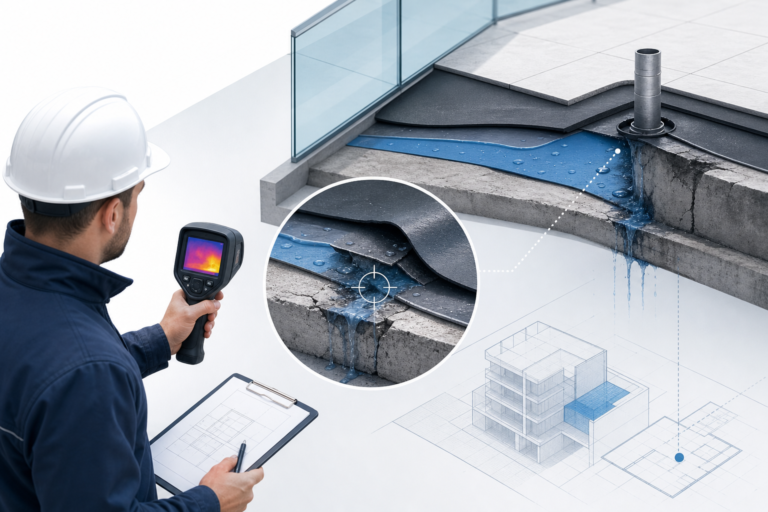
Waterproof Membrane Failure: How Inspectors Find the Cause
Waterproof membrane failure is diagnosed by tracing the water entry point, reviewing design documents, exposing the membrane for visual inspection,
Read More »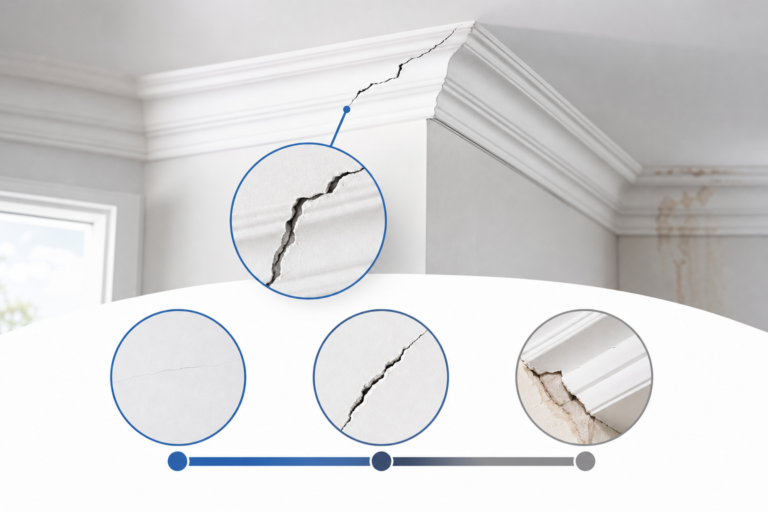
Cornice Cracking: How to Tell If the Damage Is Serious
Cornice cracking is one of the most common concerns Australian homeowners raise, and the hard part is not spotting the
Read More »
Digital Construction Consultant Australia: What They Do
A digital construction consultant in Australia manages the technology-driven side of building projects: BIM coordination, clash detection, asset data handover,
Read More »