When you’re in the middle of a building dispute, it often feels like everyone is speaking a different language. A homeowner sees a worrying crack in a wall, but the builder talks about “normal settlement.” This is where an expert witness report comes in—it acts as the official translator.
It’s a specialised document that turns complex building defects into clear, factual evidence that a court or tribunal can actually understand.
What Is an Expert Witness Report in a Building Dispute?

Think of it this way: a standard building inspection is for a buyer’s peace of mind, but an expert witness report is prepared specifically for legal proceedings. It’s a formal document created by a qualified professional to get to the bottom of the problem.
The expert witness report building process involves a thorough analysis of building defects, an assessment of workmanship quality, and a check to see if the work complies with the National Construction Code (NCC) and relevant Australian Standards. It’s designed to provide an impartial, evidence-based foundation for resolving a dispute.
The Primary Purpose of an Expert Report
The report’s main job is to help the decision-maker—whether that’s a tribunal member at NCAT or a judge in court—understand the technical issues. It’s not about taking sides; it’s about presenting the facts clearly.
This is a crucial point that many people miss. An expert’s duty isn’t to the client paying the bill.
An expert’s primary duty is not to the client who pays their fee, but to the court or tribunal. This principle of impartiality is the cornerstone of a credible report and is legally mandated by the Expert Witness Code of Conduct.
This independence is non-negotiable. It ensures the report is a credible, unbiased opinion, not just a “hired gun” argument. At Awesim Building Consultants, our over 15 years of providing litigation support to home owners, builders, and lawyers have been built on a strict adherence to this principle.
Who Qualifies as a Building Expert?
Not just any builder or inspector can step into the role of an expert witness. The person you choose must have specialised knowledge and experience directly relevant to the issues in your dispute. These qualifications have to be clearly stated within the report itself to prove their credibility.
Here’s a quick summary of what makes a high-quality, compliant report.
Key Components of a Compliant Expert Witness Report
This table outlines the essential elements a report must contain to be considered credible and admissible in NSW legal proceedings.
| Component | Purpose | Why It’s Critical |
|---|---|---|
| Expert’s Qualifications | To establish the author’s authority and expertise. | The tribunal or court needs to trust the expert’s opinion. This includes their experience, education, and credentials. |
| Client Instructions | To define the scope of the report. | It clarifies exactly what the expert was asked to investigate, ensuring the report stays focused on the relevant issues. |
| Facts & Assumptions | To outline all information the expert relied upon. | Transparency is key. This shows the foundation of the expert’s analysis, separating fact from assumption. |
| Code of Conduct Declaration | To confirm the expert’s duty to the court. | This is a mandatory statement affirming the expert’s understanding that their primary duty is to be impartial and assist the court. |
| Clear, Evidence-Based Opinions | To provide a professional judgment on each defect. | Opinions must be directly linked to evidence (photos, tests, standards) and not just based on a hunch. |
| Referenced Standards & Codes | To connect defects to official building requirements. | This proves that a defect isn’t just “bad work” but a failure to meet specific, mandatory industry standards. |
A report that ticks all these boxes is far more likely to be accepted by the tribunal and carry significant weight in your case.
Key qualifications of an expert also include:
- Extensive Industry Experience: You can’t fake deep, hands-on knowledge. With over 35+ years in the Building & Construction industry, our consultants have the practical background to diagnose issues that others might miss.
- Specialised Knowledge: The expert must be fluent in the language of building codes, Australian Standards, and the specific construction methods involved in the dispute.
- Litigation and NCAT Experience: Understanding the strict rules of evidence and tribunal procedures is vital. A report that doesn’t meet the format and content requirements can be thrown out.
- Clear Communication Skills: This might be the most important skill of all. An expert must be able to explain highly technical concepts in plain, simple English.
In the end, the goal of an expert witness report is to bring order to the chaos. It provides a single, authoritative document that explains the “what, why, and how” of a building defect, creating a clear path toward a fair outcome. For a deeper look into this role, learn more about what a dedicated building consultant can do for you.
Getting the Legal Rules Right for Expert Reports in NSW
When you commission an expert witness report for a building dispute, you’re not just getting a professional opinion on paper. You’re getting a formal piece of evidence, and in New South Wales, it has to follow a strict set of legal rules to even be considered. Getting this wrong can be a disaster for your case, so understanding the framework is non-negotiable.
The whole game is governed by the Uniform Civil Procedure Rules 2005 (UCPR). Tucked inside these rules is the Expert Witness Code of Conduct, which is the absolute rulebook for every expert. It’s what separates a credible, useful report from one that gets thrown out of court.
The Expert’s Overriding Duty Is to the Court
Here’s the part that often surprises our clients. The expert’s primary loyalty isn’t actually to the person who hired them.
The expert’s paramount duty is to assist the court impartially on matters relevant to the expert’s area of expertise. This duty overrides any obligation to the person from whom the expert has received instructions or by whom the expert is paid.
What does this mean in plain English? Even though you engage us and pay our fees, our ultimate responsibility is to the judge or tribunal member. We’re there to provide unbiased, objective evidence to help them make a decision. It’s why our team at Awesim, with our over 15 years of litigation support experience, makes this crystal clear from day one. It’s the bedrock of a report that carries weight.
Key Obligations Under the UCPR
To make sure this impartiality is front and centre, the Code of Conduct lays out some key duties. Any report that hopes to be accepted as evidence must:
- Acknowledge the Code: The expert has to put it in writing, right there in the report, that they’ve read the Code of Conduct and agree to be bound by it.
- State All Assumptions: No guesswork allowed. The report must clearly list every single factual assumption the expert’s opinions are built on.
- Identify All Sources: Every document, piece of research, or other material used to form an opinion must be referenced. There’s no room for hidden information.
- Show Your Work: It’s not enough to just state a conclusion. The expert has to walk the reader through the step-by-step reasoning that led them from the facts to their final opinion.
The importance of this transparency was heavily emphasised in the NSW Law Reform Commission’s Report 109, which aimed to root out bias. This directly led to the UCPR’s requirement for experts to disclose their fee arrangements. The courts have also backed this up, with the NSW Supreme Court confirming immunity for experts like our founder, Glen Sim. This protection ensures we can give candid, fearless advice for litigation, as long as we stick to the code. For a closer look at how these rules play out, you can check the latest NSW Supreme Court provisional statistics.
NCAT Rules and the Scott Schedule
While the UCPR sets the stage, the NSW Civil and Administrative Tribunal (NCAT) has its own playbook, detailed in Procedural Direction 3. For building disputes, this almost always involves a document called a Scott Schedule.
Think of a Scott Schedule as the ultimate organiser for your dispute—a detailed spreadsheet listing every single contested item. It has columns for the homeowner’s claim, the builder’s response, and crucially, the expert’s independent opinion on the defect and the estimated cost to fix it.
This format is a lifesaver for NCAT. It transforms a messy, complex dispute into a clear, item-by-item breakdown. The tribunal member can instantly see where everyone stands on each issue and what the independent expert thinks. With our deep experience in NCAT matters, preparing compliant Scott Schedules is second nature and a core part of our service. You can learn more about an expert’s duties in our guide on the Expert Witness Code of Conduct.
Navigating these rules also means paying attention to the finer details, like the electronic signature legal requirements that determine how documents are formally signed and validated. A misstep on any of these procedural points can have serious consequences—your report could be deemed inadmissible, leaving your case without its most critical piece of evidence.
The Anatomy of a High-Quality Expert Report
A high-quality expert report is more than just a long document; it’s a carefully constructed argument built brick by brick. Think of it less like an essay and more like a detailed blueprint. Every section has a job to do, and they all need to work together perfectly to build a case that can stand up to intense scrutiny in NCAT or court.
A flimsy report will fall apart under cross-examination. A well-built one, however, gives your case the solid foundation it needs to succeed. It’s not about writing a persuasive opinion piece—it’s about a disciplined process of laying out facts, analysis, and conclusions in a way that is clear, logical, and irrefutable.
Let’s break down the components that make a report truly effective. The whole process is guided by a clear hierarchy of rules that every expert must live by.
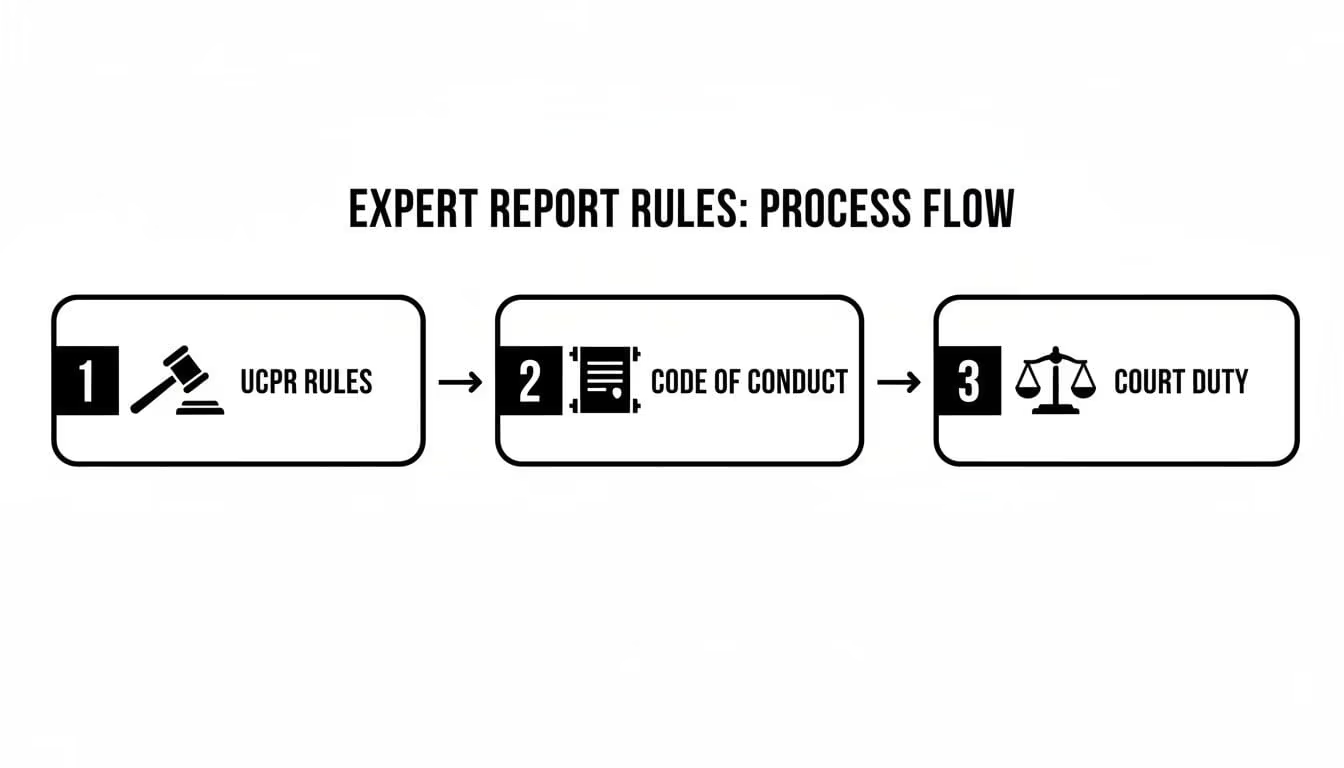
As you can see, an expert doesn’t just operate on their own. Their work is grounded in formal legal rules (the UCPR), a professional Code of Conduct, and an ultimate, overriding duty to assist the court or tribunal.
The Foundational Sections Every Report Must Have
While the final layout might differ slightly, every credible report rests on a few essential pillars. These sections are non-negotiable. They establish the expert’s credibility, set the scope of the investigation, and present the evidence in a logical sequence that anyone can follow.
First up, the report has to establish why the expert is qualified to be giving an opinion at all. This is more than just attaching a CV. It’s about detailing the specific experience relevant to the dispute. For us at Awesim, that means highlighting not just our over 35+ years in the Building & Construction industry, but our over 15 years of specialised experience in preparing reports for legal disputes.
Next is the Letter of Instruction. This is the formal request from the solicitor, and it’s crucial because it defines the expert’s mission. It outlines exactly what questions we were asked to answer, setting clear boundaries for the report and keeping the investigation focused.
A strong expert report is a completely self-contained document. Anyone—a solicitor, a barrister, or a Tribunal Member—should be able to pick it up and understand the issues, the expert’s reasoning, and their conclusions without needing any outside context.
The Core Analysis and Evidence
This is the real engine room of the report. It’s where we move from simply listing problems to conducting a deep, objective analysis of the evidence. A compelling report is built on strong analytical skills, which are essential for breaking down complex building issues and forming sound, evidence-based opinions. If you’re interested in what goes into this rigorous process, you can learn more about how to develop analytical skills.
The core analysis always includes a few key components:
- Detailed Observations: The report must meticulously document every relevant finding from the site inspection. It spells out the “what” and “where” for each defect with precision.
- Methodology: The expert has to show their work. This means explaining how they arrived at their conclusions by referencing the exact clauses in the Australian Standards, the National Construction Code (NCC), or other industry guides they used for their assessment.
- Supporting Evidence: Words alone are never enough. A top-tier report is packed with evidence like annotated photographs, clear diagrams, and material test results. This visual evidence creates a direct, undeniable link between the expert’s findings and the physical defects.
Opinions, Conclusions, and Compliance Statements
The final sections are where everything comes together. Here, the expert provides their professional opinion on each item, directly connecting the defects they observed to specific breaches of the building code or Australian Standards. This is the part that turns a list of complaints into a set of substantiated, actionable claims.
An expert’s opinion must be transparent and robust. After decades in the field, our Principal Consultant, Glen Sim, knows that a report’s value lies in its clarity. The reasoning must be spelled out, leaving no room for ambiguity. This old-school emphasis on human expertise and clear disclosure is more critical than ever, especially as discussions around AI in legal settings highlight the risks of “junk science” from automated tools.
Finally, every report must end with a mandatory declaration. The expert must state that they have read the Expert Witness Code of Conduct and agree to be bound by it. This is their formal promise of impartiality to the court.
To see how all these pieces fit together in practice, take a look at our guide and template on what goes into an expert witness report template in Australia.
How a Well-Crafted Report Shapes Your Case Outcome
A strong expert witness report does a lot more than just list building defects. From the moment it’s served to the other side, it starts to actively shape how your entire legal case unfolds. Think of it less as simple background evidence and more as a powerful tool for negotiation. It turns technical findings into legal leverage, often deciding whether a dispute settles early or drags on into a costly hearing.
The whole point of a good report is to lay out the facts so clearly and authoritatively that your position becomes undeniable. When the other party gets a report that is rock-solid—thorough, backed by evidence, and following all the rules—it forces them to take a hard look at their own case. A flimsy defence doesn’t stand a chance against a document built on a foundation of proof.
The Report as a Catalyst for Settlement
The truth is, many building disputes get resolved long before they see the inside of a courtroom, and a well-written expert report is often the reason why. It becomes the centrepiece of any mediation or settlement conference, shifting the conversation away from he-said-she-said arguments and onto objective facts.
A clear report from a seasoned consultant gives everyone a roadmap for resolution. It pinpoints the exact defects, connects them directly to breaches of the National Construction Code or relevant Australian Standards, and usually includes a costed plan for rectification. This provides a tangible, third-party assessment of what’s wrong and what it will take to make it right.
A credible, evidence-based report removes ambiguity. It presents a clear, logical argument that is difficult to refute, giving the opposing party a compelling reason to negotiate a fair settlement rather than risk a costly and unpredictable outcome at a tribunal.
This is precisely where our over 15 years of providing litigation support makes a difference. At Awesim, we don’t just write reports for a Tribunal Member; we construct them to give the other side every incentive to settle the matter fairly and without delay.
Strengthening Your Position in NCAT Hearings
If your dispute does go all the way to the NSW Civil and Administrative Tribunal (NCAT), that report becomes your most important tool, whether you’re on the offensive or defensive. The Tribunal Member leans heavily on the expert’s impartial analysis to get their head around the complex construction issues at the heart of the matter. A report that is clear, well-organised, and easy to follow gives them the confidence they need to make an informed decision.
During the hearing, the expert will likely be cross-examined on their findings. This is the moment of truth where the quality of the report is put to the ultimate test.
An expert who can confidently stand by their methodology and conclusions under questioning reinforces the credibility of their entire report. On the other hand, an expert whose report is full of holes or vague claims will lose credibility fast, and can sink the entire case. It’s why we build our reports knowing that every single line will be put under a microscope.
For homeowners, builders, and lawyers, getting this right is crucial. Investing in a high-quality, defensible report from a consultant with deep experience—like our team with over 35+ years in Building & Construction—isn’t just about ticking a box for NCAT. It’s a strategic move to secure the best possible outcome for your case.
Choosing the Right Building Consultant for Your Dispute

When you’re in a building dispute, choosing the right building consultant is single-handedly the most important decision you’ll make. The credibility and authority of your expert witness report rest entirely on who you choose.
A true expert does more than just list defects. They deliver a court-compliant document designed to withstand intense legal scrutiny.
It’s crucial to understand the difference between a standard building inspector and a genuine litigation expert. An inspector might identify problems for a potential home buyer, but a litigation expert analyses those same defects through the sharp lens of legal evidence. This role demands a deep understanding of construction, paired with fluency in the complex rules of NCAT and court proceedings.
Key Criteria for Selecting an Expert
As you evaluate potential consultants, you’re looking for a specific blend of hands-on building experience and proven litigation expertise. This is no time to cut corners. Your expert’s credibility will be challenged, so their qualifications must be undeniable.
Here’s what you should focus on:
- Deep Construction Experience: Your expert needs extensive, practical experience in the building industry. Theoretical knowledge isn’t enough; they need to have been on-site, seen how buildings are put together, and understood firsthand why they fail.
- Proven Litigation Support: Ask for their track record in preparing reports specifically for legal disputes. The expert witness report building process is a completely different beast to a standard inspection, governed by the strict Expert Witness Code of Conduct.
- NCAT and Court Familiarity: Your consultant must be comfortable with tribunal and court procedures. This includes knowing exactly how to prepare compliant reports and Scott Schedules that meet the court’s requirements.
- Demonstrable Impartiality: A genuine expert’s primary duty is to the court, not to you. They must be able to stay objective, even if it means delivering news about your case that’s hard to hear.
Questions to Ask a Potential Consultant
Before you engage anyone, treat the process like an interview. You need to ask direct questions to gauge their suitability for this highly specialised role. A confident expert will have no problem giving you clear, direct answers.
With over 35+ years in Building & Construction and more than 15 years providing dedicated litigation support to home owners, builders, and lawyers, Awesim Building Consultants sets a benchmark for reliability. We have built our reputation on providing clear, evidence-based reports that stand up to legal challenge.
To help you choose with confidence, here’s a checklist of questions to ask:
- How many years have you worked in the construction industry versus providing litigation support?
- Can you provide de-identified examples of reports you have prepared for NCAT or court?
- Are you fully versed in the UCPR Expert Witness Code of Conduct and NCAT Procedural Direction 3?
- How do you ensure your opinions remain impartial and objective throughout the process?
By asking these questions, you can filter out the generalists and find a true specialist who can deliver a report with the authority your case demands. If you need assistance, learning more about the role of a professional building consultant can provide valuable clarity.
Frequently Asked Questions About Expert Witness Reports
When you’re facing a building dispute, it’s natural to have questions. We get calls every day from homeowners, builders, and strata managers trying to understand the process.
Here are some clear, straightforward answers to the questions we hear most often about expert witness reports.
How Much Does an Expert Witness Report Cost in NSW?
The cost of an expert witness report is directly tied to the complexity of your dispute. A simple report for a single defect in a home will naturally cost less than a report for a large strata building with a long list of issues.
More complex cases simply require more time for the site inspection, document review, research, and analysis. A straightforward report might begin in the low thousands, while a multi-issue case will be more involved and priced accordingly.
At Awesim Building Consultants, we believe in total transparency. You’ll receive a detailed fee proposal upfront, so there are no surprises. It’s helpful to see this cost not just as an expense, but as a critical investment in your legal position. A strong report often leads to a faster and more favourable resolution.
Can I Use a Standard Building Inspection Report for NCAT?
No, a standard pre-purchase building inspection report is not suitable for legal proceedings and will not be accepted by NCAT. It’s a common and costly mistake to think it will suffice.
These standard reports are created for homebuyers to assess a property’s general condition. They don’t meet the strict requirements of the UCPR Expert Witness Code of Conduct, lacking the required declarations, detailed analysis, and specific format needed for court or tribunal evidence.
If you submit a non-compliant report to the NSW Civil and Administrative Tribunal (NCAT), it will almost certainly be rejected. This leaves your case without credible, admissible evidence, which can severely damage your position.
An expert witness report must be prepared specifically for legal proceedings. It must explicitly state the expert’s primary duty is to the court, providing detailed reasoning for every conclusion—a standard inspection report simply isn’t built for this purpose.
How Long Does It Take to Prepare an Expert Witness Report?
You can typically expect a draft report within 2-4 weeks of the site inspection. This timeline, however, can vary based on the case.
Complex disputes with extensive defects, multiple sites, or the need for specialised testing (like materials analysis) will require more time for a thorough investigation. The process involves the site visit, a deep dive into all documents, writing the report itself, and a rigorous internal review to guarantee it complies with all legal standards.
We have over 15 years providing litigation support, so we understand the importance of delivering on time. We always provide a clear timeline in our initial engagement agreement to set clear expectations. For a better idea of what goes into it, you can see our expert witness report template.
With over 35+ years in the Building & Construction industry, Awesim Building Consultants has the deep, practical expertise needed to deliver clear, credible, and court-compliant expert witness reports. If you require assistance with a building dispute, we are here to provide the independent advice you need.
Contact Awesim Building Consultants today for a confidential discussion about your matter.