
Your Guide to Winning with a Scott Schedule

If you’ve ever found yourself in a building dispute, you know how quickly things can get messy. A Scott Schedule is the document that brings order to that chaos, especially in a legal setting like the NSW Civil and Administrative Tribunal (NCAT).
Think of it as a master list or a detailed spreadsheet. It’s where every single defect, claim, and point of contention is laid out, item by item. This structure allows both parties—the homeowner and the builder—to state their case and proposed fix for each issue, side-by-side. It transforms a tangled, emotional argument into a clear, logical format that the Tribunal can actually work with.
What Is a Scott Schedule and Why Does It Matter?

Imagine trying to explain a dozen different building problems to a Tribunal Member. You start with the leaking roof, jump to the cracked tiles in the bathroom, and then mention a window that doesn’t close properly. The other party just denies everything. It’s a recipe for confusion.
This is exactly the problem a Scott Schedule is designed to prevent. It’s a formal document that forces everyone to address the same points in the same way, column by column. This isn’t just a helpful suggestion; in many NCAT cases, it’s a mandatory step.
The Power of an Organised Argument
The real strength of a Scott Schedule is its ability to create a direct, apples-to-apples comparison of the claims. It stops the parties from talking past each other and makes sure every single issue is methodically addressed, debated, and costed. A well-prepared schedule gives the Tribunal a clear roadmap of the entire dispute.
For a homeowner, it’s the perfect tool for systematically listing every fault, from major structural issues down to minor paint blemishes. For a builder, it provides a structured way to respond to each specific claim with their own evidence and argument. This clear format helps everyone, including the Tribunal Member, to cut through the noise and focus on the facts.
At its core, a Scott Schedule turns a tangled web of allegations and denials into a straightforward, point-by-point debate. It’s the single most important document for creating a logical, evidence-based case in a building dispute.
To get a quick sense of how this works, here’s a breakdown of the standard columns you’ll find in a schedule.
Quick Guide to Scott Schedule Columns
This table breaks down the core components of a Scott Schedule, giving you a quick snapshot of how information is organized for the Tribunal.
| Column Element | What It Does |
|---|---|
| Item Number | Gives each defect a unique number for easy reference. |
| Defect Description | Clearly explains the problem, where it is, and what’s wrong. |
| Applicant’s Claim | Outlines the homeowner’s position on the cause and proposed fix. |
| Respondent’s Position | Details the builder’s response—do they agree, disagree, or have another explanation? |
| Cost to Rectify | States the cost to fix the issue, supported by quotes or expert reports. |
| Tribunal Member’s Notes | A space reserved for the Member to record their findings or decisions on each item. |
Each column forces a direct response, leaving no room for ambiguity and making the entire process far more efficient.
A Cornerstone of NCAT Proceedings
In New South Wales, the Scott Schedule is deeply embedded in how NCAT handles building disputes, guided by its Procedural Direction 3. Its effectiveness isn’t just anecdotal. During the 2024-2025 financial year, NCAT handled over 12,000 building disputes. Of those, 68% involved defects and workmanship issues.
An internal efficiency review from 2025 estimated that a staggering 45% of these cases used a Scott Schedule, which helped cut down hearing times by up to 30%. If you want to dig deeper into the document itself, you can learn more about the fundamentals of a Scott Schedule in our detailed guide.
This reliance on a structured format says it all. With over 35+ years in building and construction and 15+ years providing litigation support to home owners, builders and lawyers, we at Awesim Building Consultants have seen it time and again: a meticulously prepared Scott Schedule is the bedrock of a strong case. It proves your claims are organised, backed by evidence, and ready for serious consideration.
How a Scott Schedule Influences Your NCAT Case
In my experience, the single most powerful tool you have in an NCAT building dispute isn’t just your evidence—it’s how you present it. That’s where a properly drafted Scott Schedule comes in. It’s not simply a list of what’s wrong; it’s the very backbone of your case, the document that frames the entire conversation for the Tribunal Member.
Think of it as the script for your dispute. Without it, you’re left with a confusing mess of claims and counter-claims. But with a solid schedule, you transform that chaos into a logical, easy-to-follow story that guides the Tribunal straight to the heart of the matter: what went wrong, why it’s wrong, and what it will take to make it right.
Forcing Clarity and Accountability
Here’s the real power of a Scott Schedule: it corners the other side. There’s no room for vague excuses or blanket denials. When each defect has its own row, the opposing party has to respond to every single point in their designated column.
They can no longer hide behind generic statements like “all work meets the standard” or dismiss everything as “minor wear and tear.” They are forced to go on the record, item by item. Do they agree the defect exists? Do they dispute the cause? Do they have a different idea about how to fix it? This process instantly clarifies what’s actually in dispute and what isn’t, saving an enormous amount of time in the hearing itself.
A Scott Schedule removes the ambiguity from a building dispute. It forces every issue into the open, demanding a direct response and creating a transparent framework for resolution that the Tribunal can rely on.
This forced accountability is often the key to unlocking a faster resolution. When a builder or developer is faced with a professionally prepared schedule—one that’s packed with undeniable evidence—they quickly realise that fighting every single point is a losing battle. It suddenly becomes much more sensible to negotiate and settle, saving everyone the cost and stress of a drawn-out hearing.
Building a Persuasive Narrative
Every line in your Scott Schedule is a chance to build your argument. A lazy entry like “faulty window” is practically useless; it tells the Tribunal nothing and is easy to dismiss.
Now, consider this instead: “Window in Bedroom 2 fails to seal when closed, causing water ingress during rain events. Installation is non-compliant with manufacturer’s instructions and AS 2047.” That tells a story. It’s specific, it points to a breach of standards, and it establishes a clear consequence.
This is where true expertise shines. A compelling schedule doesn’t just list problems; it methodically links each one to cold, hard facts:
- Photographic and video proof that leaves no doubt about the issue.
- References to Australian Standards or the Building Code of Australia that prove non-compliance.
- Detailed costings from reputable tradespeople or quantity surveyors to justify your claim.
- An expert’s opinion explaining the root cause and the correct, compliant method of rectification.
When you stack up dozens of these well-supported claims, one after another, the cumulative effect is overwhelming. You’re not just complaining; you’re presenting a powerful, almost undeniable case of substandard work that the Tribunal simply cannot ignore.
The Awesim Advantage in Litigation Support
This is exactly what we do. With over 35+ years of hands-on experience in building and construction, we’ve seen these defects from the inside out. But just as importantly, our 15+ years of dedicated litigation support means we know precisely what NCAT needs to see to make a favourable decision.
We don’t just fill in boxes on a spreadsheet. We build a strategic weapon for your case. We’ve seen firsthand how a meticulously prepared, evidence-backed Scott Schedule can force early settlements and secure stronger outcomes at hearings. By bringing in an expert early, you’re not just getting a document; you’re building your entire case on a rock-solid foundation from day one.
Anatomy of a Powerful Scott Schedule Entry
The difference between a Scott Schedule that helps you win your case and one that gets picked apart at the Tribunal comes down to the detail in each entry. If your list is vague or poorly put together, you’re basically inviting the other party to dismiss your claims.
Let’s break down what a rock-solid entry looks like, column by column, so you can build an argument that holds up under pressure.
Think of each line item not just as a complaint, but as a mini-argument in itself. It needs to be specific, backed by solid evidence, and technically sound. A weak entry just says there’s a problem; a powerful one proves it. This is where our 35+ years in the construction industry gives our clients a real advantage—we make sure every detail is both technically accurate and legally defensible.
From Vague to Victorious: The Power of Precision
The most common mistake we see? A serious lack of specifics. An entry like “faulty bathroom” is completely useless. It doesn’t tell the Tribunal what’s wrong, where it is, or why it matters. It’s a claim that can be easily brushed aside.
Now, let’s look at a powerful alternative:
“Failed waterproofing membrane behind the shower wall in the master ensuite, located on the first floor. This failure is non-compliant with the National Construction Code (NCC) Volume Two and Australian Standard AS 3740-2021, leading to water ingress into the adjacent bedroom wall cavity.”
See the difference? This entry is a world apart. It pinpoints the exact location, identifies the specific building codes and standards that have been breached, and clearly states the consequence. This level of detail leaves no room for debate and shows you’ve done your homework.
A well-documented list of defects directly shapes the legal process and pushes the case toward a clear outcome.
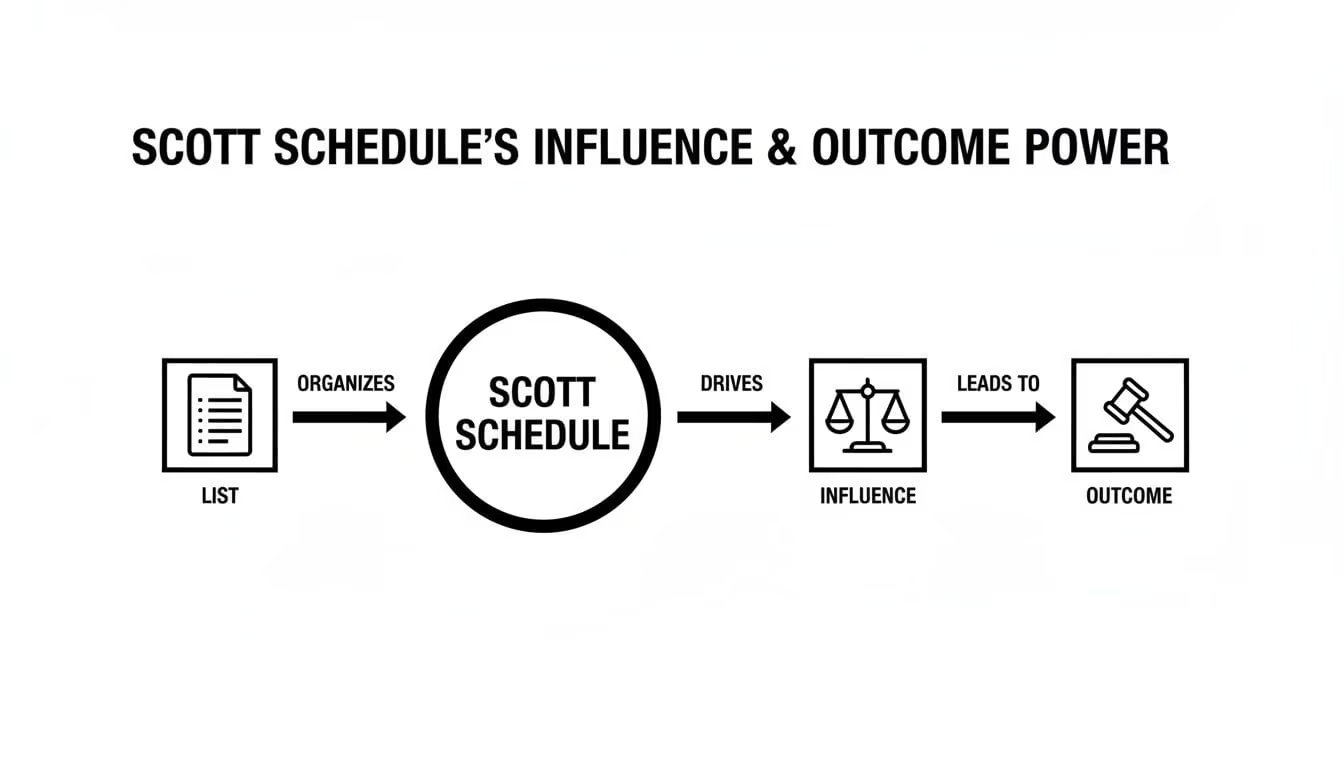
This process shows how an organised list is the foundation for influencing the proceedings and, ultimately, getting a decisive result.
To really drive this home, let’s look at how a single, common building defect would be properly documented in a schedule.
Example Entry for a Common Building Defect
| Column | Example Content for ‘Leaking Balcony’ |
|---|---|
| Item & Defect Description | 1. Defective balcony waterproofing on the first-floor balcony. Water is ponding near the sliding door threshold due to incorrect fall. Fails to comply with AS 4654.2-2012 (Waterproofing membranes) and the NCC requirements for drainage. |
| Applicant’s Position on Rectification | Remove existing tiles and screed. Re-grade substrate to achieve correct fall away from the building. Install new waterproofing system to AS 4654.2-2012 and re-tile. |
| Applicant’s Cost to Rectify | $7,850 + GST. (See attached Quote #INV-345 from Watertight Solutions Pty Ltd). |
| Reference to Evidence | See Expert Report dated [Date] paragraphs 5.2-5.6. Refer also to Photographs 18-22 and Video 04. |
This table shows the clear, logical chain of information needed for just one defect. When you multiply this level of detail across all your claims, you build an incredibly strong case.
The Evidentiary Backbone of Your Claim
The strength of your Scott Schedule is directly tied to the quality of the evidence you have to back it up. Clear photos and videos are a must, but it’s the expert analysis that gives them context and real power.
An expert can use diagnostic tools like thermal imaging cameras or moisture meters to prove a defect that you can’t even see. This methodical approach has a massive impact on case outcomes.
In NSW, a 2025 Fair Trading audit of 10,200 disputes found that well-prepared Scott Schedules helped resolve 55% of building defect cases without needing a full, costly hearing.
The benefits for homeowners are clear. In 2024-2025, the 7,300 residential disputes where schedules were used early on saw average settlements around $38,500. This is significantly less than the $62,000 average for matters that went all the way through a full hearing. These figures, which you can explore further in data about Australian construction work from the ABS, highlight just how crucial this document is.
At Awesim Building Consultants, our litigation support—refined over 15+ years—is built on this principle. We don’t just find defects; we build an ironclad, evidence-based case for each one, ensuring your Scott Schedule is structured to win. You can learn more about how an expert witness strengthens your NCAT dispute in our other guides.
Common Mistakes That Can Sink Your Claim
Putting together a Scott Schedule is far more than just a paperwork exercise. After spending 35+ years in the trenches of building and construction disputes, we’ve seen how easily simple mistakes can weaken or even completely derail a solid claim.
Think of your Scott Schedule as the foundation of your case. If it’s built on shaky ground with gaps and weak points, it won’t stand up to the pressure from the other side or the scrutiny of the Tribunal. Every single entry needs to be rock-solid.
Vague Descriptions and Weak Language
This is hands-down the most common error we see. An item listed as “cracked wall” or “faulty plumbing” is essentially useless. It’s an open invitation for the other party to dismiss it because it lacks any real substance.
Where is the crack, and how long is it? Which specific part of the plumbing is failing, and what damage is it causing? You need to be precise. Every detail you add closes a door on ambiguity and strengthens your position.
Pro Tip: Instead of writing “leaking shower,” be specific. Try: “Failed waterproofing in master ensuite shower, evidenced by moisture readings of 25% in the adjacent wall, in breach of AS 3740.” Language like that is technical, factual, and incredibly difficult to argue against.
Plucking Costings Out of Thin Air
Another critical fumble is throwing in repair costs without any backing. You simply can’t guess what a job will cost or use a rough number a mate gave you. NCAT needs to see credible, documented proof for every dollar you’re claiming.
Each cost must be supported by a formal quote from a qualified, licensed tradesperson or a detailed cost breakdown from an expert like a quantity surveyor. If you don’t provide this, the Tribunal has no basis to award you the money, even if they agree a defect exists.
A Scott Schedule without properly sourced costings is like a lawsuit without a dollar amount. It identifies a problem but fails to provide the court with a concrete, justifiable solution.
This is a huge part of the litigation support we offer. We make sure every cost isn’t just a random figure but a defensible number backed by solid, professional evidence.
Forgetting the Evidence Trail
People often attach a folder of photos but forget to link them directly to the specific defects in the schedule. The Tribunal Member isn’t going to play detective, trying to figure out which photo of a leaky pipe belongs to which item on your list.
Every piece of evidence—a photo, a report, a quote—has to be clearly referenced in the corresponding row. For example: “See Photos 12-15 and Expert Report, paragraphs 4.1-4.3.” This creates a clean, undeniable trail of evidence for each item.
A well-structured schedule makes a massive difference. In fact, properly integrating Scott Schedules in NSW construction disputes has been shown to improve case efficiency by as much as 35%. For homeowners, our expert-prepared schedules often pinpoint major compliance failures, like waterproofing issues that breach AS 4654.1. In our strata work, we’ve seen non-compliance rates for these critical standards exceed 40%. This reflects the broader growth and complexity in the industry, which you can read more about in recent Australian construction industry forecasts.
Getting this right is non-negotiable. A well-prepared Scott Schedule is your most powerful tool—a carefully built argument designed to be credible, bulletproof, and ultimately, win your case.
The Expert Witness Is Your Secret Weapon

Think of a Scott Schedule as the skeleton of your building claim. It provides the structure, but it’s the expert evidence that gives it muscle. Without it, your claim is just a list of complaints. With it, your schedule becomes a powerful tool in any building dispute.
This is where a credible expert witness comes in. Their role isn’t just to fill out a form; it’s to provide an impartial, objective opinion based entirely on facts. Their primary duty is to the Tribunal, not the person paying their invoice, and it’s this independence that gives their findings so much credibility.
Turning Observations Into Irrefutable Evidence
So, what makes an expert’s report so powerful? It’s all in the process. A genuine expert goes well beyond a quick visual look-over. They conduct meticulous site inspections, often using specialised diagnostic tools to find problems that aren’t visible to the naked eye.
This forensic approach turns a vague feeling that “something’s wrong” into hard, measurable facts. For instance, they might use thermal imaging to prove moisture is trapped inside a wall cavity or run tests to confirm a concrete slab fails to meet the required strength. This is how you get the rock-solid, evidence-based opinions needed to make your case.
Just as importantly, a good expert can translate technical jargon into plain English. They take complex building code clauses, Australian Standards, and test results and explain them in a way a Tribunal Member can immediately grasp. This clarity is what makes a Scott Schedule truly persuasive.
The Duty and Credibility of an Expert
An expert witness must follow a strict code of conduct. Their paramount duty is to assist the Tribunal, which means their findings have to be completely independent and unbiased. They are not a “hired gun” paid to advocate for your side.
This professional integrity is non-negotiable. An expert’s reputation is on the line with every report they write. When an expert is known to the courts for their objective analysis, their evidence brings a level of authority to your case that is simply unmatched.
The moment an expert’s report is seen as biased or one-sided, its value evaporates. A credible expert provides an impartial assessment that strengthens your case precisely because it is objective and grounded in facts, not advocacy.
This is why experience counts. At Awesim Building Consultants, our 15+ years of litigation support is built on a foundation of providing impartial, court-recognised advice. We understand our duty to the Tribunal comes first, and it’s this commitment to integrity that makes our evidence so effective. You can learn more about this role in our guide on using a building expert witness in NCAT disputes.
The Awesim Advantage Backing Your Schedule
With over 35+ years in the building and construction industry, we bring a depth of hands-on, practical knowledge that’s hard to find. We’ve seen these defects in the real world, we know why they happen, and we know exactly what a compliant repair looks like according to the standards.
This deep experience allows us to prepare a Scott Schedule that isn’t just procedurally correct but technically bulletproof. We make sure every single item is:
- Clearly Identified: Pinpointing the exact nature and location of every defect.
- Technically Justified: Referencing the specific building codes or standards that have been breached.
- Evidence-Backed: Supported by high-quality photos, diagnostic test results, and detailed analysis.
- Properly Costed: Including realistic, defensible, and itemised costs for rectification.
Bringing in an expert isn’t just about getting a document filled out; it’s about building an undeniable case based on solid proof. An expertly prepared Scott Schedule, backed by a credible witness, gives your claim the authority it needs to succeed. It’s your best asset for turning a messy dispute into a clear-cut case.
When to Engage a Building Consultant for Your Dispute
When you’re staring down the barrel of a building dispute, recognising you need help is the first step. But knowing when to call for that help is what really counts.
If there’s one mistake we see homeowners make time and time again, it’s waiting too long. The ideal time to bring a building consultant into the picture is right at the beginning—often well before the situation has any chance of escalating to NCAT.
Think of it this way: getting an expert involved early gives you a clear, factual map of where you stand. An early assessment from a professional can validate your concerns, uncover all the defects (not just the ones you can see), and help form an initial strategy. This proactive approach can sometimes stop a formal dispute in its tracks by presenting the other party with a credible, expert-backed list of issues that are simply too difficult to ignore.
The Process From First Call to Final Report
The thought of engaging an expert can feel a bit daunting, but it shouldn’t be. At Awesim, we’ve spent over 15+ years in litigation support, refining our process to be as clear and collaborative as possible. It all starts with a simple, no-obligation chat where we just listen to your story and explain how we might be able to help.
From that first conversation, the journey typically looks like this:
- Comprehensive Site Inspection: We get on-site and conduct a meticulous inspection. Drawing on our 35+ years of hands-on construction experience, we document every single defect, code breach, and instance of shoddy workmanship.
- Collaborative Development: This isn’t a one-way street. We work closely with you and your legal team to make sure the expert report and the Scott Schedule are perfectly aligned with your overall case strategy.
- Report & Scott Schedule Preparation: We then take all our findings and compile them into a detailed, NCAT-compliant expert report and a precisely drafted Scott Schedule, ready for any legal proceedings.
Taking Control of Your Dispute
Bringing an expert in early is an act of empowerment. Instead of constantly reacting to a builder’s denials or waiting on your lawyer for the next move, you get to take control of the narrative.
You establish the hard facts of the case on your own terms, backed by the authority of an independent, credible professional. It completely shifts the dynamic of the dispute, putting you firmly on the front foot.
Engaging a building consultant isn’t just about preparing for a fight; it’s about arming yourself with the facts to potentially avoid one, or to ensure you enter it with the strongest possible position.
With a proven track record across Sydney and regional NSW, the Awesim team is ready to be your trusted partner. Our deep expertise in both building and dispute resolution means you get the support you need to navigate this challenging process. To find out more about what we do and how to choose the right expert for your situation, you can learn more about how to choose the right building consultant on our website.
Common Questions We Hear About Scott Schedules
When you’re in the thick of a building dispute, documents like a Scott Schedule can feel overwhelming. Let’s clear up a few of the most common questions we get from homeowners, builders, and even lawyers who are navigating the NCAT process for the first time.
Can I Just Prepare a Scott Schedule Myself?
Technically, yes, you can. But it comes with a massive risk. The real power of a Scott Schedule isn’t just listing what’s wrong; it’s in the technical detail, the precise referencing of Australian Standards and the Building Code, and the objective evidence that backs it all up.
If you don’t have that deep industry knowledge, it’s easy for the other side to pick your schedule apart. The Tribunal might even dismiss it, which can seriously damage your case. An expert makes sure every single item is defensible, credible, and framed in the language the Tribunal understands. With over 35+ years in building and construction, we know exactly what standards apply and what a Member needs to see to make a favourable decision.
What’s the Difference Between a Scott Schedule and an Expert Report?
This is a common point of confusion. The easiest way to think about it is that the Expert Report is the full, detailed investigation, and the Scott Schedule is the easy-to-read summary designed specifically for the hearing. The report is where we put all the photos, analysis, test results, and our detailed professional opinions.
The schedule then takes that information and distils it into that side-by-side format. It’s the tool that allows the Tribunal Member to directly compare your claim against the other party’s response for each and every defect. The report is the evidence; the schedule is the courtroom weapon. Our 15+ years in litigation support have shown us time and again that you can’t have a strong schedule without a rock-solid report behind it.
The Expert Report provides the depth of evidence, while the Scott Schedule delivers the structured argument. Both are critical and work hand-in-hand to build a compelling case.
How Much Does a Professional Scott Schedule Cost?
There’s no single answer here, as the cost really hinges on the specifics of your case. A dispute over a handful of straightforward defects is naturally going to be less complex—and therefore less expensive—than a case involving major, systemic failures across a whole building. At Awesim, we provide a clear, transparent fee proposal once we’ve had an initial chat and understand the scope.
It’s helpful to see a professionally prepared schedule as an investment, not just a cost. A strong, well-argued schedule can speed up the resolution process significantly and puts you in a much stronger negotiating position. Ultimately, it can save you from far greater legal costs down the track by getting things sorted efficiently.
Does the Other Side Have to Use a Scott Schedule Too?
In most NCAT building disputes, the answer is yes. The Tribunal often orders both parties to use a Scott Schedule because it’s the established, standard method for keeping the hearing focused and efficient. It forces everyone to deal with the same issues in the same format.
But even if it isn’t ordered, preparing one is a powerful strategic move. It shows you’re organised, serious, and that your claims are backed by evidence. It immediately puts the other party on the defensive, forcing them to respond directly to your points instead of making vague, unsupported arguments. It’s a proactive step that signals you’re ready for business.
Navigating a building dispute requires precision, evidence, and expertise. If you need help creating a powerful, NCAT-compliant Scott Schedule, trust the team at Awesim Building Consultants. Our extensive hands-on and litigation experience ensures your case is built on a rock-solid foundation. Contact us today to discuss your situation at https://www.awesim.com.au.
Related Posts

NCAT Consumer Division: Steps From Lodgement to Hearing
Most people who end up at the NCAT Consumer and Commercial Division do not arrive there by choice. They arrive
Read More »
Statutory Warranty NSW: What Builders Must Fix and for How Long
Statutory warranty NSW obligations exist precisely for the moment a builder stops returning calls. A crack appears in the render.
Read More »
Home Building Act NSW: Key Clauses Every Owner Should Know
The Home Building Act 1989 (NSW) sets the rules for residential building work in New South Wales. It requires licensed
Read More »