
What Is a Scott Schedule: A 2026 Guide for NSW Disputes

Ever tried to untangle a major disagreement using nothing but a messy pile of emails, quotes, and scribbled notes? In a building dispute, that approach is a fast track to confusion and mounting legal bills. This is where a Scott Schedule comes in—it’s the single document designed to bring methodical order to the chaos.
Understanding the Scott Schedule

Think of a Scott Schedule as a master table or spreadsheet for your building dispute. It’s a formal document that forces both parties—homeowners, builders, and lawyers—to lay their cards on the table, defect by defect. Instead of a tangled, unstructured argument, every single issue—from a poorly installed window to significant structural faults—gets its own dedicated row.
This format is absolutely essential in legal settings like the NSW Civil and Administrative Tribunal (NCAT). In fact, its entire purpose is to streamline the dispute by creating a clear, side-by-side view of every claim, response, and counter-claim. It’s less of a simple list and more of a comprehensive ledger for the entire dispute.
The Power of Clarity and Organisation
A properly drafted Scott Schedule can completely transform a complex, emotional disagreement into a logical, organised dialogue. The columns are set up to capture specific details from both the person making the claim (the applicant) and the person responding (the respondent).
This typically includes:
- A clear description of each defect: Pinpointing exactly what’s wrong and where.
- The proposed fix and cost: Outlining how to rectify the issue and the cost involved.
- The other party’s response: Stating whether they agree or disagree with the defect and the cost.
- A column for expert or tribunal comments: Allowing an independent expert or the Tribunal Member to provide their assessment.
This methodical structure cuts through the noise. It pushes everyone to move past vague complaints like “the waterproofing is faulty” and instead provide precise details on why it’s faulty, where the failure is, and how it breaches the contract or Australian Standards.
By isolating each point of contention, the Scott Schedule allows a tribunal to quickly identify areas of agreement and focus solely on the items that are genuinely in dispute, saving significant time and costs for everyone involved.
With over 35+ years in Building & Construction, our team at Awesim Building Consultants knows just how powerful a professionally prepared schedule can be. It adds undeniable strength and clarity to your case. If you’re facing a building dispute, understanding the Scott Schedule is a crucial step toward resolution.
You can find out more about how we help our clients prepare these critical documents in our detailed guide on the Scott Schedule preparation process.
The Purpose and Legal Weight of a Scott Schedule in NSW
Think of a Scott Schedule as more than just a list. In the New South Wales justice system, it’s a powerful document with real legal clout. Its job is to cut through the often-messy reality of a building dispute, forcing everyone involved to lay their cards on the table with precision and transparency.
It’s not just a good idea; it’s often a strict requirement.
For anyone involved in the legal industry, understanding how a Scott Schedule works is vital. By locking claims into a structured format, it stops vague finger-pointing in its tracks and makes sure every single point of disagreement is clearly defined and ready to be addressed. This disciplined format is formally recognised and enforced by the NSW Civil and Administrative Tribunal (NCAT) as a core part of how it manages its busy caseload.
NCAT and Procedural Direction 3
So, where does this legal authority come from? It’s cemented by NCAT’s Procedural Direction 3. This directive, updated in 2025, frequently mandates that a Scott Schedule must be used in building and construction disputes. This isn’t a suggestion or a helpful template—it’s a non-negotiable part of the legal process.
By requiring parties to use a Scott Schedule, NCAT ensures that before a case even reaches a hearing, the core issues have been identified, arguments have been articulated, and areas of disagreement are crystal clear.
This single procedural rule completely shapes how a dispute plays out. For homeowners and builders alike, it means the real preparation for a hearing begins with the painstaking task of filling out this document. It literally sets the stage for every argument and piece of evidence that follows.
With over 15 years providing litigation support to homeowners, builders, and lawyers, our team at Awesim Building Consultants has seen firsthand just how critical this document is in NCAT proceedings. We make sure our clients’ cases are presented with the structure and formality the Tribunal demands.
A Catalyst for Efficient Resolutions
Here’s where the Scott Schedule really shines: it’s a powerful tool for getting things sorted out. By forcing each side to put a position—and a price tag—on every single item, it instantly shows where you agree and what the exact financial gap is on the items you don’t. That kind of clarity is a huge driver for reaching a settlement.
In New South Wales, Scott Schedules have become a cornerstone of building dispute resolutions at NCAT. With over 4,500 home building disputes lodged annually, a huge number of them rely on these structured tables to move forward. In fact, cases that use Scott Schedules tend to resolve 28% faster on average.
This structure often gets both parties talking and settling individual items long before a formal hearing is on the horizon. It can save an unbelievable amount of time, stress, and legal fees, transforming what could be a sprawling, chaotic argument into a focused, item-by-item negotiation.
Breaking Down the Anatomy of a Scott Schedule
To really get what a Scott Schedule is, you need to look past its purpose and pull apart its structure. It might look like a daunting legal document at first, but it’s really just a logical table built for one thing: absolute clarity.
Each column has a specific job to do. They all work together to turn a messy, complicated dispute into an itemised, easy-to-follow record.
This structured format is what brings order to the chaos. It forces both the claimant (the one making the claim) and the respondent (the one responding) to tackle the exact same points for every single defect. This side-by-side comparison makes it dead simple for a Tribunal Member to see precisely where everyone stands.
The Essential Columns Explained
While you might see slight variations in templates, a standard Scott Schedule used in NCAT building disputes will always have several key columns. Think of it as telling the complete story of each defect, from start to finish.
The core components usually include:
- Item Number: A unique number for each alleged defect (e.g., 1, 2, 3). This ensures every single issue is tracked separately and nothing gets lost in the shuffle.
- Claimant’s Description of Defect: This is where you state exactly what’s wrong, where it is, and why it’s a defect. You might reference a breach of the building contract or a specific Australian Standard.
- Claimant’s Cost to Rectify: The amount the claimant believes it will cost to fix the issue. This figure should be backed up by a quote or a cost estimate from an expert.
- Respondent’s Position: The respondent’s direct reply. Here, they state if they agree it’s a defect, disagree entirely, or have another view (for example, arguing the “defect” is due to homeowner misuse).
- Respondent’s Cost to Rectify: The amount the respondent believes it should cost. This could be $0 if they deny the defect exists or believe they aren’t responsible for it.
- Tribunal’s Finding: A column reserved for the Tribunal Member’s final ruling on that specific item, which is often guided by an independent expert’s opinion.
This layout is what gives the document its legal weight. It drives clarity, efficiency, and accountability for everyone involved.
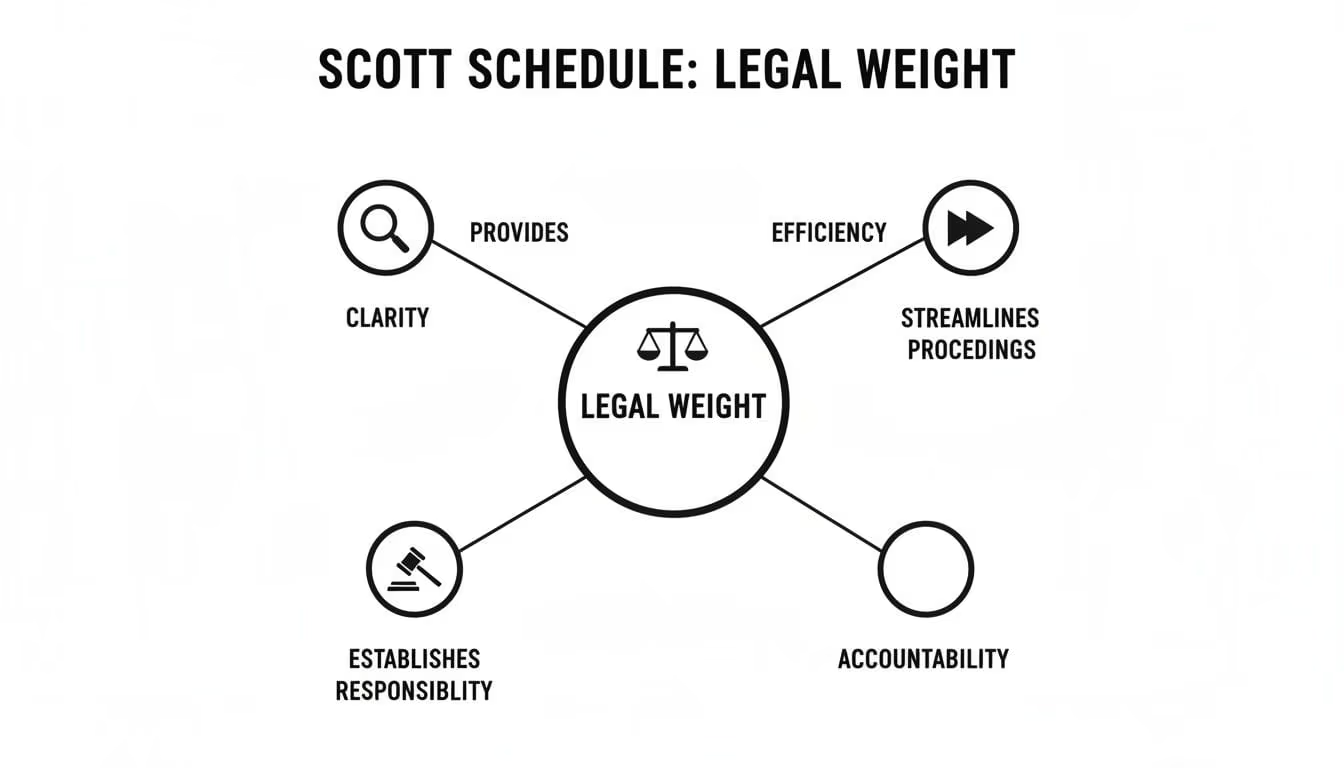
By breaking a dispute down into these clear components, the document makes each party’s position transparent and directly comparable. No more talking in circles.
Putting It Into Practice
Let’s look at how a single defect plays out in this format. The table below shows a simplified layout for one common issue: a leaking shower.
Example Scott Schedule Layout
| Item No. | Claimant’s Description of Defect | Claimant’s Cost to Rectify | Respondent’s Position | Respondent’s Cost to Rectify | Tribunal’s Finding |
|---|---|---|---|---|---|
| 1 | Leaking shower in main bathroom. Water penetrating wall due to non-compliant waterproofing membrane, failing to meet AS 3740-2010. | $5,500 (inc. GST) per Quote A to strip, re-waterproof, and re-tile. | Disagree. Leak is due to failed grout joint and lack of maintenance. Not a waterproofing failure. | $450 (inc. GST) to re-grout the shower base. | Ruled a defect. Evidence shows waterproofing failure. Respondent to pay Claimant $5,500. |
As you can see, this methodical approach is incredibly effective. The homeowner (claimant) outlines the problem and their cost, while the builder (respondent) gives their side. An expert, like one from Awesim Building Consultants, would provide an independent assessment to help the tribunal make a final, informed decision.
This isn’t just theory. A 2024 NCAT study highlighted just how impactful this structure is. It found that these schedules boosted settlement rates to 71% at conciliation, slashed the need for full hearings by 34%, and saved the tribunal a massive 2,100 hearing days each year.
If you’d like a head start, you can download our free Scott Schedule template to see this layout for yourself.
Common Mistakes to Avoid When Preparing Your Schedule
A Scott Schedule can be your most powerful tool in a building dispute, but only if it’s done right. A poorly prepared schedule, on the other hand, can quickly sink your case before it even gets going.
With 35+ years in Building & Construction, we’ve seen the same handful of mistakes trip people up time and time again. These aren’t just minor slip-ups; they can weaken your arguments, frustrate the Tribunal, and ultimately cost you the resolution you deserve. Knowing what these pitfalls are is the first step to making sure your schedule is a weapon for clarity, not a source of confusion.
Mistake 1: Vague or Emotional Defect Descriptions
This is easily the most common error we see. When you’re frustrated, it’s easy to write things like “The paint job is terrible” or “The window is just faulty.” The problem is, these statements give a Tribunal Member nothing to work with. They’re subjective, emotional, and can’t be measured or assessed by an expert.
What to Do Instead: Get specific and tie it back to the rulebook. Instead of complaining about a bad paint job, frame it like this:
“Paint finish on living room walls shows visible roller marks and inconsistent sheen, failing to meet the ‘good workmanship’ standard defined in AS/NZS 2311:2017.”
See the difference? You’ve just turned a personal complaint into an objective, evidence-based claim that an expert can actually evaluate. When it comes to Scott Schedules, specificity is everything.
Mistake 2: Pulling Costs Out of Thin Air
The second major blunder is throwing a number at the wall and hoping it sticks. Claiming a defect will cost $10,000 to fix without a shred of proof is a red flag. The other side will immediately tear it apart, and the Tribunal is likely to ignore it completely.
What to Do Instead: Back up every single dollar.
- Get Formal Quotes: Don’t just get one—aim for a few detailed, written quotes from qualified and licensed tradespeople. Make sure the quotes clearly outline the scope of work needed to fix the defect.
- Bring in an Expert: For more complex problems, having a building consultant provide a detailed cost estimate within their expert report is the gold standard. It shows the Tribunal you’ve done your homework.
When you attach these documents as evidence, you’re proving your costs are grounded in market reality, not just wishful thinking.
At Awesim Building Consultants, our 15+ years of litigation support have shown us one thing clearly: a Scott Schedule backed by rock-solid evidence is a game-changer. We make sure every detail, from the defect descriptions to the costings, is precise, defensible, and built to give you the best possible shot at a fair outcome.
Why an Expert-Prepared Scott Schedule Is Your Best Investment

Sure, you can fill out a Scott Schedule template on your own. But its real power doesn’t come from the columns and rows; it comes from the expertise poured into every single cell. Thinking of it as just another form to fill out is a mistake.
Engaging a building consultant to prepare your schedule isn’t an expense—it’s a strategic investment in the strength and credibility of your case. An expert turns a simple list of complaints into a powerful piece of evidence that can’t be easily ignored.
A self-prepared schedule often falls apart under pressure. Vague descriptions and ballpark costings are easy targets for the other side to challenge and, ultimately, for the Tribunal to dismiss. In contrast, an expert-prepared schedule is built to withstand scrutiny because every entry is backed by technical precision and solid evidence.
The Authority of Expertise
With 35+ years in Building & Construction, the team at Awesim Building Consultants knows exactly what the Tribunal needs to see. We don’t just list defects; we meticulously describe them using correct technical language and tie each one directly to the specific Building Code of Australia (BCA) clauses and Australian Standards that have been breached.
This level of technical authority is almost impossible to replicate without decades of hands-on experience.
An expert-prepared Scott Schedule shows the Tribunal that your claims aren’t just grievances. They are verified, quantified, and professionally assessed facts. It strips away the ambiguity and forces the conversation to focus squarely on the evidence.
On top of that, we bring 15+ years of providing litigation support to homeowners, builders, and lawyers. This means we provide realistic, defensible costings for rectification work that hold up under questioning. This stops the other party from undermining your case by arguing your figures are inflated or just guesswork.
An expert’s assessment carries a weight that a self-generated estimate simply can’t match.
A professionally drafted schedule gives you the authority and peace of mind to navigate your dispute with confidence. For the strongest possible case, this document often works hand-in-hand with our detailed Expert Witness Reports. The report provides the deep-dive evidence, and the schedule summarises it for the Tribunal, creating a comprehensive approach that heavily influences the final outcome.
Your Scott Schedule Questions Answered
Even after walking through the details, we find clients often have a few lingering questions. It’s a complex area, after all. Let’s tackle some of the most common queries we hear from homeowners, builders, and even legal professionals wading into these disputes for the first time.
Can I Prepare a Scott Schedule Myself?
While you technically can, it’s a path fraught with risk in building disputes. The real power of a Scott Schedule isn’t just in the format; it’s in the credibility of the information within it.
An expert-prepared schedule ensures every defect is correctly identified, cross-referenced against the relevant building codes and Australian Standards (like AS 3740-2010 for waterproofing), and assigned a realistic, defensible rectification cost. A self-prepared schedule, even with the best intentions, can contain errors or lack the robust evidence needed to be persuasive, potentially weakening your entire case at NCAT.
What’s the Difference Between a Scott Schedule and an Expert Report?
This is a fantastic question, as the two documents work hand-in-hand to build a powerful case. Think of it this way:
- The Expert Witness Report is the comprehensive investigation. It’s a detailed, in-depth analysis from a qualified professional that explains the what, why, and how of the building defects.
- The Scott Schedule is the “at-a-glance” summary for the Tribunal. It takes the key findings from the expert report and lays them out in a clear, comparative table.
Essentially, the detailed findings from a robust Expert Witness Report provide the ammunition. The Scott Schedule is the weapon that delivers it clearly and effectively to the Tribunal.
Does Using a Scott Schedule Guarantee a Win?
No single document can ever guarantee a win in a legal dispute. However, a professionally prepared Scott Schedule dramatically improves your odds.
By presenting your case in a clear, organised, and evidence-based format, you make the Tribunal’s job easier. They can quickly grasp the issues, compare your position to the respondent’s, and assess the evidence for each item. This clarity and professionalism maximise your chances of achieving a fair and favourable outcome.
With over 35+ years in Building & Construction and more than 15 years providing litigation support, Awesim Building Consultants has the deep expertise needed to prepare NCAT-compliant Scott Schedules that give your case the authority it deserves. Don’t leave your dispute to chance—contact us today at https://www.awesim.com.au.

Related Posts

Water Damage in Homes: How to Track Down the Source
Water damage in a home rarely announces itself at the source. A stain on the ceiling, a musty smell in
Read More »
Waterproofing Membrane Types: Which Fails Most in NSW Bathrooms
Waterproofing failure is the single most common serious defect found in NSW apartments, and the type of membrane used, along
Read More »
Building Certifier NSW: Role, Limits, and When You Need More
A building certifier in NSW is a registered professional who issues construction certificates, conducts critical stage inspections, and grants occupation
Read More »