
Building Expert Witness Litigation Support: A NSW Guide
A building dispute usually starts with one fault and turns into ten arguments. The shower leaks into the room below. The tiles don’t line up. The slab finish looks wrong. The builder says it’s cosmetic. The owner says it’s defective. Emails pile up, photos get taken from bad angles, and by the time NCAT is mentioned, both sides are frustrated and talking past each other.
That’s where building expert witness litigation support becomes useful. Not as a dramatic last step, but as a structured way to sort fact from allegation. In New South Wales, residential building disputes often end up in NCAT or court, and the outcome usually turns on whether the evidence is organised, technically sound, and easy for a decision-maker to follow.
With 35+ years in building and construction and 15+ years providing litigation support, the work is familiar. Site investigation, defect diagnosis, expert reports, and Scott Schedules all serve the same purpose. They turn a messy dispute into a document set that can be tested. That matters because expert witness consulting is not a small, informal sideline. In the United States alone, the market is projected at 11,925 businesses and US$789.5 million in 2026, which shows how specialised this work becomes when legal systems routinely rely on technical evidence in complex disputes like building defects (IBISWorld expert witness consulting services).
Your Guide to Navigating Building Disputes in NSW
A common NSW dispute looks like this. A homeowner notices cracking after handover. The builder says settlement. The owner thinks structural movement. A strata manager inherits a file full of emails, phone photos, and incomplete maintenance records. A solicitor comes in later and has to work out what is actual defect evidence and what is just noise.
That’s why the first practical step is almost always the same. Strip the dispute back to observable facts. What is the defect. Where is it. When was it first noticed. What standard or code requirement is relevant. What likely caused it. What work is needed to rectify it.
What usually goes wrong early
Most disputes weaken before anyone files a proper application. People rely on broad statements like “poor workmanship” or “non-compliant work” without identifying the exact defect mechanism. They commission a standard inspection report when they really need a forensic defects report. Or they send long complaint letters that don’t tie the issue to building documents, photographs, or a measurable standard.
A second problem is scope confusion. Electrical issues, waterproofing issues, structural movement, and finish defects each need a different lens. If part of the dispute touches specialist services, a focused technical reference can help clarify the compliance side. For example, work involving electrical certification is better understood when people look at how electrical compliance in Brisbane is documented and evidenced in practice, because disputes often turn on what was certified, by whom, and against what requirement.
A weak case often has plenty of complaints and very little proof.
What practical support should do
Good litigation support doesn’t inflame a dispute. It narrows it. It identifies which defects can be supported, which allegations should be dropped, and which documents matter. That is often the difference between a case that drifts and a case that can be decided.
For homeowners, that means clarity on whether the problem is workmanship, maintenance, movement, or design. For builders, it means a chance to separate legitimate defects from overreach. For solicitors, it means a cleaner brief and fewer technical dead ends.
What Building Litigation Support Actually Means
You are halfway into an NCAT matter. The owner says the shower leaks. The builder says the cracks are normal shrinkage. The solicitor has photos, emails, and a scope of works, but no clear technical path from complaint to remedy. That is where building litigation support earns its keep. It turns a dispute about opinions into a case built on inspection findings, building documents, applicable standards, and a rectification view that fits the way NCAT deals with defect claims.
In practice, building expert witness litigation support is the technical preparation behind the case. It usually involves inspecting the work, tracing each alleged defect back to drawings, specifications, contract documents, approvals, and relevant standards, then setting out an opinion in a form the tribunal can test. In NCAT matters, that also means preparing material that can be used item by item in a Scott Schedule, not just writing a broad narrative report.
That is a different exercise from a pre-purchase inspection or a maintenance assessment. Those reports often tell you there is staining, cracking, movement, or incomplete work. They rarely go far enough to answer the questions that decide a building dispute.
The primary task is to pin down four things with precision:
- The defect itself. “Poor bathroom finish” is too loose. “Failed waterproofing at wall and floor junctions” or “inadequate falls to waste” gives the tribunal something measurable.
- The requirement that applies. That may come from the NCC, an Australian Standard, the approved plans, the contract, or the manufacturer’s installation instructions.
- The cause. Poor workmanship, poor detailing, product failure, structural movement, lack of maintenance, and later damage are not the same thing. If the cause is wrong, the claim often goes off course.
- The reasonable remedy. Some defects justify replacement. Others call for local repair, monitoring, or no work at all. Overstating rectification weakens a report.
That level of detail matters in NCAT because the tribunal is usually dealing with multiple defect items at once, each with its own allegation, response, and claimed cost. A useful expert does not just say whether work is good or bad. The expert helps organise the dispute into issues that can be determined.
A practical brief usually produces three working documents:
| Deliverable | Purpose in an NCAT dispute | What it needs to do |
|---|---|---|
| Expert witness report | Set out opinions the tribunal can follow and test | Tie observations to documents, standards, cause, and remedy |
| Site investigation record | Preserve direct evidence from the property | Show locations, measurements, photographs, and inspection limits |
| Scott Schedule input | Break the dispute into individual defect items | Match each item to the claim, the response, and the expert view |
There is also a discipline to this work that clients do not always see at the start. A sound technical brief can narrow a case before anyone spends money arguing the wrong point. It may show that one item is a maintenance issue, another is a design issue outside the builder’s scope, and a third is a clear workmanship defect worth pursuing. For homeowners, that can stop an inflated claim from collapsing under scrutiny. For builders and solicitors, it can cut out weak items early and keep the hearing focused on points that can be proved.
Good litigation support is not advocacy dressed up as technical language. It is structured building evidence prepared for a contested forum, with enough detail to survive questions from the other side and fit the way NCAT works through defect lists and Scott Schedules.
The Role and Duties of a Building Expert Witness
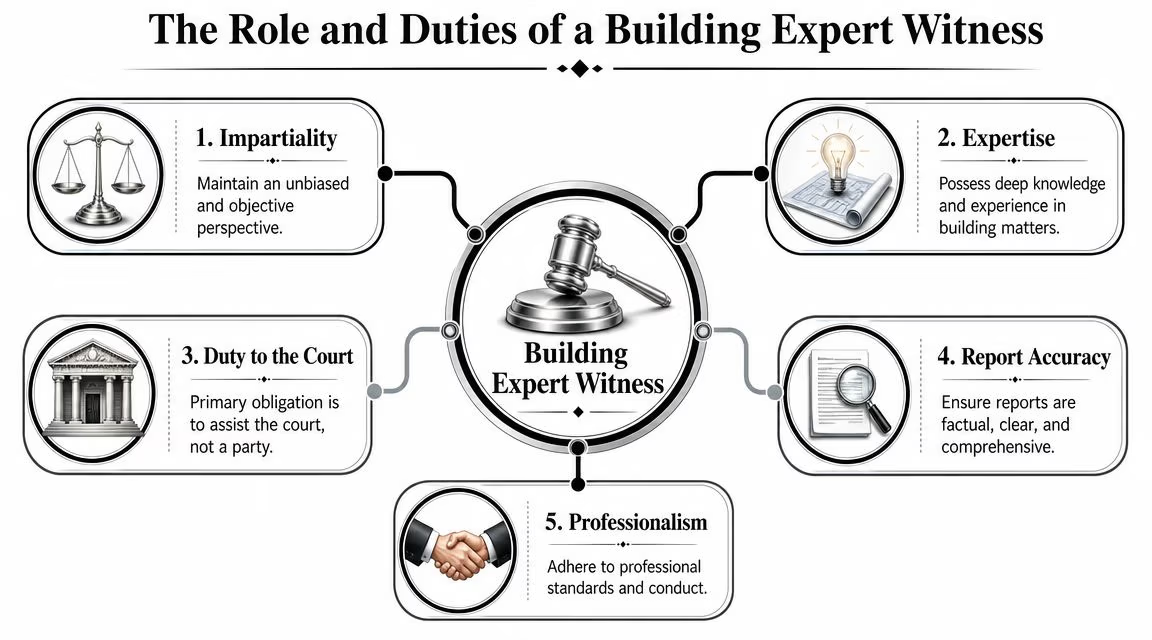
In NSW, an expert witness has one job above all others. Assist the court or tribunal independently. That sounds straightforward, but plenty of people still misunderstand it. The party paying for the report doesn’t get to buy an opinion. They get an independent technical assessment.
Independence is not optional
In NSW civil proceedings, expert evidence is governed by procedural rules requiring the expert to assist the court independently, not act as an advocate. The report must be factual, methodical, and based on specialised knowledge. That principle is especially important in NCAT building disputes where expert evidence is often used to sort out residential building defects, contract issues, and remediation claims (expert evidence duties in NSW).
That independence changes how the report is prepared. A proper expert doesn’t start with the outcome a client wants. The expert starts with inspection findings, available documents, and technical standards. If the evidence supports the claim, the report should say so. If it doesn’t, the report should say that too.
Practical rule: If a report reads like submissions from a lawyer, it has usually gone off track.
What the tribunal expects
The tribunal wants a report that is usable. That means:
- Clear observations. Defects need to be identified by location, extent, and visible condition.
- Technical reasoning. The opinion has to show how the expert moved from observation to conclusion.
- Defined limits. If an area wasn’t opened up, tested, or accessible, the report should state that.
- Plain language. Technical terms are fine, but they must be explained in a way a non-tradesperson can follow.
A good expert also knows what not to say. Avoid arguing credibility. Avoid making legal conclusions. Avoid speculation beyond the available evidence. Those habits weaken reports quickly.
What builds credibility under challenge
Cross-examination usually attacks three areas. Method. Assumptions. Scope. If the expert can explain how the site was inspected, what documents were relied on, what standard was applied, and where the opinion stops, the report stands up far better.
That is why seasoned building experts are careful with wording. “Observed”, “measured”, “consistent with”, and “unable to confirm without destructive inspection” are not soft phrases. They are disciplined ones.
Navigating NCAT Procedures and Scott Schedules
For many residential building matters in NSW, NCAT is where the dispute becomes formal. It is designed to be more accessible than court, but that doesn’t mean loose or casual. NCAT still expects organised evidence, clear issue definition, and compliance with its directions.
The difficulty for many parties is that NCAT disputes are often small in dollar terms, heavy in documents, and very procedural. Public information about experts usually explains the general role of technical witnesses, but it often doesn’t answer the practical question that matters in an NCAT building claim. What makes a report usable there. The answer is usually the same three things. Independence, clear defect causation, and plain-English reasoning tied to the claim and remedy. That gap matters in NSW because NCAT building matters often depend on structured evidence, tribunal directions, and practical tools such as Scott Schedules rather than broad technical essays (construction defect expert witness gap in NCAT-style matters).
What NCAT is really looking for
NCAT doesn’t need a report that tries to win by volume. It needs a report that helps separate the dispute into answerable parts. If there are twenty alleged defects, the tribunal wants to know which ones are real, which standards apply, what caused them, and what rectification is proportionate.
That’s why concise structure matters so much. Long narrative reports with no item numbering often create more confusion than assistance.
Scott Schedules make complex disputes manageable
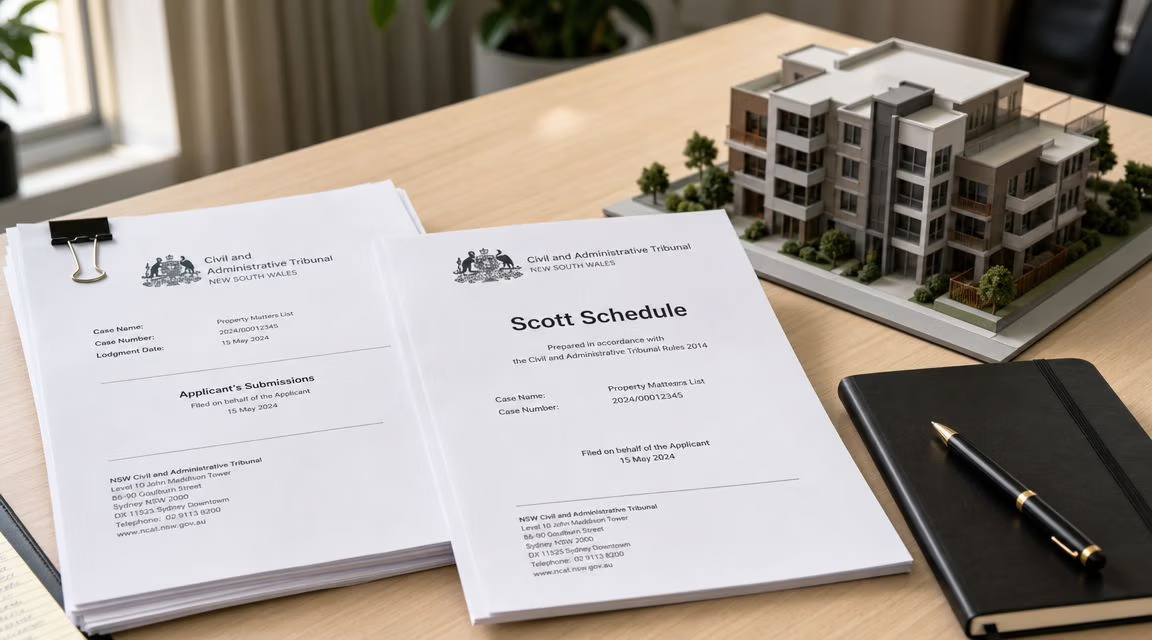
A Scott Schedule is one of the most useful documents in a building dispute. Think of it as a dispute worksheet. It lists each defect item separately and allows the claim, response, expert opinion, and sometimes rectification position to be compared side by side.
In a multi-item matter, this can change the entire hearing. Instead of parties arguing in circles about “the whole job”, each item is isolated and tested.
Typical entries include:
- Item reference. Bathroom floor falls, balcony waterproofing, garage slab cracking.
- Claim position. What the applicant says is wrong.
- Response position. What the respondent says in reply.
- Expert opinion. Whether the defect exists, what likely caused it, and what rectification is required.
- Status or outcome. Agreed, disputed, incomplete, or requiring further evidence.
For parties dealing with several alleged defects, a dedicated building expert Scott Schedule is often the most efficient way to present the dispute in a form NCAT can work with.
The more defects a matter contains, the more the case depends on document structure rather than rhetoric.
What works and what doesn’t
What works in NCAT is disciplined itemisation. Number every defect. Match each defect to evidence. Keep opinions close to the actual issue pleaded.
What doesn’t work is bundling unrelated complaints together. Water ingress, cracking, incomplete finishes, and contractual variations should not be discussed as one general grievance. They are different issues with different proof pathways.
The Expert Report Process from Start to Finish
A homeowner usually calls after the matter has already gone off track. The defects list is long, the photos are out of order, the builder denies responsibility, and NCAT directions are approaching. At that point, the report has to do more than describe defects. It has to answer the questions the Tribunal is likely to ask, in a form that can be used alongside the pleadings, evidence, and any Scott Schedule.
The first instruction
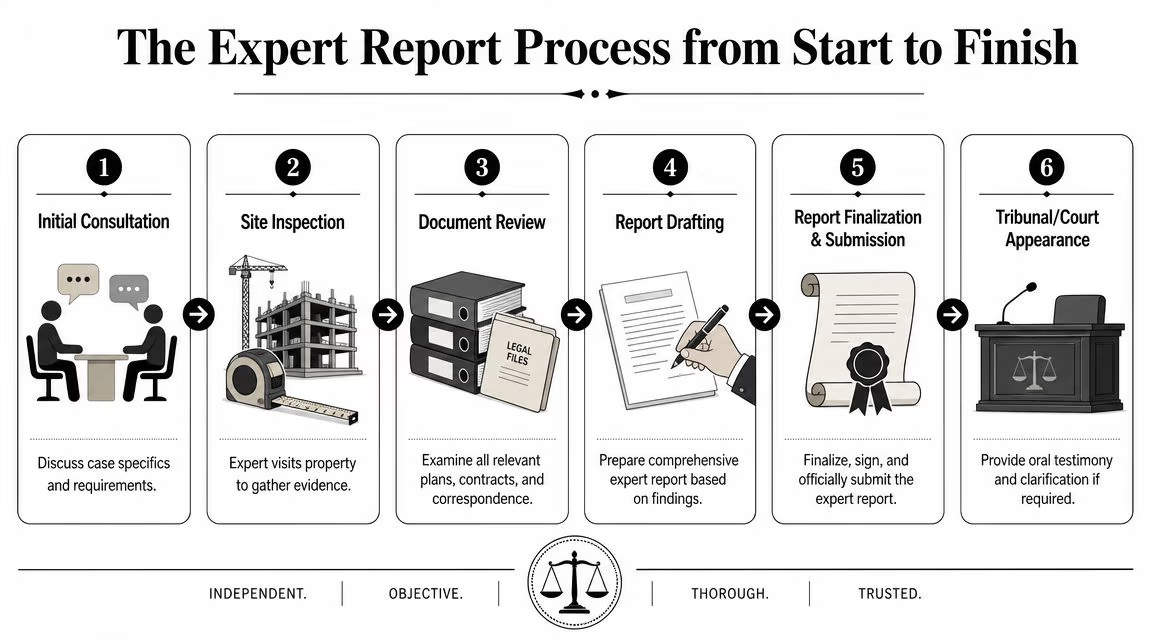
Everything starts with the brief. If the instruction is loose, the report usually becomes loose as well. A direction such as “inspect everything wrong with the property” often produces pages of complaint, but not much assistance on the actual issues in dispute.
A useful brief identifies the disputed areas, the procedural setting, the documents available, and the questions the expert must answer. In NCAT, that often means asking for opinions tied to specific items, such as waterproofing failure, slab movement, incomplete work, or non-compliant installation, rather than one broad opinion about the whole project.
That distinction affects cost as well. A focused brief shortens inspection time, reduces irrelevant commentary, and gives the Tribunal something it can work with.
The site inspection and document review
The next step is gathering facts. That means a site inspection, photographs, measurements, notes on what could and could not be accessed, and a review of the key documents. Plans, specifications, contracts, variations, certificates, correspondence, defect lists, and prior reports all matter if they go to the issue being decided.
Good reporting depends on a clear chain of reasoning. Observe the condition. Check the relevant requirement. Work out likely cause. State whether further investigation is needed. Then identify the rectification scope if it can be given properly.
That sounds straightforward. It is not.
On site, one visible problem can point to several technical causes. A crack may come from normal shrinkage, footing movement, framing movement, poor articulation, or later damage. Water ingress may be a membrane failure, a flashing defect, poor falls, blocked drainage, or a combination of those. The expert’s job is to sort that out carefully and say where the evidence is strong, where it is limited, and where destructive inspection may be needed.
For that reason, parties often engage a building consultant for dispute inspections and expert reports before they finalise their evidence. Done early enough, that can prevent the case from being built around assumptions that do not survive inspection.
How the report is assembled
A tribunal-ready report follows a disciplined structure. Each disputed item should be identified clearly, tied to the location, described factually, assessed against the relevant standard or contractual requirement, and followed by an opinion on cause and rectification.
In practice, I look for five things in each item:
| Stage | Key Activities | Expert’s Role |
|---|---|---|
| Initial instructions | Identify allegations, confirm forum, review available material | Define the questions to be answered and any limits on the opinion |
| Site inspection | Inspect the property, record defects, photograph conditions, note access limits | Gather first-hand factual observations |
| Document assessment | Review plans, specifications, contract documents, certificates, and correspondence | Compare the built work with the documentary requirements |
| Report drafting | Analyse each item, apply standards, explain causation, set out rectification scope | Present an opinion that matches the disputed issues before NCAT |
| Final issue and follow-up | Check consistency, attach supporting material, respond to questions or conferences | Prepare the report for service and possible oral evidence |
The trade-off is always between breadth and precision. A report that tries to cover every complaint in equal detail can become expensive and hard to use. A report that only deals with a handful of items may leave gaps the other side will exploit. The better approach is to deal fully with the live issues and identify any peripheral matters for separate treatment, if they matter at all.
After service of the report
Once the report is served, the matter often narrows. The other side may serve its own expert evidence. There may be questions about assumptions, a direction for experts to confer, or a request to clarify whether an item is defective, incomplete, or outside the agreed scope of work.
This stage catches out a lot of reports.
If an opinion is overstated, vague, or disconnected from the pleaded issues, it becomes difficult to defend under questioning. If the report is clear, item-based, and tied to the actual dispute, it can do its job on paper and in the hearing room. That is the standard worth aiming for in NCAT.
How to Choose a Qualified Building Expert
A homeowner engages an expert after months of emails, defect lists, and contractor arguments. The report comes back full of technical language, but it does not match the issues NCAT has asked the parties to address. That report is hard to use, expensive to fix, and often less helpful than a shorter opinion that deals properly with the pleaded items.
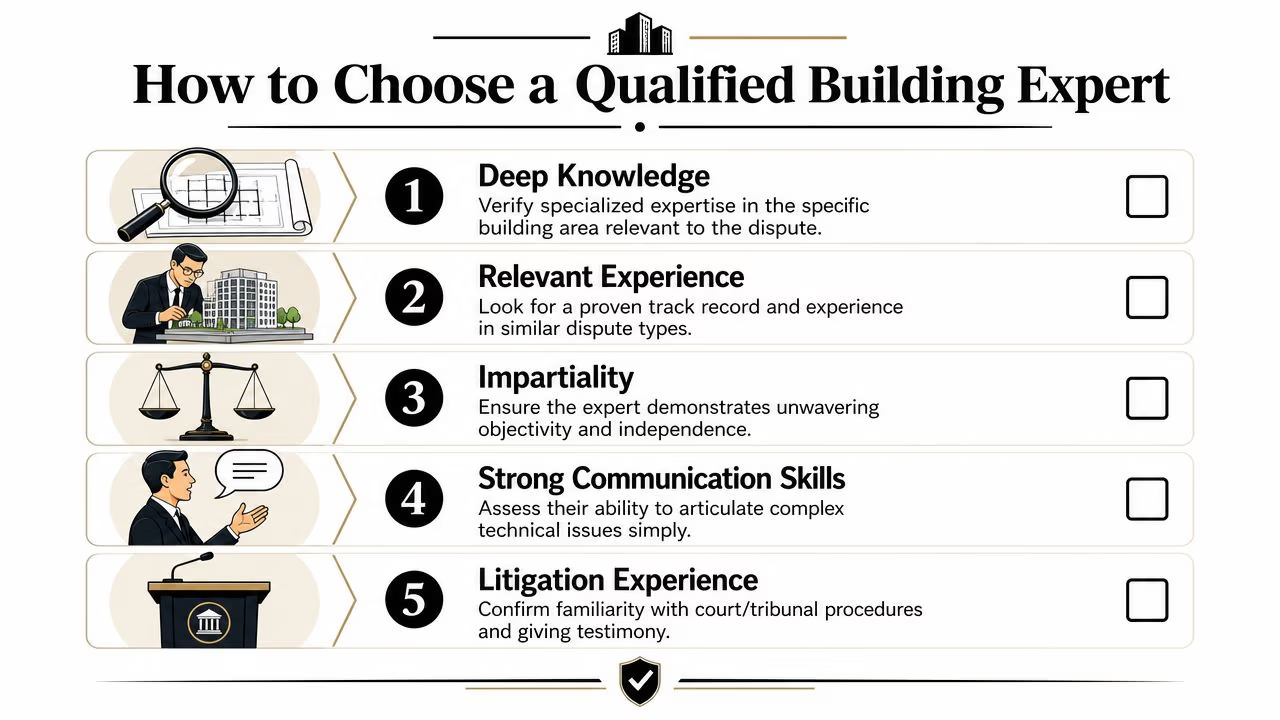
The right expert for an NCAT matter is not just someone who can spot defective work. They need to inspect carefully, separate defect from preference, and express an opinion in a form the Tribunal can use. In practice, that means choosing someone who understands building work, report writing for contested matters, and the discipline of dealing with issue by issue evidence, especially where a Scott Schedule is likely to control the case.
What to check before you engage anyone
Start with experience on real projects. A person who has spent years on site, in supervision, rectification, certification, or forensic inspection will usually recognise the difference between a genuine defect, a maintenance issue, a variation dispute, and work that is unfinished.
Then test whether they know dispute work, not just ordinary inspections. Ask for examples of reports prepared for NCAT or court. Ask whether they have given evidence before. Ask how they structure opinions where each disputed item has to be tied to the contract, the scope of work, the observed condition, and the proposed remedy.
A useful screening list looks like this:
- Hands-on construction background. They should understand how the work is built and where it commonly goes wrong.
- Forensic reporting experience. Routine inspection reports are not the same as expert evidence in a contested proceeding.
- NCAT procedure knowledge. They should be familiar with directions, joint expert processes, and Scott Schedules.
- Plain English communication. If they cannot explain a defect clearly to a homeowner or solicitor, they will struggle under questioning.
- Independence. A good expert will identify weak points in your case early, before time and money are spent on items that do not stand up.
Marketing material tells you very little. Method tells you a lot.
Why timing matters
Late engagement creates avoidable problems. By the time some experts are called in, the parties have already framed the dispute badly, mixed major items with minor complaints, and attached documents that do not prove much. At that point, the expert is doing two jobs. They are assessing the building work and cleaning up the way the case has been presented.
Early engagement gives you a better chance of getting the issues into usable form. It helps identify what belongs in the claim, what needs further inspection, and what should be left out because the evidence is too thin. In NCAT, that discipline matters because weak items can distract from the stronger parts of the case and make the whole schedule harder to manage.
A simple way to test the expert
Before you appoint anyone, ask how they would handle three common problems:
- One defect with several possible causes
- An area that cannot be inspected fully without opening up the work
- A serious allegation that has little technical support
Listen to the reasoning, not the confidence level. A sound expert will talk about inspection limits, assumptions, alternative causes, and what further material is needed before reaching a firm opinion. An unreliable one usually jumps to conclusions.
For parties who need preliminary advice before deciding on formal expert evidence, it can also help to speak first with an experienced building consultant for dispute and inspection advice.
The selection question is simple. Can this person produce an opinion that will help NCAT decide the actual disputed items, in the format the matter is likely to require. If the answer is unclear at the start, it rarely improves later.
Expert Witness Support FAQs
Can an expert report help before the hearing
Yes, often. A well-prepared report can narrow the dispute in negotiations, mediation, or directions hearings because it forces each item to be addressed properly. If the report is clear on defect, cause, and rectification scope, parties sometimes resolve more than they expected before final hearing.
The key is quality. A vague report usually hardens positions. A precise one gives everyone something concrete to respond to.
What if the other side’s expert disagrees
That happens regularly. Disagreement by itself is not unusual. The important question is whether the other opinion is based on the same facts, the same assumptions, and the same standards.
Where experts differ, the dispute usually comes down to one of these points:
- Different factual observations. One expert inspected more thoroughly or had access to more areas.
- Different assumptions. One assumed maintenance failure, another assumed original workmanship failure.
- Different scope views. One supports localised repair, the other full replacement.
In those situations, the stronger report is usually the one with the cleaner reasoning chain and clearer limits.
If two experts disagree, look first at the inspection basis and the assumptions. That is usually where the real difference sits.
How long does the process take
It depends on access, the size of the property, the number of defects, and the state of the documents. A single-issue dispute can move quickly. A file involving multiple trades, incomplete records, and several rounds of directions takes longer.
The practical way to avoid delay is simple. Gather the plans, contract, variations, photos, notices, prior complaints, and relevant correspondence before the inspection is booked.
Do I need a general building consultant, a defect specialist, or an NCAT report writer
That depends on the dispute stage. If you are still trying to work out whether there is a defect at all, a general consultant may be enough. If you already know there is a dispute and need causation, rectification scope, or a report that fits NCAT procedure, you need someone who can write to that forum.
That distinction matters. A technically sound report can still be unhelpful if it doesn’t align with the claim structure or tribunal directions.
What should I do first if I’m already in a dispute
Start by organising the file. Put the contract, plans, scope, variations, defect notices, quotes, photos, and timeline in order. Then identify the actual disputed items instead of treating the whole project as one complaint.
That alone often changes the conversation. Once each issue is isolated, it becomes much easier to decide whether you need inspection, a Scott Schedule, an expert report, or all three.
If you need practical help with a NSW building dispute, Awesim Building Consultants can assist with site investigations, Expert Witness Reports, and Scott Schedules prepared for NCAT and related proceedings. For specific advice on your matter, email admin@awesim.com.au or call 1800 293 746.
Related Posts

Scott Schedule Template: What Columns a NSW Claim Needs
What Is a Scott Schedule? Why the Column Structure Matters The Core Columns in a NSW Scott Schedule Template Column
Read More »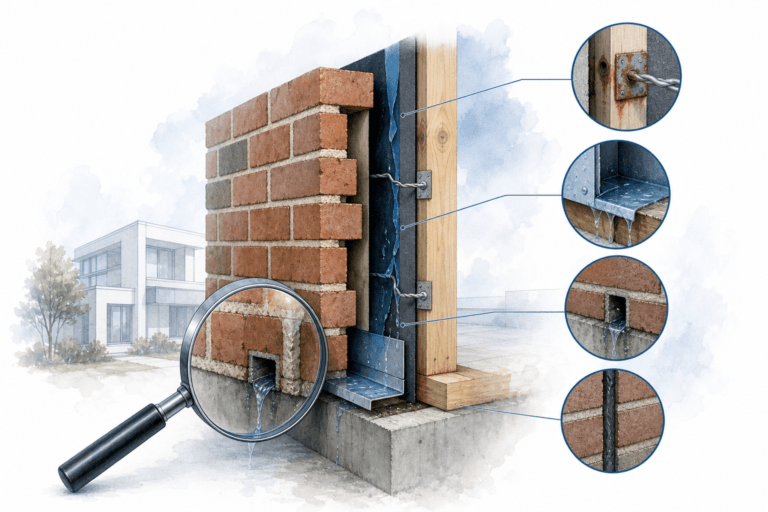
Brick Veneer Construction Defects: A Site Inspector’s View
What Brick Veneer Construction Actually Is The Most Common Brick Veneer Construction Defects Cracking in the Brickwork Missing or Blocked
Read More »
Liquidated Damages in Construction: How NSW Contracts Work
What Are Liquidated Damages in Construction? Why Contracts Use Them How Liquidated Damages Work in NSW Building Contracts Standard Contracts
Read More »