
Scott Schedule Format Explained for NSW Building Cases
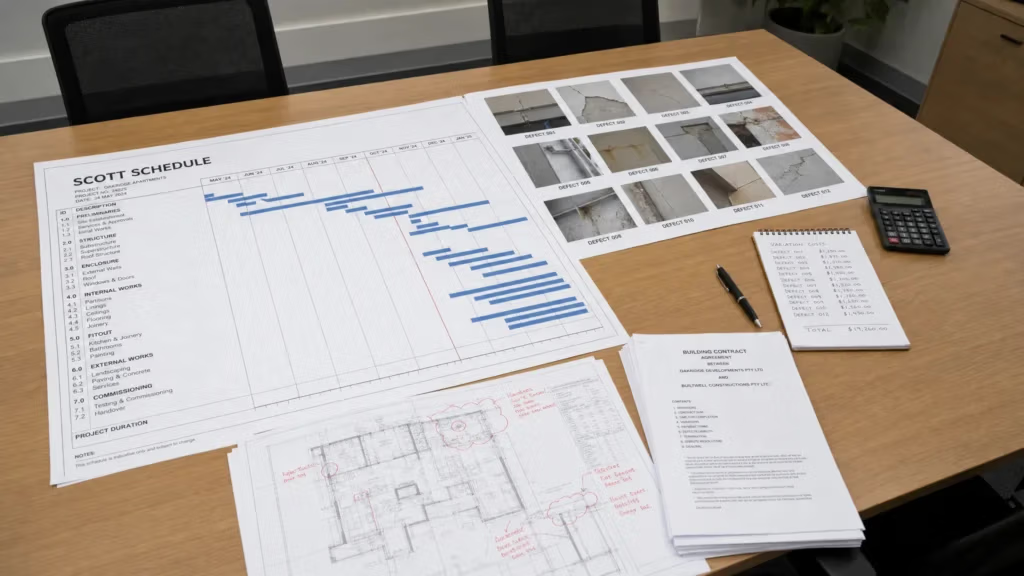
When a home building dispute moves beyond phone calls and emails, the question is no longer who is upset. It becomes: what precisely is disputed, what evidence supports it, and what will it cost to fix or pay? The Scott Schedule format answers that question.
In NSW building cases, a well prepared Scott Schedule can turn a messy defect, payment or variation dispute into a structured table of issues. It helps homeowners explain their claim, builders respond item by item, and solicitors present the case in a way that NCAT or a court can follow.
This guide explains the practical Scott schedule format commonly used in NSW building disputes. It is general information only, not legal advice. Always follow the specific directions made by NCAT, a court, or your solicitor.
What is a Scott Schedule in a NSW building dispute?
A Scott Schedule is a table that lists each disputed item in a separate row. Each row usually identifies the alleged defect, incomplete work, variation, payment item or cost issue, then sets out each party’s position beside the relevant evidence.
For building matters, the schedule often works as a bridge between the legal case and the technical evidence. It should connect the claim or response to photographs, expert reports, contract documents, invoices, quotes and site records.
A Scott Schedule is not a substitute for an expert witness report. It is also not a place for long submissions or general complaints. Its value comes from clarity: one item, one row, one concise explanation of what is disputed and why.
In NSW, Scott Schedules are commonly used in NCAT home building matters and in court proceedings where there are multiple disputed items. NCAT provides information about home building disputes, and parties should check any orders or procedural directions that apply to their matter.
Why the Scott schedule format matters
Building disputes can involve many small but important issues: leaking balconies, cracked render, incomplete joinery, disputed variations, unpaid progress claims, allegedly defective waterproofing, or disagreement about the reasonable value of work. If those issues are scattered across emails and photos, the dispute becomes difficult to assess.
The right Scott schedule format helps narrow the issues. It shows what is admitted, what is denied, what needs expert opinion, and what remains to be decided. This can support negotiation, mediation, NCAT preparation or hearing management.
For broader context on the NSW dispute pathway, see Awesim’s guide to building disputes in NSW and the role of evidence in NCAT independent building inspections.
| Building dispute scenario | How a Scott Schedule helps |
|---|---|
| Defective work claim | Breaks alleged defects into separate items with locations, evidence and rectification scope. |
| Incomplete work dispute | Identifies what work is said to be unfinished and what contract requirement applies. |
| Variation disagreement | Records the claimed variation, approval evidence, pricing basis and opposing response. |
| Payment or set-off dispute | Compares claimed amounts with alleged defects, credits, deductions and supporting documents. |
| Quantum meruit claim | Lists work performed, the basis for claiming reasonable value, evidence of value and response. |
| Multi-defect renovation dispute | Creates a working document that can be updated as expert evidence and admissions change. |
Core Scott schedule format: columns that usually matter
There is no single universal Scott Schedule template for every NSW building case. The format should reflect the orders, the type of claim and the evidence available. However, most useful schedules include the following columns.
| Column | What it should include | Why it matters |
|---|---|---|
| Item number | A unique number for each defect, variation or payment issue. | Keeps the schedule, expert report and evidence bundle aligned. |
| Location or trade | The room, elevation, area, building element or trade involved. | Helps inspectors, experts and decision-makers find the issue quickly. |
| Applicant’s allegation | A concise description of the claimed defect, omission, variation or amount. | Defines the issue to be answered. |
| Contract, standard or duty relied on | Reference to the contract, plans, specification, statutory warranty, NCC provision or Australian Standard where relevant. | Shows the basis for saying the work is defective or payable. |
| Evidence reference | Report paragraph, photo number, invoice, email, quote, plan or bundle page. | Prevents unsupported assertions. |
| Respondent’s response | Admit, deny, partly admit, alternative cause, alternative scope or alternative amount. | Gives the other party’s position item by item. |
| Expert opinion | Independent technical view, usually cross-referenced to an expert report. | Helps separate technical evidence from argument. |
| Rectification scope | The proposed method of repair, completion or adjustment. | Links the defect to a practical remedy. |
| Quantum or cost | Claimed amount, quote, estimate, builder’s valuation or amount in dispute. | Shows the financial consequence of each item. |
| Status or determination | Agreed, not agreed, withdrawn, resolved, or left blank for NCAT or court determination. | Tracks what remains live as the case progresses. |
For lawyers, the schedule should also align with the points of claim, points of defence, cross-claim, evidence bundle and any expert conclave material. For homeowners and builders, the key is simpler: every row should be understandable to someone who has not lived through the project.
Practical sample Scott Schedule format
The example below is simplified. It is not a legal template and should not be copied without adapting it to the case, directions and evidence.
| Item | Area | Alleged issue | Applicant evidence and proposed remedy | Respondent response | Expert or quantum status |
|---|---|---|---|---|---|
| 1 | Ensuite shower | Shower floor allegedly ponds near the waste and does not drain properly. | Expert report section 4.2, photos 12 to 15. Applicant seeks rectification of falls and associated tiling. | Denied. Respondent says the shower drains adequately and requests further inspection. | Not agreed. Cost evidence required. |
| 2 | Rear deck | Balustrade fixings allegedly loose and incomplete. | Photos 21 to 25, contract drawing A06. Applicant seeks secure fixing and completion. | Partly admitted. Respondent says minor adjustment only is required. | Scope and cost disputed. |
| 3 | Kitchen | Cabinet doors and hardware allegedly incomplete or misaligned. | Site photos, joinery quote, email dated during handover period. Applicant seeks completion and adjustment. | Admitted as to two doors only. Remaining items denied as owner-supplied hardware issue. | Partly agreed. Remaining issue requires evidence. |
| 4 | Progress payment | Builder claims unpaid balance for completed works. | Progress claim, invoices and payment ledger. Builder seeks payment of outstanding amount. | Homeowner claims set-off for defects and incomplete works. | Amount depends on findings for defect items. |
The best schedules are concise but not vague. If an item needs three paragraphs to explain, it may need to be split into separate rows or supported by a more detailed expert report.
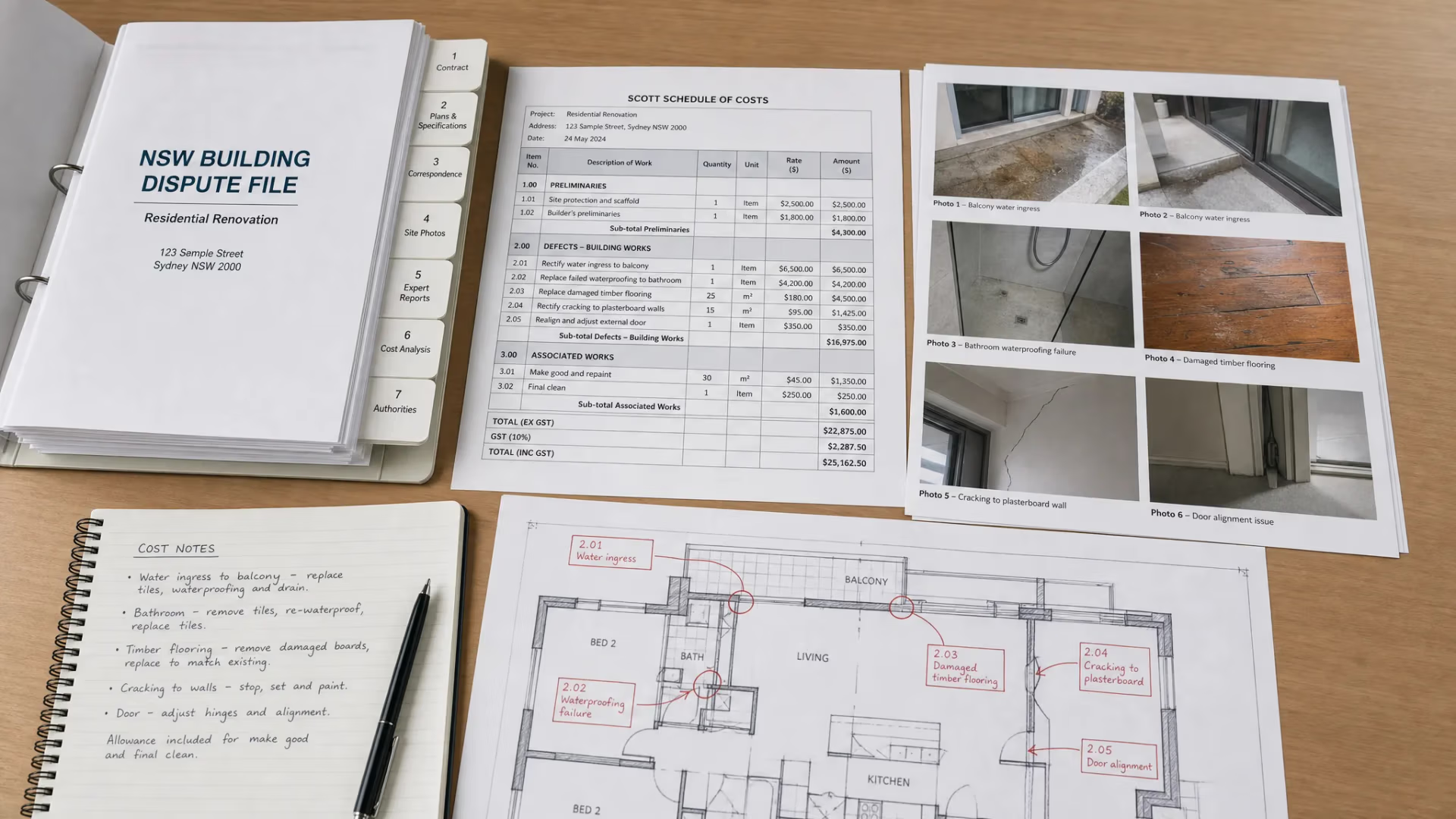
How to write strong item descriptions
A strong item description is specific, neutral and evidence-based. Instead of writing poor workmanship throughout bathroom, identify the exact issue: ensuite shower floor ponding at the south-west corner, alleged inadequate falls to waste, photos 12 to 15, expert report section 4.2.
Each row should generally deal with one issue only. Combining waterproofing, tiling, drainage and painting in one row may seem efficient, but it often creates confusion. If the respondent admits one part and denies another, the row becomes hard to resolve.
Avoid emotional language. NCAT members, judges and experts need to understand the technical issue and the remedy. Words such as defective, incomplete or non-compliant are useful only when paired with the evidence that supports them.
What homeowners should include
Homeowners should focus on clarity and proof. If you allege a defect, identify where it is, when it was observed, what document or expert opinion supports it, and what remedy you seek. If you are claiming a cost, connect the amount to a quote, estimate, invoice or expert opinion.
It is also important to separate inconvenience from rectification cost. A Scott Schedule is usually designed to identify building issues and amounts claimed, not to tell the full story of the dispute. Your broader narrative may belong in a statement, chronology or submissions, depending on the directions.
What builders should include
Builders should respond to each item directly. A clear response might admit the issue, deny the issue, partly admit it, identify an alternative cause, propose a different repair method, or dispute the amount claimed.
A common mistake is giving a general denial across the whole schedule. That rarely helps. If one item is accepted and another is disputed, say so. If access was not provided, materials were owner-supplied, the work was outside scope, or a variation was not approved, identify the document or event that supports that response.
What solicitors should check
Solicitors often use the Scott Schedule to control the structure of the case. The schedule should match the pleadings or NCAT application, the expert evidence, and any orders about joint schedules or expert conferences.
It is worth checking whether the schedule is being used for hearing preparation, settlement discussions, expert conclave purposes, or final determination. Those uses can require different levels of detail. If the matter is in court, expert evidence may also need to comply with the Expert Witness Code of Conduct in Schedule 7 of the Uniform Civil Procedure Rules 2005.
Evidence that should sit behind the schedule
A Scott Schedule is only as strong as the evidence behind it. It should act as an index to the material, not as a replacement for it.
Useful supporting evidence may include:
- Signed contract, scope of works, specifications and approved variations.
- Architectural drawings, engineering details and marked-up plans.
- Dated photographs and videos showing the location and condition of each item.
- Independent building consultant reports or expert witness reports.
- Quotes, invoices, payment records and cost estimates.
- Emails, text messages, site instructions and defect notices.
- Certificates, approvals, warranties and product information where relevant.
For NCAT matters, evidence should be organised so the member can locate it quickly. For court matters, the format may need to align with pleadings, affidavits, expert reports and the court book.
How independent building experts use Scott Schedules
An independent building expert can help make the schedule more useful by connecting each alleged defect to a technical opinion. That may include identifying the building element, inspecting the work, referencing relevant documents, commenting on likely cause, and recommending a reasonable rectification scope.
The expert’s role is not to argue the case for one side. In tribunal and court matters, expert evidence is expected to assist the decision-maker with independent technical opinion. A schedule that simply repeats a party’s frustration is far less useful than one that cross-references a properly prepared expert report.
Awesim Building Consultants provides independent building dispute support across New South Wales, including expert witness reports, Scott Schedules, quantum meruit reports, NCAT dispute reports and building defect assessments.
Scott Schedule format for quantum and payment disputes
Not every Scott Schedule is about defects. In NSW building cases, schedules are also used for unpaid progress claims, disputed variations, set-offs and quantum meruit claims.
A quantum meruit report generally concerns the reasonable value of work performed, especially where the amount payable is disputed. The schedule format should then focus less on physical defects and more on the work item, the basis for entitlement, the valuation evidence and the response.
| Format issue | Defect-focused schedule | Quantum or payment-focused schedule |
|---|---|---|
| Main item | Alleged defect or incomplete work. | Claimed work item, variation or unpaid amount. |
| Key evidence | Photos, inspection notes, expert report, plans and standards. | Contract, invoices, timesheets, supplier records, valuation evidence and correspondence. |
| Technical question | Is the work defective, incomplete or non-compliant? | Was the work performed, authorised or reasonably valued? |
| Remedy | Rectification, completion, replacement or cost allowance. | Payment, deduction, set-off or valuation adjustment. |
| Common dispute | Scope and repair method. | Entitlement, approval and reasonable value. |
For builders, this can be particularly important where the dispute is not just about defects but also about whether additional work should be paid. For homeowners, it helps test whether a claimed amount is properly supported.
Common Scott Schedule mistakes to avoid
| Mistake | Why it causes problems | Better approach |
|---|---|---|
| Combining several defects in one row | Admissions, denials and costs become unclear. | Use one row per distinct issue. |
| Using vague descriptions | The other party and decision-maker cannot identify the issue. | Include location, element and observable problem. |
| Leaving evidence references blank | The schedule becomes assertion rather than proof. | Cross-reference report sections, photos and documents. |
| Treating the schedule as a long submission | It becomes hard to read and update. | Keep entries concise and put detailed argument elsewhere. |
| Claiming amounts without support | Quantum may be challenged or given little weight. | Use quotes, invoices, expert cost opinion or valuation evidence. |
| Ignoring tribunal or court directions | The schedule may not be accepted in the required form. | Follow the ordered format and deadlines. |
| Failing to update resolved items | The hearing remains cluttered with issues no longer in dispute. | Mark items agreed, withdrawn or resolved when appropriate. |
A practical workflow for preparing a Scott Schedule
A disciplined workflow can save time and reduce rework. Start by checking the relevant orders, directions or solicitor’s advice. Then create a master list of disputed items from the application, response, expert report, photos and correspondence.
After that, group the items logically by area, trade or claim type. Number each item and keep that numbering consistent across reports and bundles. If an expert inspection is required, the expert can then inspect against the schedule and add technical comments.
A simple preparation sequence is:
- Check the required format and filing timetable.
- Create one row for each separate issue.
- Add location, allegation, evidence references and claimed remedy.
- Obtain independent expert input where technical opinion is needed.
- Add cost or valuation evidence for each monetary claim.
- Send the schedule for response if required by directions.
- Update the status column as items are admitted, resolved or withdrawn.
The final version should be easy to navigate. If the decision-maker has to search through hundreds of pages to understand a single row, the schedule is not doing its job.
Frequently Asked Questions
Is there a required Scott schedule format for NCAT building disputes? There is no single format that fits every matter. NCAT or a court may make specific directions about the columns, timing and exchange process. If directions are given, they should be followed over any generic template.
Can I prepare a Scott Schedule myself? Yes, many parties start the schedule themselves by listing each issue, location and evidence reference. However, technical defect opinions and cost claims often need support from an independent building consultant, quantity evidence or legal advice.
Is a Scott Schedule the same as an expert witness report? No. The schedule organises disputed items in a table. An expert witness report provides the independent technical opinion, reasoning, observations, photos and conclusions that may support entries in the schedule.
Should the schedule include costs? Usually yes, if money is claimed for rectification, completion, variations, set-offs or payment. The cost column should identify the amount and the evidence supporting it, such as a quote, invoice, estimate or expert opinion.
Can a Scott Schedule be used for quantum meruit claims? Yes. The format can be adapted to list work performed, the basis for claiming reasonable value, valuation evidence and the opposing response. In these matters, a quantum meruit report may be important.
What if the other party refuses to complete their columns? Keep your side clear, evidence-based and compliant with any directions. If the matter is before NCAT or a court, ask your solicitor or the registry process what procedural step is available. Do not assume silence means the item is admitted unless directed or legally advised.
Need a Scott Schedule for a NSW building case?
A clear Scott Schedule can make the difference between a confusing dispute and a focused case. It helps identify what is truly in issue, what evidence supports each item, and what cost or remedy is being claimed.
Awesim Building Consultants supports homeowners, builders and solicitors across NSW with independent building defect assessments, expert witness reports, Scott Schedules, NCAT dispute reports and quantum meruit reports. If you need dispute evidence prepared in a structured, practical format, contact Awesim Building Consultants to discuss your matter.

Related Posts

Water Damage in Homes: How to Track Down the Source
Water damage in a home rarely announces itself at the source. A stain on the ceiling, a musty smell in
Read More »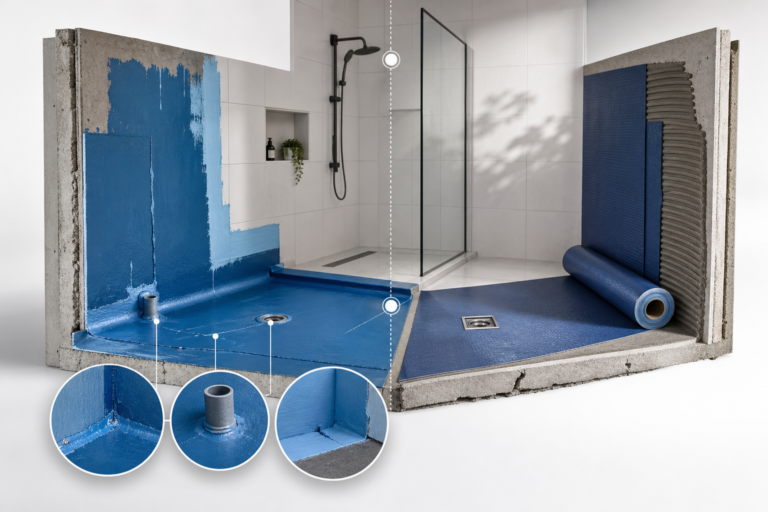
Waterproofing Membrane Types: Which Fails Most in NSW Bathrooms
Waterproofing failure is the single most common serious defect found in NSW apartments, and the type of membrane used, along
Read More »
Building Certifier NSW: Role, Limits, and When You Need More
A building certifier in NSW is a registered professional who issues construction certificates, conducts critical stage inspections, and grants occupation
Read More »