
Winning a Bathroom Building Dispute in NSW

A bathroom building dispute is what happens when you and your builder can’t see eye-to-eye on the work done. It could be about the quality, the final cost, or how long it all took. Most of the time, these conflicts boil down to things like poor workmanship, contracts that were too vague, or nasty surprises—defects—that only show up after the tools have been packed away.
Getting it sorted requires a cool head, meticulous documentation, and a solid grasp of your rights.
What to Do When You Find a Bathroom Defect
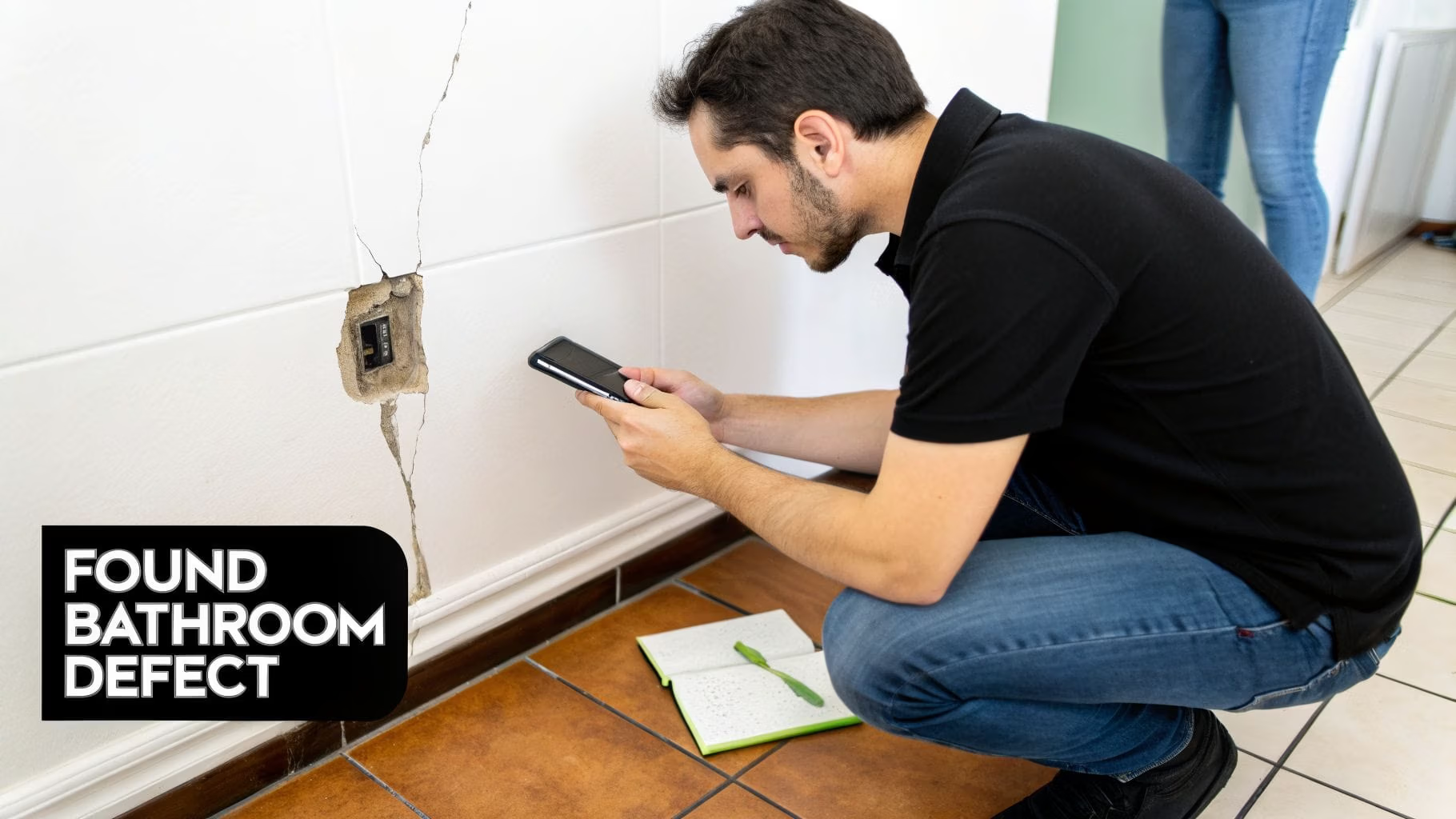
It’s a sinking feeling, isn’t it? You walk into your newly finished bathroom, and there it is. A cracked tile. A leak that just won’t quit. Grout lines that wander all over the place. That feeling of excitement evaporates, replaced by a knot of stress and frustration.
Your first impulse might be to fire off an angry email or make a furious phone call. Don’t. A calm, methodical approach is always going to serve you better.
With our 35+ years in Building & Construction and over 15 years providing litigation support to homeowners, builders, and lawyers, we’ve learned that what you do right at the start is crucial. This isn’t about picking a fight. It’s about building a case based on facts, which is the only way to get a professional resolution.
The Reality of Construction Conflicts
If you’re in this position, you’re far from alone. Construction disputes across Australia are on the rise, and bathroom renovations in NSW are a big part of the problem. The average national dispute value hit a staggering AU$33 million in 2022, and it’s now taking an average of 15 months to resolve these conflicts.
Here in NSW, Building Commission NSW dealt with over 2,500 formal complaints for residential builds in 2023 alone. A huge 28% of those cases involved bathroom defects like shoddy tiling and failed waterproofing.
This isn’t to scare you, but to highlight why a structured approach is so important from the second you spot something wrong.
At Awesim Building Consultants, we’ve seen countless times how a well-documented case can take the heat out of a bathroom building dispute. The goal is to shift from anxiety to action and create an undeniable record that forces a productive conversation with your builder.
When you discover a defect, it’s easy to feel overwhelmed. This quick checklist breaks down your immediate priorities to ensure you start on the right foot.
Immediate Action Checklist for Bathroom Disputes
| Action Item | Why It’s Critical | Awesim’s Pro Tip |
|---|---|---|
| Document with Photos & Videos | A picture is worth a thousand words. Visual evidence is hard to dispute and shows the exact condition of the defect. | Use your phone to take high-resolution photos and videos. Include a ruler or tape measure for scale. Make sure your shots are well-lit and in focus. |
| Start a Written Log | Memories fade and details get confused. A dated log creates a timeline of events that is invaluable in any formal process. | Use a simple notebook or a digital document. Note the date you found the issue, what it is, and any impact it’s having (e.g., “water pooling on floor”). |
| Collate All Communications | This creates a paper trail of who said what and when. It prevents “he said, she said” arguments down the line. | Save every email and text message. If you have a phone call, send a follow-up email summarising the conversation to create a written record. |
| Resist DIY Repairs | Tampering with the defect can muddy the waters and may even void your warranty or give the builder an excuse to deny liability. | As tempting as it is to “just fix it,” leave the defect as is. Your job is to document, not repair. |
Following these steps methodically will give you a powerful and organised foundation before you even pick up the phone to contact your builder.
Identifying Common Bathroom Defects
While every project has its quirks, our experience shows that the same problems pop up again and again in bathroom disputes. Knowing what to look for gives you a massive head start.
The areas we consistently see failures are waterproofing, tiling, and plumbing. These are the big three. For example, a major red flag is a shower without a proper water stop at the entrance—a critical piece for keeping water where it belongs. You can see just how important they are in our guide on water stops in showers.
It also pays to be aware of issues that might not be immediately obvious. For instance, knowing the signs of plumbing stack defects can help you spot a much deeper problem that might otherwise go unnoticed until it causes major damage.
By taking a breath, calmly gathering your evidence, and understanding the common pitfalls, you build a solid foundation. This preparation lets you approach your builder with facts, not just feelings, paving the way for a resolution instead of a war.
How to Document Common Bathroom Defects Like a Pro

When you’re facing a bathroom building dispute, the strength of your case hinges entirely on your evidence. A vague complaint about “bad tiling” is easy for a builder to dismiss. On the other hand, a detailed log with dated photos of uneven grout lines, measurements showing tile lippage, and videos of water pooling is impossible to argue with.
Professional documentation is what transforms a subjective grievance into an objective, factual case for rectification.
Over our 35+ years in Building & Construction, we’ve seen countless times how the quality of an evidence log determines the outcome. This isn’t about taking a few blurry snaps on your phone; it’s about methodically building a record that tells the undeniable story of what’s gone wrong. Your goal is to create a file so clear that your builder, NSW Fair Trading, or NCAT can understand the issues without you saying a word.
The process is a lot like writing a non-conformance report on a major construction site. You’re simply identifying where the work fails to meet the contract and Australian Standards.
Creating Your Evidence Log
Think of your evidence log not as a personal diary, but as a formal record of facts. Every entry needs to be precise, objective, and unemotional. Leave the frustration aside and focus only on what you can see, measure, and prove.
For every single defect you find, your log entry must include:
- Date and Time: Pinpoint exactly when you first noticed the issue and when you are creating the log entry.
- Precise Location: Be specific. Don’t just write “shower leak.” Instead, note “Water seeping from the wall-to-floor junction below the shower tap, left-hand side.”
- Detailed Description: Describe the defect with neutral language. Use measurements, colours, and textures. For example, “A 10cm hairline crack runs vertically from the base of the shower mixer.”
- Supporting Visuals: Every entry must be backed up by clearly labelled, high-resolution photos and videos.
This disciplined approach turns a simple list of complaints into a powerful tool that can stand up to scrutiny. It’s the kind of file our litigation support experts can pick up and immediately grasp the entire situation.
Based on our 15+ years providing litigation support to homeowners, builders, and lawyers, we can tell you that a well-organised evidence log is often the deciding factor. It demonstrates that you are serious, methodical, and have a claim based on facts, not frustration.
Key Defects to Document
While every bathroom project is unique, our experience shows that the same defects crop up again and again in NSW. Focusing your documentation efforts on these common, high-impact failures is the smartest way to build your case.
Waterproofing Failures: The Number One Culprit
Waterproofing failures are, without a doubt, the most common source of bathroom building disputes in New South Wales. NSW Fair Trading receives over 1,500+ building defect complaints each year, and NCAT statistics from 2022 show that over 40% of these are linked to moisture ingress from showers and baths. For homeowners, a serious waterproofing defect often means a full strip-out, with average rectification costs hitting AU$15,000–$25,000 per bathroom.
Keep a sharp eye out for these red flags and document them immediately:
- Bubbling or Peeling Paint: If you see paint lifting on walls next to the shower or bath, it’s a classic sign that moisture is getting into the wall cavity where it doesn’t belong.
- Efflorescence: This white, powdery residue on grout or tiles looks innocent but is a major warning. It’s caused by water moving through the structure, dissolving mineral salts, and depositing them on the surface as it evaporates.
- Damp or Musty Smells: An odour that persists even when the bathroom is completely dry is a strong indicator of trapped moisture and potential mould growth behind walls or under the floor.
- Missing Waterstops: Check the entrance to your shower. A compliant installation must have a raised angle or barrier to stop water from escaping the shower area. If it’s not there, photograph the flat transition. Learn more about the role they play in our guide to water stops in showers.
Tiling and Grouting Errors
Sloppy tiling isn’t just a cosmetic annoyance; it can point to deeper problems and often contributes directly to water damage.
- Lippage: This is the term for when adjacent tiles sit at different heights, creating an uneven surface and trip hazards. Place a credit card or straightedge across the tile join and take a photo showing the gap underneath.
- Inconsistent Grout Lines: Are the gaps between the tiles uniform? Use a tape measure in your photos to highlight any significant variations, which points to a lack of care.
- Drummy or Hollow Tiles: Tap each tile gently with a coin. A sharp, solid sound is good. A hollow, “drummy” sound means the tile isn’t properly bonded to the surface, making it prone to cracking and allowing water to get behind it.
- Inadequate Fall to Wastes: The floor of your shower and bathroom should be sloped to direct all water toward the floor waste. Pour a small amount of water on the floor and see where it goes. If it pools in corners or away from the drain, take a video—it’s the best way to prove the defect.
Documenting these issues correctly is a critical first step. For a broader view of what to look for, our comprehensive house inspection checklist can help you apply this organised approach to other areas of your home, ensuring you are fully prepared for a productive discussion and a successful resolution.
Why an Expert Witness Report Is Your Most Powerful Tool
When the back-and-forth emails with your builder have gone nowhere and you’re just hitting a wall, it’s time for a new approach. This is the point where you have to stop thinking like a frustrated homeowner and start acting like a claimant. And in this arena, your most powerful asset is an independent Expert Witness Report.
Suddenly, the argument is no longer a messy “he said, she said” affair. It becomes a factual, evidence-based assessment that a builder or a tribunal simply can’t ignore.
But here’s a critical mistake I see homeowners make all the time: they assume any old building inspection report will do the job. A standard handover report or a pre-purchase inspection is not an Expert Witness Report. Frankly, it won’t hold up in any formal legal setting. What you need is a specialised document, prepared from the ground up specifically for tribunal or court action.
At Awesim, we’re in a unique position. We’ve spent 35+ years on the tools, actually building and managing construction projects. On top of that, we have over 15 years of experience providing litigation support for homeowners, builders, and lawyers. This means we don’t just know how a bathroom should be built; we know exactly how to document defects in a way that’s clear, defensible, and meets the strict requirements of the tribunal.
The Anatomy of an NCAT-Compliant Report
To be taken seriously by NSW Fair Trading or the NSW Civil and Administrative Tribunal (NCAT), an Expert Witness Report has to be much more than a list of what’s wrong. It needs to be an objective, thorough, and completely unbiased investigation. It’s not about picking sides—it’s about presenting the cold, hard facts as they relate to the building codes and standards.
A proper, comprehensive assessment looks something like this:
- Detailed Site Inspection: The expert physically gets on-site to inspect every single alleged defect. This isn’t a quick walkthrough; it involves taking meticulous measurements and extensive photographic evidence.
- Non-Invasive Testing: We often use tools like thermal imaging cameras to find hidden moisture behind walls, moisture meters to get precise readings on dampness, and electronic levels to confirm if the floor falls are correct (or non-existent).
- Code and Standards Analysis: This is the core of the report. We meticulously cross-reference every defect with the specific clauses in the National Construction Code (NCC), Australian Standard AS 3740 (Waterproofing), and AS 3958.1 (Tiling).
- Clear Opinion on Rectification: The expert doesn’t just point out problems. They provide a professional opinion on what caused them and lay out a clear, step-by-step method for a proper fix.
It’s this forensic level of detail that gives the report its authority. It turns your personal complaint into a formal, evidence-backed case.
In our experience, a well-prepared Expert Witness Report is often the very thing that breaks a deadlock. It signals that you’re serious and have had your claim validated by an independent professional. Many builders suddenly become a lot more willing to negotiate once this report lands on their desk.
How an Expert Report Validates Your Claim
Think of the expert report as the solid foundation for your entire formal dispute. It performs a few crucial jobs that your own photos and notes, as important as they are, just can’t do on their own.
First, it gives you unbiased third-party validation. A builder might try to brush off your concerns or your photos, but it’s a lot harder to dismiss the findings of a licensed building consultant who is bound by a strict Expert Witness Code of Conduct. The report proves the issues aren’t just about your personal taste—they’re genuine failures to meet mandatory industry standards.
Second, it quantifies the problem. The report won’t just say the tiling is “bad.” It will state precisely why it fails to comply, referencing the exact clause from the Australian Standards. It will also outline a recommended scope of works for rectification, which is what you’ll use to get accurate quotes and calculate the real cost of the damage.
Finally, and most importantly, it becomes the primary evidence for your case. Whether you’re lodging a complaint with NSW Fair Trading, briefing a solicitor, or standing before an NCAT Member, the Expert Witness Report is the central document that proves your claims. It gives the decision-maker a clear, logical, and evidence-based roadmap of the entire dispute. To get a better sense of how these documents are put together, you might find it helpful to look over our guide which breaks down an Expert Witness Report template. Seeing the structure can help you appreciate the level of detail needed to build a strong case.
Navigating the NSW Formal Dispute Resolution Process
So, you’ve got an independent expert report in hand. This is a game-changer. The dynamic of your bathroom building dispute has just shifted completely. You’re no longer just a homeowner with a grievance; you are now a claimant armed with validated, expert-backed evidence.
This report is your ticket to confidently enter the formal dispute resolution system here in New South Wales.
While the path can feel a bit daunting, it’s a structured process designed to bring about a resolution when all other communication has broken down. Having provided litigation support to homeowners, builders, and lawyers for over 15 years, we know this journey inside and out. It kicks off with NSW Fair Trading and, if needed, progresses to the NSW Civil and Administrative Tribunal (NCAT).
The First Formal Stop: NSW Fair Trading
Before you can take a residential building stoush to NCAT, you must first go through NSW Fair Trading. Lodging a complaint with them is your official first move. Fair Trading will take a look at your case, and if it’s within their scope, they’ll get in touch with the builder to try and mediate.
Think of them as an impartial go-between. Their job is to get a conversation going and nudge both sides toward a solution you can both live with. This free mediation service often works well for simpler issues, but honestly, its success hinges on whether the builder is willing to play ball.
If the builder agrees to fix the defects during mediation, brilliant. Problem solved. But if they dig their heels in, or if the talks go nowhere, Fair Trading will close the case. This isn’t a dead end—it’s actually a crucial step. That official confirmation that mediation was unsuccessful is precisely what you need to escalate your bathroom building dispute to NCAT.
This flowchart maps out that critical fork in the road. It shows how a builder’s response determines whether you’re headed for a straightforward fix or need to gear up with an expert report.
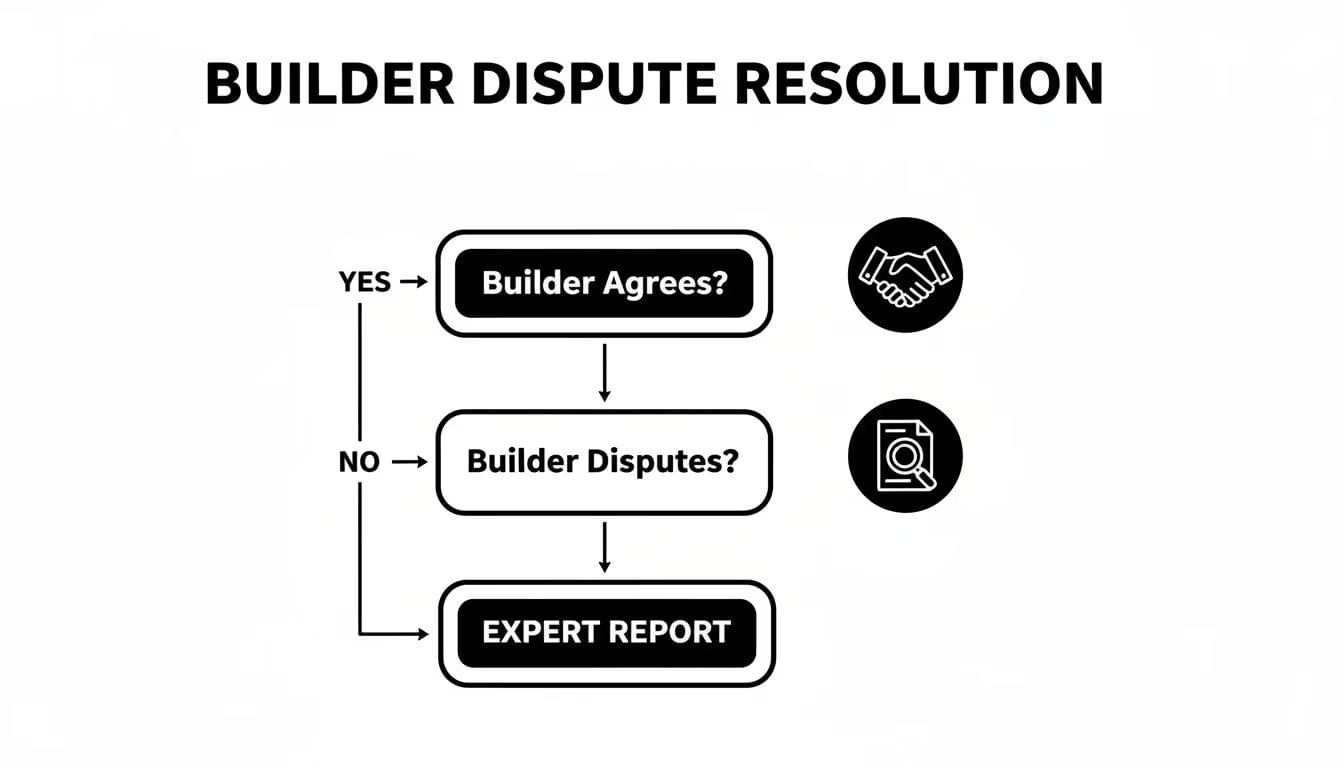
As you can see, when a builder disputes your claim, the only way forward is to get professional, independent evidence to back up your case. Our Expert Witness Reports are designed for this exact purpose.
Escalating Your Dispute to NCAT
When mediation hits a wall, NCAT is your next port of call. This tribunal is less formal than a traditional court, but don’t be mistaken—its decisions are legally binding. Filing an application means submitting your entire arsenal of evidence: your communication log, photos, contracts, and most critically, your Expert Witness Report.
Be warned: strict timelines apply. You generally have two years for non-structural defects and six years for major structural defects, calculated from when the work was completed. Miss these deadlines, and you could lose your right to a remedy altogether.
Once your application is in, you’ll be scheduled for a directions hearing. This isn’t the main event. It’s a preliminary meeting where an NCAT Member sets out the timetable for the case, including deadlines for both parties to exchange all their evidence. This is also when they will almost certainly order the creation of a “Scott Schedule.”
In our experience providing litigation support, we’ve seen countless disputes won or lost in this preparation phase. A thorough, well-organised application supported by a compliant expert report sets a powerful tone from the very beginning.
Understanding the Scott Schedule
The Scott Schedule is arguably one of the most important documents you will prepare for your NCAT hearing. It’s a requirement under NCAT’s Procedural Direction 3, and it’s essentially a table that lists every single defect you’re claiming in a systematic way.
Its whole purpose is to streamline the hearing and force both sides to address each issue directly, point by point. A professionally prepared Scott Schedule, which is a service we offer to all parties in a dispute, is invaluable. Moisture-related defects, especially waterproofing failures, dominate the tribunal’s cases. In fact, 2024 NCAT data shows a 75% resolution rate for mediated claims under $40,000 when an expert report clearly details the problems and solutions. You can explore these trends in building dispute resolutions for more context.
The columns in a Scott Schedule typically look like this:
- Item Number: A unique number for each individual defect.
- Claimant’s Complaint: Your description of what’s wrong.
- Builder’s Response: The builder’s chance to reply to each specific complaint.
- Claimant’s Comments on Response: Your reply to the builder’s defence.
- Tribunal Member’s Findings: A blank column for the Member to record their decision on each item.
This document brings much-needed clarity and stops the hearing from descending into a chaotic “he said, she said” argument. It focuses everyone—you, the builder, and the Tribunal Member—on a structured, item-by-item analysis of the dispute, making it a true cornerstone of an effective NCAT case.
Preparing to Win at the NCAT Hearing

So, your dispute has been escalated to the Tribunal, and you’ve been through the initial directions hearing. This next phase is where the real work begins—and where the outcome is often decided. It’s not enough to simply tell your side of the story; you need to present a logical, evidence-backed case that the NCAT Member can easily understand and rule on.
With over 15+ years of experience in litigation support for everyone from homeowners to lawyers, we’ve seen time and again that success at NCAT is built on meticulous preparation. This preparation hinges on two critical documents: your Expert Witness Report and, crucially, the Scott Schedule.
The Scott Schedule is the great equaliser in a building dispute. It cuts through the noise and forces both parties to address each alleged defect directly. A well-prepared schedule, backed by a solid expert report, is arguably the single most powerful tool you have to steer the case toward a favourable outcome.
Mastering the Scott Schedule
The Scott Schedule isn’t just another form to fill out; it’s a formal, structured document required by NCAT to bring order to the dispute. Its column-based layout is specifically designed to create a clear, side-by-side comparison of claims, making it straightforward for the Tribunal Member to assess the conflict.
Think of it as the official ledger for your dispute. Each defect is given its own entry, which prevents important issues from getting lost or vaguely bundled together. The structure is standard, designed to capture the core arguments:
- Item: Each defect is assigned a number (e.g., Item 1, Item 2).
- Defect Alleged by Applicant: Your clear, concise description of the problem (e.g., “Water ponds in the north-west corner of the shower recess instead of draining”).
- Applicant’s Desired Outcome and Cost: The specific remedy you’re seeking and its cost (e.g., “Remove shower screen and floor tiles, re-screed to correct falls, re-waterproof and re-tile. Cost: $3,500”).
- Respondent’s (Builder’s) Response: The builder’s official reply to that specific item (e.g., “Fall is compliant with standards. Water pooling is minor”).
Our team at Awesim Building Consultants prepares these schedules constantly. From that experience, we can tell you that a schedule filled with vague complaints or missing costings immediately undermines your credibility. On the other hand, a schedule that is precise, fully costed, and cross-references your expert report is incredibly persuasive.
Understanding Potential NCAT Orders
It’s vital to walk into the hearing with a clear-eyed view of what the Tribunal can and will order. NCAT has broad powers to issue legally binding orders, which typically fall into two main categories.
1. Work Orders
This is a directive from the Tribunal ordering the builder to come back and fix the defective work or complete unfinished work. A strict deadline is always attached. For many homeowners, this is the ideal outcome, as it gets the job done by the party originally responsible.
2. Money Orders
A money order may be issued if a work order is no longer practical—for instance, if the relationship has completely broken down or the builder is incapable of doing the work properly. This order compels the builder to pay you a specific sum of money to cover things like:
- The cost of engaging a new contractor to rectify the defects.
- Compensation for other damages caused by the faulty work.
- A partial refund for work that was paid for but not up to standard.
The financial evidence you provide is paramount here. The costings detailed in your Expert Witness Report and Scott Schedule will directly influence the dollar value of any money order. For a better grasp on how these costs are professionally quantified, take a look at our guide for creating a compliant Expert Witness Report template.
This final stage of preparation is what separates a strong case from a winning one. By getting the Scott Schedule right and understanding the potential remedies, you give yourself the best possible chance of securing the resolution you deserve at NCAT.
Common Questions in a Bathroom Building Dispute
When you’re caught in a bathroom building dispute, it can feel like you’re navigating a maze without a map. With our team’s combined 35+ years in Building & Construction and 15 years in litigation support, we’ve heard just about every question from stressed homeowners, builders, and lawyers. Here are some straight answers to the most common queries we get.
How Long Do I Have to Make a Claim for a Bathroom Defect in NSW?
This is probably the most critical question, because in building disputes, the clock is always ticking. Your rights in NSW are governed by statutory warranty periods under the Home Building Act 1989.
For what are known as ‘major defects’, you have a 6-year window to make a claim. These are the serious problems that might make the bathroom unsafe or unusable, like a complete waterproofing failure or a structural issue.
For all other issues, known as ‘general defects’, the period is much shorter—just 2 years. This covers things like minor tiling flaws, paint blemishes, or small hairline cracks in the grout.
Crucially, these timeframes begin from the day the work was completed. If you miss these deadlines, NCAT will almost certainly dismiss your claim, no matter how strong your case is.
Can I Refuse to Pay My Builder if I Find Defects?
It’s a tempting thought, but stopping payment is a high-risk move. Your contract is a legal document, and if you stop paying without following the proper process, you could find yourself in breach. This can give the builder a clear-cut claim against you.
The first, correct step is always to check the dispute resolution clause in your contract. This will usually require you to notify your builder of the defects in writing, giving them a fair chance to come back, inspect the work, and fix it.
An Expert Witness Report from a qualified consultant completely changes the game here. It provides an independent, professional assessment of the defects and the true cost to rectify them. This allows you to negotiate from a position of authority, perhaps by agreeing to withhold a specific part of the final payment that matches the cost of the repairs.
What Is the Difference Between a Building Inspector and an Expert Witness?
People often confuse these two roles, but their purpose is entirely different. A standard building inspector is usually hired for a visual check, often for a pre-purchase or handover report. While these reports have their place, they typically lack the detail and formal structure to be persuasive in a legal forum like NCAT.
An Expert Witness, on the other hand, is engaged specifically to provide a formal, unbiased opinion for a court or tribunal. Their work is bound by a strict Expert Witness Code of Conduct.
At Awesim Building Consultants, our reports are drafted from day one to be NCAT-compliant. We don’t just do a visual check; we perform a deep analysis, referencing the National Construction Code and relevant Australian Standards to create the robust evidence needed to stand up in legal proceedings. You can see our detailed methodology on our Expert Witness Reports page.
What Are My Options if My Builder Goes Into Liquidation?
This is the scenario every homeowner dreads, but there is a safety net in place. If your builder becomes insolvent or disappears, your main path for recourse is the Home Building Compensation Fund (HBCF). This insurance is mandatory for most residential building work in NSW and is there to protect you from this exact situation.
To make a successful claim, your evidence must be irrefutable. The insurer will demand strong, verifiable proof of the defects and a detailed breakdown of the costs to fix them. An independent and comprehensive Expert Witness Report isn’t just helpful here—it’s essential. It becomes the core evidence that substantiates your claim and helps you secure the funds you need.
Successfully resolving a complex bathroom dispute requires more than just knowing your rights; it demands solid, professional evidence. Awesim Building Consultants provides the independent, NCAT-compliant Expert Witness Reports and Scott Schedules that give homeowners, builders, and lawyers the clarity needed to resolve conflicts effectively. If you need practical, experienced advice for your NSW building matter, get in touch with us at https://www.awesim.com.au.

Related Posts

NCAT Consumer Division: Steps From Lodgement to Hearing
Most people who end up at the NCAT Consumer and Commercial Division do not arrive there by choice. They arrive
Read More »
Statutory Warranty NSW: What Builders Must Fix and for How Long
Statutory warranty NSW obligations exist precisely for the moment a builder stops returning calls. A crack appears in the render.
Read More »
Home Building Act NSW: Key Clauses Every Owner Should Know
The Home Building Act 1989 (NSW) sets the rules for residential building work in New South Wales. It requires licensed
Read More »