
Resolving a Kitchen Building Dispute in NSW
So, you’ve finally started that kitchen renovation you’ve been dreaming about for years. The plans are perfect, the finishes are picked out, and you can almost smell the first meal you’ll cook in your brand-new space. But then, things start to go wrong.
A kitchen building dispute is what happens when that dream project turns into a stressful reality. It’s more than just a minor hiccup; it’s a significant failure to meet the agreed-upon standards, timeline, or budget. This can range from frustrating flaws like misaligned cabinets and faulty plumbing all the way to serious structural problems and non-compliance with Australian Standards.
Navigating this situation is tough, but you’re not powerless. Understanding your rights and the proper steps to take is the key to getting your project back on track.
When Your Dream Kitchen Becomes a Nightmare
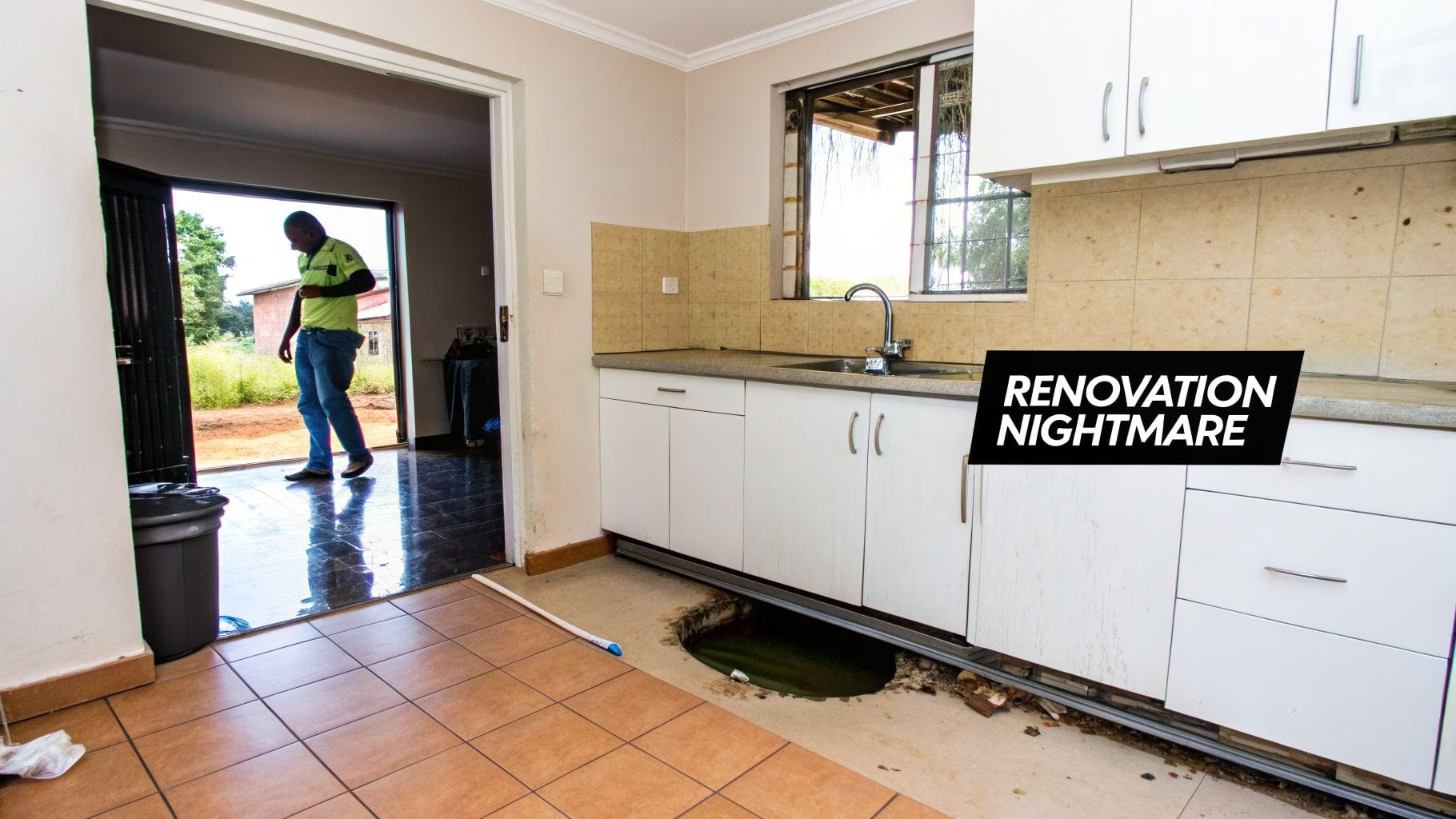
It usually starts with a sinking feeling. You notice the new stone benchtops aren’t quite level, or there are visible gaps in the custom cabinetry you paid a premium for. Maybe the new tap under the sink has a persistent drip.
What often begins as a small concern can quickly spiral into a full-blown dispute, leaving you with a dysfunctional, half-finished kitchen and a mountain of stress.
From Minor Flaws to Major Disputes
A formal dispute isn’t just about being unhappy with the final look. From a legal standpoint, it almost always involves a breach of the statutory warranties laid out in the Home Building Act 1989 (NSW). These are built-in consumer protections that automatically apply to most residential building work, guaranteeing it will be fit for purpose and carried out with due care and skill.
We see the same issues pop up time and time again. Some of the most common triggers for a kitchen building dispute include:
- Defective Workmanship: This is the big one. It covers everything from poorly laid splashback tiles and uneven flooring to incorrectly installed appliances that don’t fit or function properly.
- Non-Compliant Work: The job fails to meet the National Construction Code (NCC) or key Australian Standards. For kitchens, AS 3740 for waterproofing is absolutely critical, and failures here can cause thousands in damage.
- Unreasonable Delays: The project drags on for months past the agreed-upon finish date with no good reason, leaving your home and life in chaos.
- The Disappearing Builder: Your builder stops returning calls, abandons the site altogether, or even worse, goes out of business, leaving you with an incomplete job.
It’s easy for small issues to cascade into major problems. A poorly constructed base can lead to cracked tiles down the line—it’s why understanding fundamentals like how to install a subfloor for a flawless tile foundation is so critical for builders. When these basics are ignored, homeowners are the ones who pay the price.
Here’s a look at some of the most frequent defects we encounter and the serious issues they can cause if they aren’t fixed properly.
Common Kitchen Defects and Their Real-World Consequences
| Defect Type | Example | Potential Consequence |
|---|---|---|
| Waterproofing Failure | Incorrectly sealed joints behind the sink or dishwasher. | Hidden water leaks causing rot, mould growth in walls and cabinets, and structural damage to the subfloor. |
| Faulty Cabinetry | Doors that don’t align, drawers that stick, or poor-quality finishes that peel and delaminate. | The kitchen looks cheap and unfinished; functionality is compromised and can require complete replacement. |
| Non-Compliant Plumbing | Drains with improper fall, uncertified pipework, or leaking connections. | Blockages, foul odours, water damage, and potential health hazards from contaminated water. |
| Uneven Benchtops/Floors | Stone or laminate benchtops installed on an unlevel base; tiles laid on a poorly prepared surface. | Cracks in expensive stone, liquids pooling on surfaces, and “lippage” in floor tiles that creates a trip hazard. |
| Incorrect Appliance Installation | Ovens not secured properly, dishwashers not plumbed correctly, or rangehoods vented improperly. | Safety risks (fire, electrical shorts), poor performance, and potential to void the appliance’s warranty. |
These examples aren’t just hypotheticals; they are real-world problems that can cost homeowners dearly, both financially and emotionally.
At Awesim Building Consultants, we bring 35+ years of experience in Building & Construction to the table, with over 15 years providing litigation support to home owners, builders, and lawyers. We’ve seen firsthand how a seemingly minor defect can escalate, and our experience shows that identifying the core problem early is the most important step toward a fast and fair resolution.
You’re Not Alone: The Scale of the Problem in NSW
If you’re dealing with a kitchen dispute, know that you are far from alone. Data from NSW Fair Trading shows that between 2018 and 2023, homeowners lodged over 15,000 complaints for residential building work.
Of those, a staggering 42% were related to defects. Kitchens are a consistent hotspot, with issues like waterproofing failures and shoddy cabinetry making up 28% of all reported problems in home renovations.
Understanding that your issue is a legitimate, legally recognised dispute is the first step. It allows you to move past the frustration and start the formal process of holding your builder accountable. From here, you can explore your options, which may include lodging a formal complaint with Fair Trading, participating in mediation, or preparing a case for the NSW Civil and Administrative Tribunal (NCAT).
Building Your Case with Strong Documentation

Before you can challenge a builder’s work or defend your own, you need a solid foundation of proof. This isn’t about who shouts the loudest; it’s about who has the facts straight. With our 35+ years in Building & Construction and over 15 years providing litigation support to home owners, builders, and lawyers, we’ve seen it time and again: the person with the best documentation almost always has the upper hand.
This evidence forms the bedrock of your entire case, whether you’re negotiating a simple fix, lodging a complaint with NSW Fair Trading, or preparing for the NSW Civil and Administrative Tribunal (NCAT). Think of it as building a fortress of facts around your position.
Create a Chronological Timeline
The first thing you need to do is map out a clear timeline of events. Memories fade and details get muddled, so a written record is absolutely non-negotiable. Start from the day the contract was signed and document everything as it happened.
Your timeline should include:
- Key Dates: Pinpoint the project start date, when major items were installed (like benchtops or plumbing), and any promised deadlines that were missed.
- Communication Records: Log every single phone call, text, and email. Jot down the date, time, and a factual summary of what was discussed. For example, “15 May, 10:30 AM: Spoke to builder John Smith about leaking tap. He promised to send a plumber by EOW.”
- Defect Discovery: Note the exact date you first spotted each defect. This is crucial for establishing a clear sequence of when problems started appearing.
This chronological file organises the narrative, making it easy for you, your solicitor, or a tribunal member to follow the story without getting lost in confusion.
Gather and Organise Your Paper Trail
Next, it’s time to collect every single piece of paper and digital file related to your kitchen project. Don’t dismiss anything. A seemingly minor detail now could become a critical piece of evidence later on. Create a dedicated folder—either a physical one or on your computer—and organise everything meticulously.
Your evidence file must contain:
- The signed contract, including any and all variations.
- All plans, drawings, and specifications.
- Every invoice and proof of payment you have.
- All written communication, including emails and screenshots of text messages.
- Warranty documents for appliances, materials, and finishes.
Your goal is to create an undeniable record that speaks for itself. Unemotional, factual documentation is your most powerful tool in any negotiation. It removes personal feelings from the equation and focuses everyone on the objective evidence.
The unfortunate truth is that housing-related issues are common. In NSW, legal assistance enquiries have surged, with the 35-44 age group—often young families renovating or building—showing the highest rate of disputes at 5.3 per 1,000 people. With trends suggesting a potential 22% rise by 2026 thanks to renovation booms, getting your documentation right is more important than ever.
Capture Compelling Visual Evidence
A picture is worth a thousand words, but only if it tells the right story. Simply snapping a quick photo on your phone isn’t enough to hold up in a formal dispute. To give your visual evidence real weight, it needs context and scale.
Follow these tips for creating powerful visual proof:
- Use a Tape Measure: When you photograph a crack, gap, or misaligned cabinet, always place a tape measure right next to it. This shows the precise size of the defect.
- Take Wide and Close-Up Shots: First, get a wide shot of the kitchen to establish the defect’s location. Then, move in for detailed close-ups from several different angles.
- Shoot Videos: A short video is incredibly powerful for showing functional problems. For instance, you could film a drawer that sticks, a door that doesn’t close properly, or water pooling on an uneven benchtop.
- Date-Stamp Your Photos: Check your phone or camera settings to ensure every image is automatically stamped with the date and time. This verifies exactly when you captured the evidence.
Strong documentation is the first step, but you also need to understand what it means in the context of Australian Standards and the National Construction Code. If you suspect your builder has cut corners, getting an expert, unbiased assessment can be a game-changer. It might be worthwhile learning about the role of independent building inspections in providing this crucial clarity.
Bringing In an Independent Building Expert

When the phone calls stop, the emails go unanswered, and you’re at a complete stalemate with your builder, it’s time to change tactics. This is the point where you bring in an impartial third party.
A qualified building consultant cuts straight through the “he said, she said” arguments with an unbiased, technical assessment of the work. They become your most crucial resource in a kitchen building dispute, translating your frustrations into the language of compliance and non-compliance.
Getting an expert involved is a serious step. It signals that you’re moving beyond informal complaints and are now building a structured, evidence-based case. The right consultant decodes complex building codes and Australian Standards into a clear, factual report that stands up in negotiations, with NSW Fair Trading, or at the NSW Civil and Administrative Tribunal (NCAT).
Inspection vs. Expert Witness Report
There’s often confusion between a standard building inspection and a formal Expert Witness Report. While they both involve assessing your kitchen, their purpose and legal standing are completely different.
Think of a standard inspection as a quick health check; it’s great for spotting obvious problems and giving you a general overview. An Expert Witness Report, however, is a forensic investigation. It’s prepared specifically for legal proceedings and must comply with the strict rules of the court or tribunal it’s intended for.
With over 35+ years in Building & Construction and more than 15 years providing litigation support to home owners, builders, and lawyers, we know an Expert Witness Report is the key that can unlock a resolution. It isn’t just an opinion; it’s a detailed analysis designed to hold up under legal scrutiny.
What an Expert Looks for in a Disputed Kitchen
When we assess a disputed kitchen, we aren’t just looking at cosmetic flaws. Our role is to systematically compare the finished work against a clear hierarchy of benchmarks: the National Construction Code (NCC), relevant Australian Standards, the manufacturer’s own installation guides, and, of course, your building contract.
This deep-dive process involves checking for common but critical failures:
- Waterproofing Compliance (AS 3740): We meticulously inspect every wet area—around sinks, under dishwashers—to ensure the waterproofing membrane was installed correctly. This is a non-negotiable standard, as failures here can lead to rot, mould, and catastrophic damage down the line.
- Joinery and Cabinetry Quality: Are the cabinets level, plumb, and square? Are the gaps between doors and drawers consistent? We measure everything and assess whether the finish quality matches what was specified and paid for.
- Benchtop and Splashback Installation: Are the benchtops level and securely fixed? Are the joints in stone or laminate clean and minimal? Is the splashback tiling flat and properly grouted, or is there lippage?
- Plumbing and Electrical Work: We check that all plumbing is compliant to prevent leaks and that electrical outlets are placed according to safety codes, not just wherever was convenient for the installer.
This is what gives your claim teeth. The argument is no longer about your disappointment; it’s about the builder’s objective failure to meet non-negotiable industry and legal standards.
Water-related defects are a huge and recurring issue in NSW building disputes. Research from UNSW found that in a study of 150 apartment schemes, a staggering 42% had water problems, with kitchens being a primary culprit. This is backed up by NSW records showing that 35% of the 8,500 defect claims from 2019-2026 involved wet areas like kitchens. You can explore the full research on building defect patterns from UNSW.
This is exactly why an expert report is so powerful. It identifies these high-risk defects and provides the formal evidence needed to demand rectification. You can learn more about how we structure these crucial documents by reading our guide on Expert Witness Reports for building disputes. The report not only proves your claim but often outlines the correct way to fix the problems, giving you a clear roadmap to getting your kitchen finished properly.
The Formal Dispute Resolution Pathway in NSW
When polite chats and strongly-worded emails haven’t worked, it’s time to move your kitchen dispute into the formal system. NSW has a clear pathway designed to resolve these conflicts, and while it might seem daunting, it’s a structured process you can navigate effectively.
This isn’t about frustration anymore. It’s about facts, evidence, and following the correct procedure. For homeowners, it’s your opportunity to have your case heard by an official body. For builders, it’s the chance to present your side of the story within a regulated framework.
Starting with NSW Fair Trading
Your first official stop is always lodging a complaint with NSW Fair Trading. This government body is the frontline for resolving residential building disputes valued under $500,000. The service is free and a mandatory first step before you can even consider legal action.
This is where all that meticulous documentation you’ve been gathering becomes absolutely crucial. You’ll need to have everything ready to go, including:
- A detailed timeline of events from start to finish.
- Copies of your contract, plans, and all invoices.
- Clear photos and videos that show the defective work.
- An independent expert report, if you’ve already commissioned one.
Once your complaint is lodged, Fair Trading typically assigns a building inspector to your case. They’ll review your evidence and will often organise a site meeting with both you and the builder to inspect the issues firsthand. Their primary goal is to get both parties to agree on a solution. If the defects are clear, they can issue a Rectification Order—a legally binding direction for the builder to fix specific problems within a set timeframe.
The Role of Mediation
If Fair Trading’s direct intervention doesn’t get you a resolution, or if the dispute is particularly complex, mediation is often the next step. This is a structured negotiation session guided by a neutral third party. The mediator’s job isn’t to pick sides or make a ruling; it’s to help you and the builder find some common ground and hash out an agreement you can both live with.
Preparation is everything. You can’t just walk in and hope for the best. You need a clear head and a firm grasp of what you want to achieve.
A successful mediation isn’t about “winning.” It’s about finding a practical, cost-effective solution that saves everyone the stress and expense of a tribunal hearing. With our 15+ years of litigation support to home owners, builders, and lawyers, we’ve seen clients achieve fantastic outcomes when they focus on resolution, not confrontation.
Before you even get to the session, figure out your best-case scenario and, just as importantly, what you’re willing to compromise on. Is it a full fix of every single defect? Or would a partial refund to hire your own contractor be acceptable? Knowing these things beforehand stops you from making emotional decisions in the heat of the moment.
Escalating to the NSW Civil and Administrative Tribunal (NCAT)
When all other avenues have been exhausted, the final stop for most residential building disputes is the NSW Civil and Administrative Tribunal (NCAT). Here, a Tribunal Member will make a formal, legally binding decision.
Taking a kitchen building dispute to NCAT is a serious move, and your case has to be watertight. Success hinges entirely on the quality and clarity of your evidence. The Tribunal Member simply won’t have the time to dig through a messy folder of random emails and blurry photos. Your case must be presented in a way that’s compelling, easy to follow, and directly linked to the legal and technical points of your dispute. This is where professional support can make all the difference. To get a better sense of what’s involved, you can learn more about how to navigate the building disputes tribunal in NSW and what to expect.
The Critical Importance of a Scott Schedule
For any matter heading to NCAT, a Scott Schedule isn’t just a good idea—it’s often a mandatory document. Think of it as a specialised table that organises the entire conflict for the Tribunal in a logical, easy-to-digest format.
It breaks the dispute down into columns that clearly outline:
- The Defect: Each individual issue is numbered and described (e.g., “Kitchen benchtop is not level and pools water”).
- The Homeowner’s Claim: Your detailed explanation of what is wrong and why it’s the builder’s fault.
- The Builder’s Response: The builder’s chance to reply to each specific allegation.
- The Proposed Solution & Cost: What you believe needs to be done to fix it, and the estimated cost.
- The Tribunal’s Findings: A dedicated space for the Member to write their ruling on every single item.
A well-prepared Scott Schedule transforms a tangled, emotional argument into a side-by-side comparison of facts. It forces both sides to address each point directly, cutting through the noise and focusing the hearing purely on the evidence. At Awesim Building Consultants, our extensive experience in NCAT proceedings means we prepare these documents with the precision the Tribunal demands, ensuring your case is presented in the strongest way possible.
Preventing Disputes on Your Next Project
The best way to win a kitchen building dispute is to make sure it never happens in the first place. After 35+ years in the building game, we’ve seen it all, and the most successful projects aren’t the ones that win in court—they’re the ones that never see the inside of one.
Let’s talk about the real-world strategies that build trust, manage expectations, and protect everyone involved. This isn’t just about avoiding a stressful legal fight; it’s about getting the project finished successfully.
Due Diligence for Homeowners
For homeowners, your project’s fate is often sealed long before a single tile is laid. The builder you hire is the single biggest factor determining whether you end up with a dream kitchen or a nightmare dispute. Don’t rush this decision.
A thorough vetting process is your best line of defence.
- Verify Licences and Insurance: Head straight to the NSW Fair Trading website and check the builder’s licence. You also need to confirm they hold current home building compensation (HBC) insurance, public liability, and workers’ compensation. No excuses.
- Speak to Real References: A curated list of happy clients is nice, but it’s not enough. Ask for the contact details of their last two or three jobs and actually call those homeowners. Ask pointed questions: How was the communication? Did they stick to the budget? What happened when something unexpected went wrong?
- Review Their Past Work: Photos can be deceiving. If you can, ask to see a finished kitchen in person. This gives you a true feel for the quality of their workmanship that a glossy photo just can’t capture.
This might feel like a lot of homework, but it’s a small investment of time that can save you a mountain of stress and money. A builder with a transparent process and a solid history is just less likely to cause problems. Getting the planning right from the start is also a huge part of this, which is why it’s critical to understand how to plan a kitchen remodel in detail.
The Power of a Watertight Contract
A vague contract is an open invitation to disaster. It’s where misunderstandings are born. You need to insist on a comprehensive, written agreement that spells everything out, leaving no room for assumptions.
At a minimum, your contract must have:
- A Detailed Scope of Works: This needs to list every single task, from the first day of demolition right through to the final clean-up.
- A Full List of Materials and Fittings: Be specific. List the brands, model numbers, and colours for everything—appliances, benchtops, tiles, tapware, even the grout colour.
- A Clear Payment Schedule: Payments should be linked to tangible, completed milestones, not just dates on a calendar. For example, “payment due upon completion of cabinet installation.”
- A Stated Completion Date: Make sure you include terms for how any potential delays will be handled and communicated.
The official dispute resolution pathway in NSW shows just how involved things can get if they go wrong.
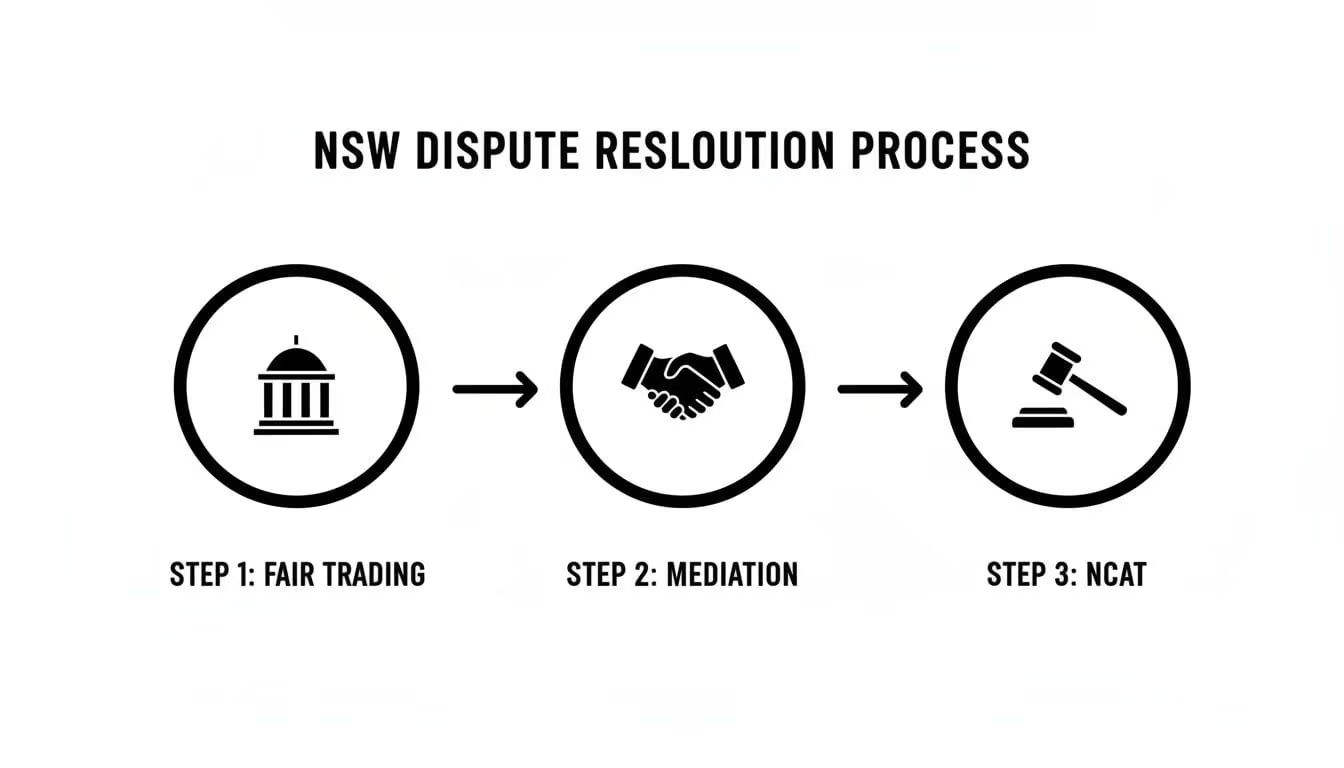
As you can see, formal steps like mediation and NCAT come much later. The goal is to never have to start down this path.
Proactive Strategies for Builders
For good builders, your reputation is your most valuable asset. Preventing disputes isn’t just about sidestepping legal fees; it’s about protecting your business and building the kind of client relationships that generate referrals for years to come. Your best tools for this are meticulous project management and crystal-clear communication.
Drawing from our 35+ years in Building & Construction, we’ve learned that most disputes arise from a simple breakdown in communication. A small misunderstanding left unaddressed can quickly fester into a major conflict.
Set up a communication rhythm from day one. A standing weekly site meeting or a shared online folder for progress photos and updates works wonders. It ensures everyone is on the same page.
Crucially, document every single variation in writing. Get it signed by the homeowner before you do the work. This one simple habit eliminates nearly all “he said, she said” arguments about scope changes and extra costs down the line.
By putting these measures in place, both homeowners and builders can foster an environment built on collaboration and respect. That’s the foundation for a kitchen renovation that gets remembered for all the right reasons. If you need guidance on anything from contract reviews to pre-construction planning, you can always reach out to Awesim Building Consultants.
Your Questions on Kitchen Building Disputes Answered
Finding yourself in the middle of a kitchen building dispute can be incredibly stressful and confusing. To cut through the noise, we’re answering some of the most common questions we hear from homeowners, builders, and solicitors across NSW. These answers are drawn from our team’s 35+ years in Building & Construction and over 15 years spent deep in litigation support for home owners, builders, and lawyers.
How Long Do I Have to Claim for a Defect in NSW?
This is a critical question because the timelines are non-negotiable. In NSW, statutory warranties give homeowners a safety net, but that net has a time limit. You have a finite window to make a claim.
The time you have depends entirely on the type of defect:
- Major Defects: You have six years to make a claim. A major defect is a serious problem that renders the kitchen unsafe or unusable, like a significant structural failure, a major waterproofing issue, or a fire safety hazard.
- All Other Defects: For everything else—think cosmetic issues or minor functional problems—you have two years.
It’s absolutely vital to remember that the clock for both periods starts ticking the moment the work is completed. If you suspect a defect, act fast. Getting professional advice to correctly categorise the issue is your first step, as missing these deadlines can mean forfeiting your right to have the problem rectified.
What Is a Scott Schedule and Why Is It So Important for NCAT?
If your dispute finds its way to the NSW Civil and Administrative Tribunal (NCAT), the Scott Schedule will become one of the most crucial documents in your case. It’s essentially a specialised table that the Tribunal relies on to break down, understand, and rule on a building dispute in a methodical way.
Its real power is in how it organises the conflict. It forces both parties to move past emotional arguments and engage in a structured, fact-based debate. Each row on the schedule represents a single alleged defect, with columns for:
- The item number and a description of the defect
- The claimant’s view on what’s wrong
- The claimant’s proposed solution and associated cost
- The respondent’s official reply to the claim
At Awesim, we specialise in preparing these NCAT-compliant documents. Our litigation support experience means we know how to frame your case clearly and anchor it in solid evidence, giving the Tribunal the information it needs to make a sound decision. A properly prepared Scott Schedule is essential when navigating the building disputes tribunal in NSW.
Can I Just Stop Paying My Builder if I Find Problems?
Withholding payment from your builder might feel like your only point of leverage, but it’s an incredibly high-risk move that can easily backfire. Acting on impulse here could put you in breach of your contract, which would seriously undermine your legal standing.
Before you even think about stopping a payment, you must get professional legal and building advice and review your contract’s dispute resolution clauses. Making a unilateral decision can escalate the conflict and might even give your builder grounds to sue you.
A far safer—and more effective—approach is to commission an independent expert report. This document gives you the objective, third-party evidence you need to formally state your position and justify your concerns. Armed with a detailed report, you can then negotiate from a position of strength, perhaps by agreeing to place the disputed funds into a trust account until the rectification work is completed and signed off.
Of course, the best strategy is always prevention. A detailed plan is the first line of defence against problems. To effectively prevent disputes on your next project, understanding how to plan a kitchen remodel thoroughly is indispensable. Proper planning minimises surprises and ensures everyone agrees on the scope and standards from the very beginning.
If you’re facing a complex kitchen building dispute and need clear, expert guidance, Awesim Building Consultants is here to help. With decades of hands-on construction experience and specialised expertise in NCAT proceedings, we provide the independent reports and litigation support you need to navigate the process with confidence. Contact us today to discuss your situation.

Related Posts

NCAT Consumer Division: Steps From Lodgement to Hearing
Most people who end up at the NCAT Consumer and Commercial Division do not arrive there by choice. They arrive
Read More »
Statutory Warranty NSW: What Builders Must Fix and for How Long
Statutory warranty NSW obligations exist precisely for the moment a builder stops returning calls. A crack appears in the render.
Read More »
Home Building Act NSW: Key Clauses Every Owner Should Know
The Home Building Act 1989 (NSW) sets the rules for residential building work in New South Wales. It requires licensed
Read More »