
Concrete Slab Defects: What Causes Cracking, Settlement, and When It Triggers a Defect Claim
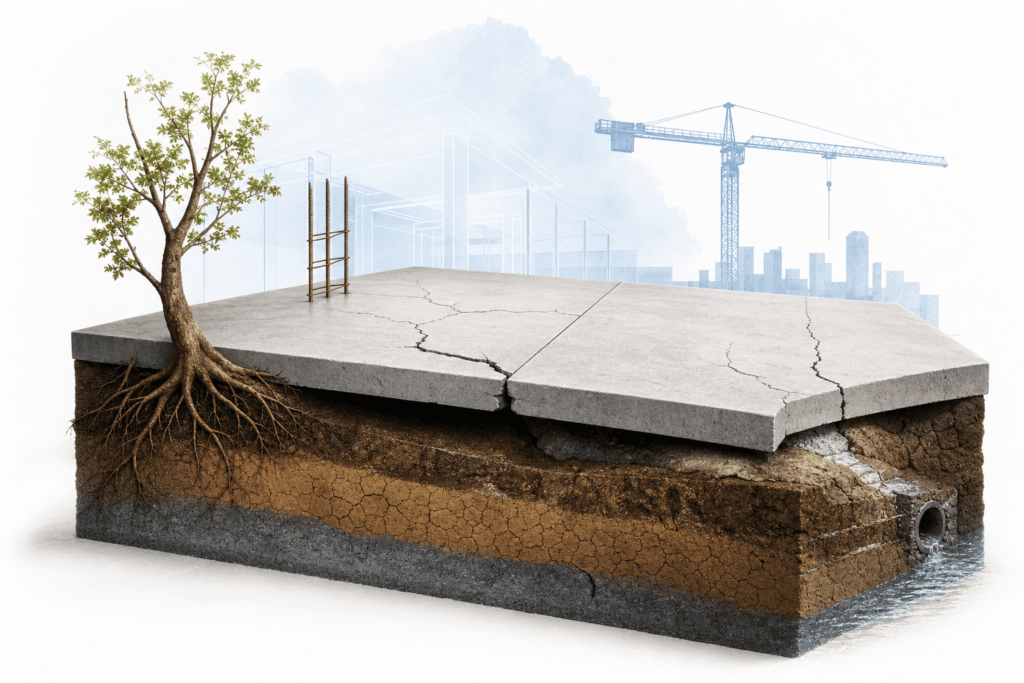
Concrete slab defects require evidence of cause and consequence. Record crack locations, widths, movement over time, drainage and any associated damage before selecting a repair. Where the findings support a dispute, consult the NSW Government dispute guidance and arrange an independent technical report suited to the issues.
- What Concrete Slab Defects Actually Meanfor Your Building
- Why Concrete Slabs Crack
- What Causes Slab Settlement
- Cosmetic Defects Versus Structural Defects
- When a Concrete Slab Defect Becomes a Formal Claim
- Getting an Independent Assessment in NSW
- What to Document Before the Inspection
- Common Slab Defect Scenarios in NSW Disputes
- Practical Steps If You Have a Slab Defect
- FAQs
- Start with the Evidence
What Concrete Slab Defects Actually Mean for Your Building
Concrete slab defects are among the most common triggers for construction disputes in NSW — and among the most misunderstood. A crack doesn't automatically mean the builder did something wrong. Settlement doesn't always mean structural failure. But some defects are serious, some are the direct result of poor workmanship or non-compliant materials, and knowing the difference matters enormously when you're heading toward a tribunal or court.
This article covers the main causes of concrete slab cracking and settlement, how to distinguish a cosmetic defect from a structural one, and when a defect is significant enough to support a formal claim at NCAT or through the NSW courts.
Why Concrete Slabs Crack
Concrete cracks. That's not a defect finding — it's a material property. Concrete handles compressive loads well but is relatively weak in tension, meaning it resists being crushed but can be pulled apart. The real question is whether the cracking was foreseeable, whether the design and construction addressed it, and whether the outcome falls within acceptable tolerances under the relevant Australian Standards.
Plastic Shrinkage Cracking
This occurs within the first few hours after a pour, while the concrete is still setting. If the surface dries faster than the body of the slab, it shrinks and cracks before the concrete has gained any meaningful strength. Hot weather, low humidity, and wind all accelerate surface drying. The result is typically shallow, irregular cracks — often described as a map or crazing pattern.
Plastic shrinkage cracking is largely preventable with proper curing: covering the slab, applying curing compounds, and avoiding pours in conditions that exceed safe parameters. When it appears on a residential slab and the builder failed to take reasonable precautions, it can form part of a defect claim.
Drying Shrinkage Cracking
As concrete cures over weeks and months, it loses moisture and contracts. Control joints exist specifically to manage this — they create deliberate weak points where the slab can crack in a controlled location rather than randomly across the surface. When joints are spaced too far apart, positioned incorrectly, or cut too late, drying shrinkage cracks appear where they shouldn't.
This is a workmanship issue. The joint layout should be specified in the structural drawings, and following it is the builder's responsibility.
Thermal Cracking
Concrete expands in heat and contracts in cold. In large slabs — particularly exposed outdoor areas like driveways and pool surrounds — daily and seasonal temperature cycles create repeated stress. Without adequate expansion joints, that stress eventually exceeds the concrete's tensile capacity.
Structural Cracking
Structural cracks are a different category entirely. They occur when the slab is loaded beyond its design capacity, when the subgrade fails to provide adequate support, or when the reinforcement is inadequate, incorrectly placed, or missing. These cracks are typically wider, may show vertical displacement between the two sides (step cracking), and tend to worsen over time.
If you can see daylight through a crack, feel a step across it, or notice it growing, you're likely dealing with something structural rather than cosmetic.
What Causes Slab Settlement
Settlement is the downward movement of a slab after placement. Some minor settlement is normal. Significant or differential settlement — where one part of the slab drops more than another — is a serious problem.
Poor Subgrade Preparation
Inadequate ground preparation is the most common cause. If fill material wasn't properly compacted, if reactive clay soils weren't treated or accounted for in the design, or if organic material was left in the subgrade, the ground will compress or shift under load.
In NSW residential construction, the site classification — ranging from reactive to highly reactive to extremely reactive — determines the footing and slab design requirements under AS 2870. When a builder constructs a slab to a lower specification than the site demands, settlement is a predictable outcome, not an accident.
Reactive Clay Soils
NSW has significant areas of reactive clay, particularly in western Sydney and parts of regional NSW. Reactive clay expands when wet and contracts when dry. A slab sitting on reactive clay that wasn't designed for that movement will heave in wet conditions and settle in dry ones. Cracks that open and close with rainfall are a hallmark of this problem.
Poor Drainage and Water Infiltration
Water pooling beneath a slab, or running toward the building due to inadequate site drainage, can erode or saturate the subgrade over time. This is particularly common where stormwater management wasn't addressed during construction, or where landscaping changes after handover have altered drainage paths.
Tree Root Intrusion
In established urban areas, tree roots can grow beneath slabs and cause localised heaving. Large trees also draw moisture from the soil, which can cause shrinkage and settlement on the side of the slab closest to the root zone.
Cosmetic Defects Versus Structural Defects
This distinction matters legally, not just technically. Under the Home Building Act 1989 (NSW), major defects in residential building work carry a six-year statutory warranty, while other defects carry two years. Whether a concrete slab defect qualifies as a major defect depends on whether it affects a structural element and whether it makes the building uninhabitable or unable to be used for its intended purpose.
A hairline crack in a garage floor is unlikely to be a major defect. A crack in a suspended slab that has caused deflection, compromised structural integrity, or allowed water ingress into a habitable space is a different matter entirely.
The practical difficulty is that many defects sit in a grey zone. A crack that looks cosmetic may have an underlying structural cause. Settlement that appears minor may be progressive. This is precisely why an independent assessment from a qualified building consultant is worth doing before you commit to a legal position.
When a Concrete Slab Defect Becomes a Formal Claim
Not every defect leads to litigation. Many are resolved through direct negotiation, through the builder's statutory warranty obligations, or through Fair Trading NSW. But when those pathways fail — or when the defect is serious enough that you need documented evidence from the outset — a formal claim at NCAT or through the NSW courts becomes the next step.
What You Need to File a Claim
To pursue a defect claim successfully, you need more than photographs and a list of complaints. You need an independent expert report that:
- Identifies each defect with specificity
- Explains the likely cause of each defect
- Assesses whether the work departed from the contract, the relevant Australian Standards, or accepted trade practice
- Quantifies the cost to rectify
At NCAT, the report needs to come from someone with appropriate qualifications and experience. In the District Court or Supreme Court, it must comply with Schedule 7 of the Uniform Civil Procedure Rules 2005 — the code of conduct governing expert witnesses in NSW civil proceedings. A report that doesn't meet Schedule 7 requirements can be rejected or heavily discounted, which means the money spent on it achieves nothing.
The Role of a Scott Schedule
In disputes involving multiple defect items, a Scott Schedule is typically required. This is a structured document listing each defect, the claimant's description and cost estimate, the respondent's position, and the expert's independent assessment. Scott Schedules are standard practice at NCAT and in the NSW courts for construction matters because they force both sides to address each item directly rather than arguing past each other.
If your slab has ten or fifteen separate defect items, a Scott Schedule will almost certainly be required before the matter is heard.
Limitation Periods
Timing matters. The six-year major defect warranty under the Home Building Act 1989 runs from the date of completion. The two-year warranty for other defects runs from the same date. If you're approaching either of those periods, getting an inspection and report done promptly is important — the defect needs to be documented before the limitation period expires.
Getting an Independent Assessment in NSW
If you're dealing with concrete slab defects and considering a claim, the first practical step is an independent on-site inspection by a building consultant with litigation experience. The inspector needs to understand not just construction, but what a tribunal or court will require from the evidence.
Awesim Building Consultants has been preparing Expert Witness Reports and Scott Schedules for NSW construction disputes since 1996. Operating from offices in Sydney, Tamworth, and Tweed Heads, the firm conducts on-site inspections across NSW and prepares reports to Schedule 7 of the Uniform Civil Procedure Rules 2005. Whether your matter is headed to NCAT, the District Court, or the Supreme Court, the report needs to be written to the standard that proceeding requires.
A free initial consultation is available at 1800 293 746 if you want to talk through your situation before committing to a formal engagement.
What to Document Before the Inspection
The more information you can provide going into an expert inspection, the more useful the report will be. Useful documentation includes:
- The original building contract and any variations
- Structural drawings and engineering specifications, particularly the slab design and site classification
- Geotechnical or soil reports if they were prepared
- Photographs taken over time showing how defects have developed
- Correspondence with the builder about the defects
- Previous inspection reports, including the practical completion inspection if one was done
The inspector will form their own independent view, but having the original design documentation allows them to assess whether the as-built work matched what was specified.
Common Slab Defect Scenarios in NSW Disputes
Residential Slab-on-Ground
The most common residential dispute involves a ground-floor slab that has cracked or settled after the owner moved in. Cracks are often first noticed at doorframes, where differential movement is most visible. The dispute typically centres on whether the slab was designed and constructed to the correct specification for the site classification, and whether the subgrade was properly prepared and compacted.
Suspended Slabs in Multi-Storey Buildings
In apartment buildings and multi-storey homes, suspended concrete slabs carry floor loads between levels. Defects can include inadequate cover to reinforcement (leading to corrosion and spalling), insufficient slab thickness, and deflection under load. These matters often arise in strata disputes where the owners corporation is pursuing the original developer or builder.
Driveway and Outdoor Slabs
Concrete driveways and outdoor paved areas are frequently the subject of defect complaints — cracking, spalling, and surface delamination are common. These matters can be harder to pursue because outdoor slabs face greater environmental variation, but when the defect is clearly attributable to poor mix design, inadequate thickness, or missing joints, a claim is supportable.
Practical Steps If You Have a Slab Defect
Document what you can see now. Photograph cracks with a scale reference, measure widths where possible, and note whether they appear to be growing or stable.
Check your warranty position. Identify when practical completion occurred and whether you're within the two-year or six-year warranty period under the Home Building Act 1989.
Notify the builder in writing. This creates a record and starts the clock on their obligation to respond. Keep copies of everything.
Get an independent inspection. Don't rely on the builder's own assessment of their work. An independent report from a qualified building consultant gives you evidence that can be used in proceedings if negotiation fails.
Understand what proceeding is appropriate. NCAT has jurisdiction over residential building disputes up to certain limits; larger claims may need to go to the District Court or Supreme Court. A solicitor can advise on jurisdiction — a building consultant can advise on what the evidence needs to show.
FAQs
What is the difference between a cosmetic crack and a structural crack in a concrete slab?
A cosmetic crack is shallow, doesn't affect the load-bearing capacity of the slab, and doesn't allow water ingress or cause displacement between the two sides. A structural crack typically involves vertical displacement (step cracking), is wider than around 0.3mm, may be progressive, and often reflects a failure in the subgrade, reinforcement, or slab design. An independent building consultant can assess which category applies.
Does concrete always crack, or is cracking a defect?
Some cracking is expected in concrete construction. The question is whether it was foreseeable and whether the design and workmanship took adequate steps to control it. Cracking caused by missing control joints, inadequate curing, or incorrect mix design is a workmanship defect. Cracking within properly placed control joints is not.
How long do I have to make a claim for concrete slab defects in NSW?
Under the Home Building Act 1989, major defects in structural elements carry a six-year statutory warranty from the date of completion. Other defects carry two years. If you're approaching either period, getting an inspection and report done promptly is important.
What is a Scott Schedule and do I need one for a slab defect claim?
A Scott Schedule is a structured document listing each defect, the parties' respective positions on each item, and the expert's independent assessment. NCAT and the NSW courts typically require one in construction defect matters involving multiple items. If your slab has several distinct defect issues, a Scott Schedule will almost certainly be part of the process.
What does an expert witness report need to include for a concrete slab defect claim?
For NSW court proceedings, an expert witness report must comply with Schedule 7 of the Uniform Civil Procedure Rules 2005. The expert must identify their qualifications, state the facts and assumptions underpinning their opinion, give their opinion on the cause and extent of the defects, and confirm that their duty is to the court rather than to the retaining party. A report that doesn't meet these requirements can be rejected.
Can I use the same report for NCAT and the District Court?
A report prepared to Schedule 7 of the Uniform Civil Procedure Rules 2005 meets the standard required by both NCAT and the NSW courts. It's worth confirming with your building consultant and solicitor that the report is drafted to that standard from the outset, rather than needing to be redone if your matter moves between jurisdictions.
What information should I bring to an initial consultation about a slab defect?
Bring the original building contract, structural drawings and specifications, any soil or geotechnical reports, photographs of the defects, and any correspondence with the builder. The more complete your documentation, the more precisely the consultant can assess the defect and advise on the strength of a potential claim.
Start with the Evidence
Concrete slab defects range from minor surface issues to serious structural failures. What separates a defect that resolves quietly from one that ends up at NCAT or the Supreme Court is usually a combination of severity, the builder's response, and the quality of the evidence on each side.
If you're at the point where you need an independent report, the standard it's written to will shape everything that follows. Awesim Building Consultants prepares Expert Witness Reports, Scott Schedules, and forensic inspection reports for NSW construction disputes from offices in Sydney, Tamworth, and Tweed Heads. Call 1800 293 746 to arrange a free initial consultation.

Related Posts

Water Damage in Homes: How to Track Down the Source
Water damage in a home rarely announces itself at the source. A stain on the ceiling, a musty smell in
Read More »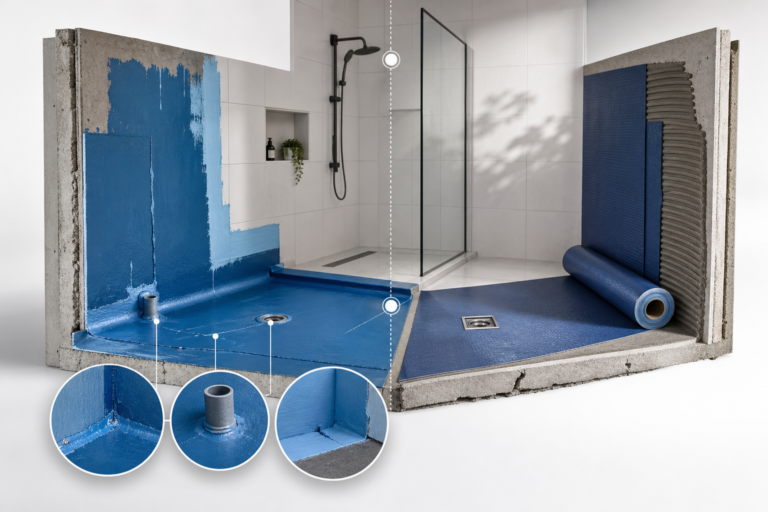
Waterproofing Membrane Types: Which Fails Most in NSW Bathrooms
Waterproofing failure is the single most common serious defect found in NSW apartments, and the type of membrane used, along
Read More »
Building Certifier NSW: Role, Limits, and When You Need More
A building certifier in NSW is a registered professional who issues construction certificates, conducts critical stage inspections, and grants occupation
Read More »