
Site Inspection Reports in NSW: What They Cover and When You Need One for a Dispute
- What Is a Site Inspection Report?
- The Different Types of Site Inspection Reports in NSW
- When a Standard Inspection Isn't Enough
- What a Good Site Inspection Report Actually Contains
- The Gap Between a Building Inspection and a Litigation Report
- How to Choose a Building Consultant for a Dispute Report
- Conclusion
- Frequently Asked Questions
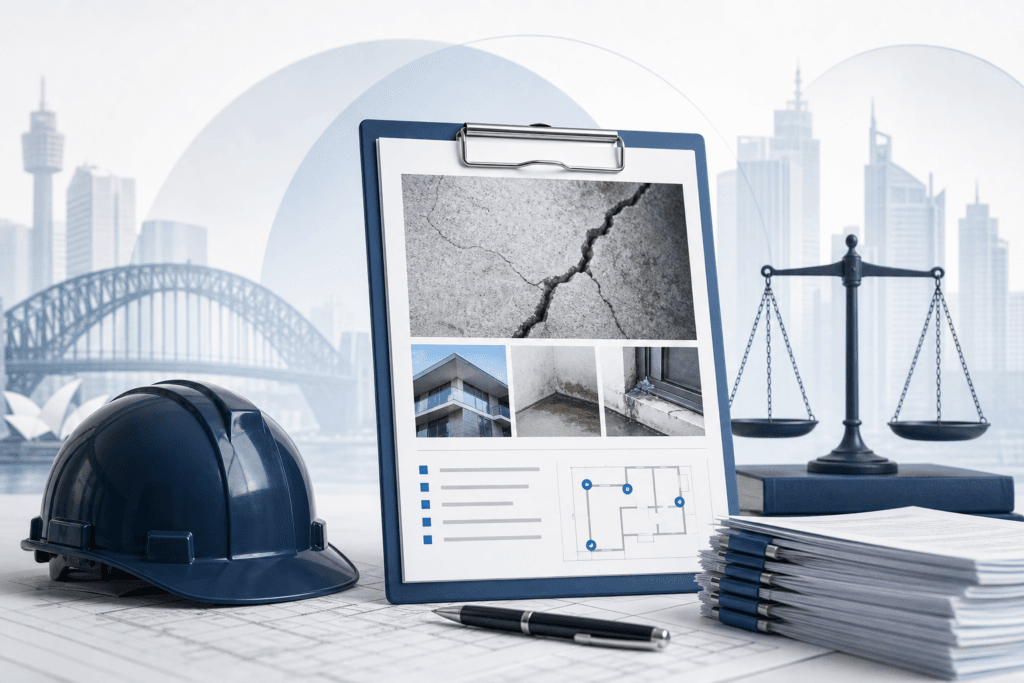
A site inspection report records observations about building work or property condition within an agreed scope. For a NSW dispute, the report may also need technical reasoning, supporting documents and clearly stated limitations. Confirm what questions the inspector will address and whether expert evidence is required.
This article covers what a site inspection report includes, how different report types serve different purposes, and when a standard inspection document simply isn't enough for a formal dispute.
What Is a Site Inspection Report?
At its most basic, a site inspection report documents the physical condition of a building or construction site following an on-site visit by a qualified consultant. The consultant attends the property, observes and records defects, assesses workmanship or materials, and produces a written record of findings.
That description, however, covers a wide range of documents with very different purposes. A general building inspection prepared for a property buyer is not the same instrument as an expert witness report prepared for NCAT proceedings. That distinction matters enormously once a dispute reaches a tribunal or court.
The Different Types of Site Inspection Reports in NSW
General Observation Reports
These are the most common form. A consultant attends the site, notes visible defects or conditions, and summarises findings in a written document. Useful for internal decision-making, insurance claims, or early-stage negotiations — but not structured to meet the evidentiary standards required by NSW courts and tribunals.
A general observation report typically doesn't include expert opinion on causation, doesn't assign liability, and isn't written to any prescribed code of conduct. If the matter proceeds to a formal hearing, this type of report will rarely survive scrutiny on its own.
Expert Witness Reports
An expert witness report is a formal document prepared by a qualified building consultant appointed to give independent opinion evidence to a court or tribunal. In NSW, these reports must comply with Schedule 7 of the Uniform Civil Procedure Rules 2005, which sets out the expert's obligations: to act independently, to state the factual basis for each opinion, and to acknowledge the limits of their knowledge.
Schedule 7 compliance is not optional. NCAT, the NSW District Court, and the Supreme Court all require expert evidence to meet this standard. A report that doesn't comply can be rejected outright — meaning the time and cost spent obtaining it is wasted, and your position in the proceedings is weakened.
Awesim Building Consultants prepares Expert Witness Reports written to Schedule 7 for NCAT, District Court, and Supreme Court proceedings, with on-site inspections conducted from offices in Sydney, Tamworth, and Tweed Heads.
Scott Schedules
A Scott Schedule is a specific document format used in construction disputes to itemise defects in a structured table. Each row sets out a single defect, the claimant's description, the respondent's response, and the associated cost estimate. Tribunals and courts use Scott Schedules to work through defect lists methodically, making them a common requirement in NCAT building matters.
A Scott Schedule is not simply a list of problems. It needs to be prepared with enough specificity and cost substantiation to hold up under challenge. If the opposing party disputes an item, your consultant needs to be able to justify both the identification of the defect and the cost attributed to it.
Forensic Waterproofing Inspection Reports
Waterproofing failures are the most frequently identified serious defect category in NSW residential buildings, and among the most contested in disputes. A forensic waterproofing inspection report goes beyond noting that water is entering a building. It documents the specific failure mode, the location and extent of the breach, the applicable Australian Standards, and the remediation scope.
This type of report is prepared as legal evidence. It differs from a general waterproofing assessment in that it's structured to support a claim and withstand cross-examination.
Quantum Meruit Reports
Less widely known but highly relevant in payment disputes. When a builder or contractor has performed work without a fixed-price contract — or where the original contract has broken down — a Quantum Meruit Report assesses the fair value of the work completed. "Quantum meruit" is a Latin phrase meaning "as much as is deserved," and it describes the legal basis for recovering payment when no agreed price exists.
These reports are used in District Court and Supreme Court proceedings and require both construction knowledge and an understanding of valuation methodology.
When a Standard Inspection Isn’t Enough
If your matter is heading to a formal hearing, a general inspection document won't serve you. These are the situations where you need something more structured.
You Have a Tribunal Date Set
Once NCAT has listed your matter for hearing, you'll need to exchange expert evidence with the other party. That evidence must meet Schedule 7 requirements. A report prepared for general purposes — or one that wasn't written with the expert's code of conduct obligations in mind — will need to be redone. Getting the right report from the start avoids that cost.
The Other Party Has Their Own Expert
If the respondent has engaged a building consultant to dispute your defect claims, you need an independent expert who can address those findings directly. A site inspection report that simply lists problems without engaging with causation or applicable standards won't answer the opposing expert's opinion.
Defects Are Disputed on Causation
Some defects aren't disputed in terms of their existence, but are disputed in terms of who is responsible. Waterproofing failures are a common example: the builder may argue the defect resulted from owner modifications or inadequate maintenance. An expert witness report needs to address causation specifically, with reference to construction records, site conditions observed, and the relevant standards.
You’re in a Payment Dispute Without a Fixed Contract
Builders and contractors in this situation need a Quantum Meruit Report that establishes the fair value of work completed. Without it, the claim rests on assertion rather than evidence. Courts in NSW require a substantiated valuation, not an estimate.
Strata Common Property Is Involved
Strata defect disputes often involve multiple affected lots, complex ownership boundaries, and questions about whether a defect falls within common property or individual lot responsibility. A site inspection report for a strata matter needs to address these boundaries clearly and document defects in a way that maps to the strata plan.
What a Good Site Inspection Report Actually Contains
Regardless of report type, a well-prepared site inspection report for dispute purposes should include the following.
A clear description of the inspection scope. What was inspected, what wasn't accessible, and what limitations apply to the findings.
Factual observations. What the consultant saw, measured, or tested, documented with photographs and references to specific locations within the building.
Reference to applicable standards. Australian Standards, the National Construction Code, and any relevant manufacturer specifications that the observed conditions are measured against.
Expert opinion on causation and liability. Not just what is wrong, but why it is wrong and who is responsible — with the reasoning set out transparently.
Remediation scope and cost. What needs to be done to fix the defect and what that work is likely to cost, supported by a methodology the consultant can defend.
The expert's qualifications and independence statement. For Schedule 7 compliance, the report must include a statement that the expert has read and complied with the code of conduct, and that the opinions expressed are their own.
A report missing any of these elements is a report that can be challenged at hearing.
The Gap Between a Building Inspection and a Litigation Report
This is the distinction that causes the most confusion for homeowners approaching a dispute for the first time. Many people obtain a general building inspection, see that it documents defects, and assume it will serve as evidence. It usually won't.
A pre-purchase building inspection is designed to inform a buyer about the condition of a property at the time of purchase. It isn't written to any litigation standard. The consultant isn't appointed as an expert witness. The document doesn't include the independence statement, the causation analysis, or the Schedule 7 compliance declaration that a tribunal requires.
Using a general inspection report as evidence in NCAT proceedings is a common and costly mistake. The report may be admitted, but its weight will be limited, and the opposing party's expert will have little difficulty challenging its conclusions.
If you're in a dispute, you need a report prepared specifically for that dispute, by a consultant who understands what the tribunal or court will require.
How to Choose a Building Consultant for a Dispute Report
Not every building consultant is qualified to prepare expert witness reports. When selecting a firm, consider the following.
Direct experience with the relevant jurisdiction. A consultant who regularly prepares reports for NCAT proceedings understands what the tribunal expects. The same applies for District Court and Supreme Court matters, which carry different procedural requirements.
Familiarity with Schedule 7. Ask directly whether the consultant's reports are written to Schedule 7 of the Uniform Civil Procedure Rules 2005. If they're not familiar with the requirement, that's a clear signal.
Published case references. A consultant who can point to specific matters in which their reports have been used gives you a basis for assessing their experience. Awesim's principal consultant, Glen Sim, has published case references available at awesim.com.au.
Independence from builders and developers. An expert witness must be independent. A consultant with ongoing commercial relationships with builders in your area carries an obvious conflict risk.
Geographic coverage. On-site inspection isn't optional. A consultant who can't attend your property can't produce a credible site inspection report. Firms with multiple offices across NSW can cover more locations without relying on a single consultant's availability.
Conclusion
A site inspection report is only as useful as its purpose. For a dispute heading to NCAT, the District Court, or the Supreme Court, you need a report that meets Schedule 7 requirements, addresses causation, and can withstand cross-examination. A general observation report won't get you there.
If you have a tribunal date approaching or a defect dispute moving toward formal proceedings, the right step is to engage a building consultant who prepares litigation-specific reports — not general inspection documents.
Awesim Building Consultants has been preparing Expert Witness Reports, Scott Schedules, Quantum Meruit Reports, and Forensic Waterproofing Inspection reports for NSW disputes since 1996. A free initial consultation is available. Call 1800 293 746 or visit awesim.com.au to discuss your matter.
Frequently Asked Questions
What is the difference between a site inspection report and an expert witness report?
A site inspection report is a general term for any document recording observations made during an on-site visit. An expert witness report is a specific type prepared to meet the evidentiary standards required by NSW courts and tribunals, including compliance with Schedule 7 of the Uniform Civil Procedure Rules 2005. Not all site inspection reports qualify as expert witness reports.
Does a site inspection report need to comply with Schedule 7 for use in NCAT?
Yes. If you intend to rely on a building consultant's report as expert evidence in NCAT proceedings, it must comply with Schedule 7 of the Uniform Civil Procedure Rules 2005. This requires the consultant to declare their independence, identify the factual basis for each opinion, and acknowledge the limits of their expertise.
Can I use a pre-purchase building inspection as evidence in a construction dispute?
Generally, no. A pre-purchase inspection isn't prepared to litigation standards. It doesn't include the independence declaration or causation analysis required under Schedule 7, and its weight as evidence in a tribunal or court hearing will be limited. You'll typically need a separate expert witness report prepared specifically for the dispute.
What is a Scott Schedule and when is it required?
A Scott Schedule is a structured table that itemises each alleged defect, the claimant's description and cost estimate, and the respondent's reply. NCAT frequently directs parties in building disputes to prepare or respond to a Scott Schedule as part of the hearing process. It's a distinct document from the expert witness report, though both are often required in the same matter.
How long does it take to obtain a site inspection report for a dispute?
Timeframes vary depending on the complexity of the matter, the number of defects, and the consultant's availability. If you have a tribunal date set, engage a consultant as early as possible. Leaving the report until close to the hearing date limits the time available for the opposing party to respond and can create procedural complications.
What types of defects are typically covered in a site inspection report for an NCAT matter?
Common defect categories include waterproofing failures, structural cracking, substandard workmanship, non-compliant materials, drainage problems, and defects in tiling, cladding, or roofing. The scope of inspection is defined by the dispute, not a standard checklist. A forensic waterproofing inspection report, for example, focuses specifically on waterproofing systems and failure modes.
How much does a site inspection report cost for a NSW dispute?
The NSW market range for expert reports is approximately $2,000 to $10,000 AUD, with roughly $4,500 typical for a standard expert witness report. The cost depends on the complexity of the matter, the number of defects, and the court or tribunal involved. Awesim offers a free initial consultation to discuss scope and likely cost before you commit.

Related Posts
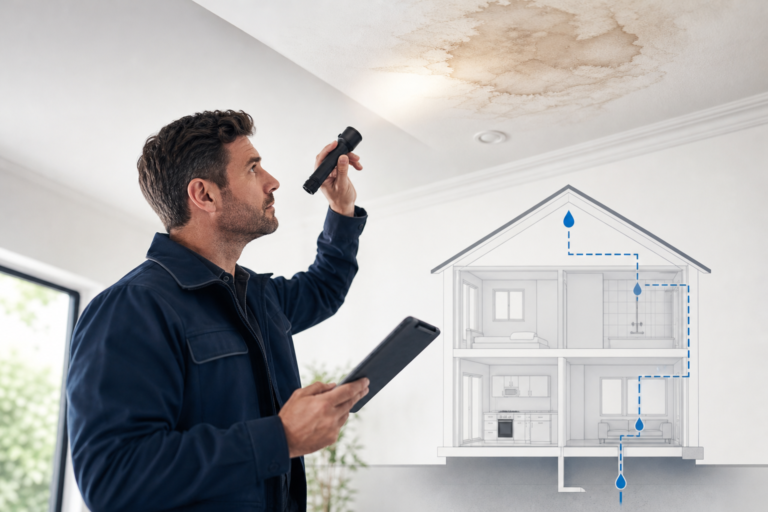
Water Damage in Homes: How to Track Down the Source
Water damage in a home rarely announces itself at the source. A stain on the ceiling, a musty smell in
Read More »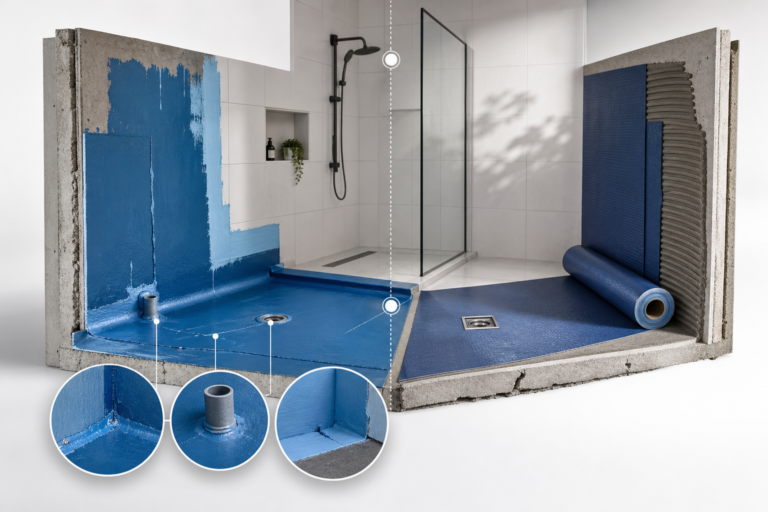
Waterproofing Membrane Types: Which Fails Most in NSW Bathrooms
Waterproofing failure is the single most common serious defect found in NSW apartments, and the type of membrane used, along
Read More »
Building Certifier NSW: Role, Limits, and When You Need More
A building certifier in NSW is a registered professional who issues construction certificates, conducts critical stage inspections, and grants occupation
Read More »