
Expert Witness Report – NCAT Guide
You’ve found a crack that wasn’t there before. Or the bathroom below the upstairs ensuite has started staining, bubbling, and smelling musty. The builder says it’s cosmetic. Your insurer wants documents. Your solicitor asks whether you have an expert report. At that point, the focus isn’t on theory. They want to know what matters, what NCAT expects, and how to avoid wasting time and money on a report that won’t hold up.
That’s where expert witness report building becomes more than paperwork. In a NSW building dispute, the report is often the document that turns a complaint into evidence. It gives the Tribunal a clear path through competing stories. It identifies the defect, explains causation, links the issue to the National Construction Code or the relevant Australian Standard, and deals with rectification in a way that can be tested.
For homeowners, builders, and solicitors, the hard part is usually not knowing where the legal process ends and the building evidence begins. In practice, those two things overlap. A report that sounds convincing but lacks method can be challenged. A report with good technical content but poor structure can be excluded or given little weight. The work has to satisfy both the building problem and the tribunal process.
Across Sydney, New England, and rural NSW, these disputes are rarely just about one crack or one leak. They’re about evidence, scope, responsibility, and whether the report has been prepared properly from the start.
Your Guide to Navigating Building Disputes in NSW
A homeowner usually comes to this process after months of frustration. They’ve raised defects, sent emails, taken photos, and heard every version of “that’s normal settlement” or “that’s a maintenance issue”. Meanwhile, the damage keeps affecting how they use the home.
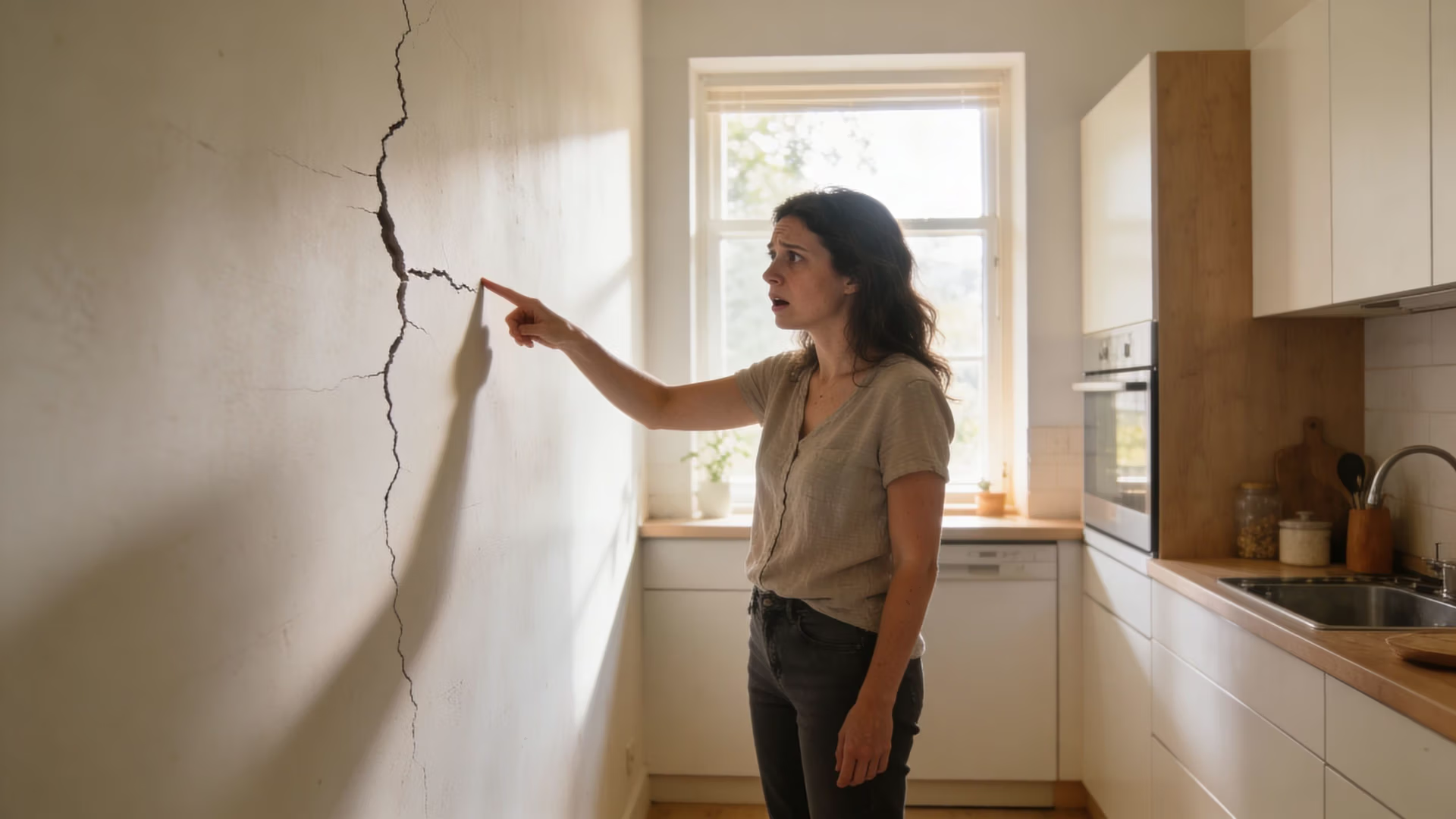
In NSW, the dispute process can feel heavier than the building problem itself. You’re expected to explain defects clearly, identify the work involved, and support your position with evidence that can survive scrutiny. That’s difficult if you’re not used to reading plans, checking tolerances, or matching conditions on site against the National Construction Code and Australian Standards.
Where people usually get stuck
Litigants don’t struggle because the defect is invisible. They struggle because they don’t know how to present it properly. A leaking shower, uneven brickwork, frame movement, failed waterproofing, or incomplete external drainage can all be real problems, but NCAT won’t decide a case on frustration alone.
What helps is a report that answers the questions the Tribunal will ask:
- What is the defect: Is it workmanship, non-compliance, incomplete work, or consequential damage?
- How was it identified: Through site inspection, measurements, photographs, testing, documents, or a combination of those?
- What standard applies: Which code, detail, specification, or Australian Standard is relevant?
- What should be done: Repair, rebuild, complete, monitor, or obtain further invasive investigation?
A building dispute becomes easier to manage when the facts are organised in the order NCAT needs to read them.
What a good report changes
A proper expert report gives structure to an otherwise messy situation. It narrows the issues. It separates emotion from evidence. It also helps lawyers advise properly, because they can see which allegations are strong, which are weak, and which need more proof before filing or defending a claim.
That’s the practical value of getting the report right early. It doesn’t remove the dispute, but it does put it on firm ground.
The Role of an Expert Witness Report in NCAT
An expert witness report isn’t a letter of support for the party who pays for it. In NCAT, its role is to assist the Tribunal with independent opinion evidence on matters requiring specialised knowledge. That distinction matters. If a report reads like advocacy, it usually creates more problems than it solves.
The report is evidence, not argument
A solicitor makes legal submissions. A homeowner explains what happened. A builder sets out their response. The expert does something different. The expert inspects, analyses, and expresses an opinion based on training, experience, documents, and observed facts.
In NSW, building disputes form a significant part of the Tribunal’s workload. Construction-related matters under the Home Building Act 1989 made up approximately 25% of NCAT’s total caseload in 2022-2023, with over 4,500 applications filed for defective works, incomplete contracts, and compliance issues, according to NCAT building dispute reporting discussed here. That volume is one reason the Tribunal expects reports to be clear, disciplined, and useful.
The expert’s duty is to the Tribunal
This is one point clients sometimes find counterintuitive. You may engage the consultant, but the consultant’s overriding duty is not to help your side win at any cost. The duty is to provide an impartial opinion within the expert’s field.
That has practical consequences:
| Issue | What works | What does not |
|---|---|---|
| Instructions | A clear brief with relevant documents | Coaching the expert toward a desired outcome |
| Opinions | Conclusions tied to site evidence and standards | Broad accusations without technical support |
| Tone | Neutral and measured | Emotional, argumentative language |
| Scope | Staying within building expertise | Commenting on legal matters outside expertise |
Why poor reports fail
A weak report usually fails in one of three ways. It doesn’t identify the defect precisely. It makes conclusions without showing the path from observation to opinion. Or it ignores the procedural requirements that govern expert evidence in NCAT.
Practical rule: If the report can’t show how the conclusion was reached, the conclusion won’t carry much weight.
For parties in dispute, that means the report is often the foundation document. It shapes negotiations, helps define the issues in contest, and can influence whether the matter settles or runs to hearing. If you’re preparing for proceedings, it also makes sense to understand the broader NCAT building and construction disputes process before the report is commissioned.
What Your NCAT-Compliant Report Must Contain
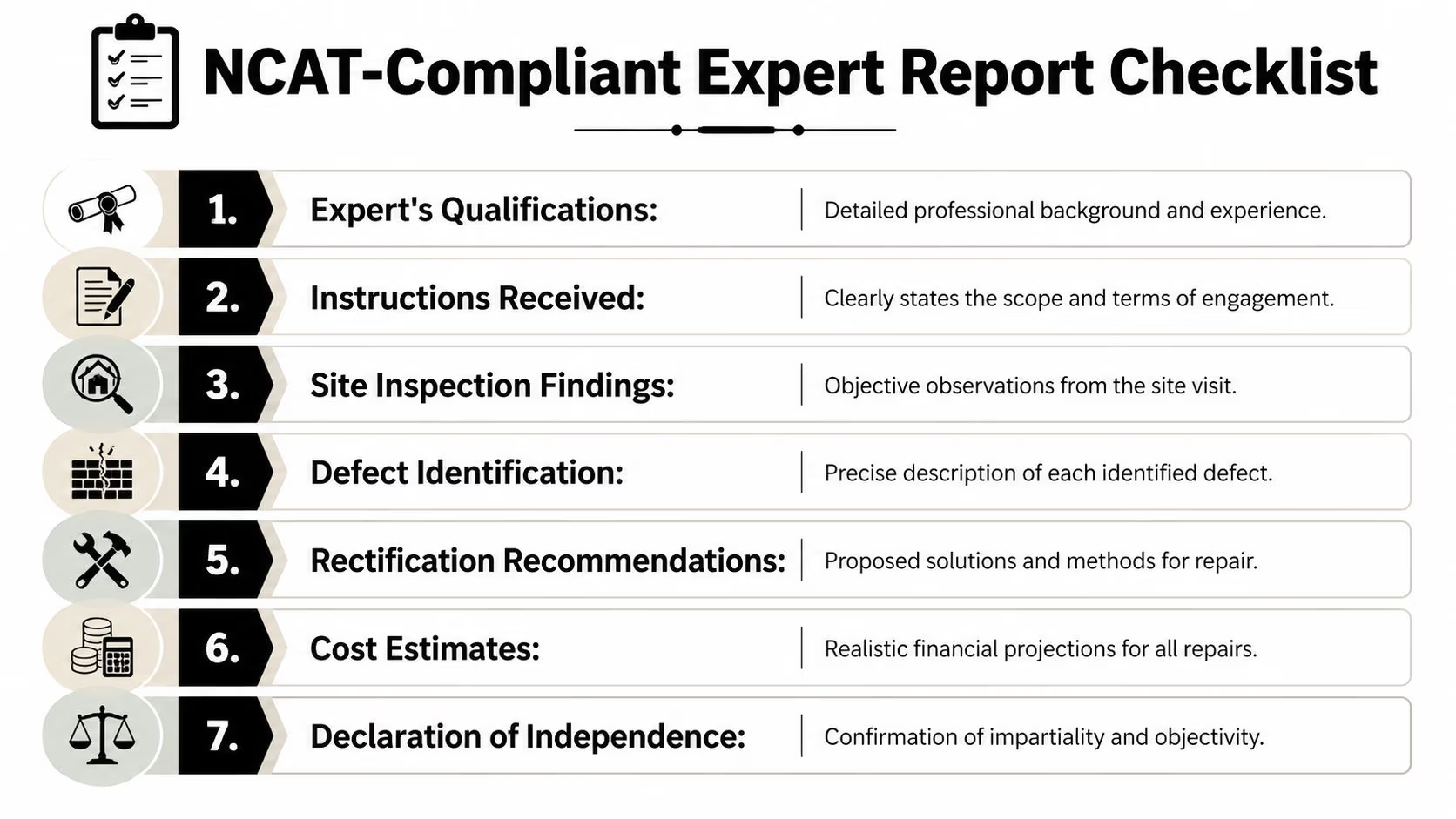
A proper NCAT report has a recognisable spine. It starts with the expert’s qualifications and instructions, then moves through the documents reviewed, the inspection process, factual observations, analysis against the relevant standards, and finally the opinion. If any of those parts are missing, the report becomes harder to defend.
The core components that matter
The report should identify who the expert is, what they were asked to do, and what material they considered. That sounds basic, but it’s essential. A tribunal member needs to see the boundaries of the engagement before they can assess the opinion.
A defensible report usually includes:
- Expert qualifications and experience: Enough detail to show why the person is competent to comment on the issues in dispute.
- Instructions received: The scope of the engagement, including whether the report concerns defects, causation, scope of rectification, cost, or all of those.
- Documents examined: Plans, specifications, contracts, variations, photographs, previous reports, correspondence, and any authority documents.
- Site inspection details: What areas were inspected, on what date, who attended, and whether any limitations applied.
- Factual findings: What was seen, measured, tested, photographed, and recorded on site.
- Analysis and opinion: The reasoning that connects the observed condition to a code breach, workmanship defect, incomplete work, or another technical issue.
- Declaration of independence: Confirmation that the expert understands and complies with the expert’s duty.
Why technical specificity matters
NCAT expects more than a list of complaints. The report needs enough technical detail to show that the expert didn’t guess. In NSW building dispute proceedings, expert witness reports must incorporate Scott Schedules under Procedural Direction 3 effective 2025, and waterproofing issues are a common example of where technical proof matters. The material cited in this discussion of reviewing building expert reports notes that a defective waterproofing membrane breach, non-compliant with AS 3740-2010, can be evidenced by moisture meter readings greater than 20% RH, and states that 68% of residential claims involve such failures.
That level of detail is what turns “the bathroom leaks” into evidence. The same principle applies to framing, masonry, movement, set-out, articulation, drainage, and finishes. The report must tie the observed condition to a benchmark.
Practical additions people overlook
Some matters involve owners, contractors, or suppliers whose documents are not in English. In those cases, accurate translated material can matter, especially where contracts, product information, or communications may become part of the evidentiary record. A useful background reference on handling formal translated documents is certified translation services.
It also helps to review the structure of a properly organised report before instructing one. A working example of the expected format appears in this expert witness report template for Australia.
The Step-by-Step Process to Commissioning Your Report
The process is far less stressful when everyone knows their role. Homeowners often think the consultant will “work it out from the site visit”. In reality, the strongest reports come from a well-scoped engagement with good documents behind it.
Step one to three
Start with the problem, not the conclusion
When you first make contact, explain what has happened, where the defects are, what stage the dispute is at, and whether NCAT proceedings have started. Don’t try to frame the answer for the expert. Give the facts.Set clear written instructions
A letter of instruction should identify the property, the parties, the issues to be addressed, and any deadlines. If a solicitor is involved, they usually handle this. If not, the consultant may help define the scope in plain language.Gather the source documents properly
Good inputs lead to a better report. Provide plans, specifications, the building contract, approved variations, photographs, defect notices, occupation documents, earlier reports, and the relevant correspondence.
The report gets stronger when the paper trail matches what is found on site.
Step four to six
A site inspection is where the paper record meets reality. The consultant will usually inspect the alleged defects, take photographs, note measurements, review workmanship, and record any access limitations. If the problem requires destructive investigation, that needs to be managed carefully and lawfully.
After inspection, there is usually a draft stage for factual correction, not opinion editing. That distinction matters. If a date, room name, document reference, or product description is wrong, fix it. If the expert forms an opinion you don’t like, you don’t rewrite it.
The final step is the issue of the completed report and, where required, a Scott Schedule. At that point, the document should be ready for filing, exchange, or use in settlement discussions. If the matter proceeds, the expert may also need to participate in conclaves, joint reports, or oral evidence.
Understanding Scott Schedules and Evidence
The Scott Schedule is one of the most important documents in a NSW building dispute because it forces everyone to deal with the issues item by item. Instead of broad complaints and broad denials, it breaks the case into individual defect allegations, responses, and cost positions.

Why the schedule matters
Think of it as an itemised map of the dispute. Each line item should tell the Tribunal what the alleged defect is, where it is, what standard or contractual requirement is said to apply, what each side says about it, and what rectification cost is claimed.
In NSW, the use of Scott Schedules is formalised under NCAT Procedural Direction 3 (2025). Modern expert-report practice emphasises independence, a clear factual basis and opinions kept within the expert’s field, as explained inthis HKA article on expert-witness duties. That history explains why the modern format is so structured. It’s designed to reduce ambiguity.
What evidence belongs in it
A Scott Schedule only works if the evidence behind each line item is disciplined. Useful material includes:
- Photographs with context: Not just close-ups. Include orientation shots so the location is obvious.
- Measurements and test results: If moisture, level variation, deflection, or dimensions matter, record them clearly.
- Code and standard references: Link the condition to the exact provision where possible.
- Scope and cost material: A cost line should connect to a repair methodology, not a guess.
- Document references: Plans, specifications, engineer details, waterproofing certificates, and variations can all be relevant.
A vague line item invites a vague response. A precise line item forces engagement.
How it helps the Tribunal
When the schedule is prepared well, the dispute becomes manageable. The Tribunal can see what is admitted, what is disputed, and where the actual technical disagreements sit. Solicitors can also use it to narrow issues before hearing.
For parties dealing specifically with this document, a dedicated guide to the use of a Scott Schedule in NCAT is worth reviewing before drafting begins.
A short overview can also help if you’re seeing one for the first time:
The best Scott Schedules don’t just list defects. They show the pathway from complaint to proof to rectification.
How to Choose the Right Building Consultant
A person can be very experienced in construction and still be the wrong choice for an NCAT matter. Tribunal work requires more than technical knowledge. It requires independence, disciplined report writing, and an understanding of how evidence is tested.

What to look for
The right consultant should have building knowledge that matches the dispute, but they should also understand the difference between an expert opinion and client advocacy. If they promise a guaranteed result, that’s a warning sign, not reassurance.
Use this shortlist when assessing someone:
- NCAT experience: Ask whether they’ve prepared reports and schedules for tribunal proceedings, not just general defect inspections.
- Standards knowledge: They should be comfortable working with the National Construction Code and the relevant Australian Standards for the defects alleged.
- Methodical site practice: They should be able to explain how they inspect, record, photograph, measure, and support their conclusions.
- Clear writing: If they can’t explain the issue clearly in conversation, the written report may have the same problem.
- Independence: They should be willing to tell you where your case is weak, not just where it is strong.
Red flags that matter
Some reports fail before they’re tested because the consultant overreaches. That might mean commenting on legal liability in a way that belongs to the Tribunal, expressing views outside their expertise, or copying broad allegations from the client without verification.
A better consultant narrows the issue. They identify what can be proved, what needs further investigation, and what should be left out.
For context, firms such as Awesim Building Consultants provide site investigations, expert witness reports, and Scott Schedules for NSW matters. The relevant point isn’t branding. It’s that any consultant you engage should be able to deliver those functions in a way that is fact-based and NCAT-ready.
Common Pitfalls and Tips for a Stronger Case
Most weak building cases don’t start weak. They become weak because the evidence is handled badly. A homeowner has genuine defects, but the documents are incomplete, the photos are disorganised, or the expert is pushed toward advocacy instead of opinion.
Mistakes that cause avoidable trouble
- Feeding the expert a conclusion: Give the history and the documents. Don’t pressure the consultant to “say it’s all defective”.
- Turning up with scattered records: If emails, plans, quotations, photos, and notices are spread across multiple devices, key details get missed.
- Using a generic inspector for a tribunal matter: General inspection and expert evidence are not the same task. If you want a broader look at what a specialized home inspector may cover in a residential context, that can be a useful background read, but NCAT evidence needs a dispute-focused approach.
- Leaving defects undocumented until too late: Conditions can change after weather, occupancy, patching, or further trades attending site.
Small habits that strengthen the file
Keep a dated defect log. Name your photos by room and issue. Save documents as clean PDFs with sensible titles. If you’ve had conversations on site, follow up in writing while the details are still clear.
On site advice: If a defect is visible today, record it today. Don’t assume it will look the same next month.
Another practical point is restraint. Don’t overload the claim with every irritation on the project. Focus on defects that can be identified, supported, and explained. A tighter case is usually easier to present and easier to defend under cross-examination.
Frequently Asked Questions About Expert Reports
How much does an expert witness report cost in NSW
There isn’t one fixed price. Cost usually depends on the size of the property, the number of alleged defects, how much documentation must be reviewed, whether the matter needs a Scott Schedule, and whether invasive inspection or later tribunal attendance may be required. A simple single-issue report is very different from a multi-trade dispute involving plans, variations, waterproofing, structural movement, and quantified rectification.
How long does it take to get a report
Timing depends on access, document quality, scope, and the complexity of the alleged defects. The process usually takes longer when parties provide documents in stages, when additional site access is needed, or when the brief changes midway through the engagement. If there is a filing deadline, raise it at the start so the consultant can confirm whether the timeframe is realistic.
Can I write the report myself or ask a builder friend to do it
You can prepare your own notes and chronology, and that’s often helpful. But an NCAT expert report is different from a personal statement. It needs independence, technical analysis, and a method that can withstand challenge. A friend who is a builder may have useful observations, but if they are not acting as an independent expert and complying with the requirements for expert evidence, their opinion may carry limited weight.
What should I give the consultant before the inspection
Provide the contract, plans, specifications, approved variations, relevant correspondence, photographs, defect notices, prior reports, and any orders or directions already made. If you have a chronology, keep it short and factual. Dates, events, and who said what are more useful than long commentary.
Should I repair the defects before getting a report
Usually, no. If you repair first, you may remove the evidence the expert needs to inspect. If urgent mitigation is necessary to prevent further damage or make the home safe, document the condition thoroughly before work is done and keep all invoices, photos, and notes of what was opened up.
For a confidential discussion about your building dispute, contact Awesim Building Consultants. You can email admin@awesim.com.au or call 1800 293 746.

Related Posts

NCAT Consumer Division: Steps From Lodgement to Hearing
Most people who end up at the NCAT Consumer and Commercial Division do not arrive there by choice. They arrive
Read More »
Statutory Warranty NSW: What Builders Must Fix and for How Long
Statutory warranty NSW obligations exist precisely for the moment a builder stops returning calls. A crack appears in the render.
Read More »
Home Building Act NSW: Key Clauses Every Owner Should Know
The Home Building Act 1989 (NSW) sets the rules for residential building work in New South Wales. It requires licensed
Read More »