
Timber Construction Houses: An Expert NSW Guide (2026)
A lot of people start looking into timber construction houses at the exciting stage. They’ve found a design they like, the exposed timber looks warm and modern, and the build seems faster and cleaner than a conventional brick job. Then the contract is signed, the frame goes up, and the questions change. Why is that wall moving? Why is the floor springy? Why is there mould near the junctions? Why is the builder saying it’s “normal”?
Those are the questions that matter in New South Wales, especially when a project ends up in a dispute. Timber can perform very well, but only when the design, material selection, detailing and installation all match the relevant standards. If they don’t, the same features that make timber attractive can also make defects show up quickly and expensively.
Why Timber Construction is Gaining Ground in NSW
A homeowner in Sydney or Northern NSW often sees timber as the practical middle ground between appearance and performance. It suits contemporary design, it works well with prefab systems, and it can deliver a home that feels lighter and more liveable than many heavier construction types.

There’s also a simple reality behind the popularity. Timber already plays a major role in ordinary Australian housing. The average one and two storey detached house in Australia used 14.58 cubic metres of wood in its construction during 2017-18, based on the Forest and Wood Products Australia project that analysed about 4,500 building plans, as noted in FWPA’s timber usage findings.
That figure matters because it cuts through the idea that timber homes are a niche product. In practice, timber is built into mainstream housing all over NSW. The issue isn’t whether timber belongs in residential construction. It does. The issue is whether the timber system has been designed and built properly for the site, climate, detailing and intended performance.
Practical rule: Timber construction houses reward precision. They don’t reward shortcuts.
In dispute work, the same pattern turns up repeatedly. Owners are drawn to speed, aesthetics and energy performance. Builders lean on standard framing methods. Problems arise where the project team treats timber as forgiving. It isn’t. Moisture management, termite protection, tie-down, movement allowance and correct member sizing all need to be right from the start.
That’s why this topic needs more than a lifestyle discussion. It needs a compliance discussion. For homeowners, lawyers and builders dealing with defects, timber isn’t just a design choice. It’s a building system with clear technical rules and very real legal consequences in NSW.
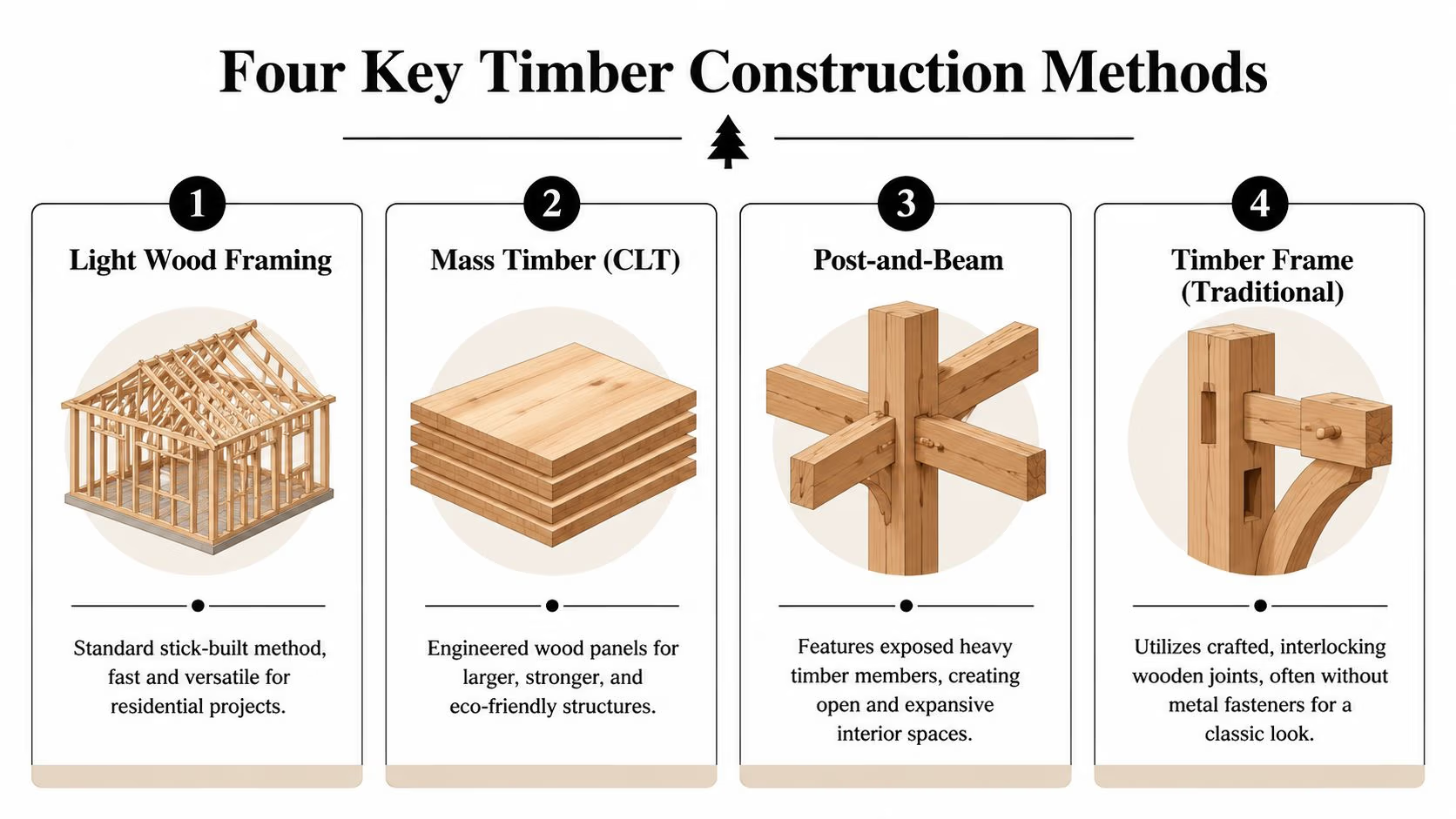
Four Key Timber Construction Methods Explained
Timber construction houses are often spoken about as if they’re all built the same way. They’re not. The method used changes how the home carries load, how it moves, where defects usually appear, and how a consultant assesses compliance.
Light frame construction
This is the standard residential method often referred to as a timber-framed house. Think of it as a skeleton made from many smaller members. Studs, joists, rafters, bracing and tie-down components work together as one system.
It’s common because it’s familiar to trades, adaptable to suburban lot conditions, and relatively efficient to erect. In NSW, the important point is that this isn’t a free-form system. It sits under AS 1684 Residential Timber-framed Construction, which includes span tables and design capacities. As noted in Timber Frame Horizons’ overview of timber frame construction, seasoned timber members can achieve spans up to 5.4m for floor joists and up to 7.2m for roof rafters in the stated conditions.
That sounds technical, but the practical consequence is simple. If a builder exceeds the permitted span, substitutes the wrong member, or ignores support conditions, movement starts showing up in floors, ceilings and wall linings.
For homeowners wanting a plain-English framing primer, Northpoint Construction’s guide to framing is a useful overview of how framing functions as the structural shell of a house.
Post and beam construction
Post and beam uses fewer but much larger structural members. Instead of lots of closely spaced studs, the house relies on major posts and beams to transfer load. The visual result is often open-plan living with exposed structure.
This method can work very well, but it demands careful connection design. The loads are concentrated at fewer points, which means footing alignment, bearing, joinery and lateral restraint matter more. When there’s a defect, it tends to be more obvious. You may see beam sag, joint separation, racking, or load transfer problems at isolated support points.
In residential disputes, post and beam is often misunderstood because it looks sturdy. Heavier timber doesn’t automatically mean compliant construction. The connection details still have to do the work.
Cross-laminated timber
CLT, or cross-laminated timber, is an engineered panel product. The easiest way to picture it is as a solid timber plate made from layers bonded at alternating directions. Walls, floors and roofs can be formed from large prefabricated panels rather than many small framing elements.
CLT can deliver excellent buildability and clean geometry. It’s especially attractive where the design team wants prefabrication and tight tolerances. But it also shifts the risk profile. Panel penetrations, moisture exposure during construction, connection detailing and interface points with windows, membranes and services become critical.
In dispute terms, CLT jobs often turn on whether the installer followed the engineered details exactly. A small deviation at a joint or opening can have wider consequences than people expect.
Timber veneer and timber cladding
This one causes confusion. Timber veneer is generally not a structural system. It’s a finish or external skin. Timber cladding also usually sits outside the main structural frame rather than replacing it.
That distinction matters in expert reporting. A defect in the veneer or cladding might be a weatherproofing issue, a fixing issue, a movement issue or a maintenance issue, but it’s not necessarily evidence that the structural timber frame has failed. Homeowners and lawyers often need these categories separated early so the defect claim is framed correctly.
A timber finish can look like structure. In many cases, it isn’t carrying the building at all.
The Pros and Cons of Timber Construction Houses
Timber construction houses can be an excellent choice in NSW, but they’re not automatically the better choice. The outcome depends on the site, the designer, the builder and the quality of supervision.
Where timber performs well
Timber’s biggest practical advantage is that it gives designers flexibility without relying on very heavy construction. It works well with prefabrication, adapts to sloping sites, and suits renovations or additions where reducing structural weight can make the project easier to manage.
Thermal performance is another major drawcard. NCC 2022 Volume 2 requires timber frame houses in Australia to achieve a total wall R-value of 5.0 to 7.0 m²K/W for Class 1 buildings in Climate Zone 5, and timber systems using SIPs with EPS core can deliver U-values as low as 0.15W/m²K, which is 30 to 40% better than brick veneer cavity walls, according to this summary of modern timber frame home performance.
For homeowners, that means timber can support a house that feels more stable in temperature and less expensive to condition, provided the envelope is detailed and installed properly.
Where timber goes wrong
The downside is that timber is less forgiving when the envelope is poorly detailed or the site management is careless. Water entry, trapped condensation, inadequate clearance, failed flashings, missing termite measures and poor storage during construction can all create defects that stay hidden until the owner has moved in.
A short comparison makes the trade-offs clearer:
| Issue | Timber can work well when | Timber often fails when |
|---|---|---|
| Moisture | drainage, flashings and ventilation are coordinated | water is allowed to enter or remain trapped |
| Movement | timber is seasoned, spans are correct, joints allow for expected behaviour | members are oversized in moisture content or undersized structurally |
| Speed | prefab elements are accurate and sequencing is controlled | the build is rushed without checking fit, membrane continuity or protection |
| Comfort | insulation and airtightness are designed as one system | thermal performance is assumed rather than verified |
The decision point
Timber is not a casual material. It’s a system that needs discipline. Where the builder understands timber movement, moisture risk and compliance requirements, the result can be outstanding. Where the team treats it like a standard frame that will somehow sort itself out on site, defects can develop fast.
That’s why timber homes benefit from early inspections, not just end-of-job arguments.
NSW Compliance for Timber Homes What You Must Know
Most timber home disputes in NSW aren’t really arguments about appearance. They’re arguments about compliance. The crack in the wall, the spring in the floor, or the water staining around a junction is only the visible symptom. The underlying issue is usually whether the design and construction met the code and standards that applied to the work.

AS 1684 and the structural basics
For ordinary residential timber framing, AS 1684 is central. It governs matters such as member selection, spans, bracing, tie-down and structural adequacy. In practical terms, many disputes arise from these issues. Builders substitute members, site conditions differ from the assumed design, or a frame is erected with details that don’t match the approved documents.
That’s not a fringe issue. NSW Fair Trading reports highlight frequent disputes over AS 1684 standards, with 2025 NCAT data showing timber-related defects in 18% of residential building disputes, as referenced in this discussion of timber-related dispute trends.
For owners and lawyers trying to understand the code framework behind these disputes, Awesim’s BCA overview is a useful starting point for how code compliance is assessed in residential matters.
Termites, bushfire and the standards people overlook
The structure is only part of the compliance picture. In NSW, timber homes also need proper attention to AS 3660 for termite management and AS 3959 for bushfire-prone areas.
These standards matter because defect liability often sits at the overlap between systems. A frame might be structurally adequate under AS 1684, but still expose the owner to serious risk if termite barriers are missing or if external elements in a bushfire-prone area don’t match the required BAL outcome.
For homeowners trying to make sense of bushfire classifications in plain English, Vivid Skylights bushfire rating details give a practical explanation of how BAL categories affect building components.
Compliance isn’t paperwork after the fact. It’s the evidence that the house was designed and built for the conditions it actually faces.
What non-compliance looks like in a dispute
In NCAT matters, non-compliance usually appears in one of three ways:
- The documents don’t align: The plans, engineering, specifications and built work don’t match each other.
- The work doesn’t match the standard: Span, bracing, tie-down, protection or detailing falls short of what the standard requires.
- The defect has a compliance pathway: Cracking, movement, decay or water entry can be traced back to a measurable failure against the code or a standard.
The thoroughness of preparation often determines whether many claims succeed or fail. A homeowner may know something is wrong, but NCAT needs more than frustration. It needs the defect identified, the relevant standard nominated, the non-compliance explained, and the rectification scope set out in a structured way.
Common Defects in Timber Houses and Their Causes
Most timber defects don’t start as dramatic failures. They begin gradually. A small amount of moisture gets into a junction. A floor feels slightly springy. A skirting opens up. A door starts sticking in wet weather. Owners often get told these are cosmetic issues, but that isn’t always true.
One hard commercial reality is cost. ABS Building Activity data for Q1 2026 states that NSW timber-framed houses average 12% higher defect claims costs, with a $45,000 median per NCAT case, due to moisture-induced warping, compared with 8% for concrete or brick, according to this timber frame cost and defect discussion.
Moisture damage
Moisture is the most common starting point for serious timber trouble. The visible signs are usually staining, mould odour, swollen trim, cupped flooring, soft timber or paint failure near openings and junctions.
The technical cause is often one of these:
- Failed weather detailing: flashings, seals or junctions let water enter.
- Trapped moisture: membranes, wall build-ups or poor ventilation stop the assembly from drying.
- Wet timber installed too early: the material moves as it dries, which can distort linings and finishes.
When I inspect these jobs, the visible stain is rarely the full problem. The bigger issue is usually hidden in the wall build-up, subfloor or roof space where moisture has been sitting for far too long.
Structural movement and deflection
A second common category is movement. Owners describe it as bounce, sag, cracking at corners, doors going out of square, or a roofline that doesn’t look right.
Common causes include:
| Symptom | Likely underlying cause |
|---|---|
| Springy floor | joists undersized, overspanned or poorly supported |
| Recurrent plaster cracking | frame movement, shrinkage, or load transfer issue |
| Ceiling sag or roof movement | rafter or support issue, sometimes compounded by moisture |
| Gaps at architraves and skirtings | timber shrinkage, settlement or differential movement |
These defects need careful diagnosis because not all movement is actionable. Timber does move. The issue is whether the movement is expected and allowable, or whether it points to non-compliance, poor material control or bad workmanship.
Before looking at the next category, this short video gives a useful visual sense of timber construction behaviour and where problems can emerge on site.
Termites and concealed deterioration
Termite activity can be difficult for owners to detect early. The obvious signs are frass, hollow-sounding timber, blistered paint, mud leads, or timber that crushes more easily than it should.
The underlying failure is often not just termite presence. It’s a breakdown in the management system. That may involve missing barriers, bridged protection zones, poor subfloor conditions, or landscaping and external works that created concealed access paths after handover.
If timber damage is visible at the surface, the cause usually sits deeper than the damaged piece itself.
Fire performance and bushfire detailing
There’s a persistent misconception that timber homes are unsuitable in bushfire-prone areas. The issue is not the existence of timber. It’s whether the entire assembly meets the required BAL-related detailing and material selection for the site.
In disputes, the defect may show up as the wrong external product, unprotected openings, or incompatible penetrations and junctions. These are design and specification failures as much as construction failures. A consultant needs to separate those responsibilities clearly, especially where multiple parties were involved.
Your Timber Home Inspection and Maintenance Checklist
A timber home doesn’t need panic. It needs a disciplined inspection routine. That applies at purchase, at handover, and during ordinary ownership.
Pre-purchase or handover inspection points
Use this as a working checklist before you commit or sign off:
- Sight along floors and beams: Look for visible sag, unevenness or lines that suggest deflection.
- Check junctions around windows and doors: Staining, swollen trim and failed sealant often point to water entry.
- Inspect subfloor and roof space where accessible: Ventilation, dampness, leaks and timber condition tell you far more than painted surfaces do.
- Look for movement in finishes: Recurrent cracking at corners and openings can indicate frame behaviour, not just plaster issues.
- Assess external clearances and drainage: Timber close to soil, ponding water or poor falls creates long-term risk.
- Review documents, not just the building: Engineering, approvals, variations and specifications should align with what’s built.
For a broader property review framework, this house inspection checklist is a practical companion.
Ongoing maintenance points
Once you own the property, prevention is cheaper than rectification:
- Keep water moving away from the building: Clean gutters, downpipes and drainage paths so water doesn’t sit against timber elements.
- Monitor sealants and flashings: Openings and penetrations are common failure points.
- Watch for pest indicators: Mud leads, frass and hollow-sounding timber deserve prompt attention.
- Control garden build-up near the house: Soil, mulch and paving can undermine termite management and moisture control.
- Track changes over time: A single crack may mean little. A crack that widens with every season means more.
- Arrange independent advice early if signs repeat: Recurrent movement or moisture staining should be investigated before finishes conceal the cause again.
A simple rule applies. If a symptom keeps returning after cosmetic repair, the defect hasn’t been fixed.
Expert Support for Timber Construction Disputes
Timber disputes are rarely resolved by broad statements like “normal settlement” or “timber moves.” Those phrases avoid the core questions. What failed. Why did it fail. Which standard applies. Who was responsible. What work is required to rectify it.
That’s where structured expert evidence becomes important. In a timber matter, the inspection has to go beyond surface defects and connect the visible symptoms to build method, code requirements, sequencing, moisture pathways, structural adequacy and scope of repair. If that chain of reasoning is weak, the case is weak.
For homeowners, lawyers and builders in dispute, the practical tools are usually:
- Site investigations: to identify the actual defect pathway rather than the cosmetic symptom.
- Expert Witness Reports: to explain the defect, the relevant standards and the rectification issues in a form suitable for proceedings.
- Scott Schedules: to separate each item clearly so parties and the Tribunal can compare allegation, response and recommended outcome.
Where flooring-related movement or timber surface wear is part of the wider dispute picture, resources like this hardwood floor maintenance checklist can also help owners distinguish ordinary upkeep issues from larger building defects.
Awesim Building Consultants provides site investigations, Expert Witness Reports and Scott Schedules for residential building matters across Sydney, the New England region and rural NSW. That work is especially relevant where timber framing, moisture damage, movement, termite concerns or compliance issues are central to the dispute.
Good evidence doesn’t just show that something is wrong. It shows how the defect connects to the standard, the documents and the required rectification.
If you need independent help with a timber home dispute, defect inspection, Expert Witness Report or Scott Schedule, contact Awesim Building Consultants. Email admin@awesim.com.au or call 1800 293 746.

Related Posts

NCAT Consumer Division: Steps From Lodgement to Hearing
Most people who end up at the NCAT Consumer and Commercial Division do not arrive there by choice. They arrive
Read More »
Statutory Warranty NSW: What Builders Must Fix and for How Long
Statutory warranty NSW obligations exist precisely for the moment a builder stops returning calls. A crack appears in the render.
Read More »
Home Building Act NSW: Key Clauses Every Owner Should Know
The Home Building Act 1989 (NSW) sets the rules for residential building work in New South Wales. It requires licensed
Read More »