
How to Prepare for an NCAT Building Dispute Hearing: A Practical Guide for NSW Homeowners
- Understand What NCAT Can and Cannot Do
- Gather Your Documents Before Anything Else
- Know the Statutory Warranty Periods
- Commission an Independent Expert Witness Report
- Understand the Scott Schedule
- Prepare Your Witness Statements
- Respond to the Builder’s Evidence
- Attend a Conciliation Conference If Directed
- Prepare for the Hearing Day
- Common Mistakes That Weaken NCAT Claims
- Get Professional Support Early
- FAQs
- Your Next Step
Reaching a hearing at the NSW Civil and Administrative Tribunal can feel like a lot to take on. You have a defective roof, an unfinished extension, or a builder who has walked off the job — and now you need to present your case to a tribunal member who will decide whether you are entitled to compensation or rectification.
Preparation is what separates strong cases from weak ones. This guide walks you through exactly what to do before your NCAT building dispute hearing, in plain language, step by step.
Understand What NCAT Can and Cannot Do
NCAT’s Consumer and Commercial Division handles residential building disputes in NSW up to $500,000. The tribunal can order a builder to rectify defective work, pay compensation, or complete unfinished work. Disputes above that threshold go to the NSW District Court or Supreme Court.
Before you file, confirm your dispute falls within NCAT’s jurisdiction. If your claim involves a large strata building or a high-value contract, you may need to start in a different court. Getting this right early saves time and money — a building consultant can help you identify the correct forum before you commit to a path.
Gather Your Documents Before Anything Else
Tribunals run on evidence. If you cannot produce a document at the hearing, it generally cannot be considered. Start collecting the following as early as possible:
- Your building contract — the signed agreement with the builder, including any variations
- Invoices and payment records — every payment you made and when
- Correspondence — emails, text messages, and letters between you and the builder
- Photographs — dated photos of defects, incomplete work, and site conditions
- Council approvals and certificates — development consent, construction certificates, and any occupation certificates
- Warranty documents — statutory warranties under the Home Building Act 1989 (NSW) apply to most residential building work
Organise everything chronologically. NCAT members work through a lot of material. A clear, ordered bundle is far easier to follow than a pile of unsorted paperwork.
Know the Statutory Warranty Periods
NSW homeowners have specific protections under the Home Building Act 1989. Statutory warranties cover all residential building work and run for:
- 6 years for major defects — structural issues affecting load-bearing elements or waterproofing
- 2 years for all other defects
The clock starts from the date of completion, or in some cases from when the work should have been completed. Missing these time limits can end your claim before it starts. If you are unsure whether your defect qualifies as major, get an independent assessment early.
Commission an Independent Expert Witness Report
This is the step most homeowners underestimate. NCAT members are not building experts — they rely on independent technical evidence to understand what went wrong, why it went wrong, and what it will cost to fix.
A properly prepared Expert Witness Report does three things:
- Identifies each defect and explains its cause
- Describes the applicable Australian Standard or building code that was breached
- Provides a costed scope of rectification works
Without this report, you are asking the tribunal to take your word against the builder’s. With it, you have independent, technical evidence the tribunal can actually rely on.
Reports prepared for NCAT must comply with the tribunal’s expert witness code of conduct. The expert must state that their duty is to the tribunal, not to the party who engaged them. A report that does not meet this requirement can be rejected or given little weight.
At Awesim Building Consultants, every Expert Witness Report and Scott Schedule is prepared specifically for NCAT and NSW court proceedings. Awesim has been preparing these documents since 1996 — nearly 30 years of producing reports that hold up under cross-examination.
Understand the Scott Schedule
Most building disputes involve multiple defects. When they do, NCAT will often direct both parties to prepare a Scott Schedule.
A Scott Schedule is a structured table that lists each defect in a separate row, setting out:
- A description of the defect
- The homeowner’s position — what they say is wrong and what it will cost to fix
- The builder’s position — whether they accept or deny the defect
- Any comments from the tribunal
The format forces both parties to address each defect specifically, prevents vague general arguments, and makes the hearing far more efficient.
If NCAT directs you to prepare a Scott Schedule, do not attempt to draft it yourself unless you have solid technical building knowledge. The schedule needs to be both technically precise and legally structured. Errors or omissions can weaken your case significantly.
Prepare Your Witness Statements
NCAT typically requires parties to file written witness statements before the hearing. Your statement should cover:
- When you engaged the builder and what work was contracted
- The timeline of events, including when defects appeared or work stopped
- What steps you took to notify the builder and what response you received
- The impact the defects or incomplete work have had on you
Write in plain, factual language. Avoid emotional language and stick to what you personally observed or experienced. If you have other witnesses — a neighbour or a family member who was present during construction — each should provide their own separate statement.
Respond to the Builder’s Evidence
Once the builder files their evidence, read it carefully. Note every point where they dispute your version of events or challenge your expert’s findings. Your expert may need to provide a supplementary report addressing their technical arguments.
Do not ignore the builder’s expert report if they have one. If their expert raises technical points that your report does not address, the tribunal may find the builder’s evidence more persuasive on those specific issues.
Attend a Conciliation Conference If Directed
NCAT often schedules a conciliation conference before the final hearing. It is an informal process where a tribunal member helps both parties explore settlement. Many building disputes resolve at this stage.
Attend with your expert report and Scott Schedule ready. Having clear, costed evidence of each defect puts you in a much stronger negotiating position — you know exactly what the rectification work should cost, and so does the builder.
If the matter does not settle, the conference still narrows the issues in dispute, which makes the final hearing shorter and more focused.
Prepare for the Hearing Day
On hearing day, bring:
- Your document bundle, organised and indexed
- Copies for the tribunal member and the other party
- Your expert witness, if they are required to give oral evidence
- A clear list of the orders you are seeking
Arrive early. Dress professionally. Speak directly and calmly when it is your turn. If you do not understand a question, ask for it to be repeated. Do not interrupt the other party or the tribunal member.
If your expert is present, they will be questioned by both the builder’s representative and the tribunal member. A well-prepared expert who knows the report thoroughly is an asset. One who is unfamiliar with the detail or cannot defend their methodology under questioning is a liability.
Common Mistakes That Weaken NCAT Claims
Homeowners who prepare poorly tend to make the same errors:
- Filing an expert report that does not comply with the NCAT expert code of conduct
- Missing the deadline to file evidence before the hearing
- Including defects in the Scott Schedule without a costed rectification amount
- Relying on a tradie’s quote rather than a formal expert assessment
- Failing to give the builder written notice of the defects before filing at NCAT — this is often a prerequisite
Each of these mistakes is avoidable with proper preparation and the right professional support.
Get Professional Support Early
The earlier you engage an independent building consultant, the stronger your position. A consultant can inspect the property, identify all defects — not just the ones you have already noticed — prepare a compliant expert report, and help you structure your Scott Schedule.
Awesim Building Consultants offers a free initial consultation and prepares court-ready reports for homeowners across NSW, including Sydney, Tamworth, Tweed Heads, Newcastle, Wollongong, Parramatta, and more than 200 other locations statewide. Principal consultant Glen Sim has published case references on the website so you can assess the firm’s experience before you call.
FAQs
What is NCAT and what building disputes does it handle?
NCAT is the NSW Civil and Administrative Tribunal. Its Consumer and Commercial Division handles residential building disputes in NSW up to $500,000. It can order builders to rectify defective work, complete unfinished work, or pay compensation to homeowners.
Do I need an expert witness report for an NCAT building dispute?
In most cases, yes. NCAT members are not building experts, so they rely on independent technical evidence to assess defects and costs. An Expert Witness Report prepared by a qualified building consultant is usually the most important document in your case.
What is a Scott Schedule and when does NCAT require one?
A Scott Schedule is a structured table that lists each defect, the homeowner’s position, the builder’s position, and any tribunal comments. NCAT commonly directs parties to prepare one when a dispute involves multiple defects. It makes the hearing more efficient and forces both parties to address each defect specifically.
How long do I have to bring a building dispute to NCAT?
Statutory warranties under the Home Building Act 1989 (NSW) run for 6 years for major defects and 2 years for all other defects, measured from the date of completion. Time limits also apply to filing at NCAT after the warranty period begins. Missing these limits can end your claim.
How much does an Expert Witness Report cost in NSW?
The market range is approximately $2,000 to $10,000 AUD, with around $4,500 being a typical figure for a residential dispute. The cost depends on the size and complexity of the property and the number of defects involved.
Can I represent myself at an NCAT building dispute hearing?
Yes. Many homeowners represent themselves at NCAT. You still need to comply with all procedural requirements, including filing compliant expert evidence and witness statements. Professional support from a building consultant significantly improves your preparation, even if you appear without a solicitor.
What orders can NCAT make in a building dispute?
NCAT can order a builder to rectify defective work, complete unfinished work, pay the cost of having rectification work done by another contractor, or pay compensation for loss suffered. Costs are not awarded in most cases, which is why preparation and evidence quality matter so much.
Your Next Step
A well-prepared case starts with an independent inspection and a clear picture of what you are actually dealing with. If you have discovered building defects or your builder has walked off the job, contact Awesim Building Consultants for a free initial consultation. Call 1800 293 746 or visit awesim.com.au to get started.

Related Posts

Waterproof Membrane Failure: How Inspectors Find the Cause
Waterproof membrane failure is diagnosed by tracing the water entry point, reviewing design documents, exposing the membrane for visual inspection,
Read More »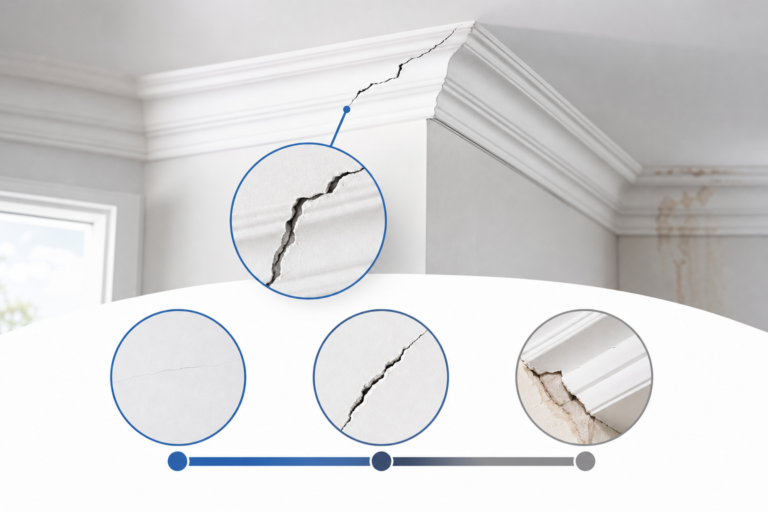
Cornice Cracking: How to Tell If the Damage Is Serious
Cornice cracking is one of the most common concerns Australian homeowners raise, and the hard part is not spotting the
Read More »
Digital Construction Consultant Australia: What They Do
A digital construction consultant in Australia manages the technology-driven side of building projects: BIM coordination, clash detection, asset data handover,
Read More »