
Your Guide to Winning a Waterproofing Dispute NSW
Waterproofing disputes rarely kick off with a catastrophic flood. More often than not, they start with something small—a faint musty smell you can’t quite pin down, or a tiny bubble in the paint. These are often the first whispers of a serious, underlying waterproofing failure. From our 35+ years in the building game at Awesim Building Consultants, we’ve seen time and again how ignoring these early clues can spiral a minor issue into major structural damage and a drawn-out, costly dispute.
Recognising the First Signs of a Waterproofing Defect
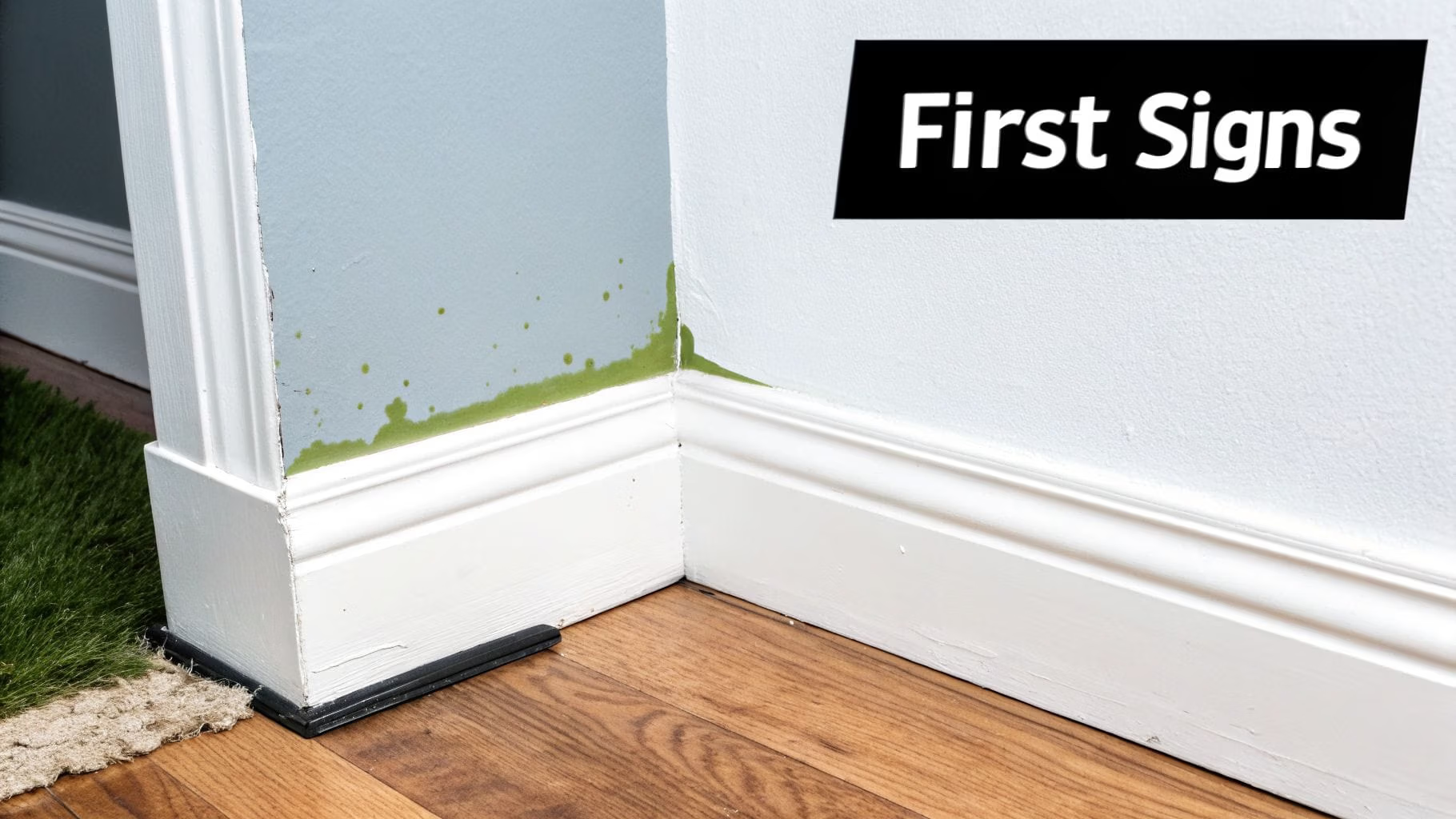
Sure, a visible leak is the most obvious sign something’s wrong. But water is a sneaky traveller, and the most significant defects often reveal themselves in much more subtle ways. Homeowners frequently write these off as simple cosmetic problems, but catching them early is your best defence against a nightmare scenario.
It’s crucial to look beyond the obvious drip and be on the lookout for common signs of water damage in your walls, like staining and mould, as these point to deeper issues.
The Detective Work: Spotting Hidden Clues
Water follows the path of least resistance. This means a failed balcony membrane might not show up as a puddle on the balcony tiles, but as peeling paint on the living room ceiling directly below it. Learning to connect these dots is key.
To help you get ahead of the problem, we’ve put together a quick-reference table. Think of it as a field guide for spotting trouble before it gets out of hand.
Early Warning Signs of Waterproofing Defects
| Symptom | Common Location | What It Could Mean |
|---|---|---|
| Musty, Damp Odour | Bathrooms, laundries, sub-floors, wardrobes. | Trapped moisture behind walls or under flooring, even without visible mould. |
| Peeling or Bubbling Paint | Ceilings below wet areas, walls adjoining showers or balconies. | Moisture penetrating the wall or ceiling substrate and pushing the paint off. |
| Swollen Skirting Boards | Along any wall, but especially near wet areas. | Timber absorbing moisture wicking up from the floor slab or from within the wall. |
| Efflorescence (White Powder) | Brickwork, concrete slabs, retaining walls. | Water migrating through the material and depositing salts on the surface as it evaporates. |
| Hollow or “Drummy” Tiles | Shower floors, balconies, tiled decks. | The tile adhesive has failed due to moisture getting underneath the tile bed. |
This isn’t just a one-off problem in older homes; it’s a crisis in new construction, particularly in strata buildings. A 2021 survey in New South Wales found 39% of apartment buildings had serious defects. By 2023, that number had shockingly climbed to 53%.
And the number one culprit? Waterproofing failures, which accounted for a massive 42% of all serious defects in 2023.
At Awesim Building Consultants, we recently worked on a case where a homeowner was frustrated by paint constantly flaking off an internal wall. They’d had painters come through multiple times, but the problem always came back. Our investigation traced the source to a planter box on the other side of the wall. The waterproofing membrane had been installed incorrectly, allowing continuous water ingress into the building’s frame. It was a classic example of the symptom appearing far from the actual cause.
Why Acting Fast is Non-Negotiable
Spotting these signs is just the beginning. The moment you suspect a waterproofing defect, you need to start documenting everything. Photos, videos, notes with dates—all of it.
This is non-negotiable for two critical reasons. First, it helps you get on top of the damage before it compromises your home’s structural integrity. Second, it builds a rock-solid timeline of evidence, which is absolutely essential if you need to make a claim under the NSW Home Building Act.
This detailed, day-one documentation is what strengthens your position in any potential waterproofing building dispute. It proves you acted responsibly and gives the independent expert building consultant a clear history to work from when they assess your claim. For a deeper dive, check out our expert waterproofing guide. Acting fast doesn’t just protect your property; it protects your legal rights.
Building a Watertight Case with Evidence and Experts
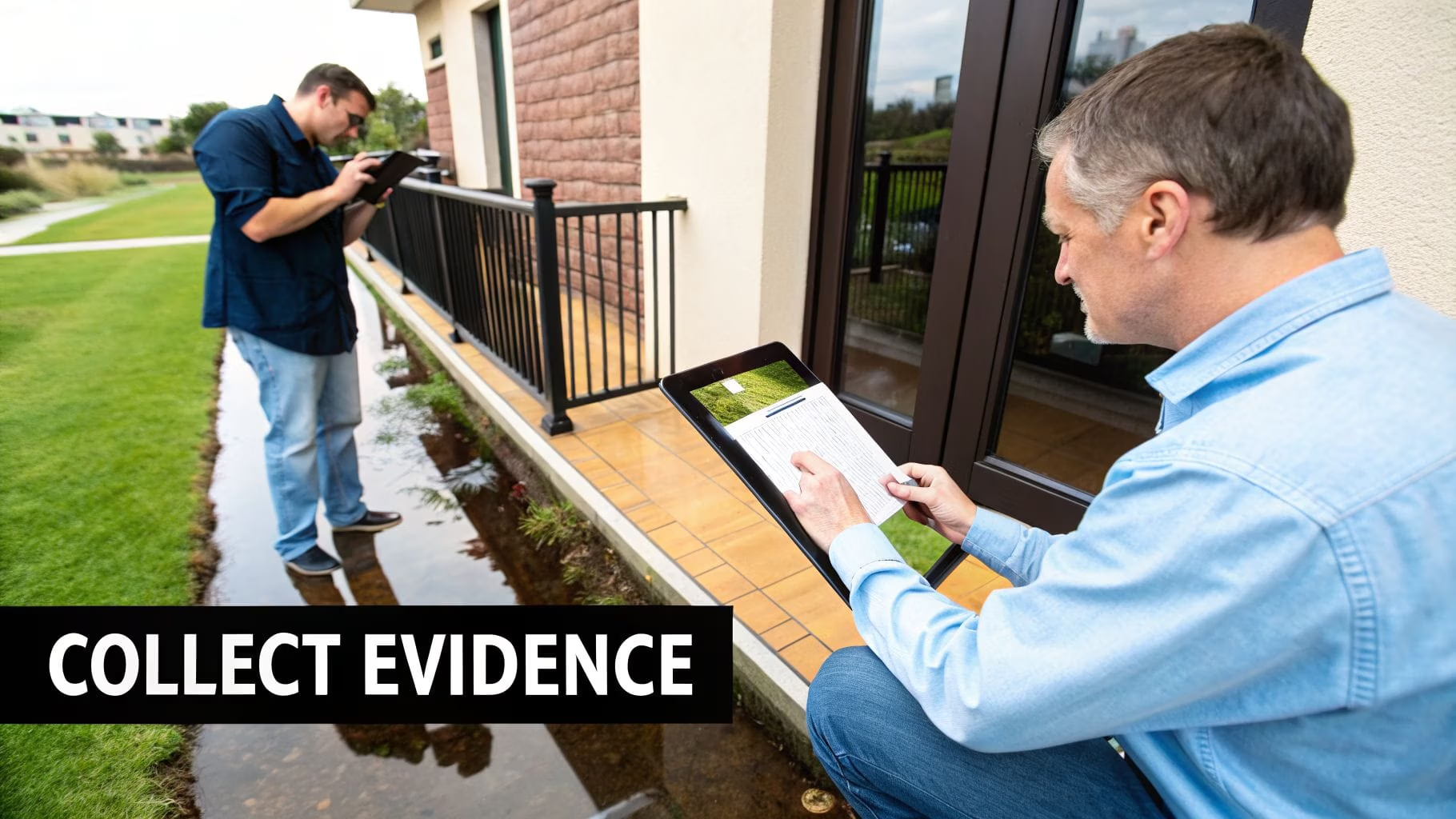
The moment you spot the first tell-tale signs of a waterproofing failure, the clock starts ticking. Resist the urge to call the first tradesperson you find for a quick patch job. Your next move is to start building a rock-solid, evidence-based case. This early documentation phase is often what makes the difference between a strong, winnable claim and a frustrating, uphill battle.
With over 35+ years in construction and 15 years providing litigation support to homeowners, builders, and lawyers, we’ve seen countless disputes turn on the quality of the initial evidence. A vague complaint about a leak just doesn’t cut it. What you need is a meticulously organised file with dated photos, videos, and every piece of communication—that’s what tells an undeniable story.
Your Initial Evidence Collection Checklist
Before you even think about lawyers or tribunals, you need to put on your detective hat. The goal is to create a clear, organised record of the defect and how it has developed over time.
A strong evidence file starts with the basics:
- Dated Photos and Videos: Capture everything. Use wide shots to show the location of the damage in the room, then get close-ups to detail the extent of the problem. A timestamp app or even holding up a current newspaper in a photo helps prove the date. Videos are brilliant for showing active leaks or capturing the hollow, “drummy” sound of lifting tiles when tapped.
- A Detailed Timeline: Start a logbook or a simple Word document. Note the date you first noticed that musty smell, when the paint began to bubble, and the day you first contacted the builder. Every detail matters.
- All Written Communications: This is crucial. Collate every single email, text message, and formal letter between you and the builder or developer. If you have phone calls, always send a brief follow-up email confirming what was discussed (e.g., “Hi [Builder], just confirming our call today where you agreed to inspect the leak next Tuesday.”). This creates a paper trail.
- Contracts and Plans: Dig out your original building contract, the architectural plans, and any other documents that specify the waterproofing systems or products that were meant to be used.
This collection of evidence is what you’ll hand over to an expert. It gives them the vital context they need to start their forensic investigation and will save you significant time and money.
The Non-Negotiable Step: Engaging an Independent Expert
Your own records are a fantastic start, but they’re only one half of the equation. The single most critical step in escalating a waterproofing building dispute is bringing in an independent building consultant to prepare an expert witness report. This isn’t just a recommendation; it’s the absolute foundation of a successful claim.
Let’s be clear: a quote from a builder to fix the issue isn’t an expert report. A report from the original waterproofer who did the work is not independent. You need an unbiased, qualified professional whose opinion carries weight at the NSW Civil and Administrative Tribunal (NCAT).
An expert witness report transforms a dispute from a “he said, she said” argument into a factual, technical analysis. It takes your observations and backs them up with science, industry standards, and the law. This is what forces the other side to take your claim seriously.
An expert’s job is to look past the visible symptoms—the peeling paint or damp carpet—and diagnose the root cause of the failure. They conduct a forensic analysis, which could involve anything from using moisture meters to performing targeted invasive testing, where small sections of the structure are carefully opened up for inspection.
This investigation answers the most important question: why did the waterproofing fail? Was it due to poor workmanship? Were cheap, substandard materials used instead of what was specified? Was the installation non-compliant with the National Construction Code (NCC) or key Australian Standards (like AS 3740 – Waterproofing of domestic wet areas)?
The final report delivers a clear, evidence-based opinion on who is liable and provides a detailed scope of works for rectification. This document becomes the backbone of your NCAT application.
At Awesim Building Consultants, our 15+ years of litigation support experience means every report we produce is meticulously prepared to withstand the scrutiny of a tribunal hearing. To see why this documentation is so powerful, you can learn more about how a formal expert witness report is structured to build and support your case. This level of preparation is your best path to achieving a fair outcome.
Navigating Your Legal Rights and Builder Obligations
When you’re facing a waterproofing building dispute, understanding the legal framework isn’t just helpful—it’s your most powerful asset. It’s not enough to simply point at a damp patch on the wall. You need to connect that defect to a specific legal obligation the builder failed to meet.
In New South Wales, this entire framework is built on the Home Building Act 1989. This piece of legislation is the rulebook for residential construction, and it’s written to protect consumers like you. Its most critical protections are the statutory warranties embedded in Section 18B.
The Power of Statutory Warranties
Think of the statutory warranties as a non-negotiable safety net. Section 18B of the Act automatically inserts these promises into every residential building contract, regardless of what the contract itself says. They are the minimum standard a builder must meet.
For any waterproofing job, the most important warranties are that the work was:
- Performed with due care and skill.
- Carried out according to the plans and specifications in your contract.
- Completed using suitable materials that are fit for their intended purpose.
- Finished in compliance with all relevant laws, which includes the National Construction Code (NCC) and Australian Standards like AS 3740.
The phrase “due care and skill” has real teeth. In waterproofing, it means the builder had a legal duty to install the entire system correctly, following the manufacturer’s instructions and established industry practices. A key part of an expert report, like the ones we at Awesim prepare, is to draw a straight line from the observed leak back to the builder’s failure to meet these exact warranties.
Major vs Minor Defects: The Six-Year Clock
One of the most critical concepts in the Home Building Act is the difference between a ‘major’ and a ‘minor’ defect. Getting this right is vital because it dictates the time you have to make a claim.
- Major Defects: The warranty period is 6 years from the date of completion.
- Minor Defects: The warranty period is much shorter, just 2 years from completion.
Given the potential for widespread damage, waterproofing failures are almost always classified as major defects. However, you can’t just assume this will be accepted; it needs to be proven by meeting a specific two-part legal test.
First, the defect must be in a major element of the building. The good news here is that the Act specifically lists “waterproofing” as a major element.
Second, the defect must be serious enough that it’s likely to cause one of the following:
- Make the building (or part of it) uninhabitable or unusable.
- Cause the destruction of the whole or part of the building.
- Threaten the collapse of the whole or part of the building.
A leaking balcony membrane that leads to concrete spalling (cancer) and undermines the balcony’s structural integrity is a classic example that would almost certainly meet this test. The same goes for a failed shower membrane that causes timber floor joists to rot.
It’s absolutely crucial to get this classification right from day one. A builder might try to frame a serious water leak as a ‘minor’ issue, hoping to run out the two-year clock on your claim. This is where an independent expert assessment from a firm like ours becomes non-negotiable—it establishes the defect as ‘major’ and secures your right to the full six-year claim period.
In NSW, disputes over shoddy waterproofing are fundamentally about these Section 18B statutory warranties. As we’ve seen, proving a major defect gives homeowners a 6-year window to launch a claim, a vital timeline when a defect in a ‘major element’ risks making a home unsafe or uninhabitable. For a more technical breakdown, you can explore detailed insights on how defect claims function under the Act.
The Role of the NSW Building Commissioner
The landscape has changed significantly in recent years with the increased powers of the NSW Building Commissioner. This office has brought a new layer of accountability to the industry, with the authority to investigate serious defects, issue stop-work orders, and force builders and developers to rectify non-compliant work.
This heightened regulatory focus means that poor waterproofing is under more scrutiny than ever before. While NCAT is the main avenue for resolving your individual dispute, the Building Commissioner’s oversight can apply significant pressure, especially on developers of new apartment buildings with systemic problems. Your expert report must be built on this solid legal and regulatory foundation to make your case undeniable.
Getting Your Ducks In A Row: Reports and Schedules for NCAT
Once you’ve confirmed your legal position and gathered some initial evidence, you’ve reached the purely technical part of the journey. This is where a waterproofing building dispute stops being just a homeowner’s stressful complaint and starts to take shape as a formal, structured case ready for the NSW Civil and Administrative Tribunal (NCAT).
The whole process hinges on two key documents: a compliant Expert Witness Report and a meticulously prepared Scott Schedule. Having provided litigation support for over 15 years, I can tell you that getting these right can be the difference between a swift, fair resolution and a soul-crushing, expensive legal battle. They need to be objective, packed with evidence, and perfectly aligned with what NCAT expects to see.
What A Proper NCAT Expert Report Looks Like
An expert report prepared for NCAT isn’t just someone’s opinion on your leaky shower. It’s a forensic analysis, and it has to be written by an independent expert who is bound by the Expert Witness Code of Conduct. Their job is to assist the Tribunal with the facts, not to act as a hired gun for your side.
A report that will actually hold water at the Tribunal must do a few critical things:
- State the Facts, Plain and Simple: It needs to document every defect with precision, backing it all up with high-quality photos and hard data from tests like moisture readings or even core samples.
- Quote the Rulebook: Every single defect has to be tied directly back to a specific clause in the National Construction Code (NCC) or a relevant Australian Standard, most commonly AS 3740 for waterproofing in domestic wet areas.
- Pinpoint the Cause: A good report doesn’t just say “it’s leaking.” It gives a professional opinion on why it’s leaking. Was it shoddy workmanship during application? Was the wrong product used? Or was there a fundamental design flaw from the start?
- Provide a Clear Solution: The report must detail a compliant scope of works for rectification. This gives the Tribunal a clear, expert-endorsed roadmap for making things right.
A mistake we see all too often is a client coming to us with a simple quote from a tradesperson. A one-liner like “Fix leaking shower – $5,000” is virtually useless at NCAT. A compliant report, on the other hand, will say something like: “The shower base waterproofing fails to comply with AS 3740, Clause X.X, as evidenced by moisture readings exceeding 20% in the adjoining wall substrate. Rectification requires the complete removal of tiles and the failed membrane, re-screeding to achieve correct falls, and installation of a new membrane system strictly in accordance with AS 3740.”
That level of detail isn’t optional. It’s exactly the technical clarity the Tribunal needs to make an informed decision.
The Scott Schedule: Your Case on a Single Page
If the expert report is the foundation, the Scott Schedule is the framework of your entire case at NCAT. Think of it as a specialised table that organises the whole conflict, forcing both sides to respond to each specific defect, one by one. This lets the Tribunal see exactly where everyone agrees and, more importantly, where the arguments are.
It’s a powerful tool for clarity. In our experience, a well-put-together schedule can often trigger a settlement before you even get to a hearing because it lays the strength of your case out in undeniable black and white.
For an in-depth look at how these crucial documents are created, you can find out more about our Scott Schedule preparation services.
To give you a real-world idea, here’s a simplified breakdown of how a single waterproofing issue would be presented in a Scott Schedule.
Example Scott Schedule Entry For A Waterproofing Defect
The table below shows how a claim about a leaking shower gets broken down into the specific format NCAT requires, putting the focus on facts, responses, and expert findings.
| Item No. | Claimant’s Alleged Defect | Respondent’s Position | Expert’s Opinion & Cost to Rectify |
|---|---|---|---|
| 1 | Failed waterproofing membrane in main bathroom shower recess, causing water damage to the adjoining bedroom wall. | Denied. Alleges the leak is from a plumbing issue, not waterproofing. States work was compliant at completion. | Expert Opinion: Invasive testing confirms the membrane has delaminated from the substrate due to inadequate surface preparation, a breach of AS 3740. No plumbing leaks detected. The defect is a result of poor workmanship. Cost to Rectify: $9,500 |
This methodical approach is exactly how our team at Awesim Building Consultants works. We draw on our deep construction background to translate complex waterproofing failures into the precise language and format that NCAT demands, giving our clients the strongest possible foundation for their case.
From Negotiation to NCAT: Charting Your Path to Resolution
You’ve got your comprehensive expert report and Scott Schedule. Now what? This is where the real strategy begins. The end goal is obviously a fair resolution for your waterproofing building dispute, but the quickest path isn’t always a straight line to a tribunal hearing.
In reality, the final stages are a careful mix of negotiation, mediation, and, only if absolutely necessary, litigation. This is where all your hard work and preparation pay off. Armed with solid, factual evidence, you can change the entire conversation. It’s no longer your word against the builder’s; it’s about the black-and-white facts of compliance and what it will take to fix the problem.
From our 15+ years of litigation support experience, we can tell you this: a robust expert report is the single most powerful tool you have to get a good result long before you ever set foot in a courtroom.
The infographic below shows the typical journey of a defect claim, from the moment you spot a problem to the final, expert-led conclusion.
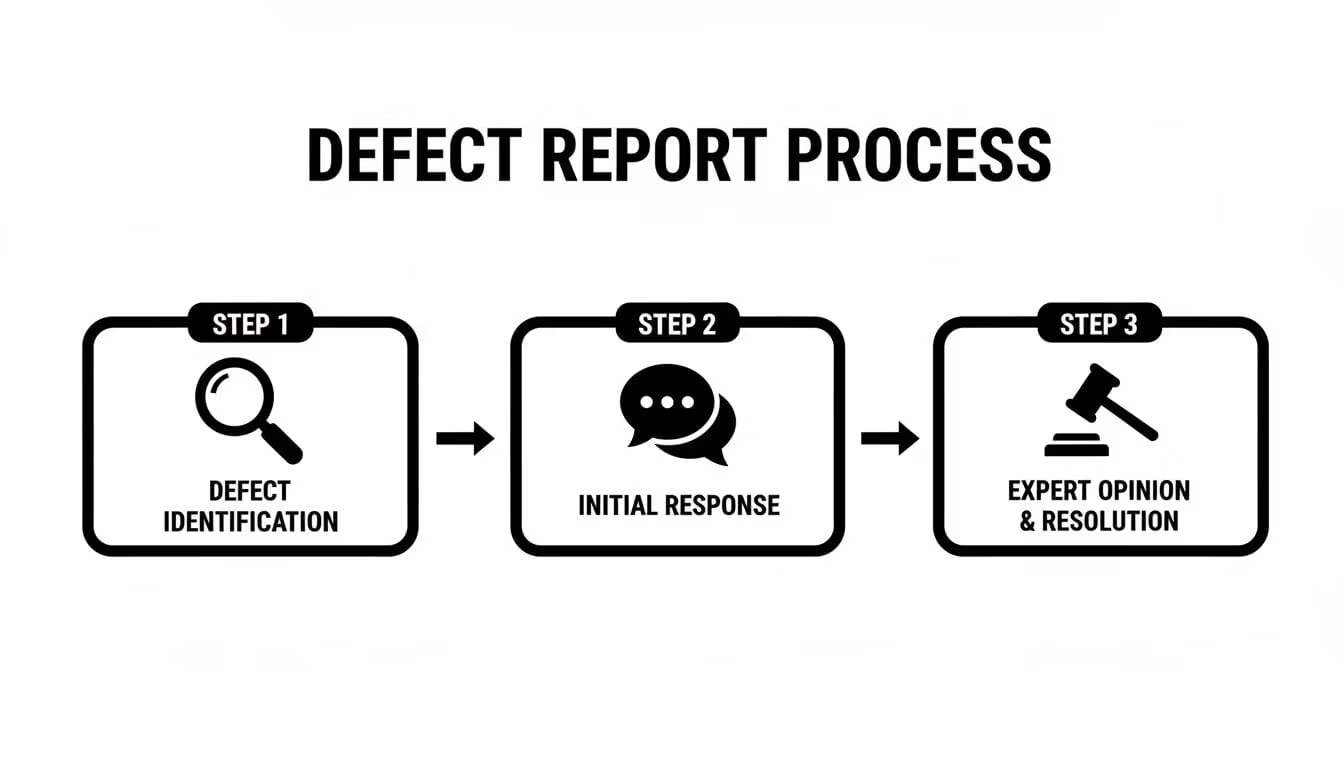
As you can see, getting an independent, third-party expert opinion is the crucial final stage that cuts through the noise and establishes the facts.
The Power of Informed Negotiation and Mediation
Your first, and best, move is always structured negotiation. This isn’t just a quick phone call. It’s a formal process where you present your evidence—the expert report and Scott Schedule—to the builder and their legal team. This step alone often forces them to face the reality of the defects.
A detailed report from a specialist firm like Awesim Building Consultants leaves very little wiggle room. It clearly lays out the non-compliance with building codes, details the exact rectification work needed, and provides a cost estimate that’s incredibly difficult to argue with. More often than not, this pressures the builder to make a fair settlement offer just to avoid the time, cost, and risk of a formal NCAT hearing.
If you hit a wall with direct negotiation, mediation is the next logical step. This is a confidential meeting where a neutral mediator helps both sides try to find some common ground. It’s still a far less stressful and expensive option than a full-blown tribunal hearing, and your expert report will continue to be your strongest negotiating tool.
When NCAT Becomes Necessary
Sometimes, despite your best efforts, negotiation and mediation just don’t work. If you can’t reach a fair outcome, your final option is to lodge an application with the NSW Civil and Administrative Tribunal (NCAT). This means formally submitting your case along with all your supporting evidence, including that critical expert report and Scott Schedule.
Once your application is lodged, NCAT sets a timeline for the hearing. This is where your expert witness truly proves their worth. Their job isn’t over once the report is written. A credible expert must be ready to attend the hearing, present their findings, and defend their professional opinion under intense cross-examination from the other side’s lawyers.
This defence in the hearing is the moment of truth. An expert’s ability to calmly and clearly explain complex technical issues, referencing the NCC and Australian Standards while under pressure, can absolutely make or break your case. It’s why you must choose a consultant who not only has deep construction knowledge but also a proven track record in litigation support.
Understanding the Likely Outcomes
It’s vital to go into this with realistic expectations. While waterproofing claims have a very good chance of success on paper, getting a financial win is all about meticulous preparation.
Recent analysis of NSW tribunal outcomes is telling. While 100% of a sample of waterproofing disputes were found in favour of the claimant, only 50% of those claimants actually recovered any money. For those who did, the average payout was a significant $298,840.
What made the difference? The quality of the evidence. A staggering 75% of the winning cases used multiple expert assessments to prove the defect and connect it to other building failures. You can read the full analysis of NSW waterproofing defect cases to see the data for yourself.
This really brings home a crucial point: simply “winning” at NCAT isn’t the whole story. The entire process, from day one of collecting evidence to the final expert testimony, is about building a case so bulletproof that you not only get a favourable order, but you can actually enforce it to get the money you need for repairs. It’s a marathon, not a sprint, and every single detail counts.
Your Waterproofing Dispute Questions, Answered
When you’re caught in a waterproofing building dispute, it’s easy to feel overwhelmed. We get calls every week from homeowners, builders, and even solicitors asking for clarity on their rights and what to do next. With our 35+ years in the building game and 15 years in litigation support, here are the straightforward answers to the questions we hear most often.
How Long Do I Have To Make a Claim?
In NSW, your right to claim is tied to statutory warranties. For a ‘major defect’—and most significant waterproofing failures fall into this category—you have a 6-year warranty period from the day the work was completed.
For anything considered a ‘minor’ defect, that window shrinks to just 2 years. Getting an expert to properly classify the defect is non-negotiable. It’s the difference between having a valid claim and losing your rights entirely.
Can I Just Use a Waterproofer’s Quote Instead of an Expert Report?
Absolutely not. A waterproofer’s quote and an expert report serve two completely different functions. The quote simply gives a price for a repair; it won’t hold up in a legal setting because it doesn’t prove why the failure happened or that it breaches any building codes.
An NCAT-compliant expert witness report is a forensic investigation. It meticulously pinpoints the defect, demonstrates how it violates Australian Standards and the National Construction Code, and builds the evidence-based foundation for your claim. One is a price tag; the other is your proof.
What If the Builder Has Disappeared or Gone Out of Business?
This is a tough situation, but it’s more common than you’d think, and you still have options. If the building company has been liquidated or has simply vanished, your primary path for compensation is usually through their home building compensation fund (HBCF) insurance, which used to be called home warranty insurance.
To make a successful HBCF claim, you’ll need an independent expert report. The insurer will demand solid evidence that a genuine defect exists, what caused it, and a detailed scope and cost for rectification. Your expert report is precisely what provides this crucial validation.
Is It Better to Settle or Go to NCAT?
Our experience across countless disputes is clear: settling out of court is almost always faster, cheaper, and far less stressful for everyone. Your most powerful tool to force a settlement is a comprehensive, well-argued expert report.
When the other side is handed undeniable proof of the defect, with clear references to their non-compliance and a professionally costed scope of works, the entire dynamic shifts. We’ve seen a strong report from a firm like Awesim Building Consultants become the catalyst for a fair settlement offer time and time again. It makes the strength of your case and their risk at a tribunal hearing impossible to ignore. Going into a negotiation this well-prepared is your smartest move.
Are you facing a waterproofing building dispute? Get clarity and build a watertight case with Awesim Building Consultants. With over 35 years of hands-on experience and specialised litigation support, we provide the expert evidence you need to achieve a fair outcome. Contact us today for an obligation-free discussion about your situation at https://www.awesim.com.au.

Related Posts

NCAT Consumer Division: Steps From Lodgement to Hearing
Most people who end up at the NCAT Consumer and Commercial Division do not arrive there by choice. They arrive
Read More »
Statutory Warranty NSW: What Builders Must Fix and for How Long
Statutory warranty NSW obligations exist precisely for the moment a builder stops returning calls. A crack appears in the render.
Read More »
Home Building Act NSW: Key Clauses Every Owner Should Know
The Home Building Act 1989 (NSW) sets the rules for residential building work in New South Wales. It requires licensed
Read More »