
Shower Waterproofing in NSW: What the Builder Must Do Before Tiles Go On
- Why Pre-Tile Waterproofing Is the Critical Stage
- The Standards That Apply in NSW
- What the Builder Must Do Before Tiles Go On
- What Happens When These Steps Are Missed
- If You Suspect a Waterproofing Defect
- Frequently Asked Questions
Shower waterproofing failures are among the most common building defects seen in NSW homes. Water gets behind tiles, saturates the substrate, and quietly destroys framing, linings, and finishes over months or years. By the time you notice something is wrong, the damage is often extensive and the rectification bill is significant.
The frustrating part is that most of these failures are preventable. They come down to what happens before a single tile is laid. This article explains what your builder is required to do at that stage, what the relevant standards demand, and what to look for if you suspect something has gone wrong.
Why Pre-Tile Waterproofing Is the Critical Stage
Once tiles are on, the membrane is hidden. You cannot inspect it without pulling the tiles off. This is why the pre-tile stage carries so much weight under NSW building law.
A builder who skips steps, uses the wrong product, or applies inadequate thickness at this stage creates a defect that may not surface for years. When it does, the builder may argue the damage has another cause, or that the work met the standard at the time. An independent forensic inspection can cut through those arguments.
The Standards That Apply in NSW
Shower waterproofing in NSW must comply with AS 3740:2021, the Australian Standard for waterproofing of domestic wet areas. This is the primary technical benchmark. It sets out minimum membrane thickness, substrate preparation requirements, bond breaker placement, and the required extent of waterproofing coverage.
The National Construction Code (NCC) also applies, referencing AS 3740 as the acceptable construction practice for wet area waterproofing in residential buildings.
Builders are required to follow these standards. If a builder deviates from them without an equivalent alternative that achieves the same outcome, that deviation is a defect under NSW building law.
What the Builder Must Do Before Tiles Go On
1. Prepare the Substrate Correctly
The surface receiving the membrane must be clean, dry, and structurally sound. Cracks, voids, or weak areas need to be addressed before waterproofing begins. Applying a membrane over a compromised substrate is one of the most common causes of early failure.
Concrete floors must be free of surface laitance. Sheet linings must be correctly fixed, with joints treated according to the membrane manufacturer’s instructions. Substrate preparation is not an optional extra — it is a prerequisite for the membrane to perform.
2. Apply Bond Breakers at Internal Corners and Junctions
AS 3740 requires bond breakers at internal corners and floor-to-wall junctions. A bond breaker is typically a strip of reinforcing fabric or a pre-formed angle that prevents the membrane from bridging rigidly across a movement point.
This step is frequently missed or done poorly. When the structure moves — as all buildings do — a membrane without proper bond breakers cracks at those junctions. That crack is where water enters.
3. Apply the Membrane to the Correct Extent
The membrane must cover the shower floor and extend up the walls to the required height. For a shower recess, AS 3740 requires the membrane to reach a minimum of 150mm above finished floor level on all walls within the shower. At the threshold, it must extend at least 50mm beyond the shower onto the floor outside.
Coverage matters as much as the membrane itself. A membrane that stops short of these dimensions leaves unprotected zones where water will eventually find a path.
4. Achieve the Required Membrane Thickness
Most liquid-applied membranes require a minimum dry film thickness to perform as rated — specified by the manufacturer and subject to the minimums under AS 3740. Too few coats, or coats applied too thinly, produces a membrane that looks complete but is not.
Thickness cannot be assessed visually once the product is dry. This is one reason forensic waterproofing inspections use specialised techniques to evaluate what is actually there.
5. Allow Adequate Cure Time Before Tiling
Tiling before the membrane has fully cured is a common shortcut on busy sites. The membrane needs time to reach its rated performance properties. Going too early can compromise adhesion and trap moisture in the membrane layer — both of which contribute to premature failure.
Required cure time depends on the product, ambient temperature, and humidity. The builder should be following the manufacturer’s data sheet, not a general rule of thumb.
6. Protect the Membrane During Tiling
Even a correctly applied membrane can be damaged during tiling. Foot traffic, dropped tools, and the installation of drainage hardware can all puncture or abrade the membrane before tiles provide protection. Managing that risk is the builder’s responsibility.
If the membrane is damaged during tiling, it must be properly repaired before work continues. Covering over damage without adequate preparation is not a fix.
What Happens When These Steps Are Missed
Water ingress from a failed shower is not a cosmetic problem. It can cause:
- Timber framing rot and structural weakening
- Mould growth inside wall cavities
- Damage to adjacent rooms, including ceilings below
- Tile adhesion failure, leading to loose or hollow tiles
- Damage to waterproof linings in adjoining wet areas
Rectification typically means stripping tiles, removing the failed membrane, repairing substrate damage, and starting the waterproofing process again. Depending on the extent of damage, costs can run into tens of thousands of dollars.
If You Suspect a Waterproofing Defect
Water stains, damp patches, mould, or loose tiles in or near your shower are all potential signs of a waterproofing failure. The first step is getting an independent forensic inspection — before you do anything else.
Do not allow a builder to carry out rectification works on a suspected defect without first documenting it independently. Once the work is done, the evidence of how the original waterproofing was applied is gone.
A forensic waterproofing inspection documents the condition of the existing installation, identifies the likely cause of failure, and produces a report that can be used in NCAT or NSW court proceedings if needed. At Awesim Building Consultants, forensic waterproofing inspections are conducted on-site across NSW — from Sydney to Tamworth and Tweed Heads — and reports are prepared to comply with Schedule 7 of the Uniform Civil Procedure Rules. We have been preparing expert witness reports for NSW courts since 1996.
If your dispute is already heading toward NCAT, an inspection report alone may not be enough. You may need a court-ready expert witness report that can withstand cross-examination. That is a different document with different requirements, and it is worth understanding the distinction before you file.
Frequently Asked Questions
What is AS 3740 and does it apply to my shower?
AS 3740:2021 is the Australian Standard for waterproofing of domestic wet areas. It applies to all residential shower recesses in NSW and sets out the minimum requirements for membrane extent, thickness, substrate preparation, and bond breaker placement. Builders in NSW are required to follow it.
How do I know if my shower was waterproofed correctly?
Once tiles are on, you generally cannot tell from a visual inspection. Signs of failure include water stains on adjacent walls or ceilings, mould growth, hollow-sounding tiles, or grout that is cracking and discolouring. A forensic waterproofing inspection is the only reliable way to assess what is behind the tiles.
Can I make a claim against my builder for a waterproofing defect?
Yes. If the defect represents a failure to comply with the required standards or contract specifications, you may have a claim under the Home Building Act 1989 (NSW). Residential building work carries statutory warranties, including a warranty that work will be done in accordance with the plans and specifications and with due care and skill. Time limits apply, so get advice and an independent inspection as soon as you identify a problem.
What is a forensic waterproofing inspection?
It is an on-site inspection carried out by a qualified building consultant to assess the condition and performance of existing waterproofing. The consultant documents the defects, identifies the likely cause, and prepares a written report. If the matter proceeds to NCAT or court, that report can form the basis of an expert witness report.
How long does a builder have to fix a waterproofing defect in NSW?
Under the Home Building Act 1989, the statutory warranty period for major defects is six years from the date of completion. For other defects, it is two years. Waterproofing failures that affect structural integrity or make the building uninhabitable may qualify as major defects, which carry the longer warranty period.
Do I need an expert witness report to go to NCAT about a waterproofing defect?
You are not required to have one to lodge an application, but NCAT will almost always require independent expert evidence to determine the nature and extent of the defect and the cost of rectification. Without an expert report, your claim rests on your own account against the builder’s. A report prepared to Schedule 7 of the UCPR carries significantly more weight.
What should I do if my builder wants to fix the waterproofing before I get an inspection?
Do not agree to this without first getting an independent inspection and having the defect documented. Once rectification work is done, the original defect and its cause may no longer be identifiable — which can seriously weaken your position if the dispute escalates. Get the inspection first, then decide how to proceed.
Shower waterproofing failures are preventable when the right steps are followed before tiles go on. When they are not, the consequences are costly and the evidence disappears quickly. If you have concerns about your shower or are already in a dispute with your builder, an independent forensic inspection is the right place to start.
Awesim Building Consultants provides forensic waterproofing inspections and expert witness reports across NSW. Call 1800 293 746 or visit awesim.com.au to arrange a free initial consultation.

Related Posts
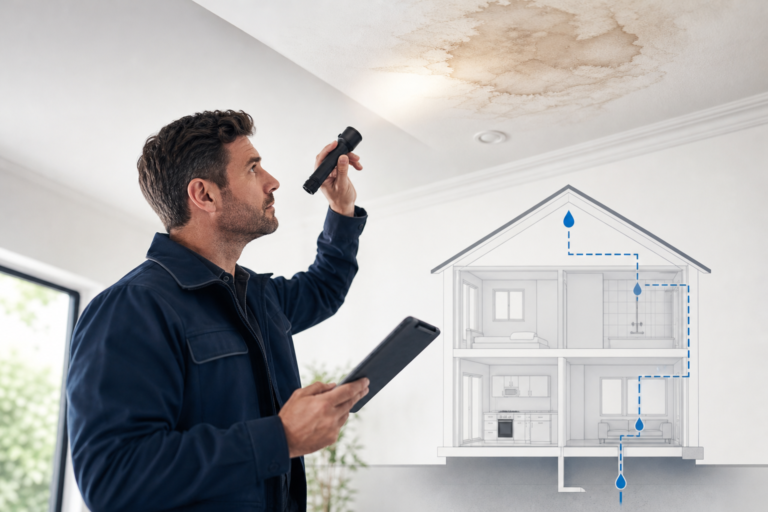
Water Damage in Homes: How to Track Down the Source
Water damage in a home rarely announces itself at the source. A stain on the ceiling, a musty smell in
Read More »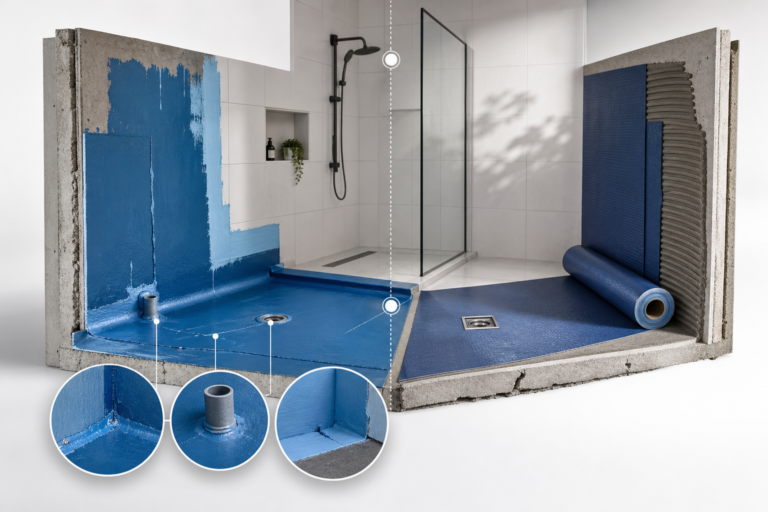
Waterproofing Membrane Types: Which Fails Most in NSW Bathrooms
Waterproofing failure is the single most common serious defect found in NSW apartments, and the type of membrane used, along
Read More »
Building Certifier NSW: Role, Limits, and When You Need More
A building certifier in NSW is a registered professional who issues construction certificates, conducts critical stage inspections, and grants occupation
Read More »