
What Is a Waterproofing Defect? How Inspectors Classify Failures Under AS 3740
- What Makes Something a Waterproofing Defect
- AS 3740: The Standard Inspectors Work From
- How Inspectors Classify Waterproofing Defects
- Why the Classification Matters in Disputes
- What a Forensic Waterproofing Inspection Involves
- Schedule 7 and Expert Witness Reports for Waterproofing Defects
- Common Waterproofing Defects Found in NSW Residential Construction
- When You Need a Forensic Waterproofing Report
- FAQs
- Getting the Classification Right From the Start
A waterproofing defect may involve the design, materials, installation or detailing of a waterproofing system. A useful investigation records the damage, considers possible sources and identifies the requirements applicable to the work. This guide explains how the findings are documented for a NSW building dispute.
This article explains what waterproofing defects are, how AS 3740 defines acceptable practice, and how qualified inspectors use that standard to classify failures in a way that holds up in formal proceedings.
What Makes Something a Waterproofing Defect
A waterproofing defect is any condition where a membrane, system, or installation fails to prevent water penetrating into or through a building element. That sounds simple enough, but the classification is more precise than "water got in."
To be treated as a defect in a legal or technical sense, the failure must be assessed against a recognised standard. In Australia, that standard is AS 3740:2021, Waterproofing of Domestic Wet Areas — the benchmark inspectors apply when examining bathrooms, ensuites, laundries, balconies, and similar spaces in residential construction.
A defect exists when the installation deviates from AS 3740 in a way that causes, or is reasonably likely to cause, water penetration. That deviation might be in the membrane itself, the substrate preparation, the detailing at junctions and penetrations, or the complete absence of required components.
AS 3740: The Standard Inspectors Work From
AS 3740 sets out the minimum requirements for waterproofing in domestic wet areas. It specifies which areas must be waterproofed, what membrane types are acceptable, how membranes must be applied, what thickness and coverage is required, and how critical junctions — floor-to-wall joints, penetrations — must be treated.
The standard distinguishes between wet areas based on their exposure classification. A shower recess has different requirements from a bathroom floor outside the shower, which differs again from a balcony or podium slab. Inspectors identify the applicable classification before assessing whether the installation meets it.
Key requirements under AS 3740 include:
- Substrate preparation: The surface must be sound, clean, and free of contamination before any membrane is applied. Cracks, voids, and movement joints must be treated beforehand.
- Membrane continuity: The membrane must be continuous across the waterproofed area with no gaps, holidays, or areas of insufficient coverage.
- Upstands and turn-ups: At floor-to-wall junctions, the membrane must turn up the wall to a specified height — typically 150 mm above finished floor level in shower areas.
- Penetration sealing: Pipes, drains, and other penetrations through the waterproofed surface must be sealed in a way that maintains membrane integrity.
- Curing and protection: Membranes must cure fully before tiling or other finishes are applied over them.
When any of these requirements are not met, the inspector has grounds to classify the deviation as a defect.
How Inspectors Classify Waterproofing Defects
Classification is not simply about identifying that something went wrong. It is about describing the failure precisely enough that a tribunal or court can understand what was done, what should have been done, and what the consequence is. This is where forensic inspection work differs from a general building report.
Defects of Installation
The most common category. These arise from the way the membrane was applied — inadequate thickness, failure to extend to the required height at wall junctions, gaps at penetrations, insufficient coverage at corners or changes of plane.
The inspector documents the specific location, measures where possible, photographs the condition, and references the AS 3740 clause that was not met. Where the membrane is concealed under tiles, moisture meter readings and visible symptoms are used to infer the underlying failure.
Defects of Design or Specification
Sometimes the installation followed the specification, but the specification itself was inadequate. This might occur where a membrane type was selected that was unsuitable for the exposure classification, or where the design omitted a required component such as a bond breaker at a movement joint.
These defects require the inspector to assess not just what was done, but what was specified — and whether that specification met the standard's requirements for the application.
Defects of Omission
Omission defects occur where a required element is simply absent. A shower recess with no membrane at all, or a balcony where the membrane stops short of the required upstand height, falls into this category. Often the most straightforward to document, they can also be the most significant in terms of damage caused.
Consequential Damage vs. the Defect Itself
Inspectors must distinguish between the waterproofing defect and the damage it has caused. The defect is the failure of the waterproofing system. The consequential damage might include rotted framing, failed tile adhesive, mould growth, or structural deterioration. Both need to be documented, but they are separate matters when assessing the scope of rectification and cost.
Why the Classification Matters in Disputes
How a defect is classified directly affects how a claim is argued and what remediation is required. A failure attributed to poor installation by a subcontractor raises different legal questions than one attributed to a design failure by the builder or a specification error by an engineer.
In NCAT proceedings and court matters, the inspector's classification becomes the foundation for the Scott Schedule — the document that itemises each defect, the applicable standard, the required rectification, and the estimated cost. A vague or unsupported classification weakens the claim at every stage.
This is why forensic waterproofing inspections are distinct from general building reports. A forensic inspection is conducted specifically to produce evidence that can withstand scrutiny. The inspector is not simply noting that water is present; they are establishing the cause, identifying the applicable standard, documenting the deviation, and setting out the required remedy.
What a Forensic Waterproofing Inspection Involves
A forensic inspection goes beyond what is visible. An experienced inspector will assess the symptoms, form a hypothesis about the cause, and gather evidence to support or refute it. That process typically includes:
- Visual inspection of all accessible wet areas, looking for tile debonding, grout failure, efflorescence, staining, and visible membrane defects
- Moisture meter readings to detect elevated moisture in substrates, walls, and adjacent areas
- Review of documentation including any available waterproofing certificates, product data sheets, and construction records
- Assessment of drainage to determine whether water is being directed away from the membrane or pooling against it
- Photographic record of all observed conditions, referenced to a floor plan
Where the membrane is fully concealed and invasive investigation is required, the inspector will note that limitation and explain what can and cannot be concluded from the available evidence.
The resulting report describes each identified defect, classifies it against AS 3740, explains the likely cause, and sets out what rectification is required. When prepared for use in NCAT or court proceedings, it must also comply with the relevant code of conduct for expert witnesses.
Schedule 7 and Expert Witness Reports for Waterproofing Defects
In NSW, any expert witness report tendered in NCAT, the District Court, or the Supreme Court must comply with Schedule 7 of the Uniform Civil Procedure Rules 2005. This is the code of conduct governing what an expert can say, how opinions must be expressed, and what limitations must be acknowledged.
A forensic waterproofing report that is also an expert witness report needs to satisfy both the technical requirements of AS 3740 and the procedural requirements of Schedule 7. The inspector must state their qualifications, confirm their duty to the court rather than to the retaining party, and clearly distinguish between facts observed and opinions formed.
This is a higher standard than a general building inspection report, and not every inspector who can identify a leaking shower has the experience to produce reports that meet it.
Awesim Building Consultants has been preparing Forensic Waterproofing Inspection reports and Expert Witness Reports for NSW proceedings since 1996. All reports are written to comply with Schedule 7 of the Uniform Civil Procedure Rules 2005 and are prepared for use across NCAT, the District Court, and the Supreme Court.
Common Waterproofing Defects Found in NSW Residential Construction
While every inspection is different, certain failure patterns appear repeatedly in NSW residential work.
Shower recesses: Inadequate membrane upstand at the wall junction is the most frequently documented failure. The membrane stops at or near floor level rather than turning up 150 mm, leaving the base of the wall unprotected. Over time, water tracks behind the tiles and into the framing.
Balconies and terraces: Membrane termination at the door threshold is a recurring problem, particularly where the threshold detail was not designed to accommodate the required upstand. Ponding water at inadequate falls compounds the failure.
Wet area floors outside the shower: Many builders treat only the shower recess as a waterproofed area, leaving the remainder of the bathroom floor without membrane. AS 3740 requires waterproofing to extend beyond the shower in certain configurations, and this omission comes up regularly.
Pipe penetrations: Where pipes pass through a waterproofed surface, the seal at the penetration is often inadequate or absent — a common source of slow leaks that cause significant damage before they are detected.
Substrate cracks: Movement cracks that were not treated before membrane application allow the membrane to bridge the crack temporarily, then split as movement continues. The crack itself is not a waterproofing defect, but failing to treat it before applying the membrane is.
When You Need a Forensic Waterproofing Report
A forensic waterproofing inspection report — rather than a general building report — is what you need when:
- You are preparing a defects claim for NCAT or a NSW court and need evidence that will survive cross-examination
- You are a strata manager dealing with recurring water ingress in common property and need to establish cause and responsibility
- You are a solicitor who needs an expert opinion on whether waterproofing work met the applicable standard
- You are a builder responding to a defects claim and need an independent assessment of whether the work conformed to AS 3740
A general inspection report that notes "water damage observed" is not the same as a forensic report that identifies the specific AS 3740 deviation, explains the mechanism of failure, and sets out what rectification is required. In formal proceedings, that difference is significant.
FAQs
What is a waterproofing defect under Australian standards?
A waterproofing defect is any deviation from the requirements of AS 3740:2021 that causes, or is likely to cause, water to penetrate a building element. This includes failures of installation, design, specification, or omission of required components.
What is AS 3740 and why does it matter?
AS 3740 is the Australian Standard for waterproofing of domestic wet areas. It sets the minimum requirements for membranes, substrate preparation, upstands, penetration sealing, and related details. Inspectors use it as the benchmark when assessing whether waterproofing work in residential construction meets an acceptable standard.
What does a forensic waterproofing inspection involve?
A forensic inspection involves a systematic examination of wet areas using visual assessment, moisture meter readings, photographic documentation, and review of available records. The purpose is to identify the specific cause of water ingress, classify it against the applicable standard, and produce a report suitable for use in legal proceedings.
Does a forensic waterproofing report need to comply with Schedule 7?
If the report is to be used as expert evidence in NCAT, the NSW District Court, or the Supreme Court, yes. Schedule 7 of the Uniform Civil Procedure Rules 2005 requires the expert to state their qualifications, confirm their duty to the court, and clearly distinguish observed facts from formed opinions.
Can a general building inspector prepare a forensic waterproofing report?
Not necessarily. Producing a report that meets both the technical requirements of AS 3740 and the procedural requirements of Schedule 7 requires specific experience in forensic inspection methodology and expert witness practice. A general building inspector may identify symptoms but may not be equipped to classify the failure or produce evidence that meets the court's requirements.
What are the most common waterproofing defects in Sydney residential construction?
The most frequently documented defects include inadequate membrane upstand at shower wall junctions, omission of membrane on wet area floors outside the shower recess, inadequate sealing at pipe penetrations, and failure to treat substrate cracks before membrane application.
How long does a forensic waterproofing inspection take?
The on-site inspection typically takes one to several hours depending on the size and complexity of the affected area. Preparing the formal report — including analysis, referencing, and Schedule 7 compliance — takes additional time. The total timeframe varies by matter.
Getting the Classification Right From the Start
Waterproofing failures are rarely straightforward. The visible damage is almost always downstream of the actual defect, and the defect itself is often concealed under finishes applied years earlier. Getting the classification right — identifying the specific AS 3740 deviation, establishing the mechanism of failure, and documenting it in a form that holds up in proceedings — requires both technical knowledge and forensic discipline.
If you are dealing with a waterproofing dispute in NSW and need a report prepared for NCAT or court use, Awesim Building Consultants prepares Forensic Waterproofing Inspection reports and Expert Witness Reports written to Schedule 7 of the Uniform Civil Procedure Rules 2005. A free initial consultation is available. Call 1800 293 746 or visit awesim.com.au to discuss your matter.

Related Posts
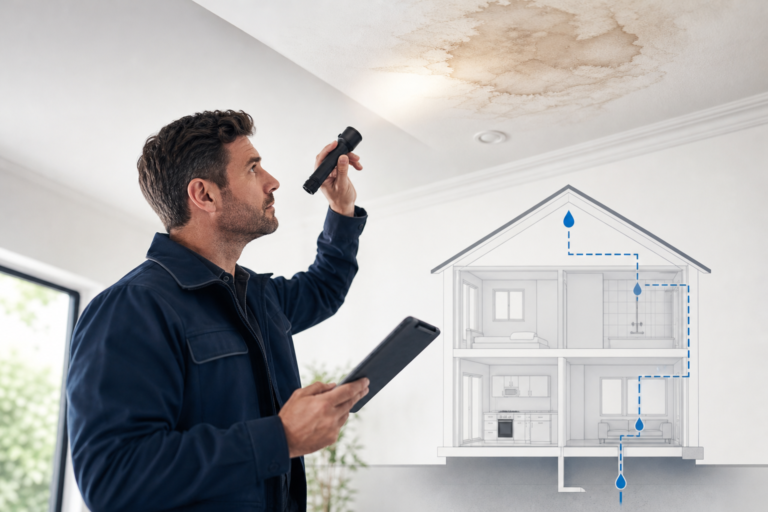
Water Damage in Homes: How to Track Down the Source
Water damage in a home rarely announces itself at the source. A stain on the ceiling, a musty smell in
Read More »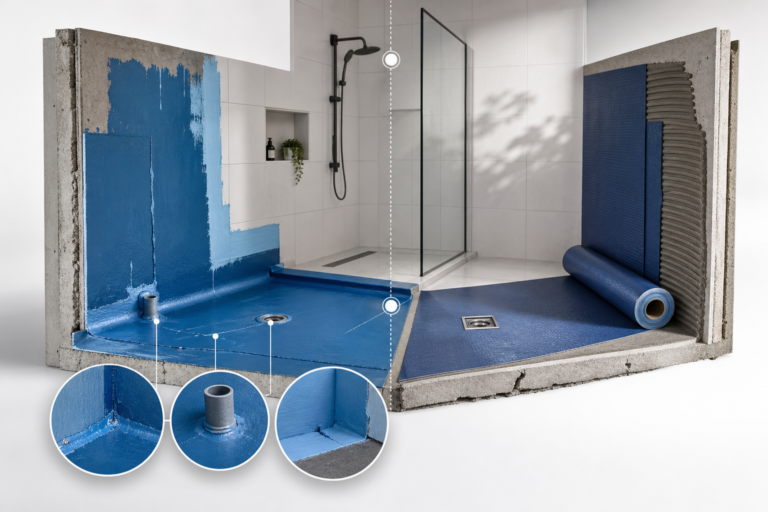
Waterproofing Membrane Types: Which Fails Most in NSW Bathrooms
Waterproofing failure is the single most common serious defect found in NSW apartments, and the type of membrane used, along
Read More »
Building Certifier NSW: Role, Limits, and When You Need More
A building certifier in NSW is a registered professional who issues construction certificates, conducts critical stage inspections, and grants occupation
Read More »