
Understanding NCAT Building Disputes and Technical Evidence

Building disputes can arise when there is disagreement about the quality, scope, completion or condition of construction work. A homeowner may identify defects that they believe require rectification, while a builder may disagree about the nature or cause of the issue. Disagreements can also arise where work has not been completed as expected or where the parties have different interpretations of the agreed scope.
When a matter progresses to the NSW Civil and Administrative Tribunal (NCAT), the technical details of the construction work can become an important part of understanding the dispute. Contracts, plans, photographs, correspondence, inspection findings and technical reports may all provide information about what was agreed, what was constructed and what issues remain.
For NCAT building disputes, presenting technical information clearly can help distinguish specific construction issues from broader disagreements between the parties.
What Are NCAT Building Disputes?
NCAT deals with a range of residential home building matters. A dispute may involve defective or incomplete work, disagreements about workmanship, construction requirements or the rectification of identified problems.
The nature of each matter can vary considerably. One dispute may centre on a specific defect, while another may involve numerous items across a property. The issues may relate to areas such as waterproofing, finishes, structural elements, drainage, extensions, renovations or other residential construction work.
A building dispute NCAT matter may involve questions such as:
- What work was originally agreed?
- What work was actually completed?
- Are particular defects present?
- Where are the identified issues located?
- What may have caused a particular defect?
- Does the completed work correspond with the relevant plans or specifications?
- What work may be required to address an identified issue?
These questions often require more than a general description of the problem. Technical information can provide greater clarity about the physical condition of the building and the construction issues being raised.
Understanding the NCAT Home Building Disputes Process
The NCAT home building disputes process can involve different stages depending on the circumstances of the matter. Rather than focusing only on the procedural aspects, parties should also consider how clearly they can identify and support the construction issues involved.
A building dispute may contain a substantial amount of information. Contracts, emails, photographs, invoices, plans, variations, reports and previous inspection records can accumulate throughout a project.
A useful starting point is to establish a clear factual record. This can involve identifying:
- The original scope of work.
- Changes or variations made during the project.
- The stages at which concerns were raised.
- The work that was completed.
- The defects or incomplete items identified.
- Any previous attempts at rectification.
- The current condition of the relevant areas.
This information can provide useful context when assessing a NCAT building dispute.
Technical assessment is separate from legal advice. A building consultant can focus on construction-related questions, while legal representatives can advise parties about their legal position and the appropriate procedural steps.
Evidence in NCAT Building Disputes
The quality of evidence in NCAT building disputes can affect how clearly the technical issues can be understood. Evidence may come from many sources, and different documents can establish different parts of the overall picture.
Common examples include:
- Building contracts
- Plans and drawings
- Specifications
- Variations
- Invoices and payment records
- Photographs and videos
- Emails and other correspondence
- Inspection records
- Defect reports
- Relevant approvals and certificates
- Expert or building consultant reports
For example, a contract may help establish the agreed scope of work, while photographs may show the physical condition of a particular area. Correspondence may establish when an issue was reported, and an inspection may provide technical observations about what was found at the property.
The usefulness of a document therefore depends on its relevance to the issue being considered.
A photograph showing cracking, for instance, may demonstrate that cracking exists. It does not necessarily establish the reason for the cracking or what work would be appropriate to address it. Those questions may require further technical investigation.
Why Technical Evidence Matters in a Building Dispute
Construction problems are not always straightforward. A visible defect may have several possible causes, and the appearance of an issue does not necessarily explain how or why it developed.
Technical assessment can be particularly relevant when a building dispute involves questions about workmanship, construction methods, compliance with relevant documentation or the nature of rectification work.
A building consultant may consider matters such as:
- The physical condition of the building.
- The location and extent of identified defects.
- The apparent nature of the construction issue.
- Relevant plans and specifications.
- Applicable building requirements and standards.
- The relationship between different construction elements.
- Potential causes of observed defects.
- The work that may be required for rectification.
The purpose of this type of assessment is to provide a structured technical explanation rather than simply state that construction work is defective.
For instance, instead of describing a waterproofing problem only as “poor workmanship”, a technical assessment can identify where the issue is located, describe the observed condition, consider relevant construction details and explain the technical basis for the finding.
This distinction can be important when dealing with complex building disputes, particularly where the parties have different views about the underlying problem.
Preparing Evidence for a Building Dispute
Preparing information for a building dispute is not simply a matter of collecting every document associated with a project. The information should be organised around the specific issues being considered.
A chronological record can be useful. It may show when construction commenced, when variations were made, when concerns were raised and when inspections or repair attempts occurred.
Photographs should also be kept in an organised manner. Where possible, information about the date and location of each image should be retained. This can help establish how the condition of the property developed over time.
It is also useful to separate individual defects rather than combining unrelated issues into a single general allegation.
For example, a defect schedule might identify:
Issue 1: Location of the defect
Observed condition: What can be seen or measured
Relevant documentation: Plans, specifications or correspondence
Photographic evidence: Images showing the condition
Technical assessment: Findings from the inspection
Rectification consideration: Work that may need to be considered
This type of structure can make complicated construction information easier to follow.
The evidence in NCAT building disputes should also distinguish between what has been directly observed and what is being inferred. Where the cause of an issue cannot be established from a visual inspection alone, further investigation may be appropriate.
The Role of an Expert Witness Report
An expert witness report can bring technical findings together in a structured document. The report may explain the consultant’s observations, the material reviewed, the technical reasoning behind the findings and the matters relevant to the dispute.
For a NCAT building dispute, a report may consider the relationship between the physical condition of the property and documents such as contracts, plans, specifications and correspondence.
A technical report should be based on appropriate investigation and clearly identify the matters within the consultant’s area of expertise. It should not simply present one party’s allegations as established facts.
Where there are multiple defects, a Scott Schedule can also be useful for organising the issues. Individual items can be identified and assessed so that the technical aspects of the dispute can be considered separately.
This approach can be particularly valuable where a project involves numerous defects or areas of incomplete work.
How a Building Consultant Can Assist
A building consultant can provide technical assistance where a construction matter requires an assessment of the physical work and supporting documentation.
Depending on the circumstances, this may involve an inspection of the property followed by a review of relevant project information. The consultant may document defects, consider their technical characteristics and prepare a report explaining the findings.
Awesim Building Consultants provides building consultancy services for construction-related matters, including technical assessments and expert witness reporting.
The work may involve:
- Inspecting relevant areas of a property.
- Recording and documenting defects.
- Reviewing plans, specifications and contract information.
- Considering relevant construction requirements.
- Assessing the technical aspects of disputed work.
- Preparing expert witness reports.
- Assisting with Scott Schedules.
- Clearly presenting technical observations and conclusions.
The consultant’s role is to address technical building matters. Legal questions, including how a party should conduct its case or what legal remedy may be available, should be addressed by an appropriately qualified legal professional.
For clients dealing with NCAT building disputes, separating these technical and legal roles can help ensure that the construction issues are assessed from the appropriate professional perspective.
Common Problems That Can Make Building Disputes Harder to Assess
A construction dispute can become more difficult when the available information is incomplete or inconsistent.
One example is undocumented variations. If the scope of work changed during construction but the change was not clearly recorded, it may be harder to establish what work was ultimately expected.
Another issue can arise when repairs are carried out before an inspection. Once construction work has been altered or repaired, some evidence of the original condition may no longer be available.
Other common complications include:
- Missing plans or specifications.
- Incomplete photographic records.
- Multiple contractors working in the same area.
- Defects being described without precise locations.
- Different descriptions of the same issue.
- Previous repairs affecting the original condition.
- Limited information about when an issue first appeared.
- Assumptions being made about the cause of a defect.
These problems highlight the value of keeping project information organised from the beginning.
Where a dispute already exists, a technical inspection can help establish the condition of the work as it currently exists and identify the matters that require further consideration.
Creating a Clear Technical Picture
The most useful approach to a construction matter is often to consider the available information as a connected record rather than treating individual documents in isolation.
A contract may establish the original scope. Plans and specifications can provide additional technical information. Photographs can show the condition of the work at particular points in time. Correspondence can establish when concerns were raised. Inspection findings can then provide technical observations about the physical construction.
This allows the different forms of evidence in NCAT building disputes to be considered in context.
It can also help identify gaps in the available information. If a defect is alleged but there are no photographs, inspection records or other supporting material, further investigation may be required. Similarly, if the physical condition of the property differs from what is shown in older photographs, the timing of the change may need to be established.
A clear technical record does not remove the complexity of a dispute, but it can make the construction issues easier to identify and assess.
Taking a Structured Approach to NCAT Building Disputes
NCAT building disputes can involve a combination of contractual, factual and technical issues. While the legal and procedural aspects of a matter should be addressed through the appropriate channels, the construction issues themselves may require detailed technical assessment.
Clear documentation, organised photographs, relevant project records and appropriately prepared technical reports can help establish a more complete picture of the work.
For homeowners, builders and other parties involved in a construction matter, obtaining technical assistance at the appropriate stage can help clarify defects, incomplete work and other construction-related concerns.
Awesim Building Consultants can assist with technical building assessments and expert witness reporting for matters involving construction disputes. To learn more about the service, contact Awesim Building Consultants to discuss your requirements.

Related Posts

Water Damage in Homes: How to Track Down the Source
Water damage in a home rarely announces itself at the source. A stain on the ceiling, a musty smell in
Read More »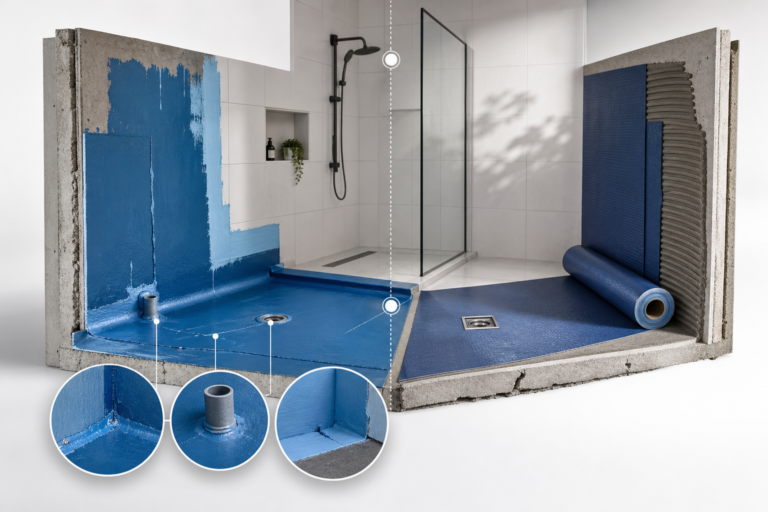
Waterproofing Membrane Types: Which Fails Most in NSW Bathrooms
Waterproofing failure is the single most common serious defect found in NSW apartments, and the type of membrane used, along
Read More »
Building Certifier NSW: Role, Limits, and When You Need More
A building certifier in NSW is a registered professional who issues construction certificates, conducts critical stage inspections, and grants occupation
Read More »