
Scott Schedule Construction Basics for Owners and Builders
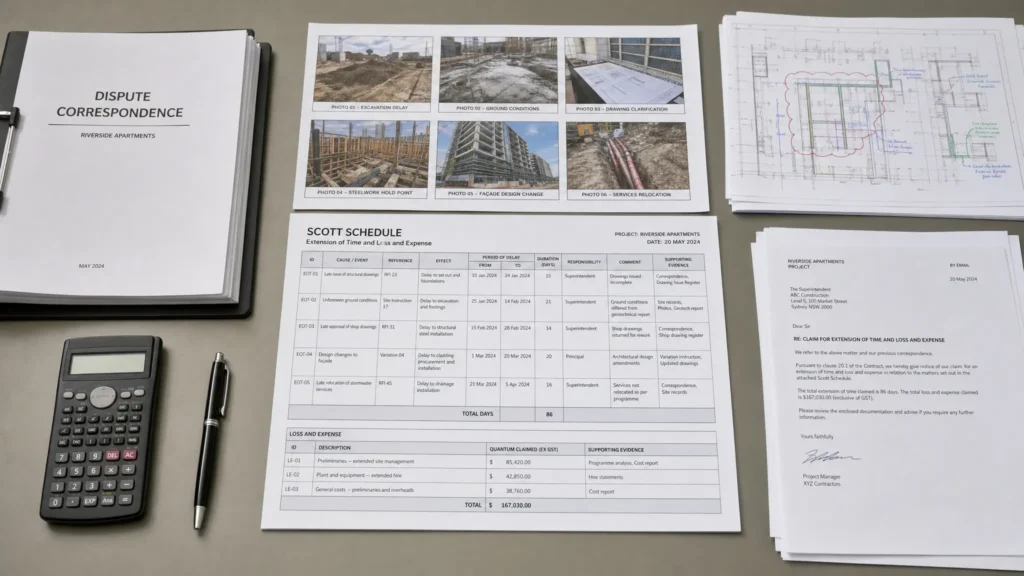
A Scott Schedule is one of the most useful documents in a construction dispute because it forces everyone to deal with the same issues, in the same order, with the same evidence in view. For owners, it can turn a long list of frustrations into a clear claim. For builders, it creates a fair opportunity to respond to each allegation rather than facing broad, unclear complaints.
In NSW building disputes, particularly matters involving NCAT or court proceedings, a Scott Schedule can help organise defects, incomplete work, variations, rectification costs and competing expert opinions. It is not a magic form that wins a case on its own. It is a disciplined way to present technical and cost issues so they can be understood, tested and resolved.
Glen Sim, owner and director of Awesim Building Consultants, approaches Scott Schedules as practical dispute tools, not just paperwork. The aim is simple: each row should help a decision-maker understand what is claimed, why it is claimed, what evidence supports it, what response is given, and what amount is in dispute.
This guide explains the basics for owners and builders. It is general information only and should not be treated as legal advice.
What is a Scott Schedule in construction?
A Scott Schedule in construction is a table used to break a building dispute into separate, itemised issues. Each row usually deals with one alleged defect, incomplete item, variation, cost claim or disputed scope of work.
Instead of presenting a dispute as a bundle of photos, quotes, emails and complaints, the schedule creates a structured pathway through the claim. That structure is especially helpful when there are many alleged defects or when the parties disagree about both liability and cost.
A basic Scott Schedule may answer questions such as:
- What item is being claimed?
- Where is it located?
- What is the alleged problem?
- What evidence supports the claim?
- What rectification work is proposed?
- What cost is claimed?
- What is the builder’s response?
- What does the expert say?
The schedule does not replace the contract, expert report, photos, invoices or legal submissions. It organises them. If the evidence is weak, unclear or inconsistent, the schedule will expose that weakness.
For a more detailed breakdown of layout and columns, Awesim has also published a guide to the Scott Schedule format commonly used in NSW building cases.
Why owners and builders should understand the basics
Owners and builders often come to a dispute from very different positions. An owner may feel the work is defective, unfinished or not what was promised. A builder may believe the work complies with the contract, that the owner changed the scope, or that claimed rectification costs are excessive.
A Scott Schedule helps narrow the gap by requiring each issue to be dealt with separately. That matters because many construction disputes become harder to resolve when different issues are bundled together. A waterproofing allegation, a paint finish complaint and a variation payment claim may all belong in the same dispute, but they should not be argued as if they are the same problem.
For owners, a schedule helps define the claim. It encourages better evidence, clearer descriptions and more realistic rectification costing. For builders, it provides a framework to admit, deny or qualify each item with reference to documents, site history and construction standards.
For lawyers and solicitors, the schedule can become a working document that connects pleadings, expert evidence, correspondence and quantum. NCAT provides information about home building disputes, and in many matters the quality of the documents presented can make a significant difference to how efficiently the dispute is managed.
What should be included in a construction Scott Schedule?
The exact format may depend on the tribunal, court, directions, legal strategy and type of dispute. However, most useful schedules contain a combination of claim details, evidence, response and cost information.
| Column | Purpose | Practical example |
|---|---|---|
| Item number | Gives each issue a unique reference | Item 1, Item 2, Item 3 |
| Location | Identifies where the issue appears | Main bathroom, rear deck, kitchen ceiling |
| Description of issue | States the alleged defect or disputed work | Cracked floor tile near shower entry |
| Evidence relied on | Links the claim to documents or photos | Photo P4, expert report paragraph 18 |
| Rectification proposed | Explains the work said to be needed | Remove and replace affected tile area |
| Amount claimed | States the claimed cost for that item | Based on quote or expert costing |
| Builder response | Sets out whether the item is admitted, denied or qualified | Denied, tile cracked after handover |
| Expert comment | Gives technical opinion where applicable | Cause, compliance issue, reasonable scope |
A schedule should be specific enough that someone unfamiliar with the project can understand the dispute. “Poor workmanship throughout” is not usually helpful. “Uneven wall tiling to ensuite shower, lippage visible at eye level, supported by photos P8 to P11” is more useful.
The more precise the schedule, the easier it is to test the claim.
How a Scott Schedule usually develops
A Scott Schedule is often built progressively. It may start with an owner’s list of alleged issues, then be refined by a building consultant, lawyer or expert. The builder may then add responses, and the schedule may continue to evolve as evidence is exchanged.
A common process looks like this:
- Identify each disputed item: Separate defects, incomplete work, variations and payment issues into individual rows.
- Match each item to evidence: Add references to photos, reports, contract clauses, emails, invoices or site records.
- Clarify the rectification scope: Describe what work is said to be required to fix or complete the item.
- Add the amount claimed: Include a cost that can be explained and supported rather than a broad estimate.
- Allow a response: Give the builder or opposing party space to admit, deny or qualify the item.
- Refine with expert input: Update the schedule so it aligns with technical findings and realistic costing.
This process is rarely perfect on the first attempt. A good schedule improves as weak items are removed, duplicated items are merged, descriptions become clearer and evidence references become more accurate.
If you are starting from a blank document, Awesim’s article on how to use a Scott Schedule template correctly explains how to avoid turning a template into a confusing list.
Owner basics: making the claim clear
Owners often know something is wrong, but the challenge is proving it in a way that is useful in a formal dispute. A Scott Schedule requires owners to move from general dissatisfaction to itemised claims.
The strongest owner entries usually include a clear location, a concise defect description, dated photos, relevant contract or scope references, and a sensible rectification method. If the claim is for incomplete work, the schedule should identify what was required and what remains outstanding. If the claim is about defective work, it should explain why the work is said to fall below the required standard.
Owners should be careful not to overload the schedule with every annoyance on the project. Minor cosmetic concerns, duplicated items or issues without evidence can distract from stronger claims. A long schedule is not automatically a strong schedule. In some disputes, ten well-supported items can be more persuasive than fifty vague complaints.
It is also important to separate different types of claims. A defect claim is not the same as a delay claim. A variation dispute is not the same as incomplete contracted work. Where variations are part of the disagreement, it may help to understand which construction variations commonly end in claims before deciding how they should be presented.
Builder basics: responding item by item
For builders, a Scott Schedule is an opportunity to respond in a controlled and evidence-based way. A broad denial such as “all work was completed correctly” is rarely as useful as a specific response to each row.
A builder’s response may explain that the item is admitted and will be rectified, denied because the work complies, qualified because the issue exists but the cause is disputed, or disputed because the claimed cost is excessive. Where relevant, the response should refer to contract documents, approved variations, site instructions, product data, photos, inspection records or handover documents.
Builders should also be careful with partial admissions. If a defect exists but the proposed rectification is excessive, the response should say so clearly. For example, a builder might accept that a minor patch repair is required but dispute full replacement of a larger area. That distinction can be important when quantum is assessed.
A clear response can reduce the number of issues that remain genuinely disputed. It may also help focus expert evidence on the items that matter most.
The role of expert evidence in a Scott Schedule
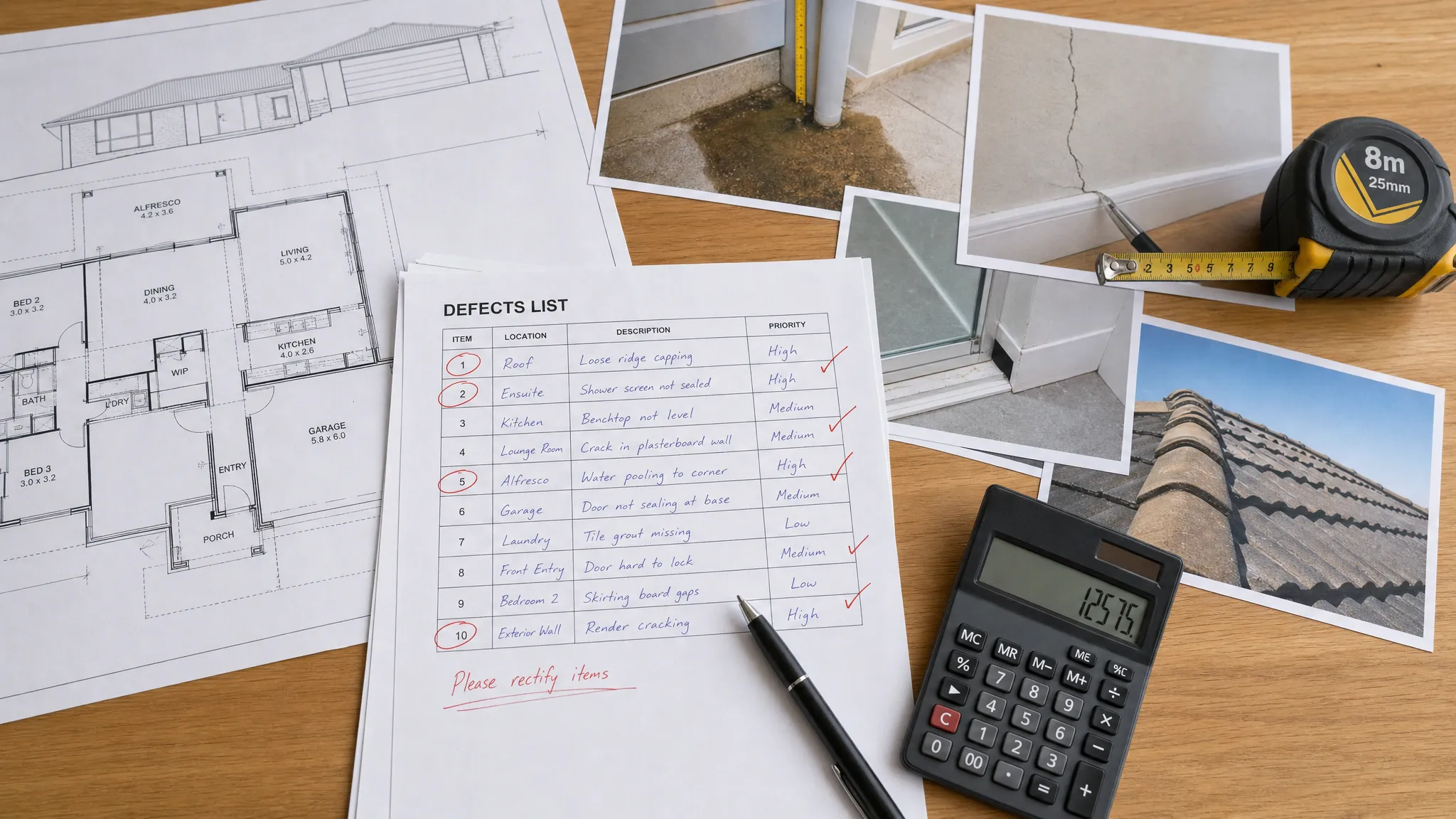
A Scott Schedule is only as useful as the evidence behind it. In construction disputes, technical issues often need expert assessment. That may include whether work is defective, whether it complies with applicable standards, what caused the problem, what rectification method is reasonable, and what cost is appropriate.
This is where an independent building consultant can add value. Glen Sim and Awesim Building Consultants assist with dispute-ready documents across NSW, including expert witness reports, Scott Schedules and quantum meruit reports. The role is not to make the table longer. It is to make it clearer, more technically reliable and better aligned with the issues in dispute.
Expert input is especially useful where the schedule includes structural concerns, water ingress, major cracking, waterproofing, incomplete works, disputed variations or competing rectification scopes. In those situations, a poorly prepared schedule can confuse the dispute, while a well-prepared schedule can help identify what genuinely needs to be decided.
If you are unsure how technical evidence fits into your matter, this guide on what a building consultant can do for your case explains the broader role of independent building dispute support.
Quantum: why the numbers need to be defensible
Many Scott Schedules fail because the descriptions are reasonable but the costings are not properly supported. In building disputes, quantum is the amount claimed or disputed. It needs to be more than a guess.
A defensible cost entry should connect the claimed amount to the scope of rectification. If the claim says tiles must be removed and replaced, the costing should reflect the area, labour, materials and associated works. If the claim relies on a quote, the quote should be consistent with the rectification method described in the schedule.
Owners should avoid inserting large lump sums without explanation. Builders should avoid rejecting costs without explaining what alternative scope or amount is reasonable. Where quantum meruit issues arise, meaning payment for work where a fixed contract price may not clearly apply, the schedule may need careful treatment so that the work performed, value claimed and basis of entitlement are not confused.
The key question is whether the number can be explained if challenged. If it cannot, the schedule may need more work.
Common mistakes to avoid
Scott Schedules are meant to simplify disputes, but they can create more confusion if prepared poorly. The most common problems are usually practical rather than complex.
| Mistake | Why it causes problems | Better approach |
|---|---|---|
| Vague descriptions | The other party cannot properly respond | Describe the item, location and alleged issue clearly |
| Too many duplicated items | Costs may be double counted | Merge overlapping claims or explain the distinction |
| No evidence references | The decision-maker must search through documents | Link each item to photos, reports or records |
| Lump sum costing | The amount claimed is difficult to test | Break down cost by scope where possible |
| Mixing defects and variations | Different legal and factual issues become blurred | Separate categories or clearly label each item |
| Ignoring the response column | The schedule becomes one-sided | Allow space for admissions, denials and qualified responses |
A schedule should not be treated as a dumping ground for every complaint. It should be a working document that helps the parties, experts and decision-maker focus on the real issues.
When should you get help with a Scott Schedule?
You should consider getting help early if the dispute involves many items, significant rectification costs, technical defects, water ingress, structural concerns, disputed variations or NCAT and court deadlines. The earlier the schedule is organised, the easier it is to identify missing evidence and avoid preventable mistakes.
Owners may need help turning site concerns into properly described claim items. Builders may need help responding to allegations in a way that is technical, fair and supported by records. Lawyers may need expert input to align the schedule with reports, pleadings and the evidence required for the matter.
A good Scott Schedule does not guarantee settlement, but it can make negotiation, mediation and hearing preparation more efficient. It can also reveal where the dispute is narrower than it first appeared.
Frequently Asked Questions
What is a Scott Schedule used for in construction disputes? A Scott Schedule is used to organise disputed construction issues into a structured table. It commonly lists alleged defects, incomplete work, variations, evidence, rectification scope, costs and responses from the other party.
Is a Scott Schedule required in every NSW building dispute? Not always. Whether it is required depends on the forum, directions and nature of the dispute. However, it is often useful where there are multiple defects, cost items or competing responses that need to be compared clearly.
Can an owner prepare a Scott Schedule without an expert? An owner can start a schedule by listing issues, locations, photos and costs. Expert input is often valuable where technical defects, compliance questions or significant rectification costs are involved.
How should a builder respond to a Scott Schedule? A builder should respond item by item, stating whether each item is admitted, denied or qualified. The response should refer to evidence such as contract documents, variations, site records, photos or expert opinion where available.
Does the Scott Schedule prove the claim? No. The schedule organises the claim and response, but the evidence still needs to prove the relevant issues. Photos, reports, contracts, invoices, quotes and expert evidence remain important.
Need help preparing or responding to a Scott Schedule?
If you are involved in a NSW building dispute, a clear and properly supported Scott Schedule can make a significant difference to how your matter is understood. Awesim Building Consultants provides independent building dispute support across New South Wales, including Scott Schedules, expert witness reports, NCAT dispute reports and quantum meruit reports.
For practical guidance from Glen Sim, owner and director of Awesim Building Consultants, contact Awesim to discuss the documents and expert support your matter may require.

Related Posts

Water Damage in Homes: How to Track Down the Source
Water damage in a home rarely announces itself at the source. A stain on the ceiling, a musty smell in
Read More »
Waterproofing Membrane Types: Which Fails Most in NSW Bathrooms
Waterproofing failure is the single most common serious defect found in NSW apartments, and the type of membrane used, along
Read More »
Building Certifier NSW: Role, Limits, and When You Need More
A building certifier in NSW is a registered professional who issues construction certificates, conducts critical stage inspections, and grants occupation
Read More »