
Building and Construction Lawyers: When to Call Them
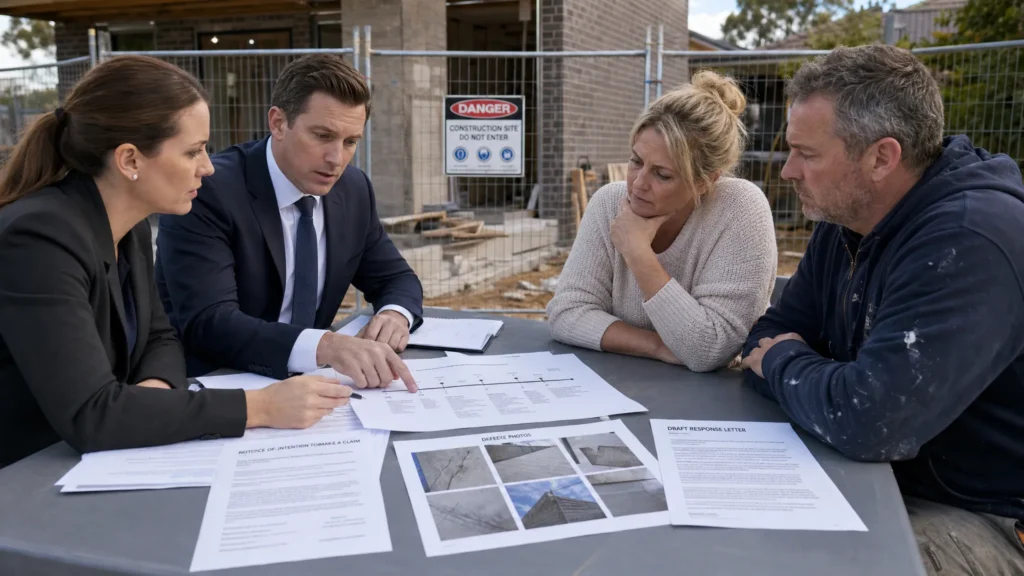
A building dispute can move from a practical disagreement to a legal problem faster than many owners and builders expect. One week the issue is cracked tiling, water ingress, unpaid variations or delays. The next week there is a letter of demand, a notice under the contract, an NCAT application or a threat to terminate.
That is when building and construction lawyers become important. They help you understand your rights, obligations, risks and deadlines. Just as importantly, they help you avoid taking a step that feels sensible in the moment but damages your position later.
This article is general information for NSW owners, builders and solicitors. It is not legal advice. If a dispute is escalating, obtain advice from a suitably qualified lawyer and support that advice with independent technical evidence where needed.
Building and construction lawyers are not only for court
Many people wait too long to call a lawyer because they assume legal advice means starting proceedings. In reality, early advice can prevent a dispute from becoming larger, more expensive and harder to resolve.
A building and construction lawyer can help with issues such as contract interpretation, statutory rights, payment claims, notices, settlement offers, termination risks, NCAT preparation and court strategy. They can also advise on the consequences of withholding payment, refusing access, engaging another contractor to rectify works or signing a deed of settlement.
What lawyers generally do not do is determine whether the building work is defective, whether a claimed variation was actually performed, what rectification method is appropriate or what the reasonable cost of rectification should be. Those are technical and evidentiary questions.
That is where an independent building consultant becomes critical. Glen Sim, owner and director of Awesim Building Consultants, is often engaged to provide independent construction dispute support, including expert witness reports, Scott Schedules, quantum meruit reports and defect assessments. If you need to understand how technical evidence supports a matter, Awesim explains what a building consultant can do for your case in more detail.
The strongest disputes strategy usually combines both roles: legal advice to protect your position and technical evidence to prove the facts.
Clear signs it is time to call a lawyer
Not every site disagreement needs immediate legal action. A minor defect, a missed appointment or a simple communication breakdown may be resolved with clear written correspondence and a sensible inspection. However, some warning signs should prompt legal advice without delay.
You should consider speaking with building and construction lawyers when:
- You receive a letter of demand, solicitor’s letter or formal notice under the contract.
- The other party threatens to terminate, suspend works or lock you out of the site.
- A payment claim, progress claim, final invoice or variation claim is disputed.
- There are allegations of defective, incomplete or non-compliant work.
- The dispute involves significant money, major defects, safety issues or water ingress.
- You are asked to sign a settlement agreement, release, deed or repayment arrangement.
- An NCAT application, court proceeding or insurance claim is being considered.
- You are unsure whether a limitation period, statutory warranty or contractual deadline applies.
NCAT deals with many home building disputes in NSW, and its procedures are designed to be more accessible than court. Even so, the outcome often depends on evidence, dates, documents and how the claim is framed. The NCAT home building disputes information is useful background, but it is not a substitute for tailored legal advice.
The timing matters because some decisions are difficult to unwind. If an owner pays another contractor to demolish and redo work before the original condition is documented, evidence may be lost. If a builder sends a poorly drafted notice or walks off site without advice, the termination issue may become more serious than the original defect allegation.
| Situation | Why a lawyer may be needed | How an independent consultant may help |
|---|---|---|
| Formal notice or demand received | To assess legal rights, deadlines and response strategy | To identify the technical facts behind the allegations |
| Defect allegations | To understand liability, remedies and dispute options | To inspect, photograph, assess causation and recommend rectification |
| Unpaid progress claim or variation | To advise on contract, payment rights and next steps | To assess completed work, scope changes and reasonable value |
| NCAT or court matter | To prepare pleadings, evidence and submissions | To provide expert evidence, Scott Schedules or reports |
| Termination threat | To advise before a high-risk step is taken | To record site status and incomplete or defective works |
For home owners: call before the dispute hardens
Home owners often try to be patient because they want the project completed, not litigated. That is understandable. However, patience can become risky if the builder denies responsibility, demands payment for disputed work or refuses to fix defects.
A lawyer should be considered before you withhold a progress payment, deny site access, terminate the contract or engage another builder to rectify. Each of those steps can have legal consequences. The right approach may depend on the contract, the type of defect, the evidence available and the history of communication.
It is also important to call for help before the site changes. If defective waterproofing, structural cracking, drainage failure or incomplete work is covered up or removed, it may become harder to prove what existed at the time of the dispute. A building consultant can inspect, photograph and record the condition of the works so that your lawyer has evidence to work with.
For owners, the most useful early question is not simply, “Can I win?” It is, “What do I need to prove, and what evidence do I need before I take the next step?”
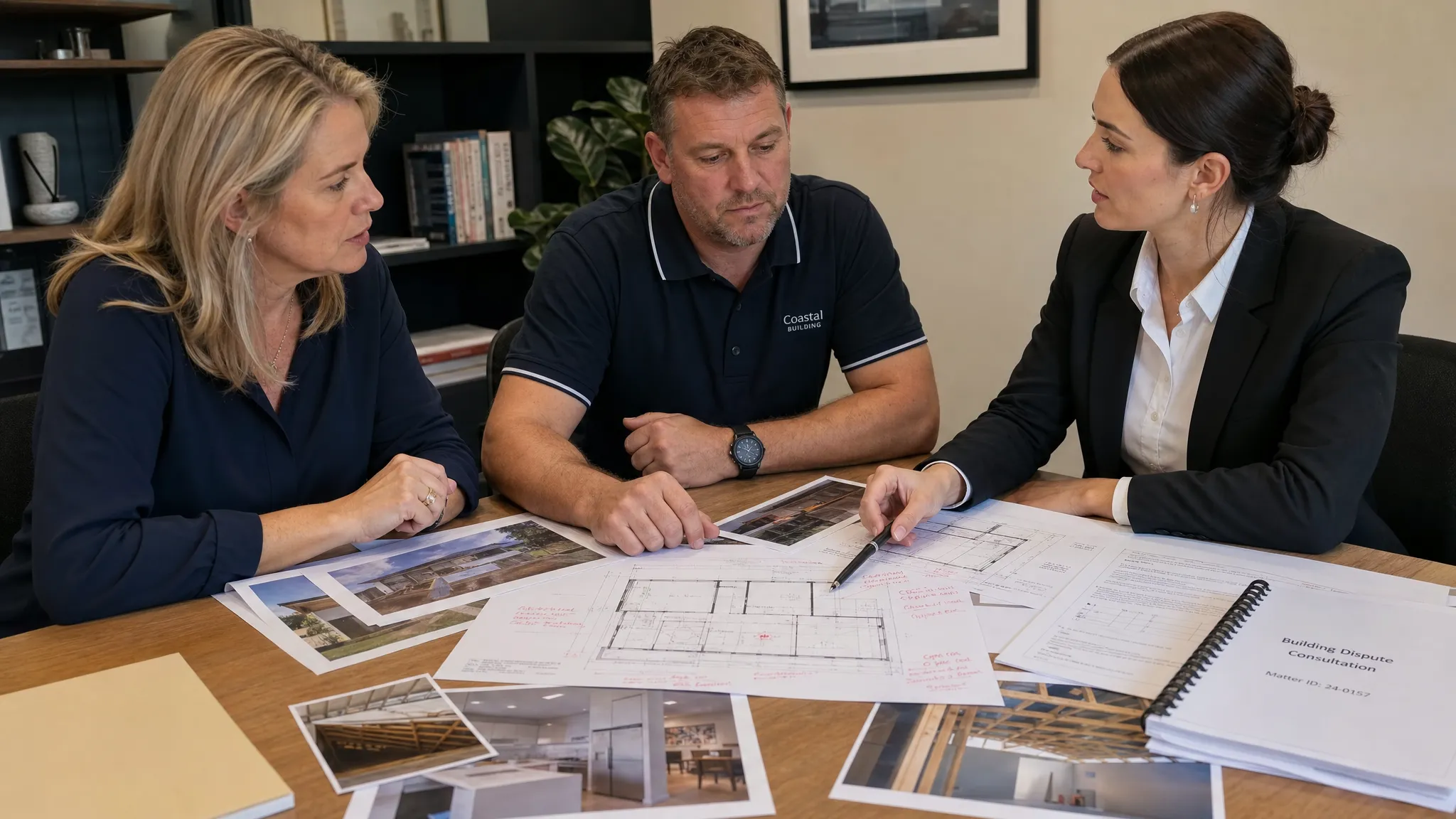
For builders: call before notices, payment disputes or defect claims escalate
Builders also need early legal advice, particularly when an owner refuses payment, disputes variations, alleges defects or threatens to terminate. A dispute may start with one unpaid claim, but quickly expand into allegations about delay, workmanship, scope, documentation and compliance.
If a payment dispute involves strict statutory or contractual timeframes, delay can be costly. In NSW, payment claims and construction payment processes can involve short response periods. Builders should obtain legal advice promptly rather than assuming a standard email response will protect their position.
Legal advice is also important before sending strong notices to an owner. A notice that is unclear, premature or inconsistent with the contract may weaken the builder’s position. A solicitor can help decide what should be said, when it should be said and what evidence should support it.
Technical evidence is often the other half of the answer. If an owner says the work is defective, the builder may need an independent assessment showing whether the work complies, whether any defect exists, what caused it and what rectification is reasonable. If the dispute concerns variations or unpaid work outside the contract scope, a quantum meruit report may assist by assessing the reasonable value of work performed.
Glen Sim and Awesim Building Consultants support these matters by focusing on independent evidence, not advocacy. That distinction matters. In a dispute, a report is more useful when it is objective, well-structured and tied to the physical evidence, documents and relevant building issues.
For lawyers and solicitors: call the expert before the evidence becomes messy
For solicitors acting in building disputes, the timing of an expert brief can materially affect the quality of the case. A matter may look straightforward at intake, but the technical issues often become more complex once pleadings, photographs, invoices, variations, site diaries and competing narratives are reviewed.
An independent construction expert should be considered early when the case turns on causation, scope, compliance, incomplete works, rectification cost or the reasonable value of work performed. Early expert input can help identify which allegations are technically supportable, which are overstated and which require further documents or site inspection.
This is particularly important for Scott Schedules. A schedule filled with broad allegations such as “poor workmanship” or “not completed properly” is rarely as useful as one that identifies the item, location, alleged defect, evidence, response, rectification method and cost. Awesim’s work in expert reporting is aligned with that need for clarity. If your matter is moving toward formal evidence, the article on how an expert witness helps in construction disputes may be a useful companion.
Lawyers should also consider briefing an expert before settlement discussions if the dispute involves technical uncertainty. Without a reliable assessment of defects, rectification costs or work value, parties may negotiate from assumptions rather than evidence.
What to prepare before you call
Whether you are an owner, builder or solicitor, preparation helps both the lawyer and the building consultant work efficiently. You do not need a perfect brief before asking for help, but you should start collecting the documents that explain the dispute.
Useful documents often include:
- The building contract, plans, specifications and scope of works.
- Variations, quotes, invoices, payment claims and receipts.
- Emails, text messages, site instructions and meeting notes.
- Photographs and videos showing the work at different stages.
- Any notices, letters of demand, reports or complaint documents.
- A short timeline of key events, including dates of payments, inspections and disputed works.
Try to preserve the original documents and keep communications in writing where possible. If conversations occur by phone or on site, make a file note shortly afterwards recording what was discussed, who was present and what was agreed or disputed.
Should you call the lawyer or the consultant first?
In many serious NSW building disputes, the practical answer is both. The order depends on the immediate risk.
If you have received a formal legal document, a termination notice, an NCAT application or a demand with a deadline, call a lawyer first. They can advise on urgent legal steps and may then brief an expert consultant in a way that suits the proceedings.
If the dispute is mainly technical at this stage, such as suspected defects, incomplete work, water ingress or disagreement over the quality of workmanship, a building consultant may be the first practical step. The consultant’s findings can help you decide whether legal advice is needed and what issues should be put to the lawyer.
If both legal and technical questions are already present, do not treat them as separate battles. A lawyer may frame the legal issues, while Glen Sim and Awesim Building Consultants can assist with independent technical evidence. For a closer look at the legal timing question, see Awesim’s guide on when to brief a construction dispute solicitor.
The key is to avoid acting on instinct alone. Building disputes are evidence-driven. A strong opinion is not the same as a strong case.
Common mistakes that make building disputes harder
Many disputes become more expensive because one party takes a major step without advice. Common mistakes include terminating too early, refusing access without understanding the contract, paying for rectification before documenting the defect, sending emotional emails, making admissions, ignoring timeframes or relying on informal verbal agreements.
Another common mistake is treating expert evidence as an afterthought. By the time a hearing is approaching, the site may have changed, documents may be missing and the parties may have committed to positions that are difficult to support. Early independent assessment can help narrow the dispute and reduce the risk of surprises.
For owners, builders and lawyers alike, the better approach is to identify the real issues early, preserve evidence and make decisions based on both legal advice and technical assessment.
Frequently Asked Questions
Do I need building and construction lawyers for every defect dispute? Not always. Minor issues may be resolved through clear communication, inspection and rectification. You should consider legal advice if the dispute involves significant cost, formal notices, payment refusal, termination threats, NCAT, court or uncertainty about rights and deadlines.
Can a building consultant replace a lawyer? No. A building consultant provides technical evidence about defects, incomplete work, causation, rectification and value. A lawyer provides legal advice about rights, obligations, strategy and proceedings. In many disputes, both roles are needed.
When should a solicitor brief an expert witness? A solicitor should consider briefing an expert when technical evidence is needed to support allegations, respond to a claim, prepare a Scott Schedule, assess rectification costs or deal with quantum meruit issues. Earlier briefing often produces clearer evidence.
Should I fix the defective work before getting advice? Be careful. Urgent safety or weatherproofing issues may need immediate attention, but the condition should be documented before it changes. If possible, obtain legal advice and an independent inspection before rectification work removes evidence.
What does Awesim Building Consultants provide in disputes? Awesim provides independent building dispute support across NSW, including expert witness reports, Scott Schedules, quantum meruit reports, defect assessments, NCAT dispute reports and litigation support.
Need independent evidence for a NSW building dispute?
If a building dispute is becoming legal, do not rely on argument alone. Clear, independent technical evidence can help your lawyer, support negotiations and assist in NCAT or court proceedings.
Glen Sim, owner and director of Awesim Building Consultants, provides independent building dispute support for home owners, builders and solicitors across New South Wales, including expert witness reports, Scott Schedules, quantum meruit reports and defect assessments.
Related Posts

Water Damage in Homes: How to Track Down the Source
Water damage in a home rarely announces itself at the source. A stain on the ceiling, a musty smell in
Read More »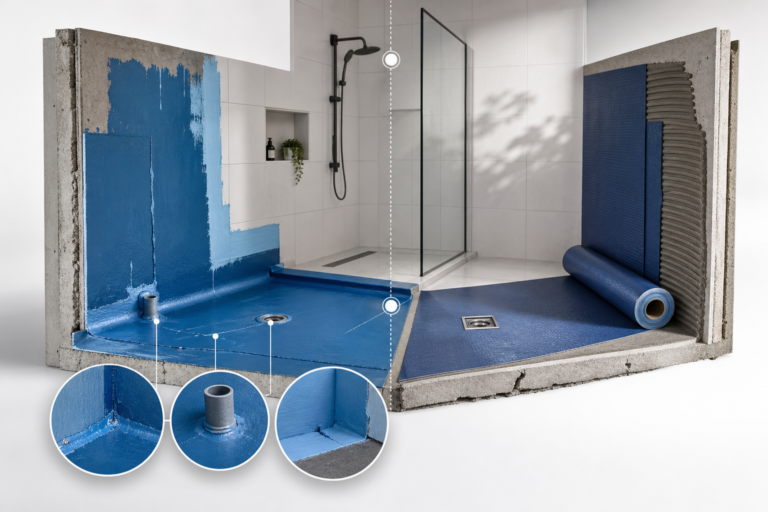
Waterproofing Membrane Types: Which Fails Most in NSW Bathrooms
Waterproofing failure is the single most common serious defect found in NSW apartments, and the type of membrane used, along
Read More »
Building Certifier NSW: Role, Limits, and When You Need More
A building certifier in NSW is a registered professional who issues construction certificates, conducts critical stage inspections, and grants occupation
Read More »