
What Building Services Consultants Assess on Site
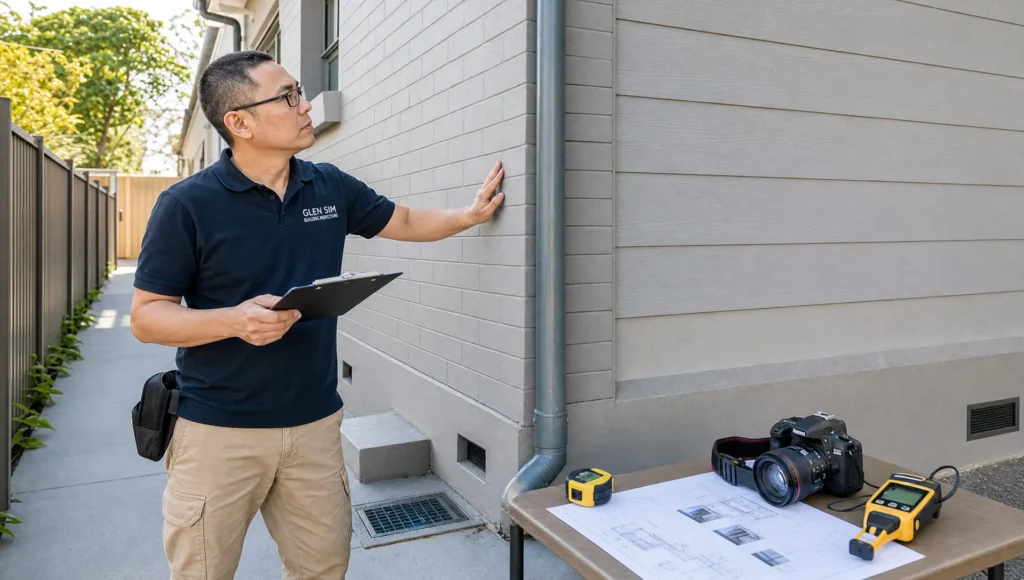
An on-site assessment is not a casual walk-through. In a building dispute, it is often the point where opinions, allegations and paperwork are tested against the physical condition of the work.
For homeowners, builders and solicitors, understanding what building services consultants assess on site helps set realistic expectations before an inspection. The consultant is not simply looking for faults. They are asking more disciplined questions: What was contracted? What was built? Is the work complete? Does it comply with the relevant requirements? What evidence supports each conclusion?
At Awesim Building Consultants, owner and director Glen Sim approaches site assessments with that evidence-first mindset. This is especially important in NSW matters where findings may later inform an expert witness report, Scott Schedule, quantum meruit report or NCAT dispute material.
The purpose of a site assessment
The purpose of a site assessment is to convert a building issue into clear, independent technical evidence. That means the consultant must observe the work, record what is visible, identify relevant documents, note limitations and explain how the findings relate to the dispute.
A good site assessment usually considers three layers of information. First, the physical condition of the work on the day of inspection. Second, the documents that define what should have been done, such as contracts, drawings, specifications, variations and invoices. Third, the technical benchmarks that may apply, such as the National Construction Code, Australian Standards, manufacturers’ requirements and accepted building practice.
This is why independence matters. A consultant engaged for a dispute should not simply advocate for the person paying the fee. Their role is to provide a reasoned technical opinion that can withstand scrutiny from the other side, a tribunal member, a court, or another expert.
What is reviewed before stepping on site
The site visit is only part of the assessment. Before attending, building services consultants often review the available documents to understand the scope of work and the issues in dispute. Without that context, an inspection can miss important contractual or technical details.
Relevant documents may include:
- The building contract and any special conditions
- Approved plans, engineering drawings and specifications
- Variations, progress claims and invoices
- Emails, notices, photos and site instructions
- Occupation certificates, inspection records and warranties
- Previous reports from certifiers, engineers, waterproofing specialists or other consultants
This document review helps the consultant avoid a common mistake: judging work only by appearance. A finish may look acceptable but still be inconsistent with the specification. Alternatively, an alleged defect may be outside the builder’s contracted scope or may relate to later damage, maintenance, design changes or third-party work.
For a broader explanation of how technical advice can support a dispute, see Awesim’s guide on what a building consultant can do for your case.
The main areas building services consultants assess on site
On site, the consultant is looking for facts that can be observed, measured, photographed and tied back to the dispute issues. The exact scope depends on the matter, but most inspections include a combination of workmanship, completion, compliance, damage, causation and cost relevance.
| Assessment area | What the consultant looks for | Why it matters in a dispute |
|---|---|---|
| Scope and completion | Whether claimed or alleged work has been carried out | Helps separate incomplete work from defective work |
| Workmanship | Alignment, finish, tolerances, installation quality and visible defects | Supports opinions on whether work is acceptable or requires rectification |
| Building services | Visible plumbing, drainage, ventilation, electrical interfaces, waterproofing and fire-related elements | Identifies service-related causes of damage or non-compliance |
| Water ingress and moisture | Leaks, staining, dampness, drainage falls, membrane clues and affected materials | Water issues often drive major defect and rectification claims |
| Structural indicators | Cracking, movement, deflection, settlement signs and load path concerns | May indicate whether specialist engineering input is required |
| Compliance references | Relevant drawings, specifications, NCC requirements and standards | Links observations to recognised technical benchmarks |
| Access and limitations | Areas not visible, unsafe areas, concealed work and destructive testing needs | Protects the integrity of the opinion by stating what could and could not be verified |
Workmanship, defects and tolerances
Workmanship is one of the most common areas assessed on site. This can include tiling, carpentry, plasterboard, painting, cladding, roofing, windows, doors, waterproofing transitions, paving, drainage falls and general finish quality.
The consultant is not only asking whether something looks neat. They are asking whether the work is consistent with the contract, relevant standards, manufacturer requirements and reasonable construction practice. For example, uneven floor tiles may need to be assessed by location, extent, lipping, drainage effect and whether the issue is cosmetic, functional or a sign of a deeper substrate problem.
This distinction matters because not every imperfection justifies major rectification. Some issues are cosmetic. Some affect performance. Some are symptoms of poor substrate preparation or movement. Some require further investigation before a final opinion can be safely formed.
If the core dispute involves alleged defects, Awesim has a separate guide explaining how a building construction consultant assesses defects in more detail.
Building services and installed systems
The phrase building services consultants can sometimes refer specifically to technical services such as plumbing, drainage, electrical, mechanical ventilation, heating and cooling, fire systems and related building performance elements. In a dispute context, an independent building consultant may assess visible service-related issues as part of the broader building work.
This may include checking whether visible drainage appears to discharge correctly, whether ventilation openings are present, whether wet area waterproofing failures are indicated by staining, whether penetrations have been sealed appropriately, or whether service installation has damaged other elements of the building.
However, there are limits. A building consultant should not pretend to certify specialist systems beyond their expertise or licensing. For example, live electrical testing, gas testing, detailed hydraulic design review or fire engineering analysis may require input from an appropriately qualified specialist. A sound report will identify those limitations rather than overreach.
That honesty strengthens the evidence. It shows which conclusions are based on direct observation and which issues require further specialist investigation.
Water, drainage and moisture behaviour
Water-related issues are often central to building disputes because the visible symptom may be far from the original cause. A ceiling stain may relate to roof flashing, plumbing, condensation, a balcony membrane, an external wall junction or a combination of factors.
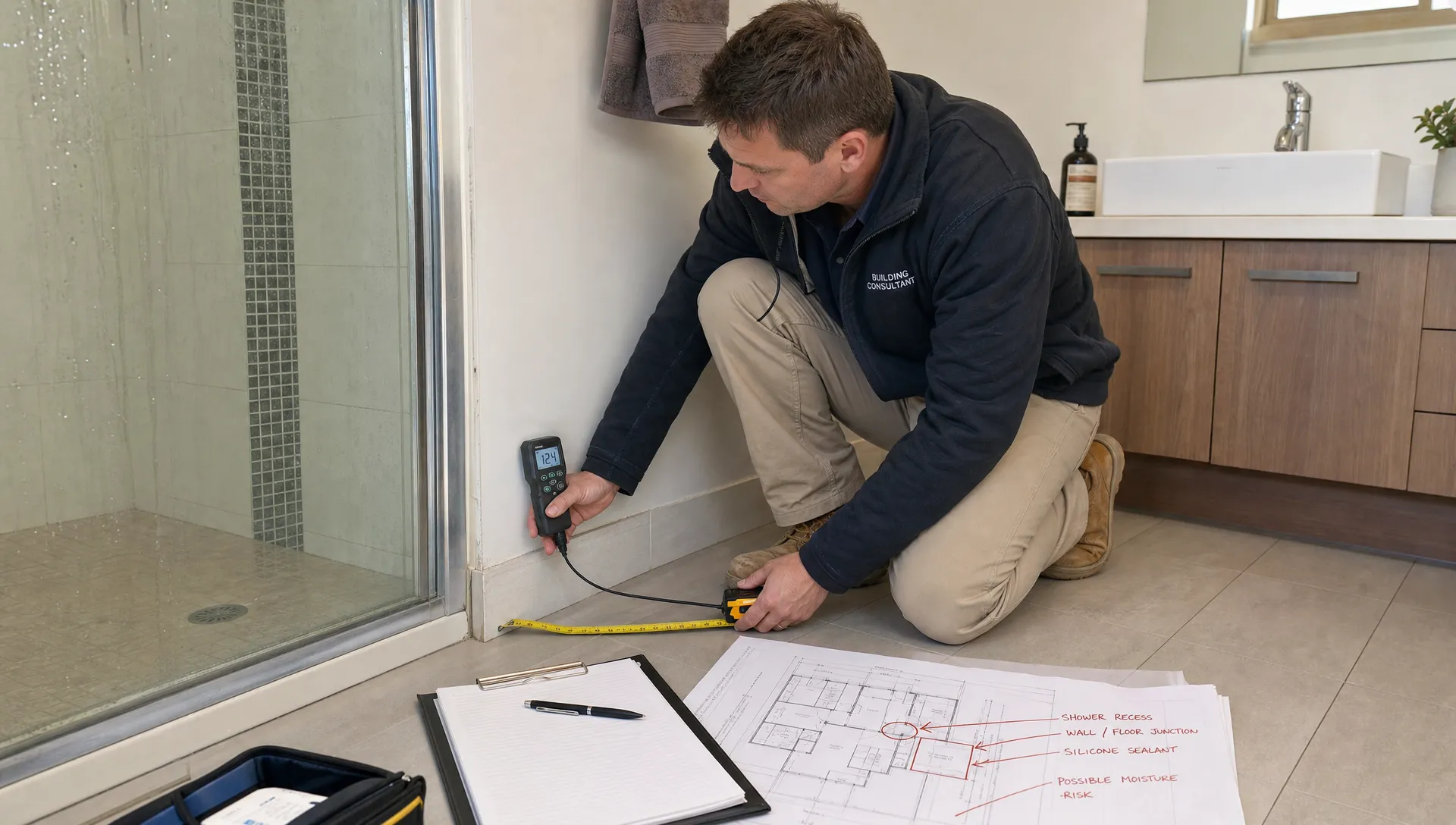
On site, the consultant may look at falls, ponding, cracks, sealant failure, weep holes, flashing details, drainage paths, wet area junctions, external ground levels and signs of repeated moisture exposure. The inspection may also record staining patterns, swelling, corrosion, mould indicators and damage to adjacent materials.
The consultant’s role is to avoid jumping to conclusions. A moisture stain is evidence of moisture, not automatically proof of a single cause. The report should explain the likely cause, the basis for that opinion and whether further testing is needed.
Structural indicators and when specialist input is needed
Building consultants often assess signs that may indicate structural movement or distress, such as cracking, deflection, uneven floors, sticking doors, separation at junctions or settlement around external areas. These observations can help determine whether an issue appears superficial or whether engineering advice is required.
A consultant may record crack widths, locations, patterns and surrounding conditions. They may also consider whether cracking aligns with construction joints, openings, material changes, footing movement or water-related ground conditions. The aim is to identify the technical significance of the issue, not to exaggerate or minimise it.
Where structural adequacy is in question, a structural engineer may need to provide a specialist opinion. A strong building assessment will make that recommendation clearly if the evidence requires it.
Compliance with documents, the NCC and standards
Site observations become more useful when they are tied to recognised requirements. In NSW disputes, a consultant may consider the building contract, approved plans, specifications, statutory warranties under the Home Building Act 1989 (NSW), relevant Australian Standards and the National Construction Code.
This does not mean every issue requires a long code analysis. The point is to identify the benchmark that matters. If the dispute is about whether a balustrade, stair, waterproofing detail or ventilation arrangement is acceptable, the opinion should refer to the relevant technical basis where appropriate.
For solicitors, this is particularly important. A report that says poor workmanship may be less useful than one that identifies the location, describes the defect, explains the non-compliance or performance issue, and links the opinion to the right documents. Awesim has also written about what building defect lawyers need from your expert report when preparing or responding to a claim.
How on-site findings are recorded
A careful inspection should leave a clear evidence trail. This usually includes dated photographs, notes, measurements, marked-up plans, room-by-room observations and records of any limitations. If an item may later appear in a Scott Schedule, it should be described with enough precision that all parties can identify the same location and issue.
For example, a vague note such as bathroom defective is weak. A stronger record might identify the bathroom, the specific wall or floor area, the observed condition, the relevant measurement, the suspected cause and the recommended rectification scope if appropriate.
This level of detail is useful for all parties. Homeowners can understand what is genuinely supported. Builders can respond to specific allegations. Lawyers can plead, negotiate or test the evidence more effectively.
Defect, incomplete work, variation or maintenance issue?
One of the most valuable parts of a site assessment is classification. Many disputes become more manageable once each item is separated into the correct category.
| Issue type | What it usually means | Example |
|---|---|---|
| Defective work | Work was done, but may not meet the required standard | A leaking shower due to failed waterproofing detailing |
| Incomplete work | Work was included in the scope but not finished | Skirting boards not installed in a contracted room |
| Variation dispute | The parties disagree about changed scope, approval or payment | Extra tiling claimed without clear written approval |
| Damage after completion | The condition may have arisen from later use, impact or events | Scratched flooring after occupation or other trades |
| Design or specification issue | The built work may reflect the design, but the design itself may be problematic | Poor drainage outcome caused by insufficient documented falls |
| Maintenance issue | The problem may relate to upkeep rather than original workmanship | Blocked gutters causing overflow after handover |
This classification can significantly affect the outcome of a dispute. It influences who may be responsible, what rectification is reasonable and whether the item belongs in a defect report, payment claim response, Scott Schedule or quantum meruit analysis.
What homeowners, builders and lawyers should expect
Homeowners should expect the consultant to listen to the complaint, inspect the relevant areas and explain which concerns appear technically supported. A good consultant will also identify issues that may not be defects, even if they are frustrating. That objectivity can prevent a claim from becoming inflated or unfocused.
Builders should expect the inspection to consider the contract scope, construction sequence, access, prior instructions and whether alleged defects are actually attributable to their work. An independent assessment can help separate genuine defects from unsupported allegations.
Lawyers should expect the consultant to provide usable evidence, not just general commentary. In litigation or NCAT matters, the report may need to address causation, liability-related technical facts, rectification scope, cost relevance and any assumptions or limitations. Where an expert witness report is required, the consultant must remain independent and focused on assisting the decision-maker with technical opinion.
How to prepare for a site inspection
Preparation helps the inspection run efficiently and reduces the risk of missing important evidence. Before the consultant attends, gather the key documents, identify the areas of concern and make sure access is available to relevant rooms, roof spaces, subfloors, external elevations or service areas where safe and practical.
It is also wise to avoid carrying out repairs before the inspection unless urgent safety or damage mitigation is required. If emergency work has already been done, keep photos, invoices and notes showing the condition before repair.
If a solicitor is involved, the inspection scope should be clear before attendance. That may include whether the consultant is preparing a preliminary opinion, expert witness report, Scott Schedule response, quantum meruit assessment or a report for negotiation.
What happens after the site visit
After the inspection, the consultant analyses the observations against the documents and technical requirements. The output may be a written defect assessment, an expert witness report, a Scott Schedule, a response to another expert’s report, or a quantum meruit report assessing the reasonable value of work performed.
The best reports are structured, specific and transparent. They explain what was inspected, what was observed, what documents were reviewed, what standards or requirements were considered, and how each opinion was reached. They also state limitations clearly, including concealed work, inaccessible areas and issues requiring specialist testing.
This is where Glen Sim’s evidence-focused approach is valuable. In a dispute, the strongest opinion is not the loudest one. It is the one that is technically sound, clearly explained and supported by the facts observed on site.
Frequently Asked Questions
Do building services consultants inspect electrical and plumbing work? They may assess visible service-related issues, such as drainage problems, water damage, penetrations, ventilation and installation impacts. Specialist testing or certification of electrical, gas, hydraulic or fire systems may require an appropriately qualified specialist.
Is a site assessment the same as an expert witness report? No. A site assessment is the inspection and evidence-gathering process. An expert witness report is a formal written opinion prepared for a dispute or legal process, usually with stricter requirements around independence, reasoning and evidence.
Can a consultant say who is legally responsible for a defect? A building consultant can provide technical opinions about cause, compliance, workmanship and scope. Legal responsibility is usually a matter for solicitors, NCAT or the court to determine based on the evidence and applicable law.
Should both parties attend the inspection? It depends on the matter and the instructions. In some disputes, attendance by both parties improves transparency. In others, access, safety, legal strategy or tribunal directions may affect who attends.
What if the defect is hidden behind walls or under floors? The consultant should record the limitation and explain whether further investigation is needed. This may include moisture testing, invasive inspection, specialist reports or opening-up works if authorised.
Need an independent site assessment in NSW?
If you are dealing with a building dispute, payment disagreement or defect claim, an independent site assessment can help turn uncertainty into clear technical evidence.
Awesim Building Consultants provides expert witness reports, Scott Schedules, quantum meruit reports and dispute-focused building assessments across NSW. To discuss your matter with Glen Sim and the Awesim team, visit Awesim Building Consultants.

Related Posts
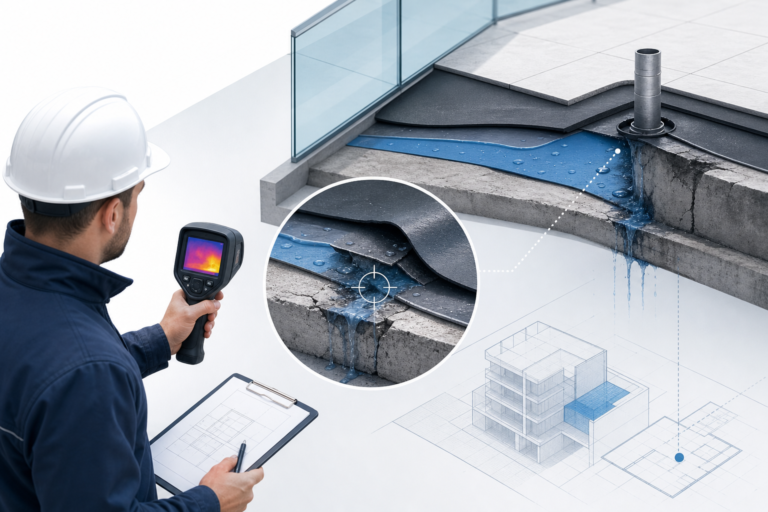
Waterproof Membrane Failure: How Inspectors Find the Cause
Waterproof membrane failure is diagnosed by tracing the water entry point, reviewing design documents, exposing the membrane for visual inspection,
Read More »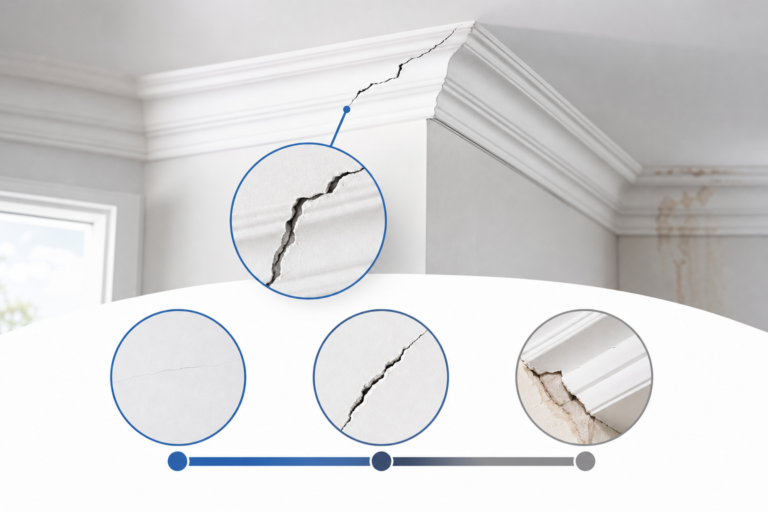
Cornice Cracking: How to Tell If the Damage Is Serious
Cornice cracking is one of the most common concerns Australian homeowners raise, and the hard part is not spotting the
Read More »
Digital Construction Consultant Australia: What They Do
A digital construction consultant in Australia manages the technology-driven side of building projects: BIM coordination, clash detection, asset data handover,
Read More »