
Waterproofing Expert Witness: Your Guide to NSW Disputes
Water ingress disputes rarely start as “a legal matter”. They usually start with a shower leak that won’t stay fixed, a balcony stain spreading into the room below, or a builder being told the membrane failed when they’re not convinced that’s the actual cause.
By the time a waterproofing expert witness is sought, those involved are typically already under pressure. The owner wants answers. The builder wants a fair assessment. The solicitor wants evidence that will stand up in NCAT. What matters at that point isn’t guesswork or a strongly worded email. It’s a clear, independent path from visible damage to technical cause, and from technical cause to responsibility.
In NSW, that path needs to be organised properly from the start. If you approach it the right way, the process becomes much less confusing.
What Is a Waterproofing Expert Witness and Why You Might Need One
A bathroom has leaked twice, the balcony below is stained, and each contractor has a different explanation. By that stage, the issue is no longer just repair work. It is evidence, cause, and responsibility.
A waterproofing expert witness investigates those questions for a dispute. The role is to inspect the building, review the drawings and defect history, test the likely failure pathways where needed, and give an independent opinion in a form NCAT can rely on.
That independence matters in NSW matters. A builder, tiler, strata manager, or remedial contractor may all have useful observations, but a tribunal needs more than a view formed from one trade position. It needs a reasoned opinion that links the symptoms to the likely source of water entry, explains the basis for that conclusion, and sets out whether the work appears defective, non-compliant, poorly detailed, or affected by another cause such as movement or maintenance.
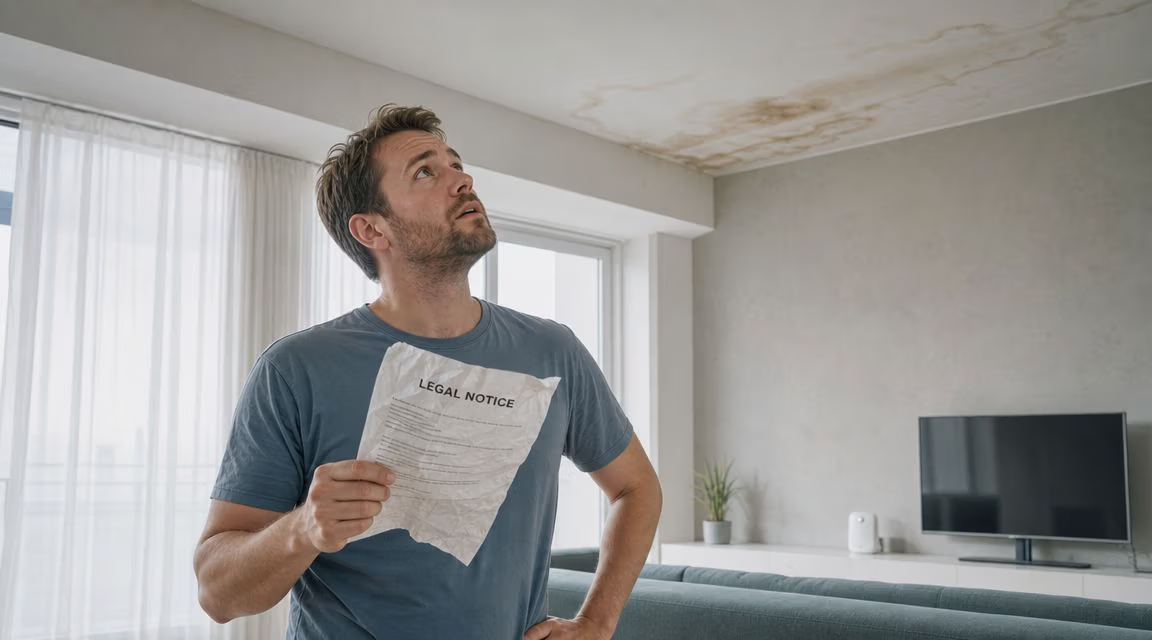
When a leak becomes a dispute
Many waterproofing problems drift for months because the first response is patching. More silicone is applied. A cracked grout joint gets blamed. Water stops for a short period, then reappears somewhere else.
That pattern usually means the underlying issue has not been isolated.
Once the owner and builder stop agreeing on the cause, or the proposed rectification becomes expensive, an expert is often needed to sort out three practical questions:
- Where is the water getting in?
- What building element has failed, or is likely to have failed?
- What evidence supports that conclusion well enough for NCAT?
In NSW, that work is usually tied back to the compliance framework that governs the job, including the NCC and the relevant waterproofing standards for the area involved. A properly prepared waterproofing defect report for a building dispute helps turn a stressful allegation into a technical case that can be assessed.
Situations where engaging an expert usually makes sense
A waterproofing expert witness is commonly brought in when the matter has moved past ordinary troubleshooting, for example:
- Causation is contested. One party blames the membrane, another blames tiling, falls, flashings, drainage, or a penetration.
- Damage has spread beyond one room. Moisture is affecting adjoining finishes, lower levels, skirtings, framing, or common property.
- The paper trail is growing. Defect notices, builder responses, insurer correspondence, and solicitor letters are already in play.
- NCAT is being considered or has started. Unsupported assertions rarely help once the matter is before the tribunal.
- Rectification may be invasive or expensive. Before bathrooms, balconies, podiums, roofs, or façades are opened up, the cause should be pinned down as far as reasonably possible.
The trade-off is straightforward. Engaging an expert costs money early, but guessing wrong can cost far more if the wrong area is demolished, the wrong trade is blamed, or the same leak returns after rectification.
What the expert adds to the case
The value is not just technical knowledge. It is structure.
A good expert separates symptom from cause, records the relevant site evidence, identifies what can and cannot be concluded from that evidence, and explains the likely failure mechanism in plain language. In practice, that often changes the course of a matter. It gives owners a clearer basis for a claim, gives builders a fair chance to answer the actual allegation, and gives solicitors material they can use instead of working from emails and photos alone.
In NCAT, that difference is often decisive.
Qualifying the Expert Credentials That Matter in NSW
Not every experienced builder is suitable as an expert witness. Site experience is important, but in NCAT it isn’t enough on its own. The opinion has to be grounded in recognised technical benchmarks and expressed in a way the tribunal can rely on.
The benchmark is not personal preference
In NSW, a waterproofing expert witness is expected to connect the defect to a specific code or standard, primarily the National Construction Code and AS 3740 for wet areas, because that framework underpins Australian building disputes, as noted in the verified reference at JurisPro’s waterproofing expert listing.
That means the key question usually isn’t, “Would I have built it differently?”
It’s closer to this: was the work compliant, was the detailing adequate, and does the evidence support a defect in design, installation, materials, or maintenance?
What to look for in the expert’s background
When clients are choosing an expert, these are the checks that matter most:
- Construction grounding: They should understand how waterproofing interfaces with framing, substrates, screeds, flashings, finishes, penetrations, and drainage.
- Diagnostic experience: Finding a leak is not the same as fixing one. The expert needs forensic discipline, not assumptions.
- Reporting experience: A sound technical opinion can still fail if the report is poorly structured.
- Litigation support exposure: NCAT documents need clarity, neutrality, and discipline.
A general builder might know that something looks wrong. An expert witness needs to explain why it is wrong, how that conclusion was reached, and what competing explanations were considered.
Questions worth asking before you engage anyone
A short conversation can tell you a lot. Ask:
| Question | Why it matters |
|---|---|
| Have you investigated waterproofing failures in disputed matters before? | Dispute work is different from ordinary defect inspection work. |
| How do you approach causation where water appears away from the entry point? | This shows whether they understand leak pathways. |
| What documents do you need before the inspection? | Serious experts want plans, contracts, photos, and correspondence. |
| Can you prepare a report suitable for NCAT? | Not every consultant writes for tribunal use. |
| Can you assist with a Scott Schedule if required? | Many cases need defect itemisation, not just narrative reporting. |
The most useful experts are rarely the loudest. They’re the ones who can take a messy site history and reduce it to evidence, standards, and conclusions that make sense.
Awesim’s background is relevant here because the work sits at the intersection of practical building knowledge and dispute documentation. The firm draws on 35+ years in building and construction and 15+ years providing litigation support for homeowners, builders, and lawyers. In NSW matters, that combination is often what keeps a report grounded in both the site reality and the procedural reality.
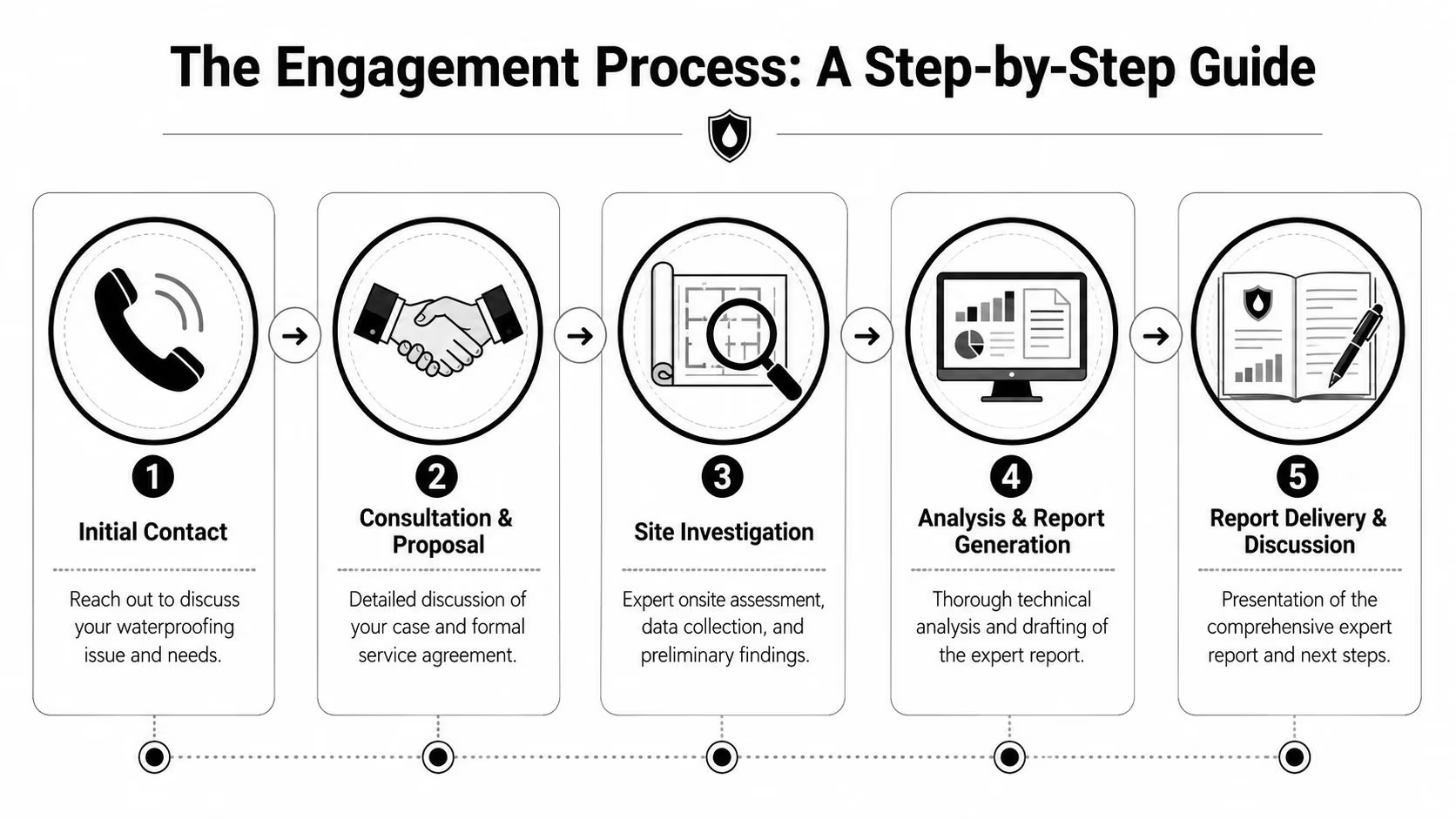
The Engagement Process A Step-by-Step Guide
People often worry that engaging an expert will be complicated. It doesn’t need to be. The process works best when it’s handled in a straightforward sequence, with the right documents gathered early and expectations set before the inspection.
Step one starts before the phone call
Before you contact an expert, pull together the basic file. You don’t need to write a perfect legal brief. You do need to give a usable snapshot of the problem.
Gather these first:
- Key dates: When did the leak appear, when was the work done, and when was the builder notified?
- Project documents: Contract, scope, plans, specifications, waterproofing details, and any variations.
- Photos and video: Early images are often more useful than later ones because they show the damage before anyone started patching.
- Correspondence: Emails, texts, defect notices, quotes, and responses from the other side.
- Prior reports: Builder reports, strata reports, plumbing reports, or insurer material if any exists.
What happens once you engage the expert
The engagement itself usually follows a practical sequence.
Initial discussion
The consultant asks what is leaking, where the dispute stands, and what outcome you need. Sometimes the issue is report-only. Sometimes it includes inspection, Scott Schedule work, or later attendance at NCAT.Scope and fee proposal
The scope should spell out what is included. That may cover document review, site inspection, moisture testing, photographs, analysis, reporting, and follow-up discussion.Document review before site attendance
A proper review before the inspection often saves time onsite. The expert can identify likely pressure points, missing information, and areas that may need closer examination.Site investigation
Access is arranged. The relevant areas are inspected. Notes, images, and testing results are recorded. If access is limited, that limitation should be documented.Report drafting and issue
After the inspection, the evidence is analysed and set against the relevant standards and defect mechanisms.
Your role in making the process efficient
The client can make a major difference to the quality of the outcome. The more organised the input, the cleaner the report.
Use this short checklist:
- Be chronological: A timeline helps separate original defects from later symptoms.
- Don’t tidy the evidence away: Fresh paint, silicone, or replacement finishes can hide useful clues.
- Declare prior repairs: Even failed patchwork matters because it can indicate an unresolved source.
- Confirm access early: Roofs, balconies, neighbouring lots, strata areas, and tenanted spaces can delay the inspection if not arranged in advance.
If you’re at the start of that process, call 1800 293 746. A clear first discussion usually saves a lot of wasted effort later.
Anatomy of an Expert Report and Scott Schedule
A waterproofing dispute can feel chaotic because the facts are scattered across photos, plans, emails, site conditions, and competing explanations. The report and Scott Schedule turn that mess into something structured.
Imagine pulling apart an engine to find the failed component. You don’t just point at the bonnet and say the car doesn’t work. You identify the part, the mechanism of failure, and the consequence.
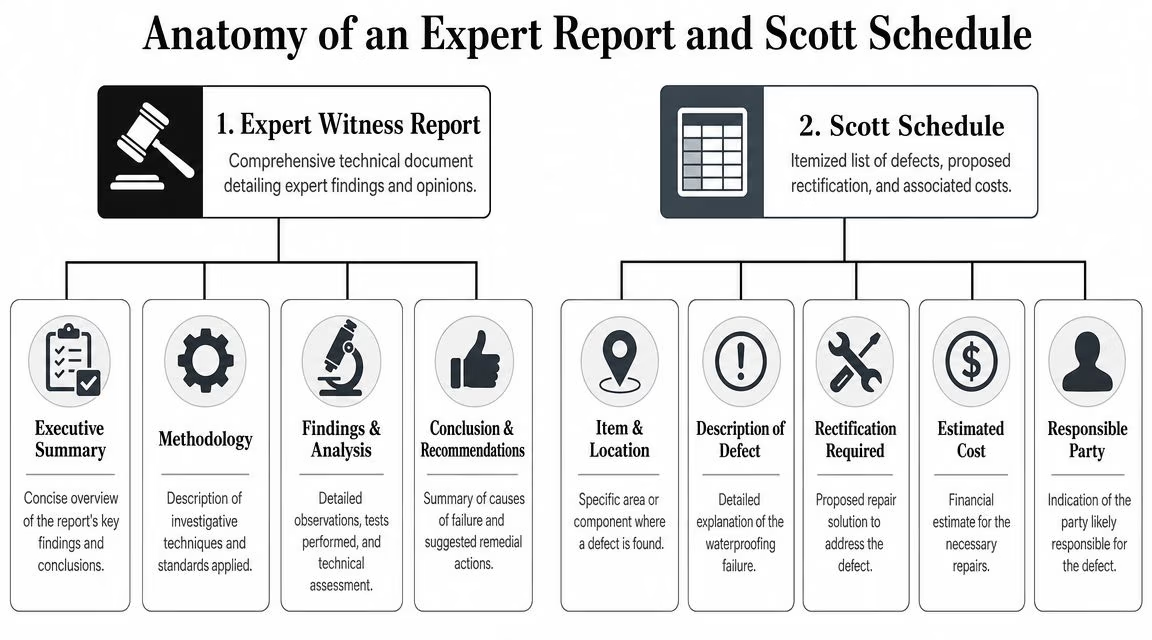
What sits inside the expert report
In Australian building disputes, waterproofing experts commonly combine site inspection, moisture readings, and document review to determine water ingress causation, and the authority of the report comes from linking observations to national technical benchmarks associated with the Australian Building Codes Board, established in 1994, rather than simple opinion, as summarised in the verified reference at Experts.com’s roofing and waterproofing expert page.
A useful report will usually include:
- The expert’s qualifications and instructions received
- Documents reviewed, such as plans, contracts, photos, and correspondence
- Site observations, recorded carefully and location by location
- Methodology, including any moisture testing or intrusive inspection
- Analysis, tying physical evidence to likely failure mechanisms
- Opinion, expressed in plain language and linked to the technical framework
- Recommended rectification scope, where that forms part of the instruction
A report carries weight when the reasoning is visible on the page. If the reader can’t follow how the expert got from stain to source, the report is incomplete.
Where large volumes of material exist, even a tool for mastering AI PDF summarization can help clients or solicitors sort contracts, email chains, and annexures before the formal review begins. It won’t replace technical analysis, but it can make a bulky file easier to process.
Why the Scott Schedule matters in NCAT
The Scott Schedule is a working document. It lines up the disputed items so each defect can be dealt with methodically rather than argued in broad terms.
A typical waterproofing Scott Schedule may include:
| Item | What it records |
|---|---|
| Location | Where the defect is found |
| Defect description | What has failed or what symptom is observed |
| Standard or requirement | The benchmark said to be relevant |
| Rectification | What work is said to be needed |
| Cost position | The amount claimed or disputed |
| Response | The other party’s agreement, denial, or alternative view |
That side-by-side format is one reason these documents are useful in NCAT. They narrow the argument.
For matters requiring both narrative defect analysis and itemised comparison, expert witness Scott Schedule support can be used to organise the issues in the format the tribunal expects.
What strong documentation looks like
Strong reporting is usually calm, specific, and restrained. It doesn’t overreach.
It identifies what was seen, what was not accessible, what testing supports the conclusion, and where assumptions would be unsafe. That’s also why reports aligned with NCAT procedural requirements tend to be more persuasive than documents written like advocacy pieces.
Common Waterproofing Failures We Investigate
A waterproofing dispute usually starts with a simple symptom. A ceiling stain under a balcony. Skirting swelling near a shower. Paint lifting beside a window. By the time the matter reaches NCAT, the key issue is no longer the stain itself. It is identifying where the waterproofing system failed, how that failure can be verified, and whether the defect sits in design, installation, damage, or an ineffective repair attempt.
After years of litigation support work in NSW, the pattern is consistent. Water rarely shows itself at the same place it enters. That is why these matters have to be investigated from the assembly outward, not from the stain backward.
The leaking balcony
Balconies generate a high number of disputes because several details have to line up at once. Falls, drainage, membrane continuity, thresholds, edge terminations, balustrade fixings, and door interfaces all affect performance. One weak point can be enough.
Typical findings include:
- Insufficient falls: Water ponds instead of draining away.
- Poor membrane terminations: The membrane stops short, is not properly turned up, or is finished badly at edges.
- Penetration defects: Posts, screws, or fixings interrupt the waterproof layer.
- Threshold detailing failures: Water tracks inward at doors during wind-driven rain or prolonged ponding.
In practice, balcony disputes often involve more than one defect. That matters in NCAT because a report needs to separate the visible damage from the mechanism of failure and explain which defect is causing ongoing ingress.
The shower that keeps leaking after “repairs”
Shower disputes often begin with grout because grout is the part everyone can see. In many cases, the problem sits below the tile finish, at wall-floor junctions, around hobs, waste detailing, or penetrations that were never sealed correctly.
A common sequence is familiar. The shower is regrouted. The leak appears to settle. A few months later the same wall, skirting, or adjoining room shows damage again because the membrane path was never repaired.
One site pattern comes up repeatedly: if damage returns at the same junction after cosmetic repairs, the actual defect is usually deeper in the assembly.
This kind of issue is easier to understand visually:
Window, flashing, and façade interface failures
Window and façade matters are often misread at first. The owner sees peeling paint, swollen trim, or damp plaster internally. The defect may sit outside, where flashings, sealants, cladding edges, sill details, or slab junctions were not formed properly.
These cases need a disciplined sequence of inspection. External details are checked first, including joints, flashings, terminations, and drainage paths. Internal moisture patterns are then mapped to see whether the damage aligns with the suspected entry route. If the evidence points to a concealed defect, targeted opening-up may be required.
That order matters. It reduces guesswork and helps avoid destructive investigation in the wrong area.
Planter boxes, retaining walls, and below-grade areas
Planter boxes and below-grade waterproofing failures are often slow, persistent, and expensive to rectify. The membrane is usually concealed behind soil, screeds, wall systems, or hard finishes, so the first visible sign may appear well away from the source.
These disputes also involve a practical trade-off. A full diagnosis may require invasive access, but unnecessary demolition can increase cost and conflict. The inspection has to be staged carefully so the evidence supports the next step.
For both homeowners and builders, the message is straightforward. Do not assume the nearest wet spot is the source. In NSW disputes, that assumption regularly leads to wasted repair work, repeat water ingress, and a weaker position once the matter is scrutinised in NCAT.
Understanding Costs and Timelines for Expert Services
The honest answer on cost is that it depends on scope. A straightforward matter with a focused brief is very different from a multi-area dispute with years of correspondence, multiple trades, and contested prior repairs.
What usually affects fees
The main cost drivers are practical:
- How many areas are affected
- How much documentation must be reviewed
- Whether moisture testing or intrusive inspection is needed
- Whether a Scott Schedule is required
- Whether the expert may later need to confer with lawyers or attend NCAT
Some matters suit a defined scope and fee. Others are better handled in stages, especially where the extent of investigation can’t be known until the first inspection is completed.
Why cheap reports often become expensive later
A rushed report can create more work than it saves. If the document is vague, unsupported, or poorly structured, the parties often end up arguing about the report itself instead of the defect.
That usually means delay, further instructions, and additional expense.
Cost guidance: Pay for clarity early if the dispute is serious. It’s usually cheaper than fixing a weak brief halfway through proceedings.
Timelines clients should expect
Timing depends on access, document readiness, and complexity. Delays often have less to do with writing time and more to do with waiting for plans, arranging entry, or dealing with occupied premises.
A sensible way to approach it is to ask for a customized fee proposal and indicative programme once the initial documents have been reviewed. That gives you a scope tied to your actual matter, not a generic estimate.
FAQs About Waterproofing Experts in NCAT Cases
Can I use a report from my builder?
Sometimes a builder’s report is useful as background, but it usually won’t carry the same weight as an independent expert report. The builder may be too close to the work, may not frame the issues around causation properly, or may write from a repair perspective rather than a tribunal perspective.
If the matter is disputed, independence matters.
What if the other party disagrees with the report?
That’s common. A disagreement doesn’t automatically weaken your case. What matters is whether the report is evidence-based, properly reasoned, and tied to the observed condition.
If the other side has a competing report, NCAT may focus closely on the quality of reasoning, the testing performed, the assumptions made, and whether the alleged defect mechanism fits the site evidence.
Does an expert report guarantee I’ll win?
No. An expert report is not a guarantee of outcome.
It’s one part of the case. The tribunal will also consider contracts, scope, timing, notices, access issues, rectification history, and the parties’ evidence. A strong report helps because it gives the tribunal a disciplined technical foundation, but it doesn’t replace the legal and factual parts of the dispute.
Can a waterproofing expert identify who is responsible?
They can often identify the likely failure mechanism and whether the defect appears linked to design, installation, materials, or maintenance. Legal responsibility is ultimately a matter for the tribunal or court.
That’s an important distinction. The expert should stay in their lane and explain the technical findings clearly.
What kinds of failures are most often involved?
Waterproofing failure is often traceable to a small group of controllable defects, including improper construction techniques, failure to properly seal external interfaces, and incorrect material use, and the strongest expert opinions are supported by site evidence showing repeated failure at the same interface, indicating a systemic issue, as stated in the verified reference at Architect Adam French on building-envelope water intrusion expert witness work.
That’s why recurring leaks at the same junction deserve careful attention. Repetition usually tells you more than a single isolated symptom.
Should I get the repairs done before the inspection?
Only if there is an urgent safety or damage-mitigation issue. In most disputed matters, doing major repair work too early can remove the evidence needed to prove cause.
If emergency protection is required, document everything. Keep photos, invoices, dates, and a record of what was opened or covered.
Do homeowners and builders both use waterproofing experts?
Yes. Owners use them to prove the defect and scope of rectification. Builders use them to test whether the complaint matches the site evidence, or whether another trade, later modification, maintenance issue, or concealed condition is involved.
The good expert doesn’t start with a side. They start with the building.
If you need practical advice on a waterproofing dispute, Awesim Building Consultants can assist with site investigations, Expert Witness Reports, and Scott Schedules for NSW matters. To discuss your situation, email admin@awesim.com.au or call 1800 293 746.

Related Posts

Building Inspector Cost in NSW: What You Should Budget
Why Building Inspector Costs Vary So Much in NSW The Different Types of Building Inspector Reports and What They Cost
Read More »
Weep Hole Covers: Standards, Sizing, and Defect Signs
What a Weep Hole Cover Does Australian Standards and Spacing Requirements Bushfire Zones Add a Second Requirement Sizing: Matching the
Read More »
Concrete Spalling Repair: Causes, Costs, and Your NSW Rights
What Concrete Spalling Actually Is Common Causes of Concrete Spalling in NSW Buildings Reinforcement Corrosion Chloride Penetration Carbonation Poor Original
Read More »