
Construction Expert Witness: NCAT Dispute Resolution
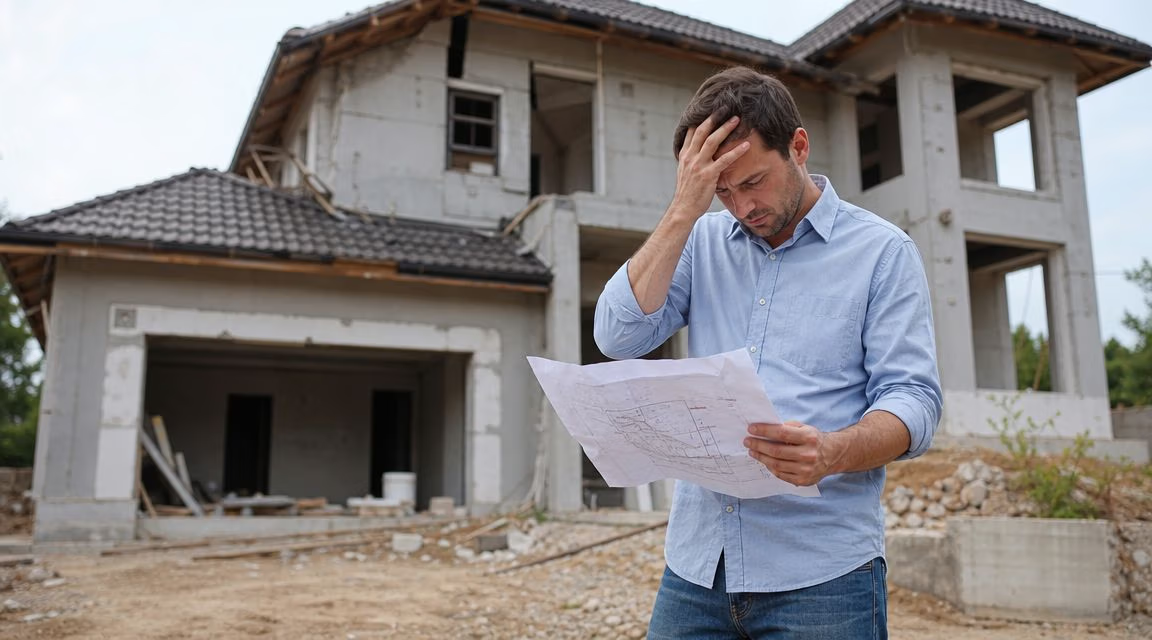
A building dispute usually starts with something that looks manageable. A crack that keeps widening. Waterproofing that never quite worked. A renovation that stalls after the progress claims have been paid. Then the emails become arguments, the site goes quiet, and someone tells you to “just take it to NCAT”.
That’s the point where most homeowners, and many lawyers, realise the same thing. A complaint isn’t enough. A stack of photos isn’t enough. Even a builder’s rough admission over text often isn’t enough. To move a dispute forward, you need evidence that is organised, technically sound, and capable of standing up when the other side pushes back.
Navigating Your Building Dispute
A lot of people come to this stage exhausted. They’ve already tried direct discussions, requests for rectification, and long email chains that go nowhere. By then, the dispute isn’t only about poor work. It’s about proving what failed, why it failed, who is responsible, and what it will take to fix it properly.
That need for proper proof sits inside a much bigger dispute context. In Australia, the Australian Government’s Centre for International Economics estimated construction disputes cost the economy about A$7.1 billion in 2022, with around A$3.5 billion attributable to legal and expert costs alone, as outlined in this discussion of the Australian construction dispute market and expert witness role. Those figures explain why expert evidence has become so important in defect, delay, and quantum matters.
Where matters usually go off track
The early mistake is nearly always the same. People focus on what they can see, but not on what they can prove.
A homeowner might say the bathroom leaks. A builder might say the owner failed to maintain the sealant. A strata committee might point to cracking, while the contractor blames movement, design, or another trade. Without an independent technical opinion, the dispute turns into competing assertions.
Practical rule: NCAT doesn’t need outrage. It needs evidence tied to the facts, the documents, and the built work.
A proper construction expert witness helps cut through that noise. The role isn’t to repeat what the client wants said. The role is to investigate, test, compare, and explain.
Why an objective voice matters
In NSW disputes, that objectivity is what gives the report weight. NCAT and the courts expect independent, evidence-based opinions rather than advocacy. That changes the whole approach.
Instead of asking, “Can you support my case?”, the better question is, “Can you identify the actual cause, the relevant non-compliance, and the reasonable rectification pathway?”
That shift matters because a dispute often turns on details such as:
- Scope of failure whether the issue is isolated or systemic
- Cause of damage whether the defect came from workmanship, design, product failure, movement, moisture, or later interference
- Legal usefulness whether the opinion is framed in a way the Tribunal can apply
- Rectification basis whether the repair recommendation is proportionate and technically justified
When the evidence is prepared properly, the path forward becomes clearer. Sometimes that leads to a stronger NCAT case. Sometimes it prompts settlement. Either way, the dispute starts moving on facts instead of frustration.
What a Construction Expert Witness Actually Does
A construction expert witness is not the same as a standard building inspector. That distinction matters.
A routine inspection might tell you that tiling is uneven, water is present, or cracking is visible. An expert witness has to go further. The task is forensic. The opinion must be relevant to a tribunal or court, grounded in records, and expressed in a form that can be tested under challenge.
The duty is to the Tribunal
Many clients are surprised by this. Even though the client pays for the report, the expert’s overriding duty is to provide an independent opinion.
That’s exactly why a good report carries weight. If an expert acts like an advocate, overreaches, or ignores inconvenient facts, the report becomes easier to attack. In practice, the strongest reports are often the ones that acknowledge limits, identify competing possibilities, and then explain clearly why one conclusion is better supported than the others.
The most useful expert is rarely the one who sounds the most certain. It’s the one who can show their workings.
The benchmark is not “good enough”
In residential disputes, the core question is usually whether the work can be measured against the National Construction Code and relevant Australian Standards, not against a general sense of disappointment. This overview of expert witness analysis against the NCC and Australian Standards captures that point well. Tribunals and courts use those standard-based departures to distinguish cosmetic complaints from actionable building failure.
That changes how the inspection and report are done. A legal report should identify the specific departure from an applicable benchmark, then explain why that departure matters.
What that looks like in practice
A competent construction expert witness typically works through issues such as:
| Issue | Inspector view | Expert witness view |
|---|---|---|
| Cracked wall | Notes visible cracking | Assesses pattern, likely cause, severity, and relevant standard |
| Shower leak | Confirms moisture damage | Examines waterproofing failure path, testing, and rectification scope |
| Uneven flooring | Describes poor finish | Measures tolerance issues and links findings to applicable criteria |
| Incomplete works | Lists outstanding items | Compares contract scope, variations, and completion status |
The same distinction applies to roles on a project. If you need clarity on approvals and compliance functions during construction, this guide to the role of a building certifier is useful because it helps separate certifier responsibilities from expert witness work in a dispute.
For disputes involving programme, sequencing, contract administration, or delivery issues, work may overlap with a construction management expert witness, particularly where the problem isn’t just defective workmanship but how the project was run.
Key Services for NCAT and Legal Proceedings
When people hear “expert witness”, they often think only of a report. In reality, NCAT matters usually need a set of connected deliverables. The quality of those documents often determines whether the case stays coherent or becomes a pile of disconnected allegations.
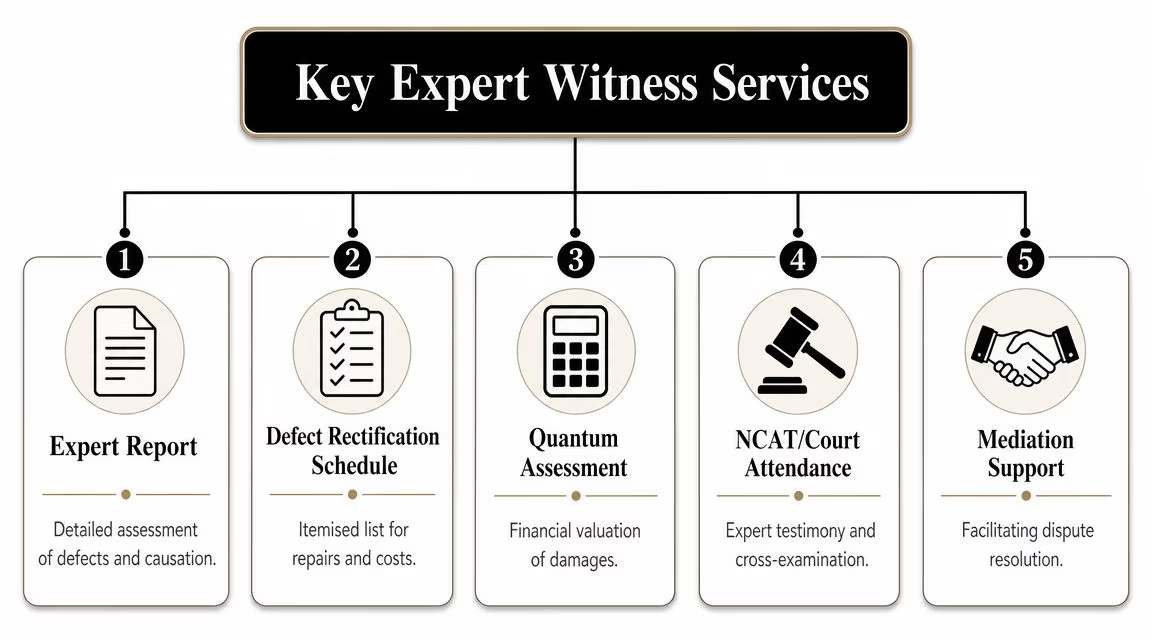
Expert witness reports
This is the core document. It sets out the instructions received, the documents reviewed, the site observations, the methodology used, the relevant standards, the findings on causation, and the expert opinion.
A report that works in NCAT doesn’t read like a complaint letter. It reads like an investigation. It shows how the expert moved from evidence to conclusion.
Good reports usually include:
- Document review contracts, plans, specifications, variations, inspection records, and correspondence
- Site-based observations what was seen, measured, tested, or otherwise verified on inspection
- Standard references the code, standard, tolerance, or specification applied to each issue
- Causation analysis why the defect occurred and why other explanations were discounted
- Rectification position what needs repair, replacement, completion, or further investigation
Scott Schedules and issue-by-issue comparison
A Scott Schedule is one of the most practical tools in a building dispute. It breaks the matter into individual items so each alleged defect or claim can be answered clearly.
That format helps everyone. The applicant can state the issue. The respondent can reply. The expert can express an opinion against each line item. NCAT can then see the dispute in a structured way rather than trying to decode long narrative submissions.
For firms handling this kind of work, including Awesim Building Consultants, the practical value often lies in pairing the report with a Scott Schedule so the technical findings can be used efficiently in proceedings.
Delay, cost, and programme evidence
Not every dispute is visible on a wall or floor. Some of the most expensive disagreements involve delay, disruption, variations, incomplete scope, and cost allocation. Such construction disputes often require the expert to separate weather, access, trades, scope changes, and client delay from contractor fault, as noted in this overview of construction expert issues involving delay, causation, sequencing, and quantum.
That kind of evidence usually depends on project records rather than photographs alone.
Examples include:
- Programme disputes who delayed what, when, and for how long
- Variation disputes whether the work was additional scope, defective rework, or included in the original contract
- Quantum issues the reasonable cost consequence of defects, omissions, or disruption
- Responsibility splits whether multiple trades or decisions contributed to the outcome
For injury matters arising from site incidents, lawyers may also need a different stream of specialist evidence. In that context, resources on expert construction accident legal help can be relevant because accident claims involve a separate legal and evidentiary pathway from defect and rectification disputes.
The Expert Witness Process from Start to Finish
Most clients feel more in control once they understand the sequence. A sound expert engagement follows a clear path. It isn’t rushed, and it shouldn’t be built around assumptions.
Step one begins with the brief
The first task is to identify the actual dispute. Not the emotional version. The technical and legal one.
That means reviewing the contract documents, plans, consultant details, variations, progress claims, completion status, communications, and any previous reports. If the brief is too vague, the report usually ends up too vague as well.
A good initial brief should answer these questions:
- What are the alleged defects or disputed issues
- What stage is the matter at complaint, solicitor involvement, NCAT filing, response, mediation, or hearing
- What documents already exist
- What outcome is sought rectification, completion, cost recovery, defence, or settlement support
The site inspection is where opinions are tested
The inspection is not a box-ticking exercise. It is where the paper trail meets the built result.
In NSW disputes, an expert report must be built around causation, not just defect description. The expert should identify the failure mechanism, explain how the observed defect links to non-compliance or workmanship error, and show why alternative causes were excluded, as explained in this discussion of causation-focused expert reports in construction disputes. That is why detailed site notes, photo logs, and traceable reasoning matter so much.
A defect report that only says “this is wrong” is weak. A report that explains “this failed because of this mechanism, supported by these observations and records” is far more durable.
Typical inspection tasks may include measurement, moisture tracing, review of access limitations, comparison against drawings, and documentation of sequence-related issues.
Drafting, response, and hearing stages
Once the inspection and document review are complete, the report is drafted. The drafting stage often takes longer than clients expect because each opinion needs to be tied back to evidence.
After the report is served, several things may follow:
| Stage | What happens | Why it matters |
|---|---|---|
| Response by other side | Another expert or party critiques the report | Tests whether reasoning is complete |
| Conclave | Experts meet and identify agreements and disagreements | Narrows the real issues |
| Joint report | Areas of consensus and dispute are recorded | Helps NCAT focus on live questions |
| Hearing attendance | Expert gives evidence and is cross-examined | Method and reasoning are scrutinised |
The clients who do best in this process are usually the ones who understand that the report is not the end of the job. It is the foundation for everything that follows.
How to Prepare Evidence for Your Expert
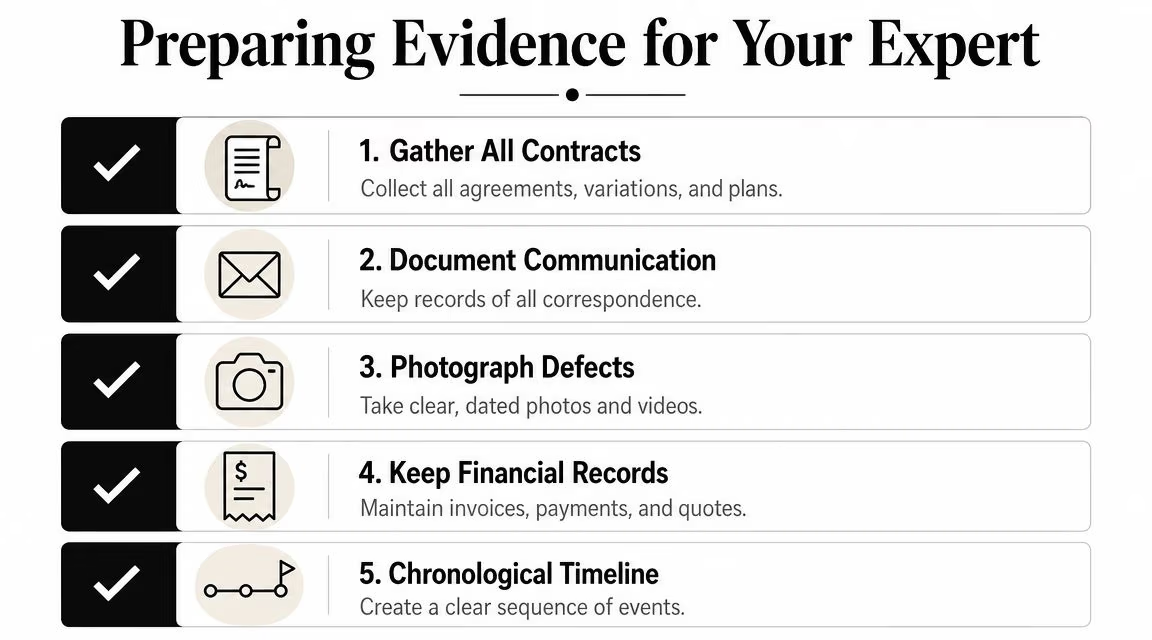
Clients can make a major difference to the quality and efficiency of the expert’s work. The better the evidence set, the easier it is to identify what happened and the harder it is for the other side to create doubt.
What to gather first
Start with the full project record, not just the documents that support your side. Selective documents create problems later.
- Contracts and scope documents include signed contracts, quotations, plans, specifications, inclusions, and approved variations
- Communications save emails, text messages, site instructions, meeting notes, and complaint notices
- Financial records keep invoices, payment claims, receipts, bank records, and rectification quotes
- Authority records include inspection outcomes, occupation documents, and any notices from councils, certifiers, or insurers
- Timeline notes prepare a dated sequence of key events, including when defects first appeared
Photographs that help instead of confuse
Poor photos waste time. Good ones answer questions.
Take wide shots to show context, then medium and close shots to show the defect itself. Keep the original date data where possible. If relevant, photograph the same area across time so progression can be seen.
A practical photo set usually includes:
- Location shot where in the building the issue sits
- Reference shot a frame that shows nearby features such as doorways, windows, drains, or corners
- Detail shot the crack, leak staining, tile lippage, movement gap, or failed finish
- Repeat images taken over time after rain, use, or attempted repair
This walkthrough may help you think about the broader record-keeping process before the expert attends site.
How to organise the file
Don’t send a random bundle of screenshots and unnamed attachments. Organise the material so the expert can follow the project without guessing.
Client advice: Put documents in date order, label photos by room or elevation, and prepare one clean timeline. That alone can save a lot of unnecessary back-and-forth.
A simple folder structure works well:
| Folder | Example contents |
|---|---|
| Contract | agreement, plans, specifications, variations |
| Communications | emails, texts, site instructions |
| Payments | invoices, receipts, claims, proof of payment |
| Defects | labelled photos, videos, notes, repair attempts |
| Timeline | dated summary of events and key milestones |
The point isn’t to overwhelm the expert. It’s to make the factual record usable.
Choosing the Right Expert and Avoiding Red Flags
The wrong expert can damage a case even when the defects are real. That happens more often than people think.
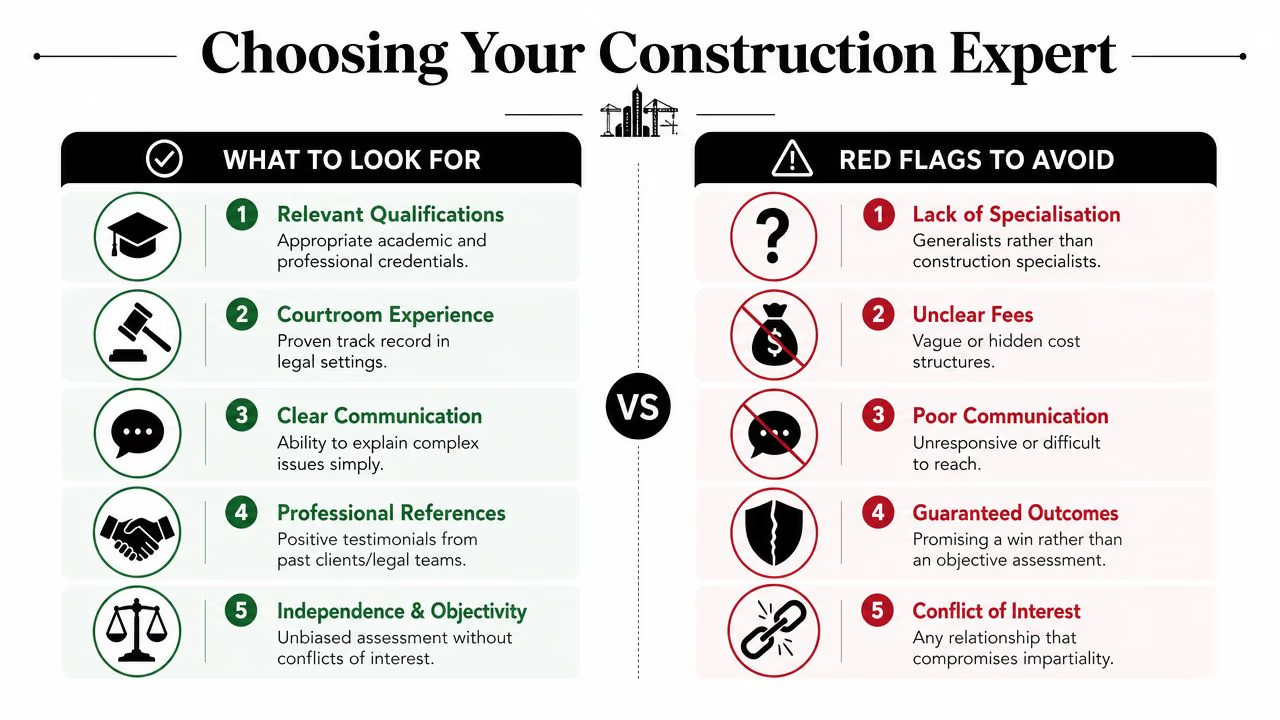
A strong CV does not automatically produce a strong report. In Australian dispute forums, expert evidence can fail if the expert doesn’t follow a systematic method or rule out alternative causes. A highly credentialed expert is not necessarily the strongest witness if the analysis is not transparent, reproducible, and tightly tied to the factual record, as discussed in this article on how construction experts are challenged on method under cross-examination.
What matters more than a long list of qualifications
When assessing a construction expert witness, ask how they work, not just what titles they hold.
Look for signs such as:
- NCAT familiarity they understand how reports are used in NSW residential disputes
- Method discipline they can explain how they move from observation to conclusion
- Evidence independence they verify facts rather than relying only on the client’s account
- Clear writing they can produce a report a Tribunal Member can follow without specialist trade knowledge
- Hearing readiness they can defend their reasoning under challenge
Red flags clients should take seriously
Some warning signs are obvious. Others are subtle.
| Red flag | Why it matters |
|---|---|
| Guarantees of success | An expert should never promise an outcome |
| Instant opinions before reviewing documents | Suggests advocacy, not investigation |
| No clear explanation of method | Makes cross-examination easier for the other side |
| Over-reliance on client summaries | Indicates weak independent verification |
| Vague scope and fees | Often leads to disputes about what was or wasn’t included |
Another warning sign is an expert who jumps straight to rectification cost without first establishing the defect, the cause, and the correct repair basis. Costing is useful, but only after liability and scope have been framed properly.
The expert you want is the one who can say, “I need to inspect that, review the records, and test alternative explanations before I form an opinion.”
Questions worth asking before you engage
A short conversation can reveal a lot. Ask direct questions.
- What documents do you need before inspection
- How do you deal with disputed causation
- Have you prepared reports for NCAT matters like this
- Do you prepare Scott Schedules if required
- Will you attend conclaves or hearings if the matter proceeds
The right expert won’t treat those questions as a nuisance. They’ll answer them clearly, because that clarity is part of the job.
Understanding Costs and Timelines
Clients understandably want a fixed number and a firm completion date straight away. Sometimes that’s possible. Often it isn’t, at least not responsibly.
The cost of a construction expert witness report usually depends on the scope of allegations, the number of defective areas, access issues, the volume of documents, whether destructive investigation is needed, whether a Scott Schedule is required, and whether the matter also involves delay, completion, or quantum issues. A simple single-issue dispute is not the same task as a whole-house defect claim with competing reports and a long project history.
Timelines work the same way. The process normally includes intake, document review, site inspection, analysis, drafting, and sometimes revision after further material comes in. If the matter proceeds further, conclaves and hearing attendance add more time again. Delays often come from incomplete client records, access problems, or late changes to the allegations.
For a clearer breakdown of the variables that affect pricing, this guide on the cost of a building expert witness report is a practical starting point.
The best way to control both cost and timing is to narrow the issues early, provide an organised document set, and brief the expert properly from the start. That doesn’t make the work cheap. It makes the work efficient and defensible, which is what you need if the matter is heading to NCAT.
If you need an independent view on defects, causation, scope of rectification, or NCAT-ready documentation, contact Awesim Building Consultants. For enquiries, email admin@awesim.com.au or call 1800 293 746.
Related Posts

Waterproofing Inspector: How to Choose One for a NSW Claim
Why a Standard Building Inspector Is Not Enough What a Forensic Waterproofing Inspection Actually Covers Membrane and System Identification AS
Read More »
Building Inspection Report Template and What Courts Expect
What a Building Inspection Report Template Looks Like in Practice The Schedule 7 Requirement and Why It Changes Everything How
Read More »
Dilapidation Report Template: What Must Be in the Document
What a Dilapidation Report Actually Is The Core Sections Every Dilapidation Report Template Must Include 1. Cover Page and Report
Read More »