
Building Disputes NSW: Your 2026 Resolution Guide
A building project usually starts with optimism. Then the defects show up, the invoices are disputed, calls get missed, and both sides start talking about what was “meant” rather than what was agreed. By the time individuals search for help with building disputes in NSW, they’re not looking for theory. They want to know what to do next, what evidence matters, and how to stop a bad situation getting worse.
That’s where a lot of disputes turn. Not on emotion, and not on who speaks the loudest, but on who can prove the facts in a form NSW Fair Trading, Building Commission NSW, or NCAT can use. In practice, expert evidence is often the lever that shifts a matter from argument to resolution.
Navigating Your NSW Building Dispute
One of the most common situations I see is a renovation or new build that looked manageable a few months earlier. The contract seemed clear enough at the start. Then workmanship concerns appeared, the finish didn’t match expectations, the builder said the work was acceptable, the owner withheld payment, and both sides dug in.
Sometimes it starts with visible defects. Sometimes it starts with delay. Often, it starts with a small issue that wasn’t recorded properly and then spreads into a bigger conflict because nobody locked the variation, instruction, or complaint down in writing.
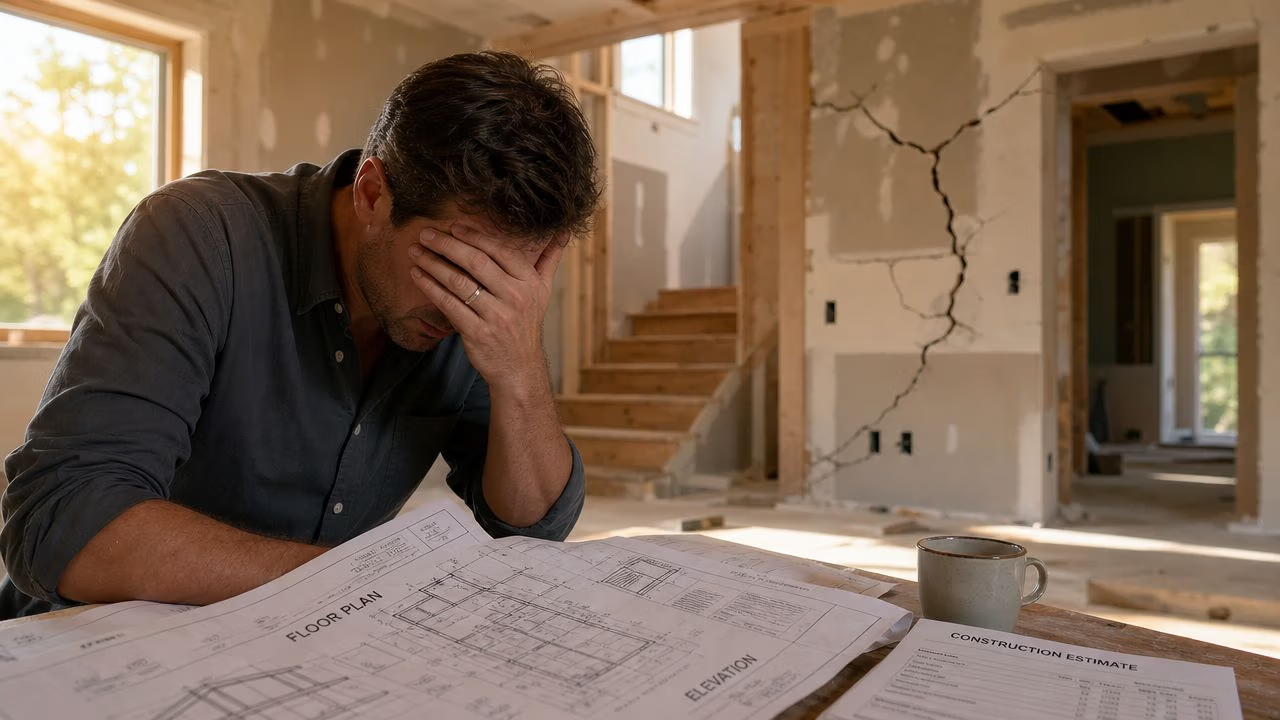
The good news is that NSW doesn’t leave people to sort this out in a vacuum. There is a pathway. It has structure, decision points, and formal stages. If you approach it properly, you can move from general frustration to a case built on documents, photographs, scope analysis, defect identification, and a clear position on rectification or liability.
What usually goes wrong first
The first failure is rarely the hearing. It’s usually the early handling of the issue.
- People keep arguing verbally: Phone calls and site conversations feel quicker, but they create confusion later.
- Defects aren’t isolated properly: A crack, leak, level issue, waterproofing concern, or incomplete item gets described loosely instead of inspected methodically.
- The evidence is reactive: Photos are taken late, records are incomplete, and no one creates a chronology.
- The wrong report is obtained: A generic inspection summary might help negotiation, but it may not be enough for a formal dispute.
Practical rule: The earlier the technical issues are defined clearly, the easier it is to negotiate from strength.
A NSW building dispute can feel personal because someone’s home, business, cash flow, or reputation is involved. But the system works better when the dispute is translated into evidence. That means identifying each issue, linking it to the contract or standards where relevant, documenting what happened on site, and presenting the position in a format a decision-maker can follow.
Understanding Common Causes of Building Disputes
A building dispute in NSW usually falls into one of a few recurring categories. The labels vary, but the underlying problems are familiar. Defective workmanship. Incomplete works. Payment claims. Delay arguments. Scope disagreements. Variations that were discussed but never documented properly.
What matters is that these disputes are often not random. The NSW Government’s Home Building Complaints dataset tracks complaints by cause, defect, and industry type, which makes it one of the few official NSW sources that lets practitioners examine recurring dispute categories rather than relying on anecdote. That matters because many building disputes in NSW are defect-driven and can be grouped and measured across the state.
The four causes that appear most often
Defective workmanship is the issue people recognise fastest. The work is physically there, but it’s not acceptable. That might involve finish quality, water ingress, movement, cracking, compliance concerns, poor set-out, incomplete sealing, or installation failures that later trigger damage elsewhere.
Scope and variation disputes are the next major category. One side says the item was included. The other says it was extra. If there’s no written approval, no signed variation, and no clear drawing trail, the dispute becomes an evidence problem very quickly.
Delay and sequencing issues often sit underneath other arguments. A builder says the owner changed the job repeatedly. The owner says the work was slow or badly managed. Without a clear project record, both positions can sound plausible until tested against documents.
Payment disputes usually arrive after one of the first three. Owners don’t want to pay for allegedly defective or incomplete work. Builders don’t want to carry costs while the principal withholds payment. By then, the technical dispute and the money dispute are tangled together.
Why independent assessment matters
A lot of people treat the matter as a pure contract fight. In reality, many building disputes in NSW turn on a more practical question. What is the defect, where is it, what caused it, and what would compliant rectification involve?
That’s why independent site assessment becomes so important. It separates dissatisfaction from evidence. It also helps parties distinguish between genuine defect issues and ordinary maintenance, wear, design constraints, or excluded items.
If you want a broader view of ensuring quality in building projects, that topic is worth understanding early because many disputes trace back to quality control failures that were never identified or corrected during the build.
In practice, most matters improve once each alleged defect is turned into a defined item with a location, description, likely cause, and required action.
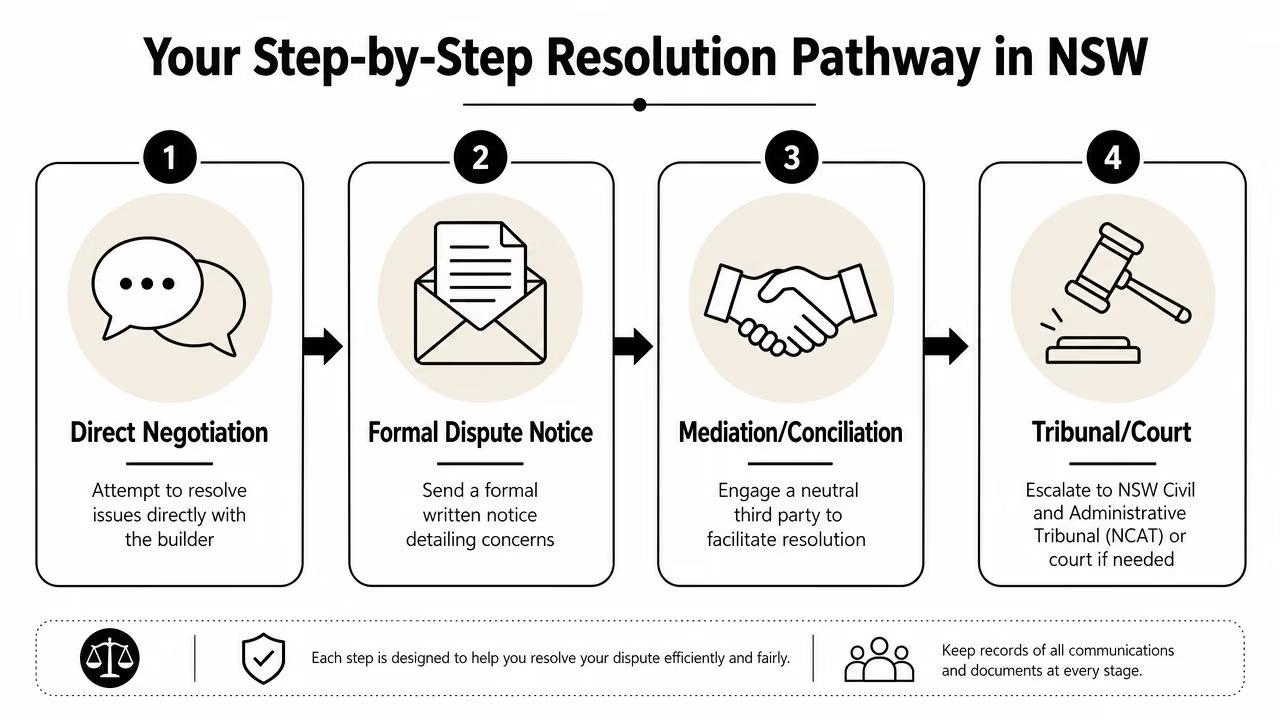
Your Step-by-Step Resolution Pathway in NSW
The NSW pathway works best when each step is treated as preparation for the next one. That doesn’t mean every dispute ends up at a hearing. Most shouldn’t. It means you act as though your documents may later be read by a conciliator, investigator, Tribunal Member, or lawyer.
Early on, the objective is simple. Narrow the issues. Identify what is in dispute. Put the technical complaints in writing. Ask for a response that deals with the substance, not just the emotion.
Step one begins on the project file
Before any formal complaint is lodged, assemble the project record.
- Collect the contract set. Include plans, specifications, quotations, approved variations, invoices, and any updated scope documents.
- Create a chronology. Keep it simple. Dates, events, site meetings, complaints, responses, and payment events.
- Document the issues visually. Clear photographs and short videos help, especially where location and progression matter.
- Write a focused notice. Set out what the issue is, where it is, and what outcome is being sought.
A vague complaint rarely gets traction. A written notice that identifies items clearly is much harder to ignore.
NSW Fair Trading is the formal starting point for most matters
The NSW Government says most residential building disputes move through a pathway that starts with NSW Fair Trading mediation and can proceed to NCAT under the state’s dispute-resolution framework for contractor-consumer building matters. The same guidance states that NCAT’s monetary jurisdiction is capped at $500,000, and that a dispute may be resolved at conciliation in roughly 3 to 6 months, while more complex matters may run 12 months or longer according to NSW dispute resolution guidance.
That framework shapes strategy. If a matter may continue for months, the evidence has to be organised early and preserved properly.
A short overview from this video helps explain the process in plain terms:
What each stage is really for
Direct negotiation
If both sides are realistic, sensible disputes should end. The mistake is trying to negotiate without defining the technical issues first. If the work is disputed, get the issues described properly before the parties start trading positions.
Formal written notice
This step matters because it fixes the allegations in writing. It also gives the receiving party a fair chance to respond to identifiable complaints. In many matters, this is the point where the quality of the record starts affecting the outcome.
Mediation or conciliation
This stage is about practical settlement. A clear defect list, photos, and an independent assessment often carry more weight here than long argumentative correspondence. Conciliation works when both parties can see the strength and weakness of their positions.
NCAT
NCAT is not just a place to keep arguing. It is a forum that expects parties to present organised material. If the dispute reaches this point, each item needs to be capable of proof. That includes the nature of the defect, responsibility, and the rectification position or claim amount.
The parties who do best in formal building disputes NSW matters are usually the ones who prepared for evidence before they prepared for argument.
The Evidence You Need to Build a Strong Case
Most weak cases don’t fail because the problem wasn’t real. They fail because the evidence is disorganised, incomplete, or in the wrong format for the stage of the dispute.
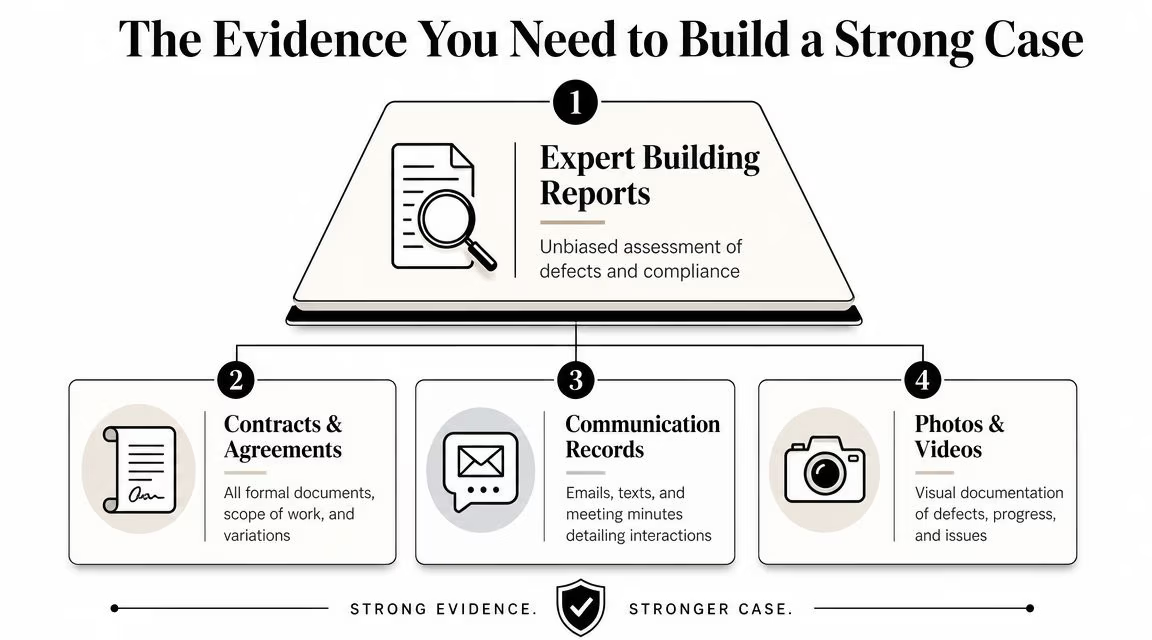
A strong case usually combines project documents, communications, visual records, and technical analysis. The key is knowing what each type of evidence can do. A text message can show timing. A contract can show scope. A photograph can show condition. An expert report can explain cause, compliance, and rectification.
The foundation documents
The core file should contain:
- The contract and scope documents: These show what was promised, what drawings applied, and what was excluded.
- Approved variations: If a variation isn’t documented, proving it later becomes harder for everyone.
- Communications: Emails, texts, meeting notes, and site instructions often become the timeline.
- Photos and videos: These help establish condition, sequence, access, and whether issues were visible at particular times.
If your file is missing these basics, fix that before doing anything more ambitious.
The three reports that matter most
Site investigation report
This is often the right starting point where parties need clarity but haven’t yet committed to litigation. A site investigation should identify the issues observed, separate probable defects from general complaints, and point to the likely areas requiring further analysis or rectification.
It helps most at the negotiation and Fair Trading stage because it brings discipline to the discussion.
Expert Witness Report
This is different. A proper expert report for a formal dispute must be independent in tone and focused on opinion supported by inspection, documents, and technical reasoning. It should identify each issue carefully and explain why it matters.
This type of report is designed for matters where the evidence may be tested formally. It is not just a longer inspection report. It serves a different purpose.
Scott Schedule
In complex disputes, especially where there are multiple defect items, a Scott Schedule can make the whole case easier to understand. It breaks the dispute into individual issues and aligns allegation, response, expert opinion, and rectification details in a structured format.
For a practical explanation of how that document works in NSW matters, see this guide on what is a Scott Schedule in a building dispute NSW guide.
What makes evidence persuasive
Not all evidence carries the same weight. The strongest evidence usually has these features:
| Evidence type | What it proves best | Common weakness |
|---|---|---|
| Contract documents | Scope, price basis, included works | Missing annexures or unsigned changes |
| Communications | Timing, notice, instructions, responses | Informal language and no attachment trail |
| Photos and videos | Physical condition and progression | No dates, no context, poor angles |
| Expert report | Cause, defect analysis, compliance, rectification | Too general, advocacy tone, weak methodology |
Key point: A strong report doesn’t just say something is wrong. It identifies the item, explains the basis for the opinion, and helps the decision-maker understand what should happen next.
Timelines Costs and Typical Dispute Outcomes
People usually ask two questions early. How long is this going to take, and what is it going to cost? The honest answer is that both depend on complexity, cooperation, and how well the evidence is assembled from the start.
The broad timing picture in NSW is clearer than the cost picture. As noted earlier, published NSW guidance indicates some disputes can resolve at conciliation in roughly a few months, while more complex matters can continue for a year or longer. Costs, by contrast, vary sharply depending on whether the dispute settles early or requires a detailed expert process.
NSW Building Dispute Stages Overview
| Dispute Stage | Typical Timeline | Estimated Costs (Excluding Legal Fees) |
|---|---|---|
| Direct negotiation and issue identification | Early stage, depends on how quickly parties exchange documents and inspect the issues | Usually limited to inspection, reporting, and administrative preparation |
| Formal dispute notice and complaint preparation | Varies by complexity of defects, scope records, and responses | Costs usually involve document review, consultant time, and possibly an initial technical report |
| Fair Trading mediation or conciliation | See the earlier NSW guidance on conciliation timing | Usually lower than formal hearing preparation, but may still include expert inspections and updated reports |
| NCAT preparation and hearing pathway | Complex matters can run much longer than early conciliation outcomes | Often the most expensive stage because it may require expert witness reporting, Scott Schedules, updated evidence, attendance, and hearing preparation |
The real trade-offs
There are two cost mistakes I see often.
The first is under-investing in early evidence. That can save money in the very short term, but it often creates a bigger bill later when the matter has to be rebuilt for formal proceedings.
The second is over-spending too early on material that doesn’t match the stage of the dispute. Not every disagreement needs a full expert witness brief on day one. Some need a targeted inspection first so the parties can see whether settlement is realistic.
Typical outcomes
The outcome usually falls into one of these categories:
- Rectification outcome: The builder carries out further work, often with clearer scope and timeframes.
- Monetary outcome: One party pays money in lieu of work or to reflect part of the claim.
- Negotiated split outcome: Responsibility is shared because causation, access, maintenance, or scope are mixed.
- Dismissal or narrowing of claims: Some items drop away once the evidence is tested.
The practical point is this. The better the defect identification and document trail, the more realistic the outcome discussions become.
How Expert Reports Strengthen Your Position
When people think about expert reports, they often think about the end of the dispute. In reality, a well-prepared report is useful much earlier than that. It can reshape negotiations, expose weak assumptions, and stop both sides arguing at cross purposes.
Common dispute problems and the report that helps
You and the other side can’t agree on whether something is a defect
That usually means the issue needs independent technical assessment. A report can identify the item, inspect the surrounding conditions, and express an opinion about workmanship, completion, or apparent non-compliance.
The dispute has too many moving parts
Once a matter includes multiple rooms, multiple trades, and multiple alleged defects, the argument becomes hard to follow. A Scott Schedule or structured defect matrix can turn a chaotic file into itemised issues that can be negotiated.
The matter is heading toward NCAT
Form matters as much as content. An opinion may be correct and still be ineffective if it is poorly structured, overly argumentative, or unsupported by reasoning. A formal expert report needs to be organised in a way the Tribunal can use.
The legal team needs technical support, not general commentary
Lawyers need technical issues translated into usable evidence. That means defect identification, likely cause, rectification logic, and a clear distinction between observation and opinion.
One option for this stage is an expert witness report for NSW building disputes, particularly where the matter requires a formal report and litigation support rather than a general inspection note.
A good expert report narrows the dispute. A poor one widens it.
What works and what doesn’t
What works is independence, structure, and careful itemisation. Reports help most when they are written for the actual forum the parties are dealing with, whether that is negotiation, Fair Trading, or NCAT.
What doesn’t work is advocacy disguised as expertise. Decision-makers can spot that quickly. So can experienced solicitors and insurers. A report should support a case by being technically reliable, not by sounding aggressive.
Awesim Building Consultants provides site investigations, expert witness reports, and Scott Schedules for homeowners, builders, and lawyers dealing with these issues in NSW. The practical value is not just the document itself. It’s having the issues identified in a form that can be used at the right stage of the dispute.
Preventing Future Disputes and Your Next Steps
Most disputes could be reduced, and some avoided entirely, if the project file was treated as seriously as the physical work. In NSW, many matters are driven by a documentation failure chain. The NSW Government states that contracts over $5,000 must be in writing and recommends confirming discussions and variations in writing because those records become the main evidence base if the matter is later assessed by Building Commission NSW or NCAT, as set out in NSW guidance on resolving building disputes.
The habits that prevent avoidable disputes
- Lock the scope early: Make sure drawings, finishes, specifications, and exclusions are clear before work starts.
- Approve variations in writing: Verbal changes are one of the fastest ways to create an evidence gap.
- Keep a dated record: Emails, meeting notes, progress photos, and site instructions matter later.
- Check contractor credentials properly: Part of good project setup is verifying practical risk issues such as insurance. This guide on how to verify painter insurance cover is a useful example of the kind of due diligence that helps avoid side disputes.
- Bring in an expert at the right moment: Don’t wait until positions have hardened if the technical issue is already unclear.
The next move if you are already in dispute
If you are already in the middle of building disputes NSW parties commonly face, the immediate task is to stop guessing. Get the documents together. Identify the actual issues. Put them in order. Then decide whether the matter needs a site inspection, a formal defect report, an expert witness report, or a Scott Schedule.
The strongest position usually comes from being organised early, not from reacting late.
If you need practical help sorting out a residential building dispute, Awesim Building Consultants can assist with site investigations, Expert Witness Reports, and Scott Schedules across NSW. To discuss your matter, email admin@awesim.com.au or call 1800 293 746.

Related Posts

Water Damage in Homes: How to Track Down the Source
Water damage in a home rarely announces itself at the source. A stain on the ceiling, a musty smell in
Read More »
Waterproofing Membrane Types: Which Fails Most in NSW Bathrooms
Waterproofing failure is the single most common serious defect found in NSW apartments, and the type of membrane used, along
Read More »
Building Certifier NSW: Role, Limits, and When You Need More
A building certifier in NSW is a registered professional who issues construction certificates, conducts critical stage inspections, and grants occupation
Read More »