
A Guide to a Construction Management Expert Witness
A lot of people reach the point of looking for a construction management expert witness after the job has already gone sideways. The defects list keeps growing. Emails have turned into arguments. Site meetings go nowhere. One side says the work is defective, the other says the drawings changed, access was restricted, or another trade caused the problem. By then, the underlying problem usually isn’t just the building work. It’s proving, in a form NCAT can use, what happened and why.
That’s where many disputes either become clearer or more expensive. A homeowner may have dozens of photos but no defect mapping tied to the contract and standards. A builder may have good records but no one has organised them into a causation case. A solicitor may have a strong client but still need an expert who understands both building practice and NSW tribunal procedure.
Navigating Building Disputes in NSW
NSW building disputes rarely start with lawyers. They usually start with a concern on site. Cracking that seems to worsen. Waterproofing that fails after handover. Variations that were discussed but never properly recorded. Delays that everyone noticed but no one documented well enough.
By the time the matter reaches NCAT, the parties are often talking past each other. One side focuses on poor workmanship. The other focuses on scope changes, weather, access, or late selections. The tribunal then needs more than competing opinions. It needs technical evidence that is organised, independent, and tied to the records.
Australia continues to generate a high volume of building activity, and the number of approved dwellings swung from 171,870 in 2021–22, to 137,610 in 2022–23, then 158,630 in 2023–24 according to construction approvals data discussed here. That level of activity is one reason defects, delay claims, and compliance disputes remain common.
Why disputes become hard to resolve
In straightforward matters, the parties can often sort out a small defect with a scope of rectification. The hard matters are different.
- Records are incomplete: Key directions were given by phone, on site, or by text.
- Multiple causes are possible: A leak may involve design, installation, sequencing, and maintenance issues.
- The timing matters: What was visible at practical completion may be different from what appeared later.
- The wrong document gets relied on: A basic inspection note gets treated like expert evidence.
Good expert evidence doesn’t start with a conclusion. It starts with the record, the site condition, and a method that can be explained under questioning.
A construction management expert witness helps bring order to that mess. The role isn’t merely to point at defects and say they exist. The role is to analyse workmanship, delay, cost, compliance, and project records in a way that gives the tribunal a reliable basis to decide the dispute.
That’s especially important in NSW, where the usefulness of an expert often turns on whether the opinion is properly structured for NCAT, not just whether the expert has construction experience.
What a Construction Expert Witness Actually Does
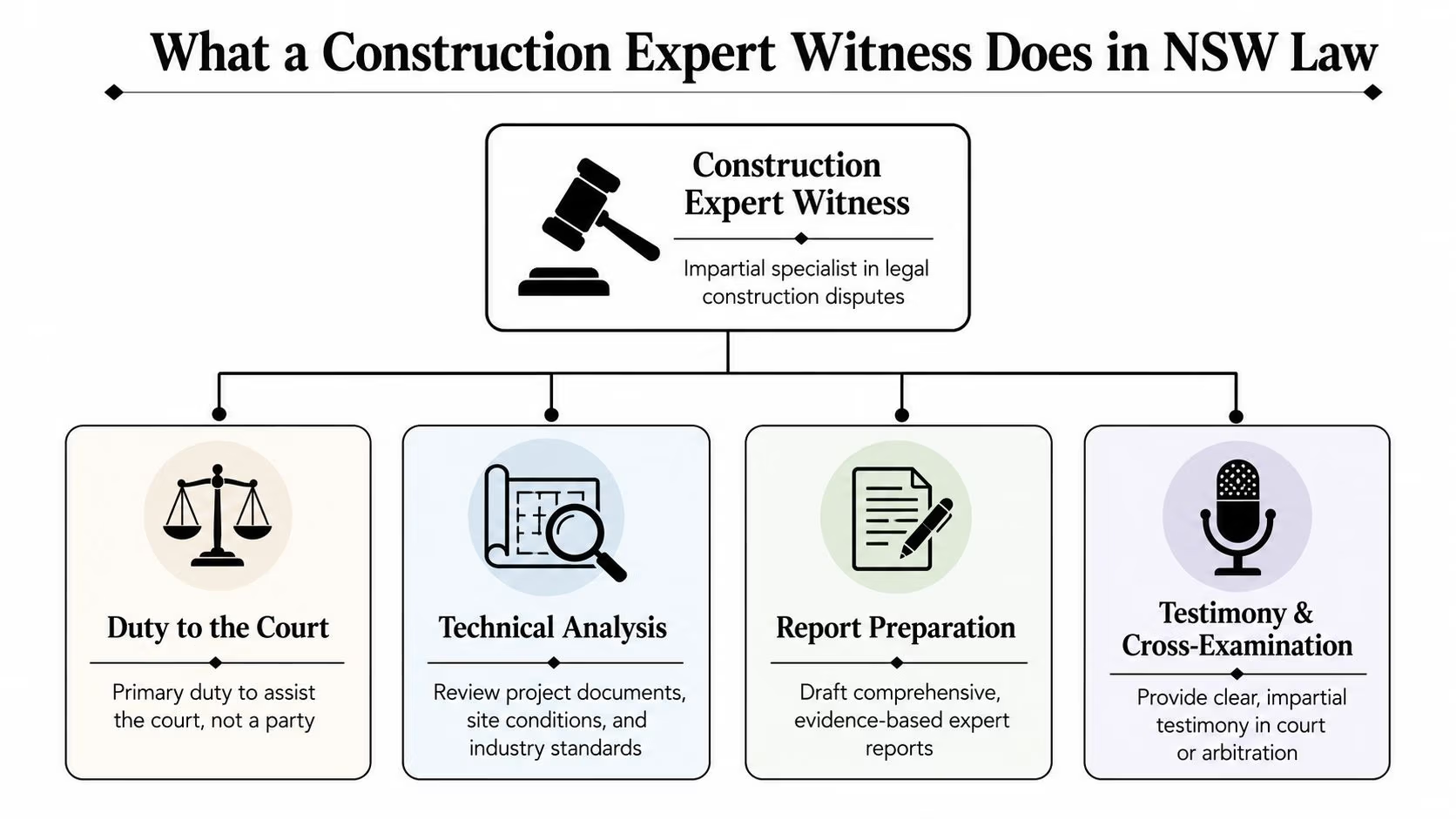
A construction management expert witness is a technical translator for the tribunal. They take plans, contracts, correspondence, site photographs, site instructions, progress claims, RFIs, inspection records, and physical observations, then turn that material into opinions that can be tested.
In NSW, that role sits inside a procedural framework that requires the expert to be independent. In NCAT, the expert’s primary duty is to the tribunal, not the party who engaged them, as outlined in this discussion of the evolution of expert evidence in construction disputes. That point matters more than many clients first realise.
An expert witness is not your advocate
Clients sometimes expect an expert to “fight the case”. That’s not the job. A proper expert must assist the tribunal with impartial opinion evidence. If the records don’t support a claimed defect, delay, or cost item, the report has to say so.
That independence is often what makes the evidence persuasive. A report that reads like an argument usually performs poorly under cross-examination. A report that separates facts, assumptions, reasoning, and opinions usually holds up much better.
What the expert actually examines
A construction management expert witness may be asked to deal with issues such as:
- Defects and compliance: Whether the work appears consistent with the contract, project specifications, and relevant standards.
- Delay and disruption: Whether project records support a claim that one event affected completion or progress.
- Variations and instructions: Whether a claimed change was directed, priced, documented, and linked to later consequences.
- Trade coordination: Whether sequencing or supervision failures contributed to the problem.
- Causation: Whether the alleged breach caused the defect, delay, or loss being claimed.
The expert witness’s role is distinct from that of a standard building inspector. An inspector may identify a symptom. An expert witness must usually go further and address cause, responsibility, and evidentiary support.
Practical rule: If the opinion can’t be traced back to documents, dates, standards, and observed conditions, it will be much harder to defend in NCAT.
Communication matters as much as knowledge
Technical expertise alone isn’t enough. The expert must also explain the issue clearly to lawyers, homeowners, builders, and tribunal members who may not share the same trade background.
For readers interested in the professional side of the role, this practical guide for aspiring expert witnesses is useful because it highlights the importance of method, independence, and communication, not just qualifications.
A capable expert witness doesn’t just know construction. They know how to present construction evidence so it can be used.
When to Engage an Expert Witness for Your Dispute
The best time to engage a construction management expert witness is usually earlier than people expect. Once positions harden, evidence gets lost, repairs get carried out without proper recording, and each side starts building a story around incomplete facts.
If you’re in NSW, there’s another reason not to leave it late. NCAT’s 2025 Procedural Direction 3 requires a structured exchange of expert evidence, which is why the practical question is whether the opinion will be procedurally defensible, not merely whether someone can identify defects, as noted in this article on finding a construction expert witness.
Clear signs you should engage someone
Some triggers are obvious. Others are easy to miss.
| Situation | Why expert input matters |
|---|---|
| Multiple defects are alleged across different trades | The dispute needs defect identification, scope separation, and likely causation analysis |
| Communication has broken down | A neutral technical assessment can stop the matter drifting into unsupported allegation |
| You’re preparing an NCAT claim or response | The evidence needs to fit tribunal procedure from the beginning |
| Delay is part of the dispute | Someone must examine programming logic, site records, instructions, and sequence |
| Repairs are about to start | Existing conditions should be inspected and recorded before evidence changes |
Early engagement usually saves trouble later
An early expert can help shape the factual brief. That includes what documents need to be collected, what should be photographed, which defects need invasive investigation, and where the dispute sits between workmanship, design, management, and maintenance.
That early work often avoids two common mistakes:
- Commissioning the wrong report: A general inspection report may describe issues but fail to answer the legal questions.
- Collecting records too late: Once memories fade and rectification starts, proving the original condition becomes harder.
For lawyers, the timing issue is strategic. If the pleadings raise technical allegations that haven’t been properly tested, the case can become more difficult and more expensive than it needed to be. For homeowners and builders, the issue is simpler. If you don’t preserve the evidence properly at the start, you may never get another chance.
Understanding Expert Reports and Scott Schedules
A lot of NCAT matters turn on a simple point. The party with the better organised evidence usually stands in a much stronger position.
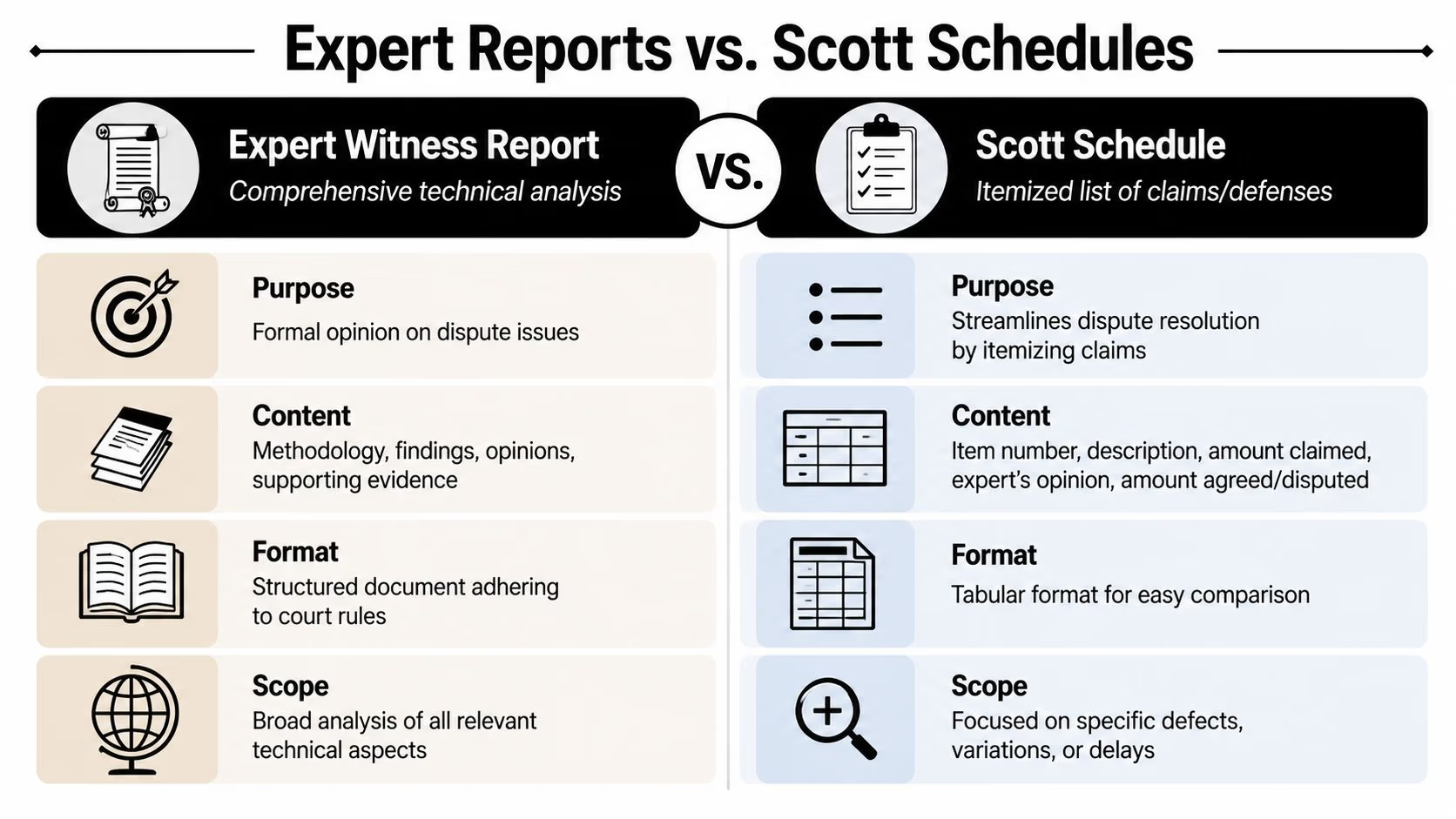
In NSW building disputes, two documents often carry that evidence. One is the expert report. The other is the Scott Schedule. They work together, but they are not interchangeable, and a lot of weak cases run into trouble because the documents were prepared as if they served the same purpose.
What an expert witness report needs to do
An expert report for NCAT has to do more than identify defects and attach photographs. It needs to show a clear path from the material reviewed, to the site observations made, to the opinion reached. If that chain is missing, the report is easier to challenge on fairness, logic, or independence.
A sound report usually covers:
- The expert’s qualifications and area of expertise
- The instructions received and the questions asked
- The documents, drawings, contracts, correspondence, and records reviewed
- The scope of inspection, including any limits on access or destructive testing
- Each opinion expressed in clear terms
- The factual basis and reasoning supporting each opinion
- Any assumptions, exclusions, or matters requiring further investigation
That level of discipline matters in tribunal work. A homeowner may want a report that says the bathroom leaks. A lawyer needs a report that explains where the water entry is occurring, what building element failed, what material supports that conclusion, whether the issue is defective work, incomplete work, design, maintenance, or a combination, and what rectification scope follows from that opinion.
What weak reports usually get wrong
After decades in this field, the same problems keep appearing.
- Conclusion without standard: The report says the work is defective but does not identify the relevant code, specification, manufacturer requirement, or accepted trade practice.
- No record trail: The opinion refers vaguely to “documents provided” without naming the plans, emails, site instructions, photographs, invoices, or diary notes relied on.
- No causation analysis: The defect is listed, but the report does not address how it likely arose or whether another cause needs to be excluded.
- Advocacy instead of expertise: The report reads like a party submission, not independent opinion evidence.
- Poor itemisation: Separate complaints are rolled together, which makes it hard for NCAT to determine liability item by item.
Those are not minor drafting issues. They affect whether the evidence can carry the claim or defence in a procedurally defensible way.
Where a Scott Schedule fits
A Scott Schedule is a working document for disputed items. It breaks the case into individual allegations so each one can be answered properly.
In practice, it is often the document that brings order to a messy building dispute. Instead of broad complaints about workmanship across the whole project, the schedule isolates each item by location, trade, issue, and competing position. That makes it easier for the parties, their experts, and the Tribunal to deal with the core points in dispute.
Typical columns include:
- Item number
- Location or building element
- Description of the alleged defect, incomplete work, variation, or issue
- Applicant’s position
- Respondent’s position
- Expert comment
- Recommended rectification scope, allowance, or observation
A practical explanation of the format and its use appears in this guide to Scott Schedules in NSW building disputes.
Why the two documents need to work together
The expert report carries the reasoning. The Scott Schedule carries the structure.
If the report is detailed but the schedule is poorly prepared, the matter can become slow and confused because nobody is dealing with the same item list. If the schedule is neat but the report does not explain the technical basis for each opinion, the table becomes little more than a set of assertions.
Good NCAT preparation usually requires both documents to align. Item numbers should match. Descriptions should be consistent. The rectification scope in the report should not contradict the comment in the schedule. Where I see disputes go off track is not usually because the defect is impossible to understand. It is because the evidence was never organised in a way the Tribunal could test efficiently.
That is the function of these documents in NSW building matters. They do not just describe problems on site. They turn technical complaints into evidence that can be examined, challenged, and decided within the NCAT process.
The Expert Witness Engagement Process Step by Step
A dispute usually starts with a simple question. What happened on this job, and can it be proved in a form NCAT will accept?
That question shapes the whole engagement. An expert witness is not engaged to give a loose opinion after a quick walk through the site. The work has to be procedurally sound from the start, because weak instructions, missing records, and poorly framed issues often create problems that are harder to fix later than the building defects themselves.
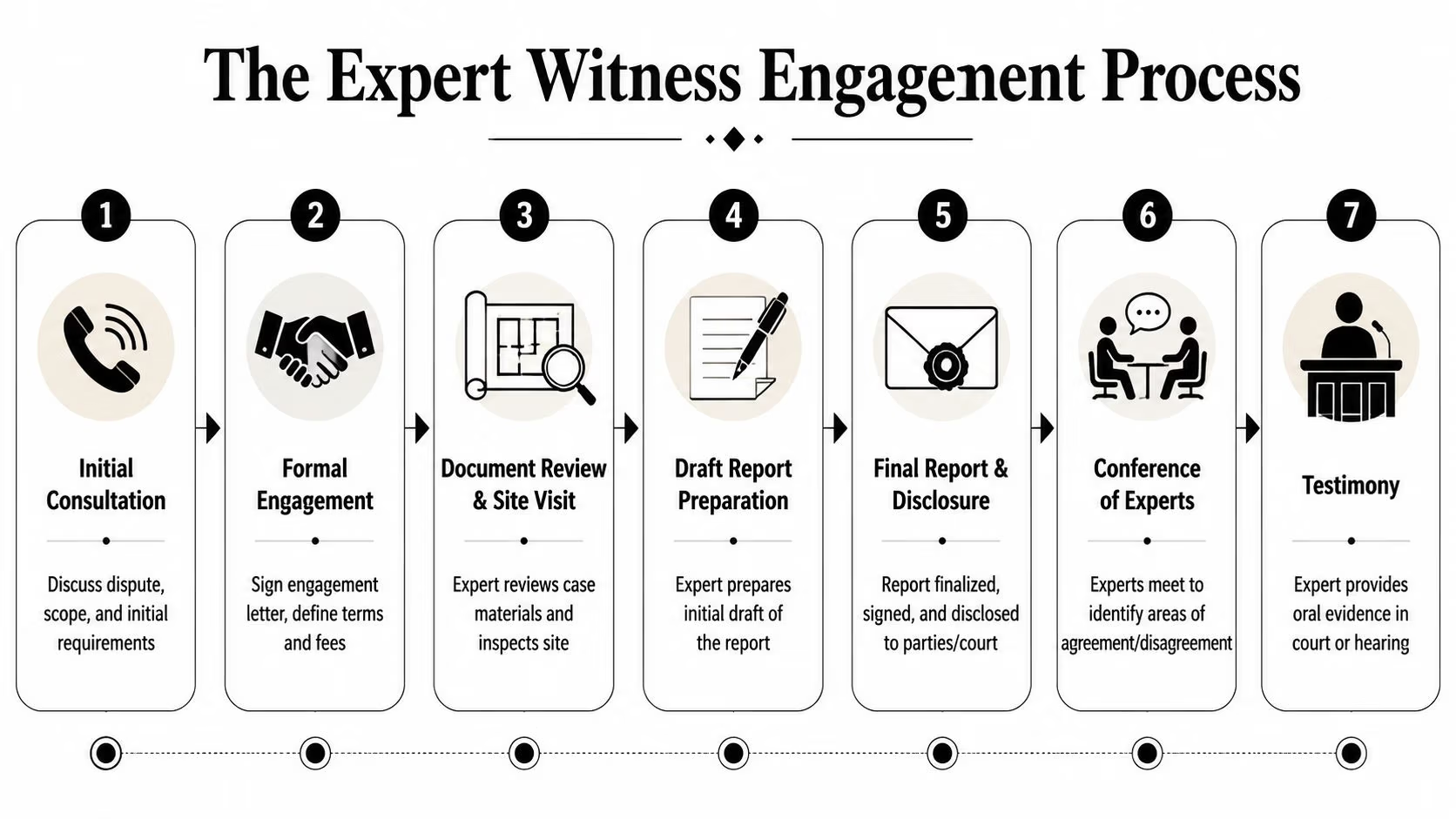
The usual pathway
Initial discussion
The first call is used to identify the type of dispute, the parties involved, the current NCAT stage, and the orders being sought. A homeowner may be focused on defective waterproofing or incomplete work. A builder may be dealing with access, variations, delay allegations, or unpaid claims. A solicitor will usually want to know whether the available material is enough to support an opinion that can survive scrutiny.Conflict check and engagement scope
Before any opinion is formed, the expert should confirm there is no conflict and set the boundaries of the engagement. That includes the property, the issues to be addressed, whether a report, Scott Schedule input, reply report, or joint conference work is required, and whether the expert is being asked for defect, causation, delay, or quantum-related opinions. If the scope is too broad, fees and time expand quickly. If it is too narrow, the report may miss the point in dispute.Written instructions and document collection
The brief should be in writing. It should identify the questions to be answered, provide the relevant pleadings or NCAT application material, and include the project records needed to test each allegation. In residential building matters, that often means the contract, plans, specifications, approved variations, certificates, photographs, emails, and previous reports. Gaps in the records do not prevent an opinion, but they do affect how far the opinion can safely go.
A short explanation of the role of records helps here:
What happens after the brief
Once instructions are settled, the work usually splits into two connected tasks. Site examination and record analysis.
- Site inspection: Inspect the alleged defects or incomplete work, confirm locations, assess access constraints, identify visible workmanship issues, and note where further testing or opening-up may be required.
- Document review: Review the contract, drawings, specifications, variations, site directions, RFIs, progress claims, correspondence, photographs, certificates, and any earlier expert material.
- Issue mapping: Match each disputed item to the available evidence, then test whether the physical condition on site aligns with the project records and the allegations made.
This is the point where many matters either tighten up or fall apart. If the defect list says one thing, the photos show another, and the contract documents are silent, the expert has to say so. NCAT does not need advocacy dressed up as technical opinion. It needs a clear explanation of what can be concluded, what cannot, and why.
Drafting and finalisation
The report is then prepared in a form that can be used in the Tribunal process. That means more than setting out a conclusion. The opinion has to show the path taken to reach it.
A properly prepared report usually includes:
- A clear chronology: Dates of contract formation, variations, inspections, complaints, and rectification attempts often affect liability.
- Issue-by-issue analysis: Each opinion should refer back to the relevant records, site observations, and applicable building standards or contractual requirements.
- Stated assumptions and limits: If access was restricted, finishes concealed the work, or key documents were missing, those matters should be identified expressly.
- Tribunal-ready presentation: The report should be organised so the member, the parties, and any opposing expert can follow the reasoning without having to reconstruct the job from scattered attachments.
Sometimes the process does not end with the first report. NCAT matters may require supplementary questions, a conclave between experts, a joint report identifying areas of agreement and disagreement, or oral evidence. A report prepared without that later scrutiny in mind often becomes expensive to repair. For a practical outline of pricing factors tied to this work, see this guide on the cost of a building expert witness report.
After decades in this field, the pattern is consistent. The strongest expert evidence is usually built from ordinary site records, properly ordered, carefully tested, and expressed in a way that matches the Tribunal process.
Awesim Building Consultants provides site inspections, expert witness reports, and Scott Schedule services for NSW building dispute matters.
Typical Fees Timelines and What to Expect
Fees and timing vary because disputes vary. A small residential matter with a limited defect list and organised documents will not take the same effort as a multi-issue dispute involving delay, variations, incomplete records, and multiple site attendances.
What usually affects cost
The main cost drivers are usually easy to identify:
- Volume of material: Large email trails, revised drawings, and extensive photos take time to review.
- Nature of the issues: Causation and delay analysis usually require more work than a short defect confirmation.
- Site complexity: Occupied homes, limited access, staged inspections, or destructive testing can affect effort.
- Number of disputed items: More items usually mean more analysis and more reporting detail.
- Tribunal or litigation demands: Replies to other experts, conferences, and oral evidence add further work.
Clients often ask for a fixed price before the records are available. Sometimes that’s possible for an initial stage, but often the sensible approach is staged work. Initial review first. Inspection second. Reporting after that. It keeps expectations realistic.
What usually affects timing
The biggest timetable issues are rarely the writing itself. They are usually:
| Factor | Effect on timing |
|---|---|
| Delayed document delivery | The expert can’t analyse what hasn’t been provided |
| Difficulty arranging access | Inspections often control the whole sequence |
| Ongoing rectification or occupation | Conditions may change before they are recorded |
| Expanding allegations | New issues can require further review |
| Need for supplementary responses | Tribunal directions can add another reporting round |
If you’re trying to budget for an expert, this guide to the cost of a building expert witness report is a useful starting point because it explains the variables rather than pretending every matter costs the same.
The practical point is simple. Faster and cheaper usually depends on better records, a tighter brief, and access to the site without delay.
Partner with Awesim for Your NCAT Building Dispute
A common NCAT problem starts the same way. The owner has photos, the builder has invoices, both sides are certain they are right, and neither side has evidence set out in a form the Tribunal can use properly.
NCAT does not decide building cases on frustration or volume. It decides them on admissible material, clear reasoning, and reports that deal with the actual issues in dispute. In practice, that means the expert’s role is not limited to identifying defective work. The report must also address scope, causation, rectification, and the documents relied on, in a way that can survive scrutiny from the other side and from the Tribunal.
That procedural side is where many matters weaken. A report may identify defects correctly but still be less useful if the brief is loose, the photographs are not tied to specific allegations, the expert has stepped outside their expertise, or the conclusions are not explained by reference to the contract, plans, standards, and site conditions. In NSW building disputes, especially in NCAT, those gaps matter.
Awesim Building Consultants brings more than 35 years in building and construction, with over 15 years assisting in dispute and litigation support matters. The work is focused on NSW building disputes for homeowners, builders, and solicitors who need evidence prepared for actual use in proceedings, not just a general defect list.
That includes site inspections, expert witness reports, and Scott Schedules prepared with the Tribunal process in mind.
Early instruction usually puts a party in a better position. It helps preserve conditions before they change, keeps the brief tighter, and reduces the risk of spending money on reports that do not answer the questions NCAT will ask.
If you need practical help with an NCAT building dispute, contact Awesim Building Consultants. We assist homeowners, builders, and solicitors with site investigations, Expert Witness Reports, and Scott Schedules across NSW. Email admin@awesim.com.au or call 1800 293 746 to discuss your matter.
Related Posts

Water Damage in Homes: How to Track Down the Source
Water damage in a home rarely announces itself at the source. A stain on the ceiling, a musty smell in
Read More »
Waterproofing Membrane Types: Which Fails Most in NSW Bathrooms
Waterproofing failure is the single most common serious defect found in NSW apartments, and the type of membrane used, along
Read More »
Building Certifier NSW: Role, Limits, and When You Need More
A building certifier in NSW is a registered professional who issues construction certificates, conducts critical stage inspections, and grants occupation
Read More »