
Expert Witness in Construction: NCAT Disputes 2026
A building dispute rarely starts in a courtroom. It usually starts with something small that won’t go away. A crack that keeps opening back up after patching. Water staining that returns after every storm. Tiles that sound hollow. Doors that no longer close properly. Someone says it’s minor. Someone else says it’s normal movement. Then the emails start, trust drops, and the problem becomes as much about proof as it is about building work.
That’s where many owners, builders, strata managers, and solicitors get stuck. They know something is wrong, but they don’t yet know what kind of evidence will matter if the dispute reaches NCAT. A normal inspection can identify issues. A proper expert witness in construction goes further. The job is to investigate, separate symptom from cause, and present findings in a form a tribunal can rely on.
Your Guide to Navigating Construction Disputes
A common NSW scenario looks like this. A homeowner notices leaking around a window after heavy rain. The builder says the sealant has failed because the owner didn’t maintain it. The owner thinks the window was installed incorrectly from day one. A handyman suggests a quick repair. A solicitor asks a different question entirely. What evidence will prove why the leak occurred?
That difference matters. In a dispute, the visible problem is only the starting point. The core issue is whether the evidence supports workmanship failure, design failure, product failure, non-compliance, site conditions, or later deterioration. Until that’s clear, both sides tend to talk past each other.
In apartment and strata matters, the pressure is even greater. Once a defect affects multiple lots or common property, costs, levies, insurance and repair timing can all become part of the wider picture. Owners dealing with the financial side of major building issues may also find useful context in EndureGo Tax’s article on handling special property levies, particularly where remediation costs spill beyond a simple repair conversation.
Why early clarity changes the dispute
An independent expert helps stop the circular argument. Instead of “I think” and “you say”, the process turns to observable conditions, documents, standards, specifications, and likely causes. That doesn’t mean the result will always favour the person who engaged the expert. In fact, if the expert is doing the job properly, the findings may narrow or reshape the claim.
The strongest starting point in any building dispute is a neutral technical view before positions harden.
That can be uncomfortable, but it’s useful. A homeowner may discover that part of the issue is defective work and part is maintenance. A builder may discover that a complaint framed as cosmetic is linked to a deeper compliance problem. Lawyers often prefer this clarity early because it helps them advise on prospects, pleadings, settlement posture, and what evidence still needs to be gathered.
What the process feels like in practice
For most clients, the first relief comes when the problem is translated into plain language. Instead of broad allegations, they start hearing practical questions:
- What exactly is failing: Is the issue the membrane, the falls, the flashing, the substrate, or the interface between trades?
- When did it likely start: During design, installation, handover, or later occupancy?
- What records matter: Contracts, plans, variations, inspection photos, occupation documents, product data, emails, and maintenance history.
- What does the tribunal need: Not outrage, not assumptions, but evidence arranged in a disciplined way.
That’s the value of bringing in an expert witness in construction early enough. The dispute becomes manageable because someone is testing the facts, not just repeating the complaint.
What a Construction Expert Witness Really Does
A construction expert witness is not a hired advocate in a hard hat. In Australia, expert witness practice in construction disputes is anchored in the overriding duty to the court or tribunal, not the party that retains the expert. The expert must remain impartial and objective, providing an independent opinion to assist the decision-maker, which is foundational in NSW settings like NCAT, as outlined by Pinsent Masons on expert witness duties in construction disputes.
Not the same as a standard inspection
A standard building inspection often answers a practical question. What defects can be seen, and what should be repaired?
An expert witness report answers a different question. What conclusions can be properly drawn from the evidence, and can those conclusions survive challenge? That requires a more careful method. The expert has to identify what was observed, what documents were reviewed, what assumptions were made, what standard or specification applies, and how the opinion was reached.
Consider the distinction: a mechanic tells you the engine is noisy, while a forensic engineer explains why the failure occurred, what components were affected, and whether poor servicing, faulty parts, or incorrect installation caused it.
The expert acts as a translator
Most construction disputes sit at the intersection of trade practice and legal proof. The builder may talk in terms of sequencing, tolerances, substrate prep, set-out, and handover conditions. The tribunal needs that translated into a clear opinion that addresses the issues in dispute.
A good expert witness in construction does three things well:
- Observes carefully: The site condition still matters. Cracks, moisture paths, deflection, movement, ponding, incomplete work, and finish quality all tell part of the story.
- Connects facts to standards: The work is assessed against the right documents, not gut feel.
- Explains conclusions clearly: If the reasoning can’t be followed, the opinion won’t help much at hearing.
Practical rule: If a report reads like advocacy, it usually loses value. If it reads like disciplined reasoning, it becomes useful.
What doesn’t work
Some reports fail because they overreach. They make sweeping conclusions without exposing the steps that led there. Others list defects but don’t explain significance. Some are written in highly technical language that sounds impressive but doesn’t answer the questions the tribunal has to decide.
The expert’s task is narrower and more demanding. Stay within expertise. Show the factual basis. Explain the methodology. Remain independent. That’s what gives the opinion weight.
Essential Qualifications of a Credible Expert
Not every experienced builder, inspector, engineer, or consultant is automatically suited to expert witness work. The technical background matters, but so does the ability to function within a legal process. A credible expert has to know construction, know documents, and know how their opinion will be tested.
What to look for first
Hands-on industry experience is the starting point. Someone who has spent real time on sites usually recognises the practical causes of failure more quickly than someone who has only reviewed paperwork from a desk. They understand buildability, sequencing, coordination between trades, and the difference between a cosmetic complaint and a deeper defect mechanism.
Litigation support experience is the next filter. Writing for owners or builders is one skill. Writing for NCAT or a court is another. The expert must know how to organise evidence, stay within their instructions, and avoid slipping into argument.
A useful shortlist looks like this:
- Trade and construction depth: Look for experience that reflects actual building practice, not just theory.
- Report writing discipline: Ask whether the consultant prepares formal expert reports rather than ordinary defect lists.
- Tribunal familiarity: NCAT has its own expectations around clarity, relevance, and compliance.
- Confidence under challenge: If the opinion is tested in a conclave or hearing, the expert must be able to explain it without becoming defensive.
Standards knowledge is non-negotiable
The most defensible expert reports evaluate work against Australian Standards and documented specifications. The report must show not only that a defect exists, but how it arose and why it is inconsistent with the required standard, which is the basis for NCAT and court-ready opinions in NSW practice, as discussed in this guide on expert witnesses in construction defect litigation.
That sounds simple, but many weaker reports miss it. They say work is poor without identifying the benchmark. Or they quote a standard without linking it to the actual observed condition. The stronger approach is methodical. Identify the relevant requirement. Compare it to what was built. Explain the gap. Then explain how that gap caused the problem being complained of.
A practical checklist for engagement
Before you appoint anyone, ask these questions:
| Question | Why it matters |
|---|---|
| Have you acted in building disputes before? | It tests whether they understand evidence, not just construction. |
| Do you work from Australian Standards and project documents? | It shows whether the opinion will be anchored properly. |
| Have you dealt with NCAT procedures? | Familiarity reduces avoidable reporting problems. |
| Can you separate defect, damage, maintenance, and wear? | Many disputes turn on those distinctions. |
| Are you prepared to change your view if new facts emerge? | Independence is more valuable than loyalty. |
A consultant with broad site knowledge but no litigation discipline can create more problems than they solve. The report may look forceful but still fail to assist the tribunal.
For clients weighing options, practical experience matters. Awesim Building Consultants brings 35+ years in Building & Construction and 15+ years providing litigation support, which aligns with the kind of experience many solicitors and parties look for when a matter is headed toward formal dispute resolution.
The Expert Report and Scott Schedule Explained
When clients first see the paperwork in a building dispute, they often assume the main document is the application or response. In practice, two technical documents often do the heavy lifting. The expert witness report and the Scott Schedule.
What an expert report should contain
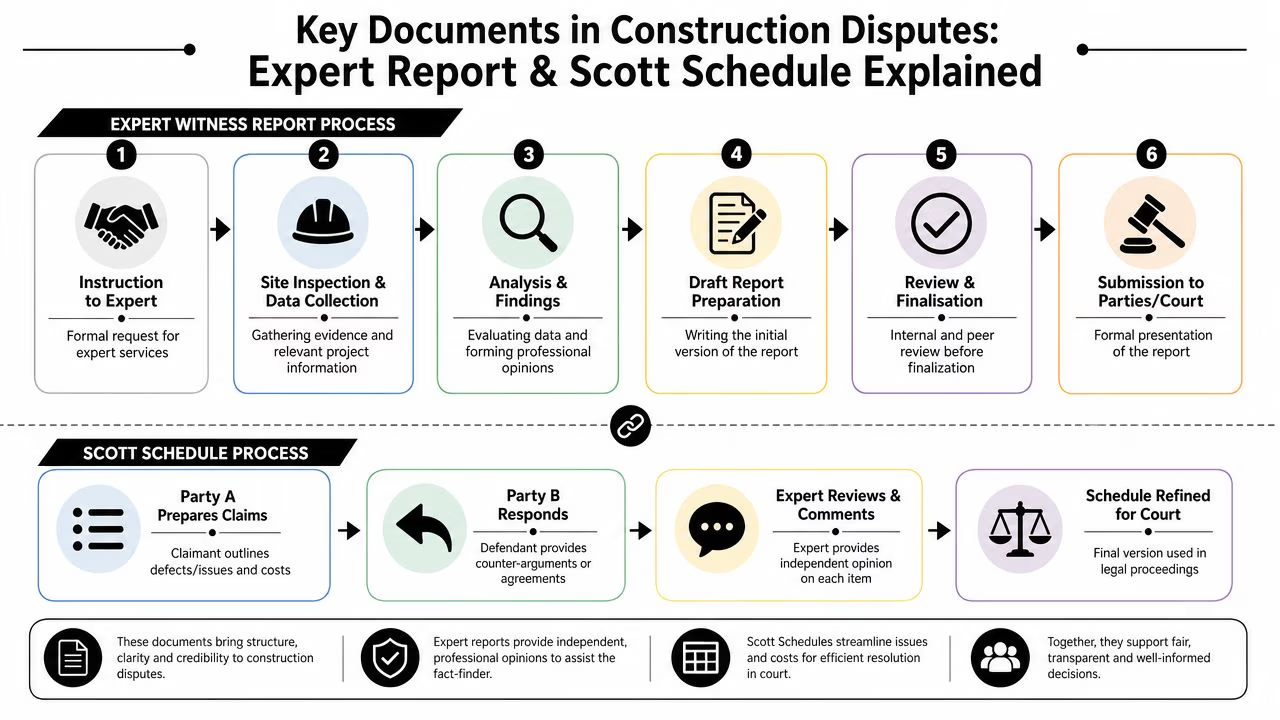
A proper report is more than a catalogue of complaints. It should set out the instructions received, the documents reviewed, the site observations, the applicable standards or specifications, the expert’s reasoning, and the opinions reached. In many matters, it will also address rectification scope.
The report should help a reader answer practical questions such as:
- What is the alleged defect
- Where is it located
- What evidence supports the finding
- Why is it considered defective
- What likely caused it
- What rectification approach is appropriate
If the report jumps from observation straight to blame, it leaves a gap. NCAT needs the bridge between the physical condition and the opinion.
A useful report doesn’t just point at a problem. It shows the path from evidence to conclusion.
Why the Scott Schedule matters
A Scott Schedule is often the document that brings order to a messy dispute. The simplest analogy is a working spreadsheet for the case. Each disputed item sits on its own line, and the parties’ positions can be compared side by side.
That matters because many building disputes involve numerous defects, partial agreements, disputed causes, and disagreement about scope. Without a schedule, issues can become muddled quickly.
A typical schedule may include:
- Claim item: The owner or claimant identifies the defect or incomplete work.
- Response: The builder or respondent states whether the item is admitted, denied, or qualified.
- Expert comment: The expert gives an independent opinion on defect status, causation, and sometimes rectification.
- Outcome use: The tribunal can then isolate what’s agreed, what remains disputed, and what evidence supports each item.
If you want a practical example of how these documents are used together, this overview of an expert witness Scott Schedule is a useful starting point.
What works and what doesn’t
The most effective reports and schedules are disciplined and itemised. They keep each issue separate. They use consistent terminology. They tie observations back to drawings, specifications, photos, and standards where relevant.
The least effective versions are bloated, repetitive, and argumentative. They mix emotional commentary with technical findings. They bundle multiple complaints into one item, which makes response and determination much harder.
For lawyers, a clean report and a well-prepared Scott Schedule save time. For owners and builders, they reduce confusion. For the tribunal, they make the case easier to decide.
Navigating the Legal Process with Your Expert
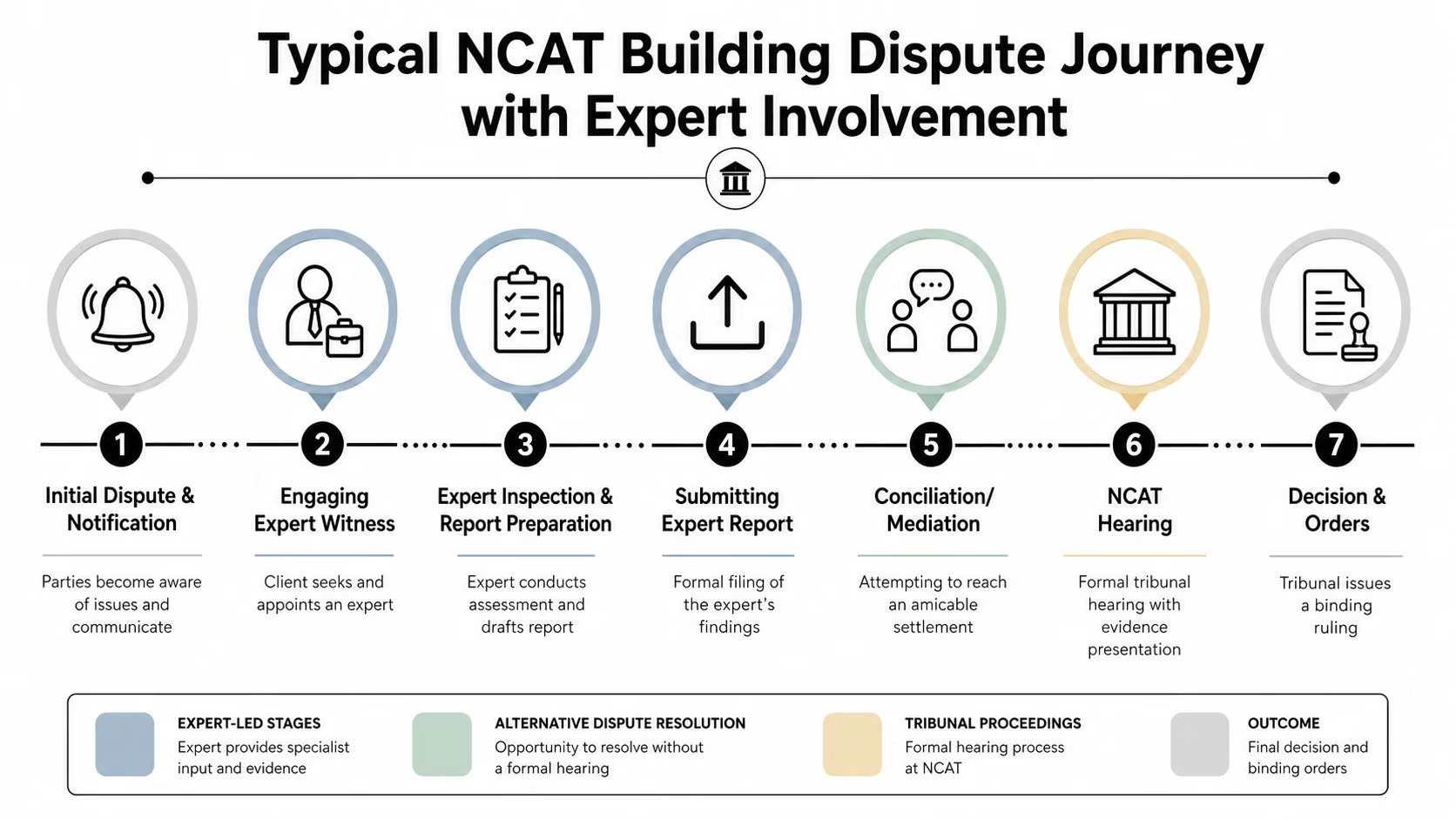
Most NCAT matters don’t move in a straight line, but the journey follows a recognisable pattern. Once a dispute becomes formal, the expert’s role starts shaping not just the evidence, but the pace and focus of the case.
A typical matter begins with instructions and a site inspection. The expert reviews the available material, visits the property, and tests whether the complaint can be supported technically. Sometimes the inspection confirms the allegation. Sometimes it narrows it. Sometimes it reveals that the visible problem is only the final symptom of an earlier failure.
Where causation becomes decisive
In construction disputes, an expert witness’s core technical task is to establish causation by linking a defect to measurable evidence such as design nonconformance, workmanship errors, material inadequacy, or code and standard breaches. That is the evidentiary bridge courts and tribunals rely on when allocating liability and quantifying damage, as explained in Rimkus on expert witnesses in construction disputes.
That point often decides the case. It isn’t enough to show cracked tiles, water ingress, corrosion, or movement. The tribunal will want to know why it occurred and whether the evidence supports the cause being alleged. If several causes are possible, the expert has to explain why one is more likely than another.
Experience becomes apparent here. A leak may involve flashing, membrane continuity, sill installation, product failure, or later maintenance issues. A weaker report names all of them. A stronger report works through the evidence and explains the most supportable conclusion.
Conclaves, joint issues, and hearings
If both parties have experts, the tribunal may direct a meeting between them, often called a conclave. The point isn’t to win an argument. The point is to identify what is agreed, what remains in dispute, and why. A good expert enters that process prepared to concede minor points if the evidence warrants it, while holding firm on the important ones.
There may also be a requirement to comply with expert conduct obligations. If you need that framework in plain terms, the NCAT expert witness code of conduct is worth reading before a report is commissioned.
This short video gives a general visual overview of the kind of process parties often encounter in dispute matters.
What clients should expect
From the client side, the process usually feels slower than expected. Reports take time because the expert has to inspect, review documents, analyse competing explanations, and write carefully. Then there may be further questions, a conclave, supplementary material, or attendance at hearing.
A practical way to think about the expert’s role is this:
- Investigate the physical issue
- Test the competing explanations
- Prepare an opinion that can be defended
- Assist the tribunal without becoming an advocate
The expert is there to help the decision-maker understand the building evidence, not to repeat a client’s grievance in technical language.
That distinction keeps the evidence useful.
Costs and How to Choose the Right Expert
Fees matter, but cost alone is a poor way to choose an expert witness in construction. A cheaper report that doesn’t deal with causation, standards, or clear reasoning can become expensive very quickly if it has to be replaced, supplemented, or defended unsuccessfully.
How fees are usually structured
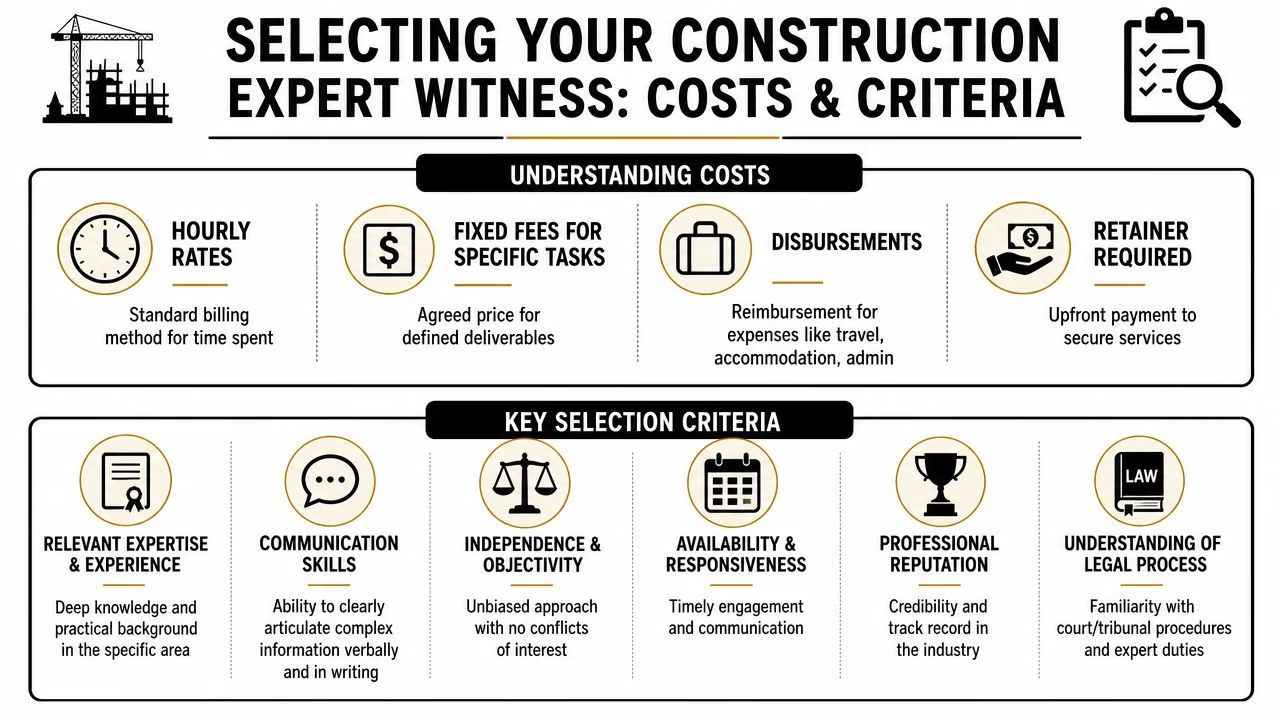
Experts commonly charge in one of two ways. Some tasks are billed hourly, especially where the scope is uncertain or likely to expand. Other tasks may be offered on a fixed-fee basis if the deliverables are defined clearly from the start, such as an initial inspection and report on specified items.
You should also ask about disbursements and assumptions. Travel, document review volume, supplementary questions, conclave attendance, and hearing attendance can all affect the final cost. The important point is transparency. If the scope changes, the budget usually changes with it.
A sensible client asks for clarity on:
- What is included: Inspection, document review, report writing, photographs, annexures.
- What is excluded: Further attendances, conferences with lawyers, oral evidence.
- What could increase cost: Additional allegations, late documents, revised instructions.
- When payment is due: Upfront retainer, staged invoices, or payment on milestones.
The selection questions that matter most
The rising need for expert witnesses who can handle defect causation, not just defect identification, is critical. In NSW, a dispute often turns on causation, not merely visible non-compliance, making a technically grounded causal analysis more valuable than generic expert witness explanations, as noted by GLG Insights on finding a construction expert witness.
That’s the key distinction when choosing. Many consultants can point out that something looks wrong. Fewer can explain why it failed, rule out competing causes, and express that view in a form that assists NCAT.
When interviewing a potential expert, ask direct questions:
| Ask this | Listen for this |
|---|---|
| How do you distinguish defect from maintenance or wear? | A method, not a vague answer |
| What documents do you need before inspection? | Plans, specifications, approvals, photos, correspondence |
| Have you prepared reports for tribunal use? | Familiarity with formal evidence requirements |
| What happens if your findings don’t support my position? | A clear statement about independence |
| Can you explain technical issues in plain English? | Clarity, not jargon |
What usually works better
Choose the consultant who is careful, not the one who sounds the most certain in the first phone call. Overconfidence early is often a warning sign. Building disputes are fact-sensitive. A serious expert will usually want documents, photographs, and context before expressing a firm view.
For practical next steps, gather your contract, plans, variations, photos, emails, certificates, and any prior reports before making enquiries. That allows the expert to scope the task properly and tell you whether a targeted report, a broader investigation, or a Scott Schedule is the right tool.
Frequently Asked Questions
Can I use a report I already have from a general building inspector
Sometimes, but don’t assume it will carry the same weight as an expert report. A general inspection report may be useful as background, especially if it identifies visible issues clearly. The problem is that many standard reports aren’t written for tribunal use. They may not address assumptions, methodology, causation, or the applicable standards in enough detail.
What happens if the other party also has an expert witness
That’s common. Two experts don’t cancel each other out automatically. Usually, the quality of reasoning becomes the actual issue. If the tribunal directs a conclave or joint discussion, each expert may need to identify points of agreement and disagreement. The stronger opinion is usually the one that is more disciplined, better supported, and more willing to separate confirmed fact from assumption.
How long does it take to get an expert report
It depends on access, document volume, complexity, and whether invasive investigation is needed. Straightforward matters may move faster than multi-issue disputes involving water ingress, structural movement, or large defect schedules. The quickest way to avoid delay is to provide complete documents at the start and make site access easy.
Does an expert witness decide who wins
No. The tribunal decides the case. The expert helps the decision-maker understand the technical issues and evaluate competing claims. A good report can shape the outcome because it clarifies the evidence, but it doesn’t replace the tribunal’s role.
Should I engage the expert before or after lodging in NCAT
Often, earlier is better. Early expert input can narrow issues, improve the way the case is framed, and sometimes support settlement before costs escalate. That said, some parties only engage an expert once proceedings are already underway. The right timing depends on how far the dispute has progressed and what evidence already exists.
Can an expert help if the issue involves many defects across a whole project
Yes. That’s where structure matters most. A report may deal with overarching issues, but a Scott Schedule often becomes essential when there are multiple defect items, disputed responses, and different rectification positions across the project.
If you need an independent view before a building dispute goes further, Awesim Building Consultants can assist with site investigations, Expert Witness Reports, and Scott Schedules for NSW matters. For enquiries, email admin@awesim.com.au or call 1800 293 746.
Related Posts

Water Damage in Homes: How to Track Down the Source
Water damage in a home rarely announces itself at the source. A stain on the ceiling, a musty smell in
Read More »
Waterproofing Membrane Types: Which Fails Most in NSW Bathrooms
Waterproofing failure is the single most common serious defect found in NSW apartments, and the type of membrane used, along
Read More »
Building Certifier NSW: Role, Limits, and When You Need More
A building certifier in NSW is a registered professional who issues construction certificates, conducts critical stage inspections, and grants occupation
Read More »