
Building Consultant Services That Help Resolve Disputes
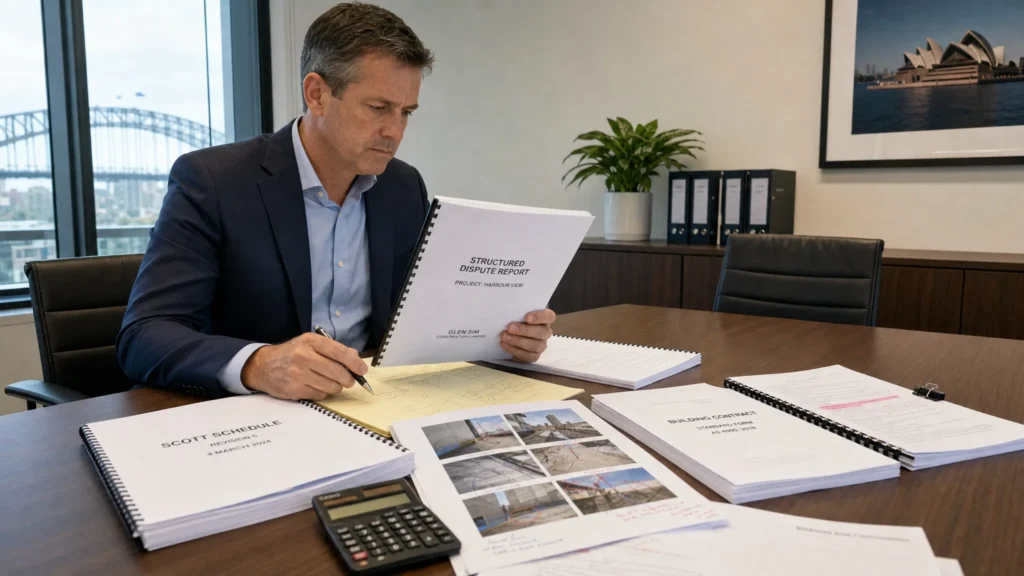
A building dispute rarely turns on one dramatic moment. More often, it grows from unclear scope, disputed workmanship, unpaid claims, variations, delays, or a mismatch between what one party expected and what the contract actually required.
That is where independent building consultant services become valuable. A skilled consultant does not simply inspect a property and list defects. In a dispute setting, the role is to convert construction issues into clear, organised evidence that homeowners, builders, solicitors, NCAT members, and courts can understand.
At Awesim Building Consultants, Glen Sim, owner and director, leads independent building dispute support across New South Wales. The focus is practical and evidence-based: expert witness reports, Scott Schedules, quantum meruit reports, building defect assessments, and litigation support for matters that need more than opinion.
Why building consultant services matter in a dispute
When a dispute escalates, each party often has a different version of events. A homeowner may say the work is defective or incomplete. A builder may say the work is compliant, varied, or unpaid. A solicitor may have the legal argument, but need technical evidence to prove or test the claim.
A building consultant helps bridge that gap by answering questions such as:
- What work was actually performed?
- Does the work comply with the contract, plans, codes, standards, and tolerances?
- Are the alleged defects valid, cosmetic, incomplete, consequential, or outside scope?
- What is the likely cause of the issue?
- What rectification is reasonable?
- What cost or value should be attributed to the disputed work?
The value is not just technical knowledge. It is the ability to express that knowledge in a way that helps resolve the dispute. A well-prepared report can narrow the issues, support negotiation, assist mediation, and provide a stronger foundation if the matter proceeds to NCAT or court.
For broader context on the role of a consultant in litigation, Awesim has also explained what a building consultant can do for your case, including how technical findings can be converted into dispute-ready documents.
The main building consultant services used in NSW disputes
Different disputes require different forms of evidence. A defect inspection may be enough for an early negotiation, while a tribunal matter may require a formal expert witness report, a Scott Schedule, or a quantum meruit assessment.
| Service | What it helps clarify | Commonly useful for |
|---|---|---|
| Building defect assessment | Whether alleged defects exist, their likely cause, and what rectification may be needed | Homeowner claims, builder responses, pre-litigation reviews |
| Expert witness report | Independent technical opinion prepared for use in a dispute forum | NCAT, court, solicitor-led disputes |
| Scott Schedule | A structured table of disputed items, responses, and claimed costs | Defects, incomplete work, variations, rectification claims |
| Quantum meruit report | The reasonable value of work performed where payment is disputed | Unpriced work, disputed variations, incomplete contracts |
| Litigation support | Technical assistance for legal strategy, evidence review, and hearing preparation | Solicitors, barristers, builders, owners |
These services are often connected. A defect assessment may identify the issues. An expert report may explain them. A Scott Schedule may organise them. A quantum meruit report may address value where the dispute is about payment rather than defect rectification.
Defect assessments: turning complaints into evidence
Not every visible problem is automatically a building defect. Likewise, not every minor imperfection is acceptable simply because construction is complex. A proper assessment looks beyond the surface.
An independent building consultant will usually consider the contract documents, approved plans, relevant standards, the National Construction Code where applicable, manufacturer instructions, workmanship expectations, site conditions, and the actual physical evidence available at inspection.
This matters because many disputes fail to progress cleanly when allegations are too general. Phrases such as poor workmanship, water issue, wall not straight, or unfinished job may be understandable, but they are not precise enough for serious resolution. A consultant can identify the item, describe the condition, explain why it may or may not be defective, and connect the issue to a reasonable rectification pathway.
For homeowners, this can prevent a claim from becoming emotional or unfocused. For builders, it can separate legitimate defects from inflated or unsupported complaints. For lawyers, it creates the technical foundation needed to advise, negotiate, or prepare evidence.
Awesim has a dedicated explanation of how a building construction consultant assesses defects if you want a deeper look at inspection methodology.
Expert witness reports: independent opinion, not advocacy
An expert witness report is different from a standard building inspection report. Its purpose is not merely to inform a client. It is prepared to assist a tribunal or court by providing an independent opinion within the expert’s area of knowledge.
In NSW building disputes, this distinction is critical. An expert who appears biased, speculative, or unclear can weaken a case. A useful expert report should identify the documents reviewed, the inspection method, the issues considered, the opinion reached, and the reasoning behind that opinion.
Good expert evidence usually does three things well. It explains the technical issue in plain English. It connects the opinion to observable evidence and relevant standards. It stays within the expert’s role, leaving legal conclusions to the lawyers, tribunal, or court.
For solicitors, this can be especially important. A well-structured expert report helps test prospects early, prepare pleadings or evidence, respond to the other side’s report, and narrow what is genuinely in dispute.
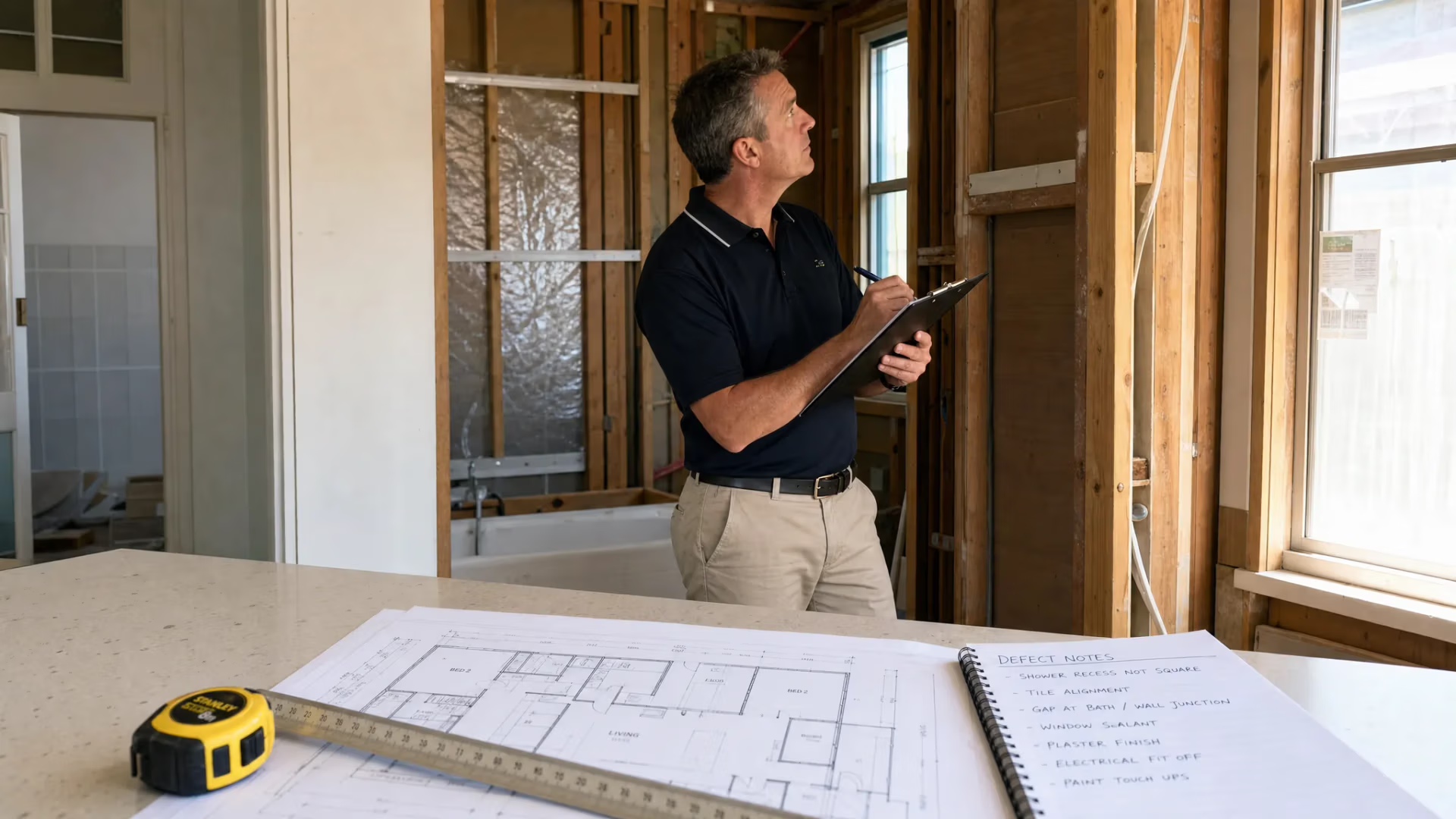
Scott Schedules: organising complex disputes item by item
Building disputes often become difficult because too many issues are argued at once. A Scott Schedule solves that problem by organising disputed items into a clear table.
In a typical building dispute, a Scott Schedule may include columns for the item number, location, alleged defect or disputed work, claimant’s position, respondent’s position, expert opinion, proposed rectification, and estimated cost. The exact format depends on the matter and any directions made by NCAT or the court.
This structure is useful because it forces precision. Instead of arguing generally about defective work, each item is considered separately. That can reveal which items are agreed, which are exaggerated, which require further evidence, and which are likely to be central to the outcome.
A Scott Schedule can also reduce legal costs by making instructions clearer. Solicitors can work from the same framework as the expert, and parties can focus settlement discussions on specific items rather than broad allegations.
For a more detailed explanation, see Awesim’s guide on what a Scott Schedule does in a building dispute.
Quantum meruit reports: when the dispute is about value
Some disputes are less about whether work is defective and more about what the work is worth. This often arises where work was performed outside a clear fixed price, where variations are disputed, or where a contract has broken down before completion.
A quantum meruit report can assist by assessing the reasonable value of work performed. This may involve reviewing the scope, invoices, site records, progress claims, photographs, correspondence, and the physical work completed.
For builders, a quantum meruit assessment may support a claim for payment where work has real value but the contractual pathway is disputed. For owners, it can help test whether the amount claimed is reasonable. For lawyers, it provides a technical and costing framework that can support negotiation or evidence.
The key is independence. A credible quantum meruit report should not simply repeat the amount one party wants. It should explain how value has been assessed and what evidence supports that assessment.
How these services help homeowners, builders, and lawyers
The best building consultant services adapt to the needs of the party using them while remaining independent in the opinion expressed.
Homeowners often need clarity. They may know something is wrong but not know whether it is a defect, a maintenance issue, an incomplete item, or a contractual disagreement. A consultant helps turn concern into documented evidence.
Builders often need a fair technical response. A dispute can include valid complaints, misunderstandings, and items outside the builder’s responsibility. Independent assessment helps identify what should be rectified and what may be defensible.
Lawyers need evidence that can withstand scrutiny. Legal submissions are only as strong as the facts and expert material supporting them. A consultant can help interpret technical documents, assess the opposing expert’s opinion, organise issues, and prepare reports that fit the procedural needs of the dispute.
This is where Glen Sim’s role at Awesim is particularly important. As owner and director, he positions the consultancy around independent, dispute-focused reporting rather than generic inspection commentary. In contested matters, that difference matters.
When should you engage a building consultant?
The earlier a technical issue is properly documented, the easier it is to manage. Waiting until a hearing date is close can create pressure, limit access to evidence, and make it harder to reconstruct what happened.
Common trigger points include receiving a defects notice, facing unpaid progress claims, preparing for mediation, responding to a solicitor’s letter, lodging or defending an NCAT application, or receiving an expert report from the other side.
The NSW dispute pathway can involve complaint handling, Fair Trading processes, NCAT proceedings, and court action depending on the type and value of the matter. NSW Fair Trading provides consumer guidance on resolving building disputes, while NCAT publishes information about home building disputes. A solicitor can advise on the legal pathway, but a consultant can help ensure the technical evidence is ready for that pathway.
As a practical rule, engage a consultant before positions become fixed. Independent evidence can sometimes prevent escalation by showing both sides what the real issues are.
What to look for in a dispute-ready consultant
A consultant used in a building dispute should be more than someone who can identify defects. Dispute work requires careful reasoning, clear writing, and an understanding that the report may be tested by the other side.
Look for a consultant who can:
- Explain the difference between inspection findings and expert opinion.
- Identify the documents needed before reaching conclusions.
- Separate defects, incomplete works, variations, and payment issues.
- Provide clear reasoning rather than unsupported conclusions.
- Prepare documents that are suitable for solicitors, NCAT, or court use.
- Remain independent, even when engaged by one party.
This final point is essential. A consultant who simply tells a client what they want to hear may feel helpful at first, but that approach can damage credibility when the matter is scrutinised.
How expert support can move a dispute toward resolution
Most parties do not want a building dispute to consume months of time and large legal costs. They want a fair outcome, whether that means rectification, payment, settlement, or a defended result.
Independent building consultant services help by reducing uncertainty. When the issues are documented, costed, and explained, the parties can make more informed decisions. A homeowner can decide whether to pursue a claim. A builder can decide what to rectify or contest. A lawyer can assess strengths, weaknesses, and evidence gaps.
In many cases, the consultant’s work does not replace negotiation. It improves it. Clear technical evidence gives everyone a more realistic basis for discussion.
Frequently Asked Questions
What are building consultant services in a dispute? Building consultant services in a dispute can include defect assessments, expert witness reports, Scott Schedules, quantum meruit reports, and technical litigation support. The aim is to provide independent evidence that helps clarify the issues.
Do I need a building consultant before going to NCAT? It is often useful to obtain independent technical advice before or during an NCAT matter, especially if the dispute involves defects, incomplete work, variations, or rectification costs. A solicitor can advise on timing and legal requirements.
Is an expert witness report the same as a building inspection report? No. A standard inspection report usually records observations for a client. An expert witness report is prepared for use in a dispute and should provide independent reasoning that can assist a tribunal or court.
Can a building consultant help both owners and builders? Yes. The consultant’s role is to provide independent technical opinion. Homeowners may use that opinion to support a defects claim, while builders may use it to respond to allegations or assess disputed payment and variation issues.
What is the benefit of a Scott Schedule? A Scott Schedule organises each disputed item into a structured format. This helps the parties, lawyers, experts, and decision-makers see what is claimed, what is denied, what evidence supports each position, and what costs are involved.
Need independent building dispute support in NSW?
If a building dispute is becoming technical, costly, or difficult to resolve, the right evidence can change the direction of the matter.
Awesim Building Consultants provides independent building dispute support across New South Wales, including expert witness reports, Scott Schedules, quantum meruit reports, NCAT dispute reports, building defect assessments, and litigation support.
To discuss the type of report or assessment your matter may require, contact Awesim Building Consultants and speak with Glen Sim’s team about dispute-focused support for your next step.
Related Posts

Strata Report: What Buyers Need to Read Before Signing
A strata report is the document that surfaces hidden obligations before you are legally committed to a purchase. A strata
Read More »
Inspection of Structures: What to Check Before You Buy
An inspection of structures examines a property's load-bearing elements, including foundations, walls, beams, roof framing, and floor systems, to identify
Read More »
Water Damage in Homes: How to Track Down the Source
Water damage in a home rarely announces itself at the source. A stain on the ceiling, a musty smell in
Read More »