
How to Choose Building Dispute Lawyers in Sydney
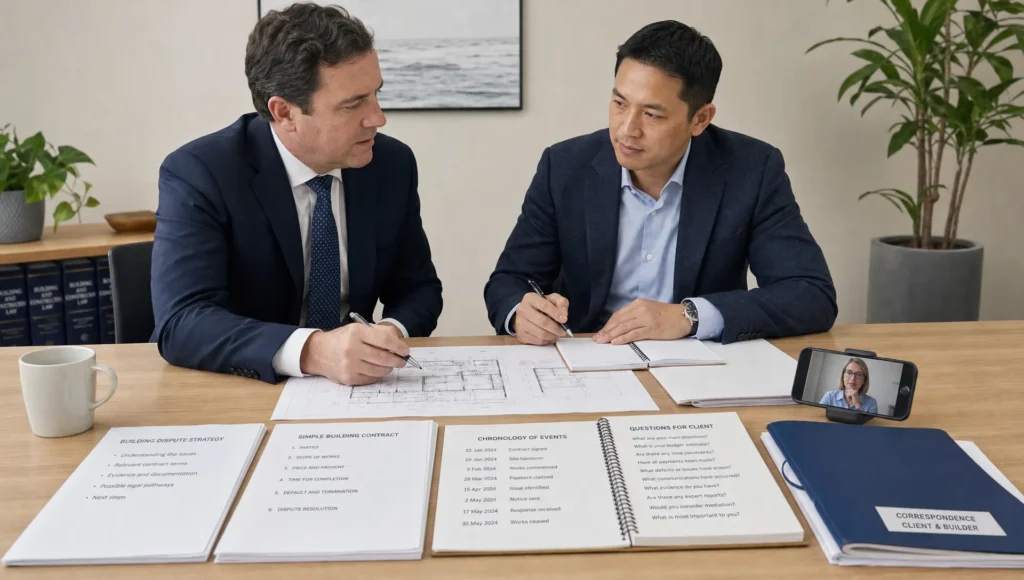
Choosing the right solicitor can change the direction of a building dispute. The wrong fit can lead to unclear advice, unnecessary escalation, weak evidence, and legal costs that grow faster than the dispute itself. The right fit helps you understand your position, preserve your rights, and present your case in a way that makes sense to NSW Fair Trading, NCAT, a court, or the other party in settlement negotiations.
If you are searching for building dispute lawyers in Sydney, you are usually not looking for general legal help. You need someone who understands construction contracts, defects, variations, delays, payment disputes, statutory warranties, expert evidence, and the practical reality of residential or commercial building work in New South Wales.
This guide explains how to choose a building dispute lawyer, what questions to ask before engaging one, and why early technical evidence from an independent building consultant can make your solicitor’s work more focused and effective.
This article is general information only and is not legal advice. Always speak with a qualified solicitor about your specific circumstances.
Start by defining the dispute you actually have
Before you compare lawyers, get clear on the type of dispute you are dealing with. Building disputes often look simple at first, but the legal pathway can change depending on the core issue.
A homeowner may believe the problem is defective workmanship, while the builder may say the issue is unpaid variations or access delays. A builder may see the matter as a payment claim, while the owner may be preparing a defects claim. A lawyer needs to know which issue is driving the dispute because the strategy, evidence, and urgency may differ.
Common NSW building dispute categories include:
- Defective or incomplete building work
- Disputes about variations and scope changes
- Non-payment, underpayment, or progress payment disputes
- Delay, liquidated damages, or access issues
- Termination or suspension of building contracts
- Statutory warranty claims under NSW home building laws
- Quantum meruit claims where the reasonable value of work is disputed
- Claims requiring a Scott Schedule or expert witness report
If you are still at the early stage, it may help to review the practical steps in Awesim’s guide to resolving building disputes early before the matter becomes more expensive and adversarial.
Choose a lawyer with the right forum experience
Not every building dispute goes straight to court. In NSW, many matters begin with direct negotiation, complaint handling, NSW Fair Trading, expert inspection, mediation, or an application to the NSW Civil and Administrative Tribunal.
NSW Fair Trading provides information about resolving building and renovation disputes, while NCAT hears many home building disputes. More complex or higher value matters may involve court proceedings, security of payment processes, or urgent applications.
When choosing a building dispute lawyer in Sydney, ask whether they regularly handle matters in the forum that is likely to apply to your case. A solicitor who is comfortable with NCAT procedures may be a better fit for a residential defects matter than a lawyer who mainly handles unrelated commercial litigation. Likewise, a builder facing an urgent payment or contract termination issue may need a solicitor familiar with construction payment legislation and injunction risk.
The key is not simply whether the lawyer is based in Sydney. It is whether they understand the NSW building dispute pathway that your matter is likely to follow.
What to look for in building dispute lawyers in Sydney
A good building dispute lawyer should help you make better decisions, not just send stronger letters. The right solicitor will test the strengths and weaknesses of your position, explain your options clearly, and work with independent experts where technical evidence is needed.
Use the table below as a practical comparison tool when shortlisting lawyers.
| Selection factor | Why it matters | What to ask |
|---|---|---|
| Construction dispute experience | Building disputes involve technical facts, contract terms, statutory rights, and expert evidence | “How often do you handle building defect, variation, payment, or NCAT matters?” |
| NSW forum knowledge | The process differs between negotiation, Fair Trading, NCAT, adjudication, and court | “Which pathway do you think applies to my matter and why?” |
| Evidence-focused approach | Strong claims usually depend on documents, site evidence, expert reports, and a clear chronology | “What evidence do you need before giving strategic advice?” |
| Cost transparency | Legal costs can become disproportionate if the strategy is unclear | “What are the likely stages, cost ranges, and decision points?” |
| Expert briefing skills | Many disputes turn on technical questions outside a lawyer’s expertise | “When would you brief a building consultant or expert witness?” |
| Communication style | You need advice you can act on, especially under time pressure | “Who will handle my matter day to day, and how will updates be provided?” |
| Settlement judgement | Many disputes resolve before a final hearing if evidence is clear | “How do you assess when to negotiate, mediate, or proceed?” |
A lawyer does not need to promise a fast win. In fact, caution can be a good sign. A strong solicitor will usually want to review the contract, correspondence, invoices, photos, inspection records, variation documents, and any existing expert reports before giving firm views.
Do not choose on aggression alone
Building disputes are stressful, and it is natural to want someone who sounds tough. But the most aggressive lawyer is not always the most effective one.
A solicitor who sends broad allegations without proper evidence can escalate the dispute before your position is ready. This may harden the other party’s response, increase costs, and create problems later if the allegations cannot be proved.
Look for a lawyer who can distinguish between legal leverage and emotional escalation. The best approach is often firm, structured, and evidence-led. That means identifying the issues, clarifying the contract position, obtaining independent technical evidence where needed, and using that evidence to support negotiation or formal proceedings.
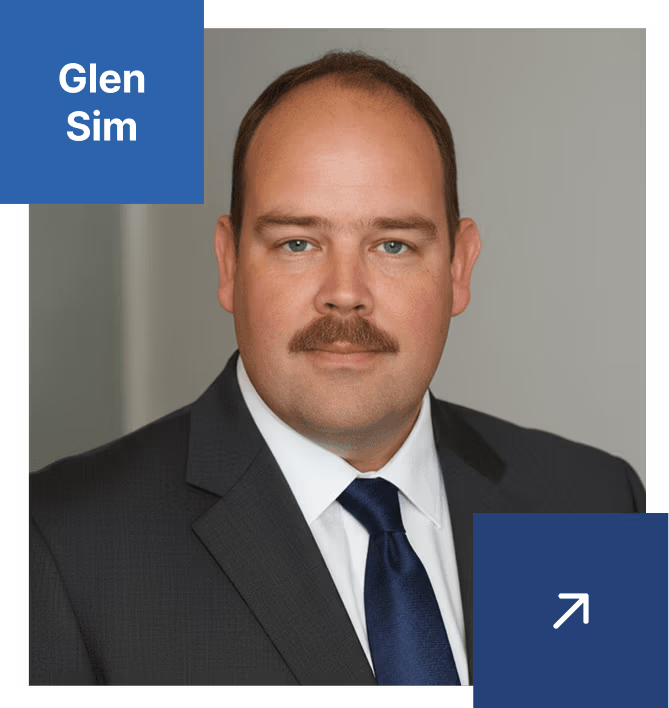
Glen Sim, owner and director of Awesim Building Consultants, sees this issue regularly in building disputes. From a consultant’s perspective, the cases that are easiest for lawyers to run are often the ones where technical issues have been organised early: what work is defective, why it is defective, what standard applies, what rectification is required, and what the likely cost impact is.
Make sure your lawyer understands expert evidence
Building disputes often involve questions a lawyer cannot answer alone. Is the work defective? Does it comply with the contract, drawings, Australian Standards, the Building Code of Australia, or accepted building practice? What is the appropriate rectification methodology? What is the reasonable cost of rectification? Has a claimed variation actually been performed?
These are technical questions. A solicitor can frame them legally, but an independent building consultant may be needed to inspect, assess, and explain them in a report.
This is where the relationship between lawyer and expert matters. A lawyer should understand how to brief an expert properly, how to ask focused questions, and how to use the resulting report in negotiations, NCAT, or court. For a deeper look at this relationship, Awesim explains how construction dispute lawyers use expert evidence in NSW building matters.
A lawyer who undervalues expert evidence may miss the real technical foundation of the dispute. A lawyer who overuses experts without focus may increase costs unnecessarily. The best fit is a solicitor who knows when technical evidence is needed, what type of report is appropriate, and how it supports the legal strategy.
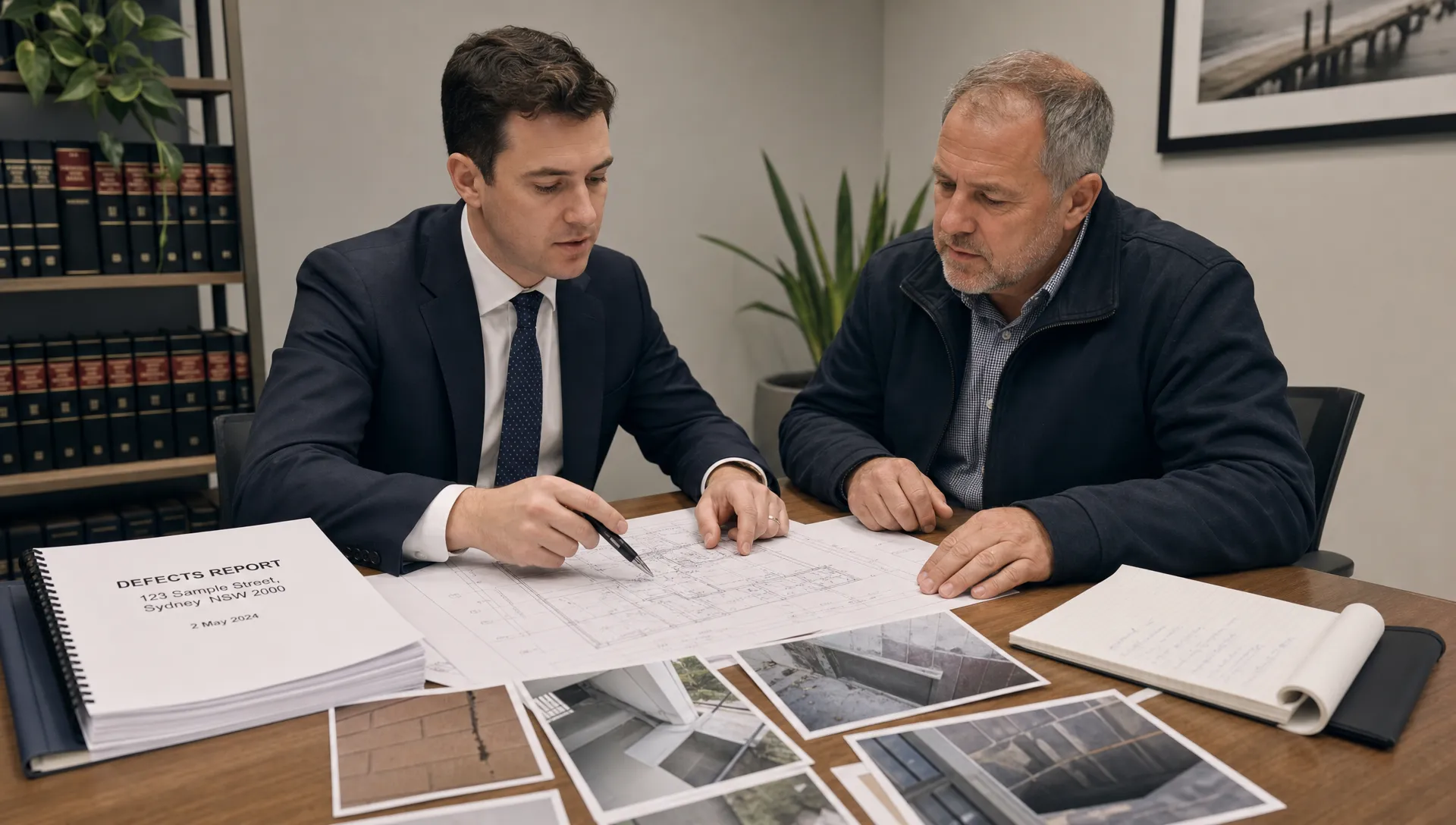
Ask how they would work with an independent building consultant
A building consultant and a building dispute lawyer perform different roles. The lawyer advises on legal rights, obligations, procedures, strategy, and representation. The consultant provides independent technical opinion on building issues, defects, scope, causation, rectification, and quantum where appropriate.
That distinction is important. Expert evidence must be independent and objective. It should not simply argue for the person paying for the report. In NCAT or court matters, an expert’s duty is to assist the tribunal or court on matters within their expertise.
Awesim Building Consultants supports homeowners, builders, and solicitors across NSW with expert witness reports, Scott Schedules, quantum meruit reports, NCAT dispute reports, and building defect assessments. Glen Sim’s role as owner and director is to help ensure the technical issues are presented clearly, independently, and in a format that can assist dispute resolution.
If you already have a solicitor, ask whether they are comfortable working with an independent expert early. If you do not yet have a solicitor, you may still benefit from understanding what a building consultant can do for your case before legal proceedings are on foot.
Questions to ask before engaging a building dispute lawyer
A first consultation is not only a chance for the lawyer to assess your matter. It is also your chance to assess the lawyer. Prepare a short summary of the dispute, gather key documents, and ask direct questions.
Useful questions include:
- “Have you handled disputes like mine in Sydney or elsewhere in NSW?”
- “Do you think this matter is likely to involve NSW Fair Trading, NCAT, court, adjudication, or negotiation?”
- “What deadlines or limitation issues should I be aware of?”
- “What documents do you need before forming a view?”
- “What are the strongest and weakest parts of my position based on what you have seen?”
- “Would you recommend an expert report, Scott Schedule, or defects inspection at this stage?”
- “What are the likely stages of the matter and what could each stage cost?”
- “Who will do most of the work on my file?”
- “How quickly do you usually respond to urgent issues?”
- “What would make settlement sensible, and what would make proceedings necessary?”
Pay attention to how the lawyer answers. Clear, measured answers are usually more valuable than confident promises. If the lawyer says they need more documents before giving a firm view, that may show proper caution rather than lack of confidence.
Red flags when choosing a building dispute lawyer
Some warning signs should make you slow down before signing a costs agreement. A building dispute can become expensive, so it is worth choosing carefully.
Be cautious if a lawyer:
- Guarantees an outcome before reviewing the evidence
- Focuses only on threats and not on proof
- Shows little interest in contracts, photos, invoices, drawings, emails, or site records
- Dismisses the need for expert evidence where technical issues are central
- Cannot explain the likely pathway for the dispute
- Avoids discussing costs, stages, and risks
- Treats NCAT or building disputes as a minor add-on to unrelated practice areas
- Encourages immediate escalation without discussing negotiation or evidence preservation
A lawyer does not need to be perfect in the first call, but they should be organised, realistic, and familiar with the type of dispute you are facing.
Different priorities for homeowners, builders, and solicitors
The right lawyer may look slightly different depending on who is engaging them. Homeowners, builders, and solicitors briefing experts often have different pressures.
| Client type | Main concern | Lawyer selection priority |
|---|---|---|
| Homeowners | Defects, incomplete work, delay, cost of rectification, stress, and uncertainty | A solicitor who can explain options clearly, manage NCAT or settlement strategy, and use expert evidence effectively |
| Builders | Payment disputes, variations, access issues, defect allegations, reputation, and cash flow | A solicitor who understands construction contracts, payment processes, evidence of work performed, and commercial resolution |
| Lawyers or solicitors | Technical proof, expert reports, hearing preparation, and evidentiary clarity | An expert-friendly solicitor or consultant relationship that supports clear reports, Scott Schedules, and quantum analysis |
For homeowners, communication and cost control are often critical. For builders, speed and commercial practicality may be essential. For lawyers, the priority is often turning complex site facts into admissible, reliable, and useful evidence.
Think about timing, not just who to call
A common mistake is waiting too long to get legal advice. By the time a dispute reaches a formal hearing, the parties may have already sent damaging correspondence, missed key deadlines, failed to preserve evidence, or carried out rectification work without proper documentation.
You do not necessarily need to brief a solicitor for every small disagreement. But you should consider legal advice earlier if the other party has threatened termination, refused payment, alleged serious defects, issued a formal notice, lodged an NCAT application, or raised a claim that could grow in value.
Awesim has a separate guide on when to brief a construction dispute solicitor if you are unsure whether your matter has reached that point.
Early legal advice does not always mean immediate litigation. Often, it helps you avoid litigation by clarifying your rights, improving your evidence, and making settlement discussions more productive.
How to compare your shortlist
Once you have identified two or three possible building dispute lawyers in Sydney, compare them in a structured way. Do not rely only on website claims or hourly rates. A cheaper hourly rate may not help if the lawyer lacks relevant experience. A higher rate may be justified if the lawyer can quickly identify the real issues and avoid unnecessary steps.
A practical comparison process is:
- Prepare a one-page chronology: Include key dates, contract signing, payments, notices, inspections, defects, correspondence, and current status.
- Collect core documents: Provide the contract, variations, plans, invoices, photos, emails, reports, payment schedules, and any notices.
- Book initial consultations: Ask the same core questions so you can compare answers fairly.
- Assess clarity and realism: Prefer the lawyer who explains options, risks, evidence needs, and likely stages without overpromising.
- Check expert strategy: Ask whether a building consultant, expert witness report, Scott Schedule, or quantum assessment may be needed.
- Review costs carefully: Ask for written costs information and make sure you understand what is included, what is not, and when costs may increase.
- Choose based on fit: Select the solicitor whose experience, communication style, and strategy best match the dispute.
This process helps you move from “Who sounds strongest?” to “Who is best equipped to resolve this matter properly?”
Where Awesim fits in the decision
Awesim Building Consultants is not a law firm and does not replace legal advice. Its role is different but often complementary. In a building dispute, your solicitor may need independent technical evidence to support a claim, respond to allegations, assess defects, quantify rectification, or prepare a Scott Schedule.
That is where Glen Sim and Awesim Building Consultants can assist. Awesim provides independent building dispute support across NSW, including expert witness reports, Scott Schedules, quantum meruit reports, litigation support, NCAT dispute reports, and building defect assessments.
For many matters, the strongest approach is not lawyer first or expert first in isolation. It is coordinated preparation. The lawyer identifies the legal issues and procedural pathway. The building consultant helps clarify the technical issues. Together, the dispute can be assessed on evidence rather than assumption.
Frequently Asked Questions
Do I need a specialist building dispute lawyer in Sydney? If your dispute involves defects, variations, payment, termination, NCAT, or court proceedings, it is usually wise to speak with a solicitor who regularly handles construction and building disputes in NSW.
Should I get an expert report before speaking to a lawyer? It depends on urgency, deadlines, and the stage of the dispute. In many cases, early technical input is helpful, but a solicitor can advise whether the report should be prepared for negotiation, NCAT, court, or another purpose.
What is the difference between a lawyer and a building consultant? A lawyer provides legal advice and representation. A building consultant provides independent technical opinion on building work, defects, rectification, scope, and quantum where relevant.
Can a building dispute be resolved without going to NCAT or court? Yes. Many disputes resolve through negotiation, expert clarification, mediation, or early settlement discussions. Clear evidence often improves the chance of resolving the matter before a final hearing.
What documents should I give a building dispute lawyer? Start with the contract, plans, variations, invoices, payment records, emails, photos, notices, inspection reports, and a short timeline of events. The lawyer can then ask for anything more specific.
Need independent technical support for a building dispute?
If you are choosing building dispute lawyers in Sydney, make sure technical evidence is part of the conversation. A clear expert report, Scott Schedule, or quantum assessment can help your solicitor understand the facts, advise on strategy, and present your position more effectively.
Glen Sim, owner and director of Awesim Building Consultants, provides independent building dispute support across New South Wales for homeowners, builders, and solicitors. To discuss expert witness reports, NCAT dispute reports, Scott Schedules, quantum meruit reports, or building defect assessments, visit Awesim Building Consultants.
Related Posts
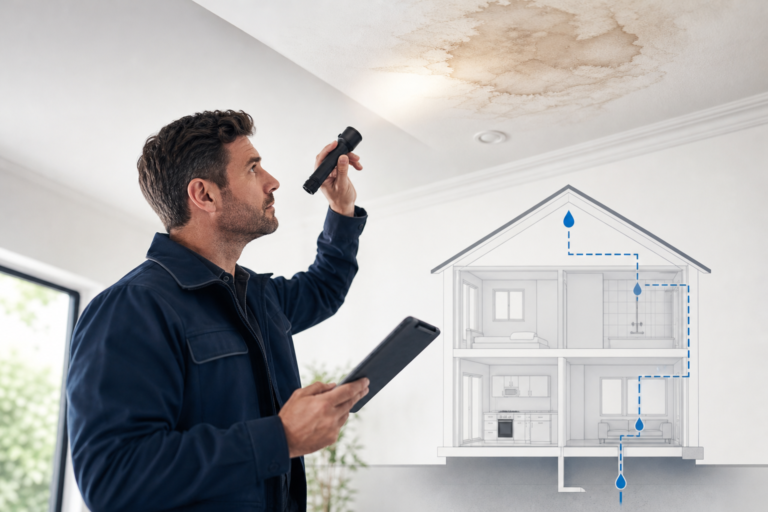
Water Damage in Homes: How to Track Down the Source
Water damage in a home rarely announces itself at the source. A stain on the ceiling, a musty smell in
Read More »
Waterproofing Membrane Types: Which Fails Most in NSW Bathrooms
Waterproofing failure is the single most common serious defect found in NSW apartments, and the type of membrane used, along
Read More »
Building Certifier NSW: Role, Limits, and When You Need More
A building certifier in NSW is a registered professional who issues construction certificates, conducts critical stage inspections, and grants occupation
Read More »