
Building Insurance Expert Witness: An NSW Guide for 2026
Your insurer says the staining to the ceiling is storm damage. The builder says the roof was installed correctly. The loss adjuster says the water got in because the flashing detail was wrong from day one. Meanwhile, the plaster keeps deteriorating, the claim stalls, and everyone is talking past each other.
That’s usually the point where a standard inspection report stops being enough.
In NSW insurance and building disputes, the central issue is rarely just whether damage exists. The issue is what caused it, what evidence supports that conclusion, and whether that opinion will stand up in NCAT or court. Homeowners want the claim resolved. Builders want unfair blame removed. Solicitors want a report they can effectively present. Those are different pressures, but they all come back to the same requirement. The opinion has to be independent, technically sound, and properly documented.
With over 35+ years in building and construction and 15+ years providing litigation support, I’ve seen the same mistake over and over. People rely on a strongly worded report when what they really need is a defensible one.
What Is a Building Insurance Expert Witness
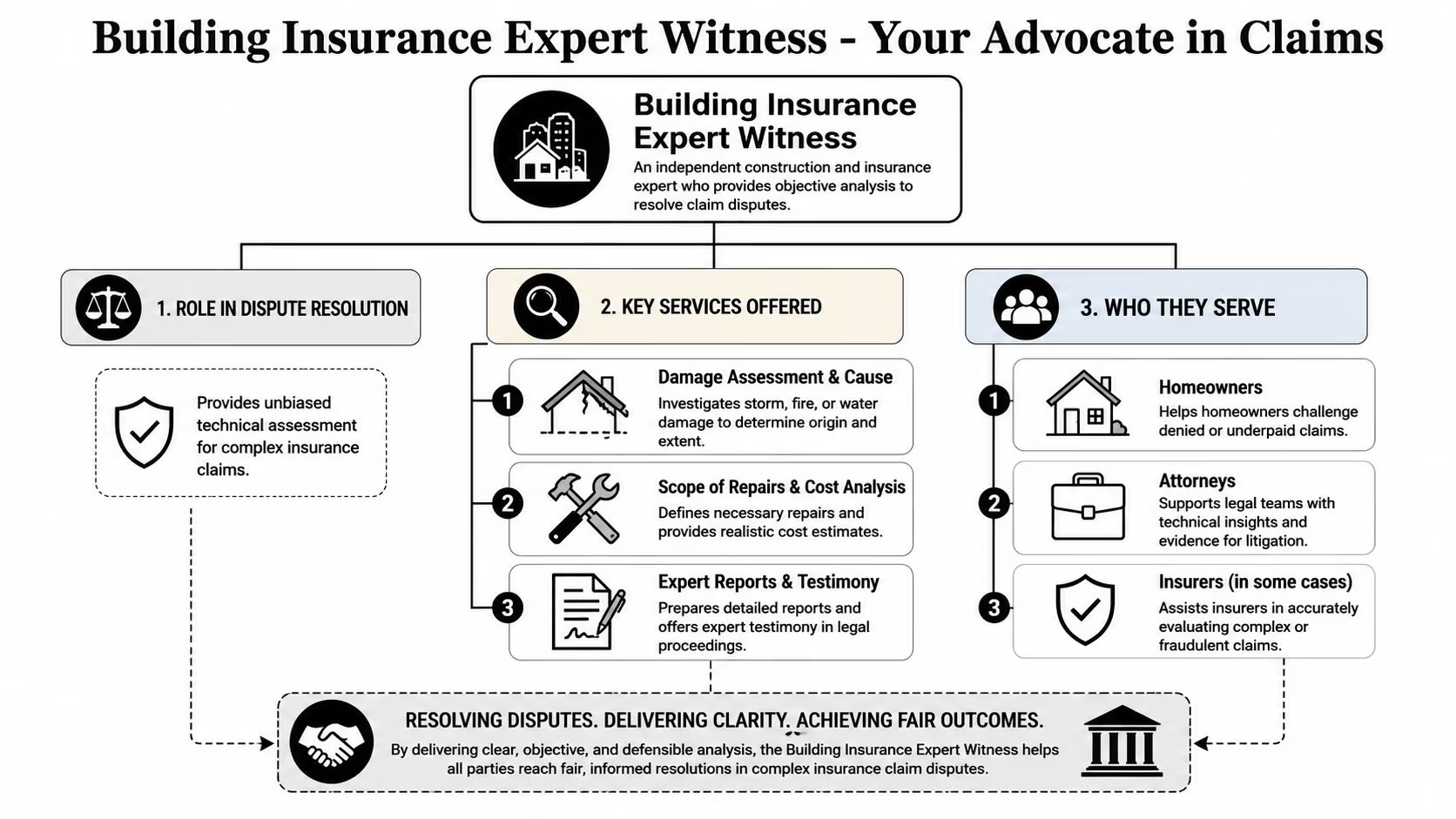
A building insurance expert witness is not just a builder with opinions, and not just an inspector who can list defects. In practical terms, this person investigates building damage, assesses likely cause, considers compliance and workmanship issues, and prepares an opinion in a form that can be used in a legal dispute.
That last part matters most.
If a ceiling collapses after heavy rain, the question isn’t merely whether water entered the building. The question becomes whether the damage was caused by a storm event, defective construction, design non-compliance, lack of maintenance, or a mix of those factors. A normal defect report might describe the symptoms. An expert witness has to go further and connect the symptoms to a reasoned conclusion.
What makes the role different
The legal distinction is straightforward. In Australia, the move from consultant to expert witness is governed by court rules, and in NSW the Uniform Civil Procedure Rules 2005 and the NSW Expert Witness Code of Conduct make clear that the expert’s primary duty is to the court, not the client, which is what gives the evidence its value in a dispute, as explained in this overview of insurance expert witness requirements.
That means a proper expert witness doesn’t write what the client wants to hear. They write what the evidence supports.
Practical rule: If an expert starts by promising an outcome, you’re not looking at independence. You’re looking at risk.
Problems often arise for many parties. A homeowner may have a builder’s quote and photos. A builder may have site notes and a strong view about what really happened. A lawyer may have useful lay evidence but no technical framework tying it together. None of that automatically becomes admissible, persuasive expert evidence.
Who uses one and why
A building insurance expert witness may be engaged by:
- Homeowners who need an independent causation opinion after a claim denial or partial acceptance
- Builders and contractors responding to allegations that defective work caused insured loss
- Solicitors who need an expert report suitable for NCAT or court use
- Strata representatives and property stakeholders dealing with common property damage and competing explanations
For readers comparing providers, it can help to see how other firms describe the role of property experts in dispute work. One example is Survey Merchant property experts, which gives a broader view of how expert witness services sit within property and construction disputes.
The short version is this. A builder tells you what they think. An inspector tells you what they found. A building insurance expert witness must explain why the conclusion follows from the evidence, and do it in a way that survives challenge.
When to Engage an Expert for an Insurance Dispute
Individuals frequently engage an expert later than they should.
They wait until the insurer has rejected the claim, the builder has fired back, or the matter is already heading toward NCAT. Sometimes that’s unavoidable. Often it isn’t. The best time to involve a building insurance expert witness is when the dispute turns on causation, scope, responsibility, or the adequacy of the proposed repair.
Three common deadlocks
A homeowner receives a scope from the insurer that allows for patch repairs to internal finishes, but says nothing about the failed roof junction that allowed the water in. The dispute isn’t just about cost. It’s about whether the repair scope addresses the actual cause.
A strata manager has repeated water entry into upper-level lots. One contractor blames the membrane, another blames balcony falls, and the insurer says the issue is long-term deterioration. At that point, someone has to test the competing explanations against the site evidence.
A builder is accused of causing storm-related damage because water entered around recently completed work. The builder’s position is that the issue comes from design detailing outside their scope, or from maintenance failures that existed before they arrived on site. That’s not something you sort out by trading emails.
The signs that a standard report won’t do
You usually need expert witness input when one or more of these issues appears:
- Cause is disputed. Storm event, workmanship defect, maintenance failure, design problem, and pre-existing deterioration are all being argued.
- Repair scope is contested. One side wants localised patching, the other says the assembly has to be opened up and rectified properly.
- Responsibility is being shifted. Owner, builder, subcontractor, designer, strata, and insurer are all pointing elsewhere.
- The matter is headed to NCAT or litigation. Procedural compliance starts to matter, not just technical opinion.
If you’re already at the stage of claim disagreement, it helps to understand what a targeted assessment covers. A focused starting point is a review of building insurance claims assessments, especially where causation and scope are both under challenge.
The worst time to discover your report is inadequate is after the other side has filed a compliant expert report and yours reads like a quotation with extra comments.
Early engagement changes the quality of evidence
In practice, delay causes two problems. First, the site changes. Temporary repairs, clean-up works, weather exposure, and occupant interference can all blur the original indicators. Second, the paper trail gets harder to reconstruct cleanly.
When the right expert comes in early enough, they can inspect before evidence disappears, request the key documents, identify what testing is needed, and frame the dispute properly from the start. That doesn’t guarantee agreement. It does give everyone a clearer technical footing.
Key Reports for NSW Legal Proceedings
In NSW building and insurance disputes, two documents do a lot of heavy lifting. One is the Expert Witness Report. The other is the Scott Schedule. They serve different purposes, but both are central when the matter reaches NCAT or formal litigation.
A standard building report can still be useful. It may identify visible defects, safety issues, or maintenance concerns. But if the dispute turns on insurance causation, responsibility, competing expert opinions, or rectification methodology, that report often won’t carry the case very far.
What an expert witness report must do
In Australian building disputes, an expert opinion only holds weight when it is backed by a documented chain of causation. A defensible report needs to show what was inspected, what standards applied, what was measured, and why alternative causes were excluded. Courts and tribunals such as NCAT expect that level of methodological rigour, and unsupported assertions can be dismissed during cross-examination, as outlined in Rimkus on expert witness methodology in construction disputes.
That sounds legalistic, but on site it’s very practical.
If you say water entered because of defective flashing, you need to identify the flashing detail, inspect the relevant junction, consider moisture pathways, review available drawings or as-built information, check installation requirements, and rule out other reasonable causes such as failed sealants elsewhere, blocked drainage, storm-related impact damage, or maintenance neglect. The report must show that reasoning, not just the conclusion.
Standard building report vs expert witness report
| Feature | Standard Building Report | Expert Witness Report (NCAT Compliant) |
|---|---|---|
| Primary purpose | General condition or defect identification | Independent opinion for dispute resolution |
| Audience | Owner, purchaser, builder | NCAT, court, solicitors, parties |
| Causation analysis | Often limited or informal | Structured and reasoned |
| Reference to standards | May mention relevant items | Tied directly to the issues in dispute |
| Measurements and testing | May be limited to visual observations | Includes documented observations, measurements, and testing where needed |
| Alternative causes | Often not addressed in detail | Must be considered and excluded with reasons |
| Independence requirements | Not usually framed for expert evidence | Prepared with expert duties and procedural compliance in mind |
| Use under cross-examination | Often vulnerable | Designed to be defended |
Where Scott Schedules fit
A Scott Schedule is a comparison document. In building matters, it itemises each alleged defect or dispute item and sets out the parties’ competing positions in a structured format. In NCAT, that can be extremely useful because it turns a sprawling disagreement into issue-by-issue analysis.
A good Scott Schedule doesn’t just list complaints. It identifies:
- The location or element in dispute
- The alleged defect or damage
- The claimant’s position
- The respondent’s position
- The expert’s view on causation, rectification, and sometimes cost
For solicitors and tribunal members, this format makes the case easier to follow. For owners and builders, it forces precision. Vague allegations don’t survive long once they’re broken into separate line items.
What works and what doesn’t
What works is a report that ties observations to standards, evidence, and a clear reasoning path.
What doesn’t work is a document full of conclusions such as “poor workmanship” or “storm damage” without enough underlying analysis to justify them.
Where the dispute requires formal expert documentation, services such as Expert Witness Reports and Scott Schedules are the relevant tools. One example in NSW practice is Awesim Building Consultants, which prepares both for construction disputes and NCAT matters.
The Expert Witness Process and Timelines
Clients are often surprised that the report itself is only one part of the job. The process starts well before drafting and usually continues after the report is served.
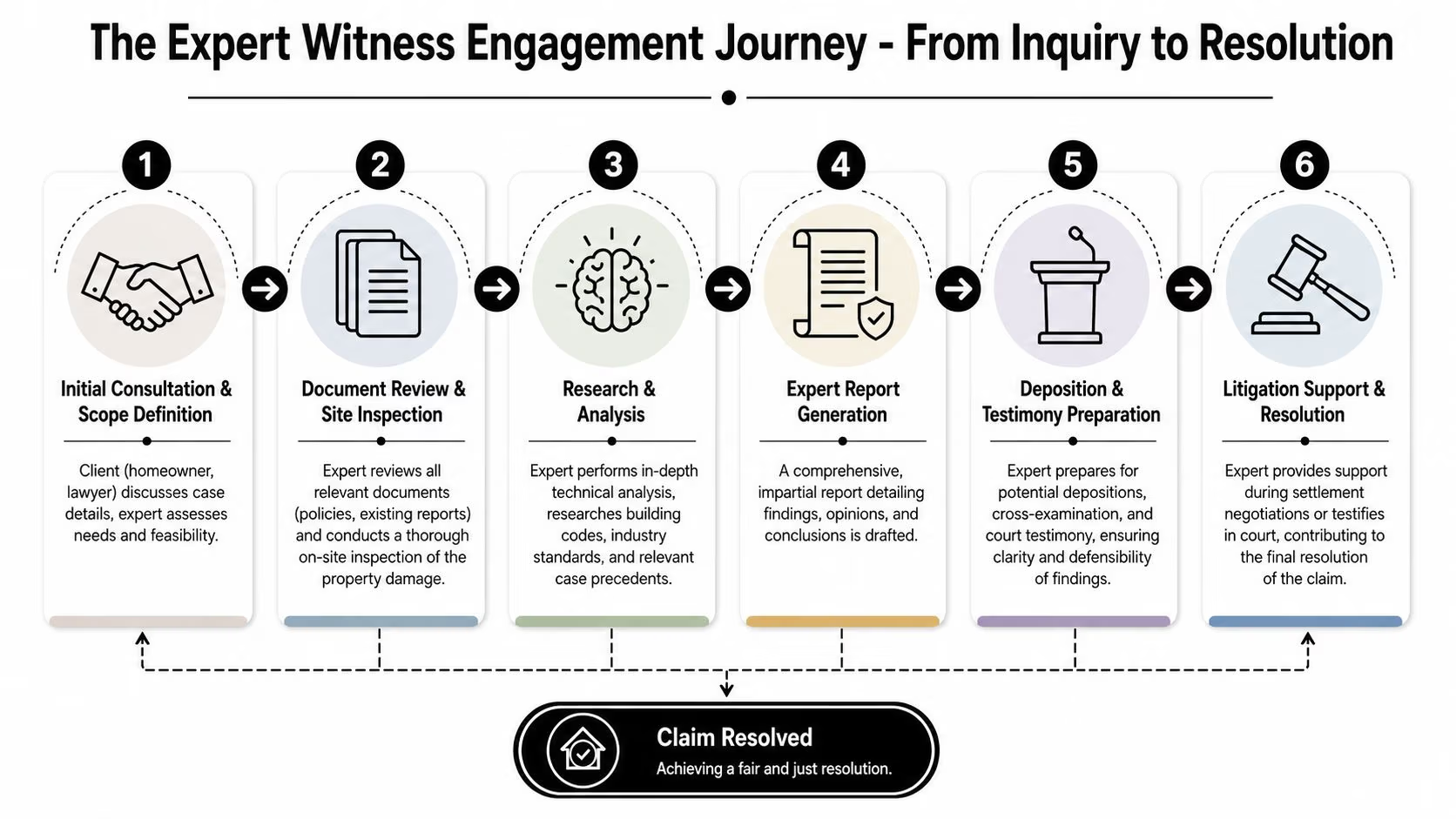
The sequence below is commonly recognized in NSW building disputes. The exact timing depends on access, document volume, testing needs, and the tribunal timetable, so it’s better to think in stages rather than fixed deadlines.
The usual path from instruction to hearing
Letter of instruction
The client or solicitor sets out the issues to be addressed. A well-drafted instruction avoids vague requests like “tell us who is right” and instead identifies the questions the expert must answer.Document review and site inspection
This usually includes plans, reports, photographs, correspondence, scopes of work, quotes, and relevant claim material. The site visit then tests the paper record against what is present.Evidence gathering and analysis
Some matters can be assessed visually. Others need moisture readings, opening-up works, or review of installation requirements and applicable standards. This is often where causation issues become clearer.Report drafting and compliance review
The expert writes the report, checks the reasoning chain, and makes sure the document is fit for its procedural purpose.Service of report and response process
Once served, the report may be answered by another expert. In many disputes, that’s when points of agreement and disagreement sharpen.Joint conference or conclave, then evidence
If directed, experts confer and prepare a joint position document. If the matter proceeds, the expert may then give oral evidence in NCAT or court.
How long it usually takes
The sensible answer is that it depends on complexity and listing dates.
A straightforward matter with good access and a clean document trail can move quickly. A multi-issue dispute involving several trades, incomplete records, and competing reports takes longer. Delays also occur when destructive inspection is needed, occupants can’t provide access, or one side serves fresh material late.
Good expert work takes time because the opinion has to be checked against the evidence, not just written quickly.
For parties involved in NSW proceedings, it also helps to understand the framework around independence and obligations. A useful reference point is this guide to the expert witness code of conduct, because many timetable and drafting issues flow directly from those obligations.
What clients can do to keep the process moving
- Provide complete documents early. Missing plans, claim correspondence, and earlier reports slow everything down.
- Preserve the site where possible. Temporary make-safe work may be necessary, but document conditions before anything changes.
- Clarify the questions. Broad frustration doesn’t help an expert. Specific technical questions do.
- Expect interaction after the report. A served report is often the start of the formal expert phase, not the end of it.
Choosing Your Expert and Avoiding Common Pitfalls
The right expert can clarify a case. The wrong one can narrow your options, harden the dispute, and leave you with a report that sounds confident but doesn’t survive scrutiny.
This choice matters more than is often appreciated. In building insurance disputes, the expert is often the person translating physical evidence into a form the tribunal can trust. If that translation is weak, the rest of the case struggles.
What to look for
Start with practical building experience. If the issue involves waterproofing, flashing, movement cracking, storm entry, roof plumbing, or structural distress, the expert should understand how those failures present on site.
Then look at dispute experience. Writing a good defect report and preparing a report for NCAT are not the same task.
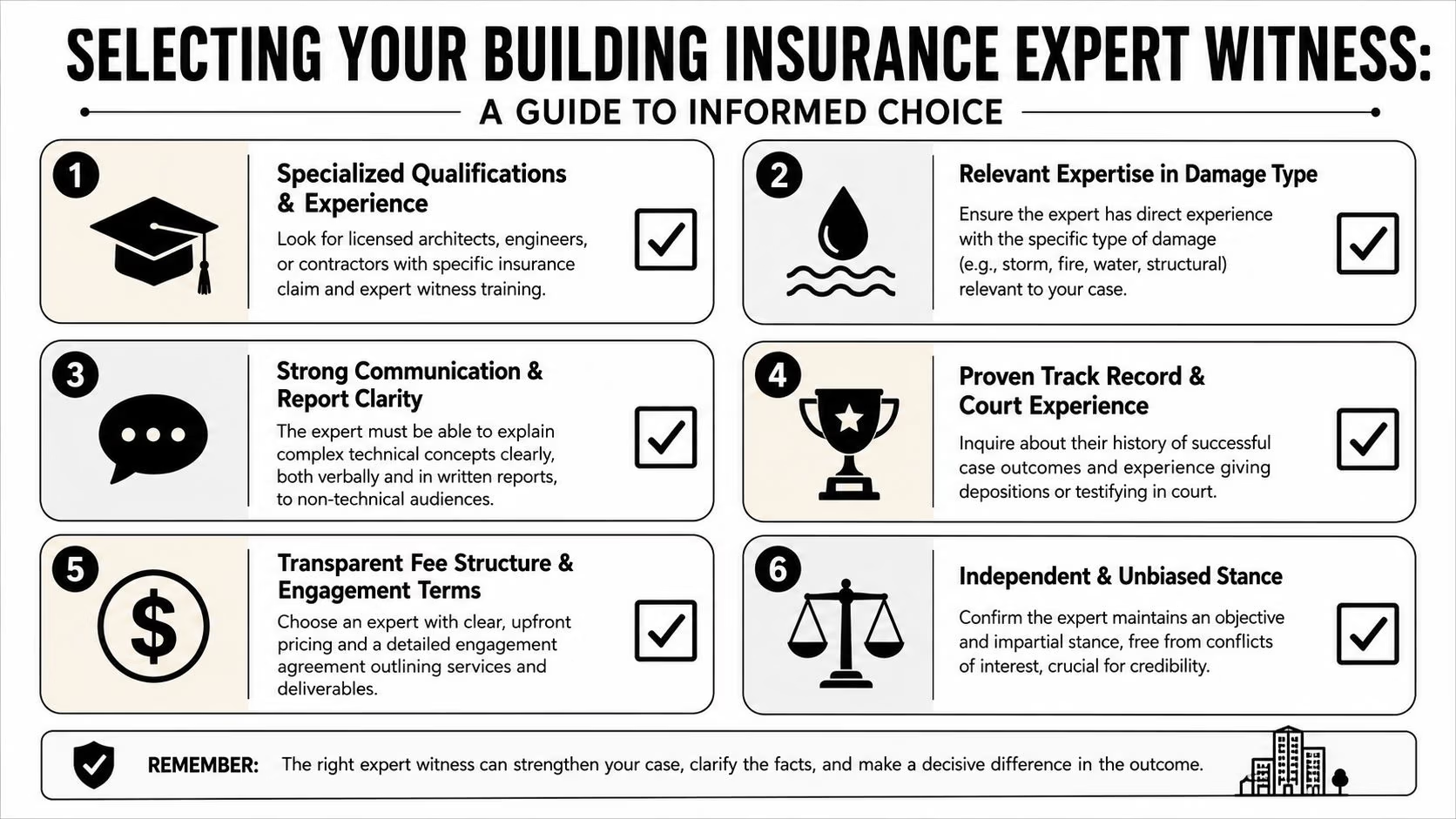
A useful checklist is:
- Deep site experience. Years on live projects matter because many disputes turn on build sequence, trade interfaces, and what was realistically possible at the time of construction.
- Litigation support exposure. The expert should understand how reports are challenged, not just how they are written.
- Clear writing and plain speech. If they can’t explain the issue to a homeowner, they probably won’t explain it well under questioning either.
- Relevant documents and standards literacy. They need to work comfortably with plans, specifications, installation instructions, NCC requirements, and Australian Standards.
- A disciplined method. Good experts inspect, record, compare, test where needed, and reason through alternatives.
Here’s a useful discussion on the subject:
Red flags that should stop you
Some warning signs are obvious. Others are subtle.
- Promises of a win. An expert can support a case. They can’t guarantee an outcome.
- Partisan language from the start. If the expert sounds like an advocate before inspecting, credibility is already slipping.
- No clear scope or fee basis. Confusion early usually becomes conflict later.
- Reluctance to explain method. If they can’t tell you how they’ll approach causation, they may not have a reliable approach.
- Reports that jump to conclusions. Strong opinions with thin reasoning are dangerous in tribunal work.
Ask one direct question before you engage anyone: “How will you distinguish event damage from defects, maintenance issues, and pre-existing deterioration in this matter?”
The practical trade-off
Some experts are excellent technically but poor communicators. Others are polished but too shallow in building knowledge. You need both. The tribunal has to understand the report, and the report has to be anchored in real construction practice.
For NSW matters, the strongest experts are usually the ones who’ve spent serious time on site, understand dispute procedure, and are comfortable saying, “The evidence doesn’t support that conclusion.”
Frequently Asked Questions About Expert Witness Services
How much does an expert witness report cost
There isn’t a single fixed price because the cost depends on the scope of the dispute, document volume, travel, site access, whether testing is needed, and whether the report is for early advice or formal proceedings.
In practice, fees are often built from time spent on document review, inspection, analysis, report writing, conferences, and any later response work. If the matter proceeds further, attendance at conclaves or hearings is usually separate. The important point isn’t finding the cheapest report. It’s understanding exactly what the fee includes and whether the report will do the job required.
How long does the whole process take
Some matters move promptly. Others continue for months because the delay is in the dispute pathway, not the report itself.
The usual variables are access, the quality of the available records, whether further inspection is required, whether another expert is engaged by the other side, and when NCAT lists the matter. If a client needs an opinion urgently, it helps to separate immediate advice from the full reporting task rather than expecting both to happen at once.
Can I speak to the expert during the process
Yes, but the communication has to stay within proper boundaries.
You can provide documents, answer factual questions, explain chronology, and seek updates on progress. What you can’t do is shape the opinion by pressure, scripting, or selective presentation of facts. A proper expert remains independent throughout the engagement, even when one party has retained and paid them.
What if the other side has an expert too
That’s common.
When both parties have experts, the dispute often becomes more focused. Each opinion is tested against the site evidence, records, standards, and reasoning. In many matters, the experts are then directed to confer and identify where they agree and where they disagree. That process can narrow the issues significantly, even when the parties themselves remain far apart.
Partner With an Experienced NSW Building Expert
Insurance disputes involving building damage rarely turn on who argues hardest. They turn on who can explain the building evidence clearly, methodically, and independently.
That’s why the right building insurance expert witness does more than inspect damage. They identify the failure mechanism, separate competing causes, define the repair issue properly, and present the opinion in a form that can assist NCAT or legal proceedings.
For homeowners, that can mean clarity after a rejected or reduced claim. For builders, it can mean drawing a proper line between workmanship allegations and issues outside their responsibility. For solicitors, it means having evidence that is organised and usable.
Awesim Building Consultants brings 35+ years in building and construction and 15+ years providing litigation support to homeowners, builders, and lawyers across NSW, including site investigations, Expert Witness Reports, and Scott Schedules.
If you need clear, independent building evidence for an insurance or construction dispute, contact Awesim Building Consultants. Email admin@awesim.com.au or call 1800 293 746 to discuss the matter and the documents needed for the next step.
Related Posts
Scott Schedule Template: What Columns a NSW Claim Needs
What Is a Scott Schedule? Why the Column Structure Matters The Core Columns in a NSW Scott Schedule Template Column
Read More »
Brick Veneer Construction Defects: A Site Inspector’s View
What Brick Veneer Construction Actually Is The Most Common Brick Veneer Construction Defects Cracking in the Brickwork Missing or Blocked
Read More »
Liquidated Damages in Construction: How NSW Contracts Work
What Are Liquidated Damages in Construction? Why Contracts Use Them How Liquidated Damages Work in NSW Building Contracts Standard Contracts
Read More »